
































































In the third and final instalment of our special Halloween heritage articles, Island Echo examines the story of the ghost ship HMS Eurydice.
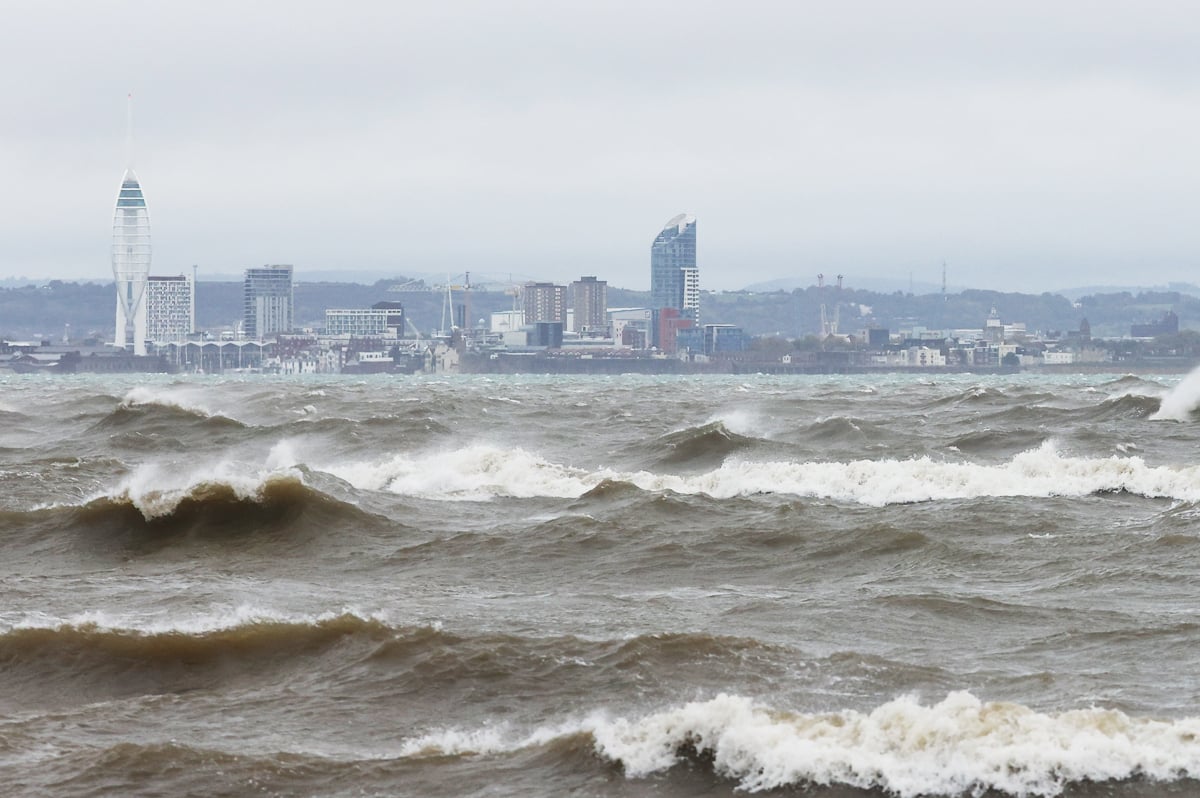
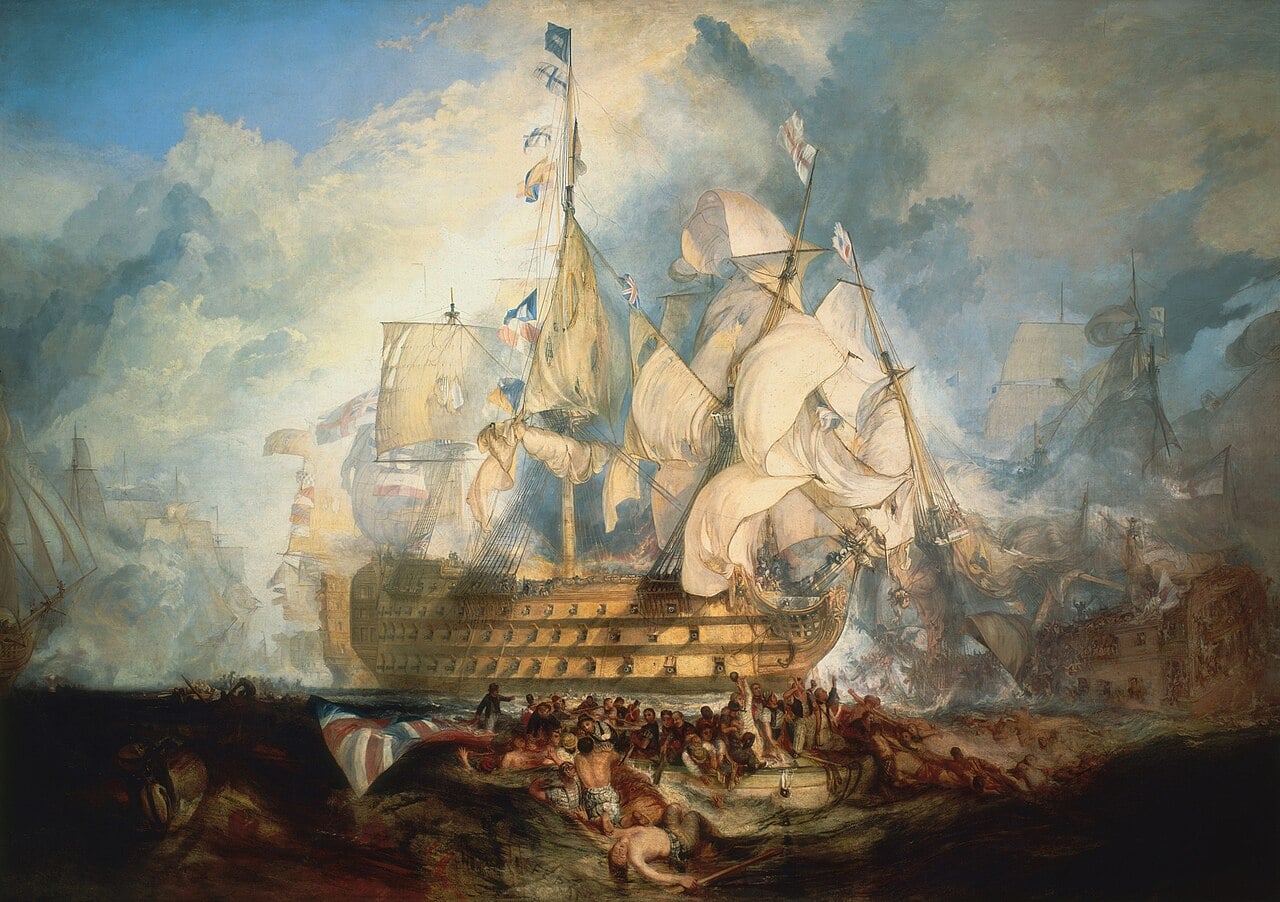
HMS Eurydice sank in a sudden snowstorm off the Isle of Wight on 24th March 1878, and some claim she sails there off the coastline still.
On that bleak Sunday afternoon, the proud frigate, once a 26-gun vessel of the Royal Navy and then a training ship, was returning from Bermuda with 319 aboard. At her helm was Captain Marcus Augustus Stanley Hare, a man of fervent Christian faith. What began as a calm passage through the English Channel ended in moments of terror.


The skies blackened, the air turned white with snow, and a cruel squall rose like a curtain of death. Caught broadside, the Eurydice heeled, capsized, and was swallowed by the sea within sight of land. Only two survived. Most who were not pulled beneath the ship froze in the waters. Captain Hare, it is said, clasped his hands in prayer as he went down with his men.
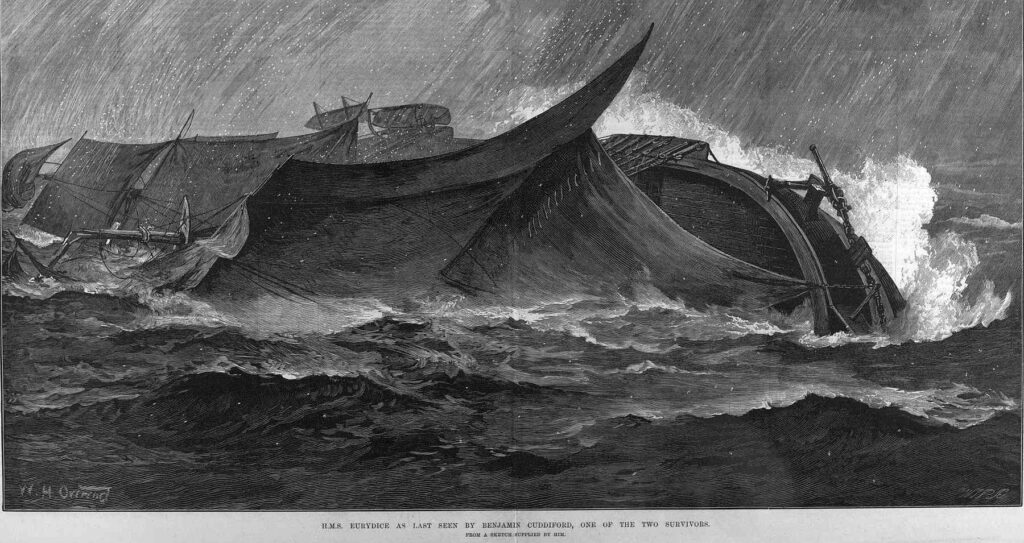
Onlookers on the Isle of Wight, among them the boy Winston Churchill, watched powerless as the frigate vanished. The tragedy shook the nation – but in its aftermath, a stranger story took hold.
From the day of her sinking, the phantom Eurydice has been seen gliding beneath the cliffs of Dunnose and Shanklin. Her sails are said to billow though no wind blows, her three masts rising ghostlike against the gloom. Sometimes she gleams with an unearthly whiteness, sometimes with the lurid red of a dying sun. She sails in silence, and when the watcher blinks or turns away, she is gone, leaving only mist and the uneasy roll of the tide.
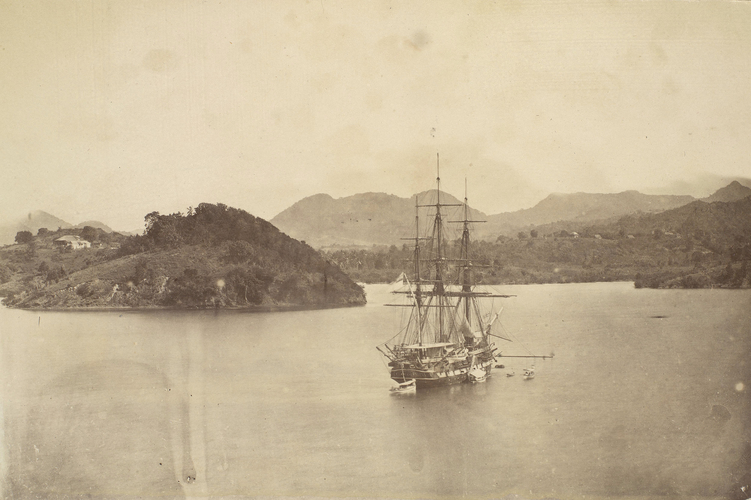
In bygone times, local newspapers recorded the fearful testimonies of those who swore they had seen her. One such letter reads:
“Sir, On a foggy night this past October, as I stood upon the esplanade at Shanklin, I beheld with my own eyes a ship under full canvas where no ship could be. She was of an older build, her rigging lit by a pale gleam as of moonlight though the moon was shrouded. I swear upon my honour that the vessel vanished as suddenly as she appeared, and the sea where she had been lay still as glass.” A Resident of Ventnor
Article continues below this advertisement

A further letter, reprinted before the Great War, confessed:
“Sir, It may interest your readers to know that I too have seen the phantom frigate. On a summer’s eve her sails gleamed blood-red in the setting sun, though the sky itself was grey. I watched until she faded into nothingness, and a terrible cold seized me though the air was warm. I shall never walk those cliffs at twilight again.” M.L., Shanklin
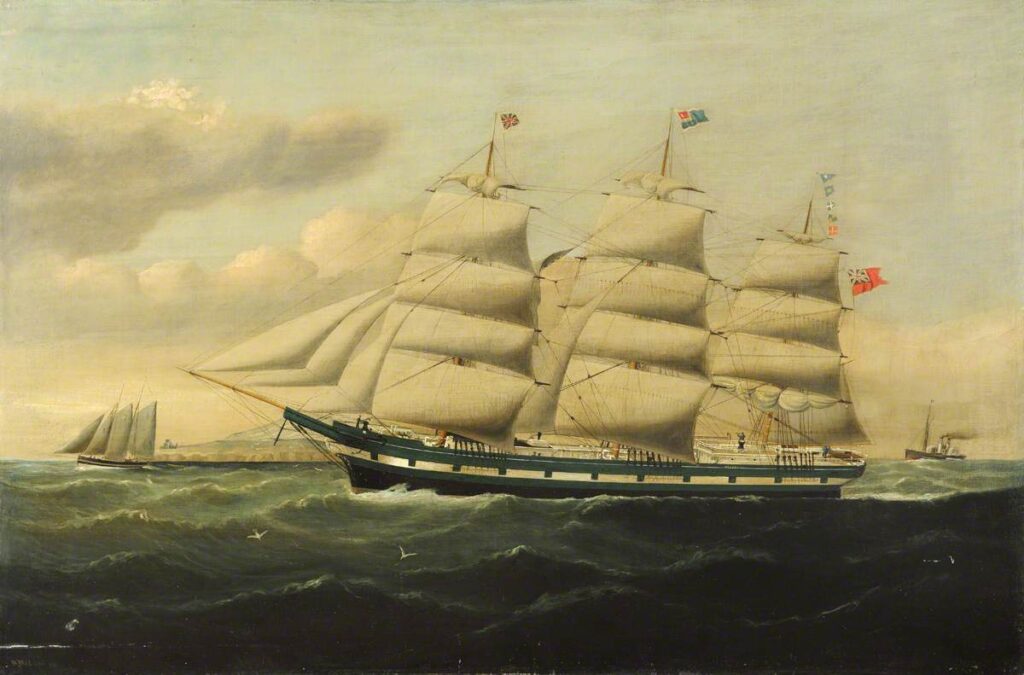
Yet the tale did not end with the Victorians. In the 1930s, Commander F. Lipscomb of the Royal Navy was at the helm of a submarine off the Isle of Wight when, by his own account, HMS Eurydice suddenly loomed before him. Convinced collision was imminent, he gave the order to dive and take evasive action. But in the very instant his crew obeyed, the phantom frigate dissolved into thin air. Sailors whispered afterwards that the ghost ship had risen from the depths to remind the living of her fate.
And even in modern times, she has returned. In 1998, while filming for the programme Crown and Country off the Isle of Wight, His Royal Highness Prince Edward declared that he too had seen the ghostly ship. Members of the film crew swore her outline was caught on camera, though many declined to speak further. When fishermen, naval officers, and a royal prince all bear witness, who can doubt that the Eurydice still sails?
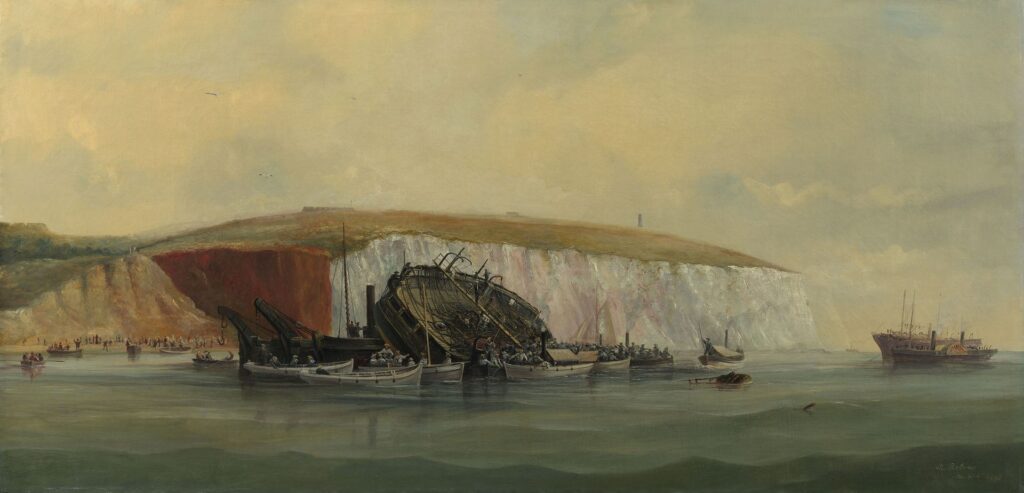
Why does the ship remain, doomed to return in mist and silence? Some believe the sudden loss bound the cadets’ spirits to their ship, never able to reach shore. Others whisper that Captain Hare himself, hands still clasped in prayer, guides his drowned crew across an endless voyage. Whatever the truth, the ghost frigate is the Isle of Wight’s most terrible guardian: a reminder that the sea does not forgive.
This All Hallows’ Eve, as the fog gathers along the cliffs of the Isle of Wight, look well to the horizon. Should you see a frigate gliding silently where none should be, recall the fate of the three hundred lost, and know that the Eurydice sails still.
Have you or anyome known to you glimpsed the phantom ship HMS Eurydice? Let us know in the comments…











For an expression of mourning, one could also read the famous contemporary poem by Gerard Manley Hopkins, “The Loss of the Eurydice”, lamenting the 300 deaths. Curiously, the actual sinking was apparently witnessed in person by 3-year-old Winston Churchill himself while he was staying with the family of Mrs Everest, his Nanny, who lived in Ventnor — he describes this in his memoir My Early Life (1930).
Reading the story’s it does make you wonder
Another great story.
We at the Shanklin Men in Sheds are currently renovating the memorial to this ship in the cemetery in Lake.