
















































One of the Isle of Wight’s grandest homes became an inferno on 1st June 1951 – 75 years ago today – when flames ripped through St Lawrence Hall near Ventnor.
In the early hours of 1st June 1951, fire broke out at St Lawrence Hall, which was then operating as a hotel, destroying the grand mansion that had once been home to Admiral of the Fleet Lord Jellicoe. Before dawn, flames lit the night sky as smoke drifted across the Undercliff roads.
The blaze began shortly after 01:00 when hotel proprietor Percy Scott-Jackson awoke to the smell of smoke. Investigating further, he discovered the rear of the sprawling building already well alight.


Ventnor Fire Brigade was immediately summoned, with crews from Newport, Ryde, Sandown, Shanklin and Freshwater soon racing to the scene as the scale of the fire became clear. Strong easterly winds whipped flames through the mansion, spreading the blaze rapidly from room to room.
By the time firefighters arrived, much of the building had already been consumed. Parts of the roof and upper floors later collapsed as around 60 firefighters battled through the night to try and save the hall. Furniture and fittings were thrown from windows in desperate salvage attempts while smoke continued to hang over the Undercliff for hours afterwards.
Despite the efforts of the crews, little could be done to save the building. By the following evening, the wreckage was still smouldering. The once-grand hall was left completely gutted and was later demolished.
Its destruction marked the end of another of the great Undercliff mansions that had once symbolised Victorian and Edwardian prosperity along the south coast of the Island.
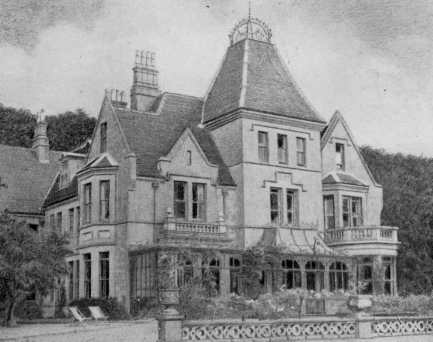
St Lawrence Hall had been one of the most imposing private residences on the Isle of Wight. Built in 1886 in the style of a French chateau, the mansion featured steep roofs, tall chimneys and turreted towers.

It was designed by noted Ventnor architect Major Theodore Ridley Saunders for Captain Fisher and constructed by local builders Henry Ingram & Sons. Originally known as ‘Inglewood’, the property later became known as St Lawrence Hall.
Standing within around 10 acres of grounds stretching towards the Undercliff escarpment, the estate featured gardens, woodland and a tennis court, along with extensive views across the English Channel. The house itself eventually grew to 24 bedrooms with extensive reception rooms.
Over the years, the hall attracted several notable residents. Among the best known was Admiral of the Fleet Lord Jellicoe, famed for his role in the Battle of Jutland during the First World War. He lived at St Lawrence Hall during his retirement and died there in 1935. Another prominent resident was shipping magnate Sir Charles William Cayzer of the famous Clan Line family.
By the outbreak of the Second World War, the once-fashionable residence had entered a quieter chapter and stood empty under the care of a caretaker. After the war, the hall was adapted for use as a private hotel under the management of Percy Scott-Jackson.
Today, the Inglewood Park housing estate occupies the former grounds of St Lawrence Hall, with little remaining to suggest that one of the Undercliff’s most striking mansions once stood there.