




























Children exploring marshland near Sandown in 1973 claimed to have met a bizarre figure unlike anything seen before, or since…
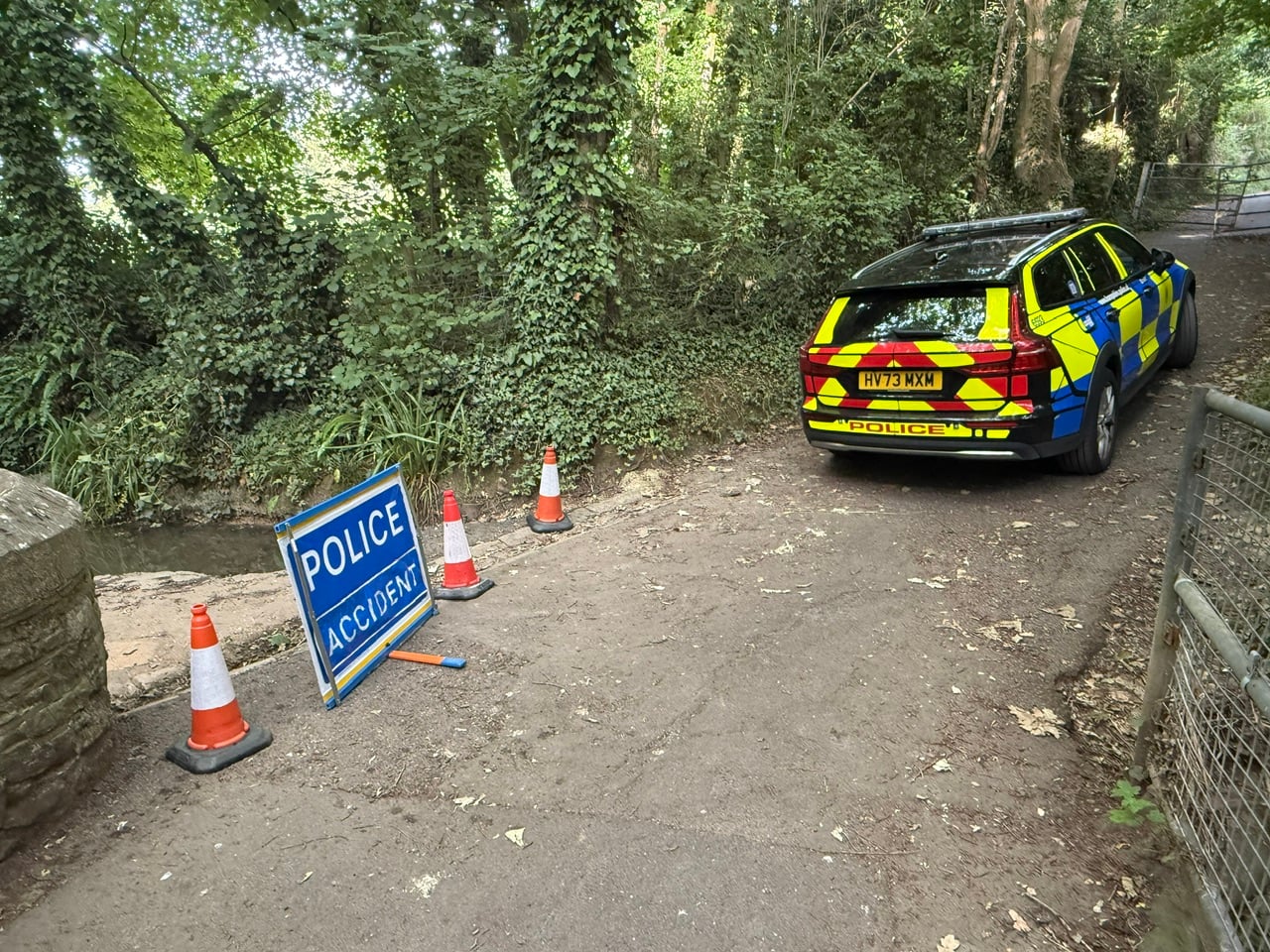
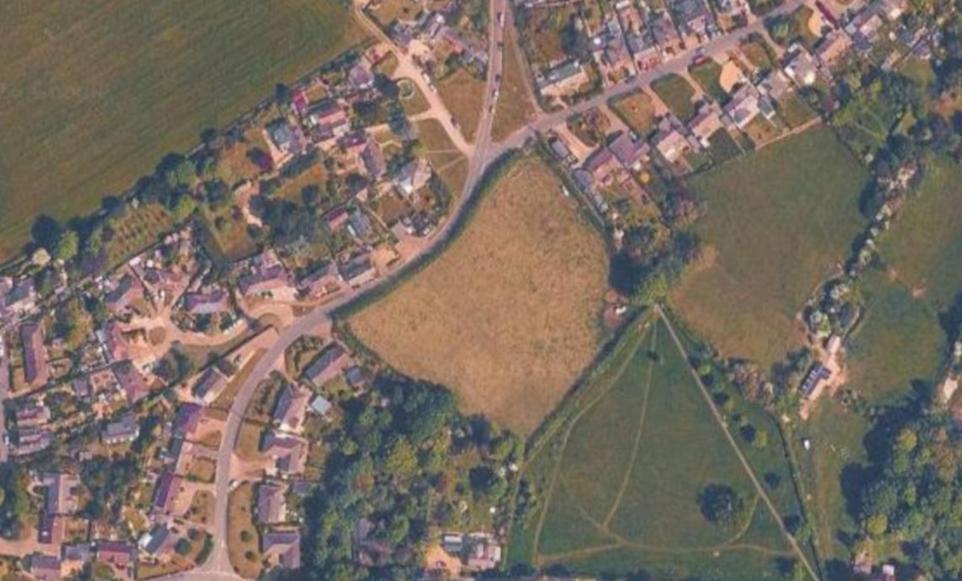
An unknown sound drifted across the marshes near Lake Common on a warm afternoon in May 1973. Fay, aged seven, later compared it to the distant wail of an ambulance siren. Curious, she and a younger companion followed it towards an old wooden footbridge spanning a narrow stream.
The strange cry faded away. They crossed the bridge expecting to find whoever had made it, but the far side was deserted. The children stopped. Only the rustle of the reeds and the gentle trickle of water beneath the bridge broke the silence.


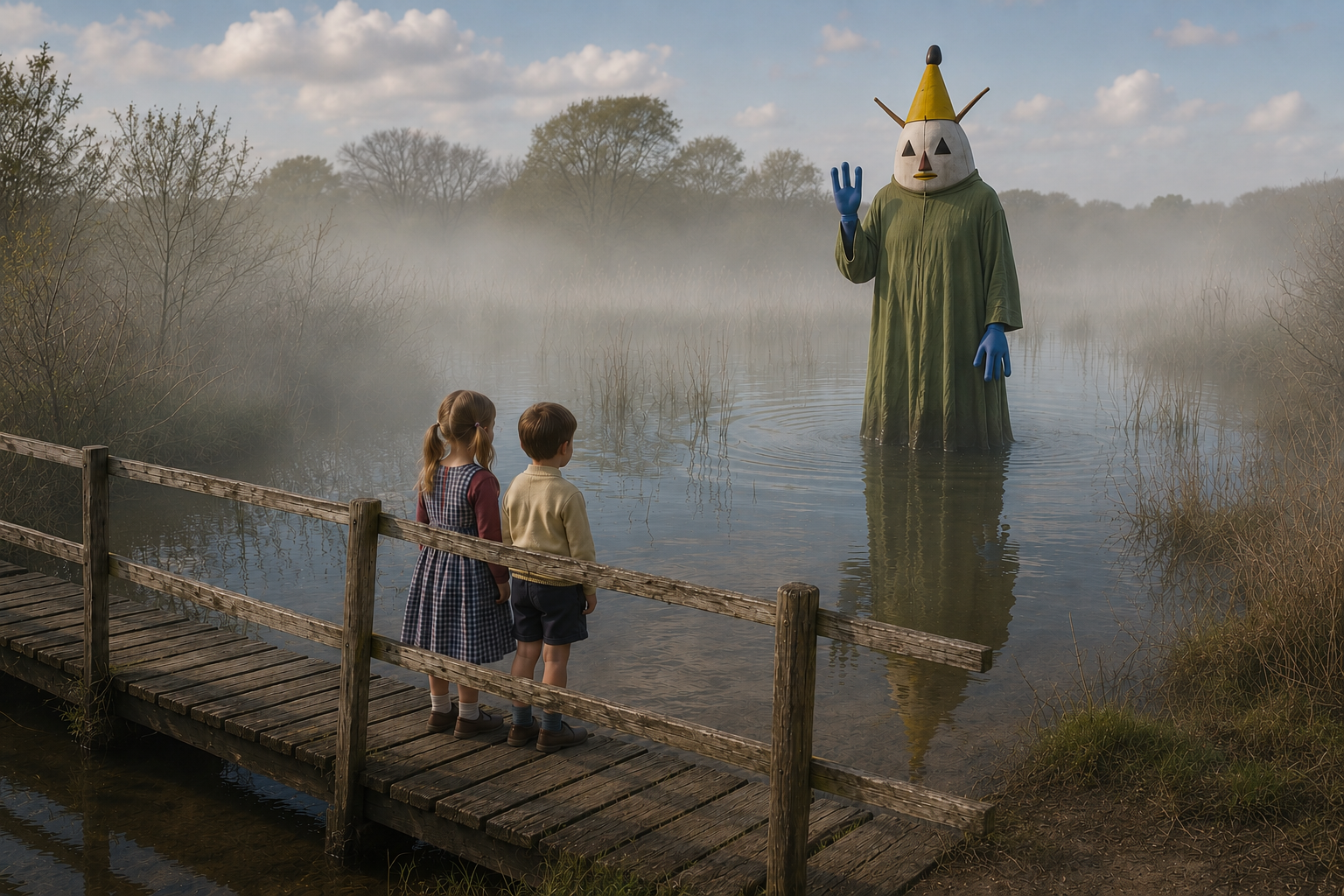
A large blue-gloved hand slowly emerged from beneath the bridge. It had three fingers and, rather than threatening the children, beckoned them closer. They watched as the figure beneath the bridge slowly stood up.
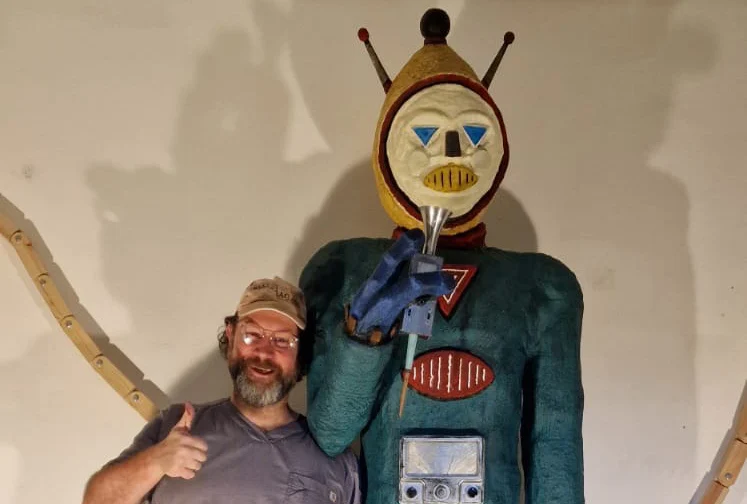
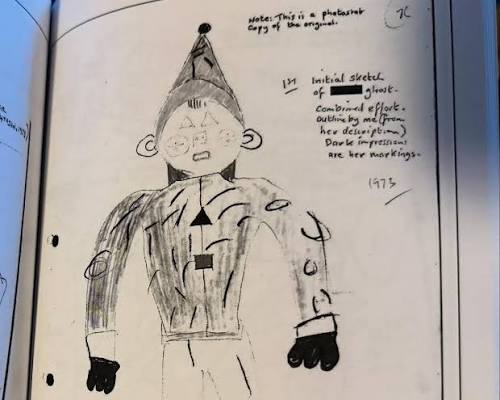
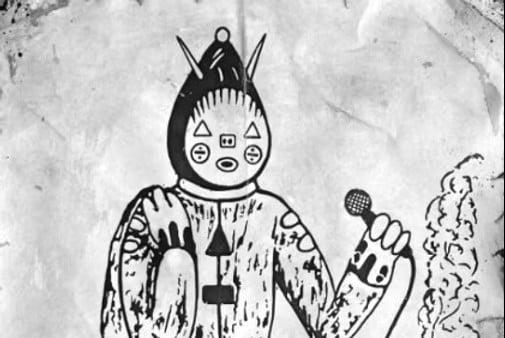
The figure was said to stand almost 7ft tall, with its head appearing to sit directly upon its shoulders. It had a chalk-white face, triangular eyes, a square nose and yellow lips beneath a pointed yellow hat topped by a black knob and flanked by what the children described as wooden antennae. A ragged green tunic hung loosely from its shoulders, while blue gloves ended in three fingers and its bare feet in three toes. Fay later said it moved with an awkward, almost mechanical gait.
The figure reached into its clothing, produced a notebook and pointed to words written across one of the pages.
“Hello… and I am all colours Sam.”
Asked whether he was a ghost, Sam replied: “Well, not really, but I am in an odd sort of way.” When the children asked his name, he explained that he did not really have one, but that people called him Sam. He answered their questions calmly, sometimes through a microphone-like device and sometimes by directing them back to the notebook.

Remarkably, neither child later claimed to have been frightened. Instead, they stayed with the strange figure, asking questions as though the extraordinary encounter had become, for a few moments at least, perfectly ordinary.
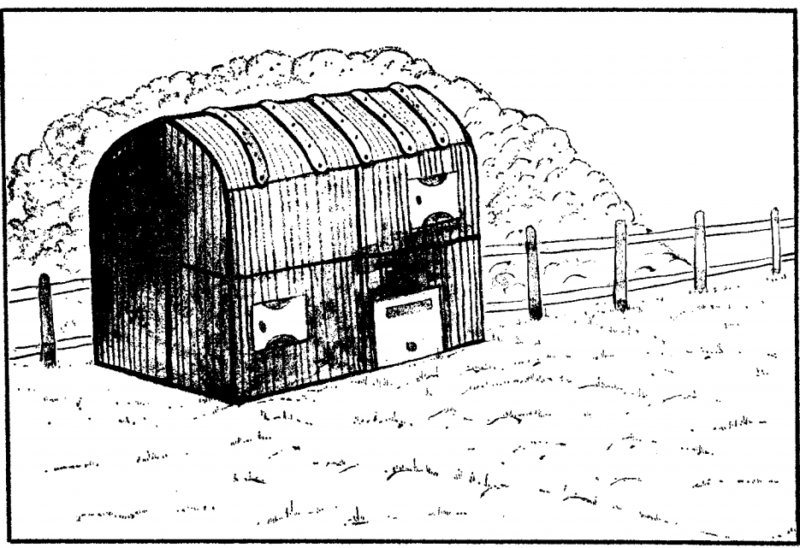
Sam then led the children to a small, windowless metallic hut concealed nearby. They stooped through a low entrance into an interior containing simple furniture, books and unusual electrical equipment.
About half an hour after first hearing the mysterious wailing sound, the children crossed back over the bridge and went home. Sam made no attempt to stop them or follow them.
Fay eventually told her father what had happened beside the marshes. Rather than dismissing the story, he carefully noted the children’s account and later passed it to Isle of Wight researcher Leonard G. Cramp, who forwarded it to the British UFO Research Association.
The encounter appeared in the January 1978 edition of the BUFORA Journal under the title Ghost or Spaceman ’73? It gradually found its way into books on unexplained mysteries, Fortean magazines, UFO journals and, later, documentaries and podcasts. Think Anomalous examined the original report in detail, the Cease to Exist podcast traced the witnesses and re-examined the evidence, and the BBC revisited the case through Uncanny.
The Sandown Clown is now regularly discussed alongside some of the world’s best-known unexplained humanoid encounters. The closest comparison is usually drawn with Voronezh.
In September 1989, children playing football in a Russian city park claimed a glowing metallic sphere descended nearby before a towering humanoid emerged. Like Sam, the figure was described as having almost no visible neck, moved stiffly rather than naturally and was associated with a metallic structure. Sam had three fingers and three toes; the Voronezh giant was said to have three eyes.
Both encounters centred on children, and in both cases the mysterious visitors appeared curious rather than openly hostile. The parallels have intrigued researchers for decades.
Proposed explanations for the Sandown Clown have ranged from an elaborate practical joke and mistaken childhood memories to folklore, extraterrestrial visitors and inter-dimensional beings. None has answered every question.
Modern investigators traced Fay in the hope that she might remember more about the extraordinary afternoon at Lake Common. Instead they discovered she had suffered a serious horse-riding accident at the age of 15.
The resulting brain injury had erased her childhood memories, leaving her unable to recall the encounter that fascinated researchers for more than half a century.