


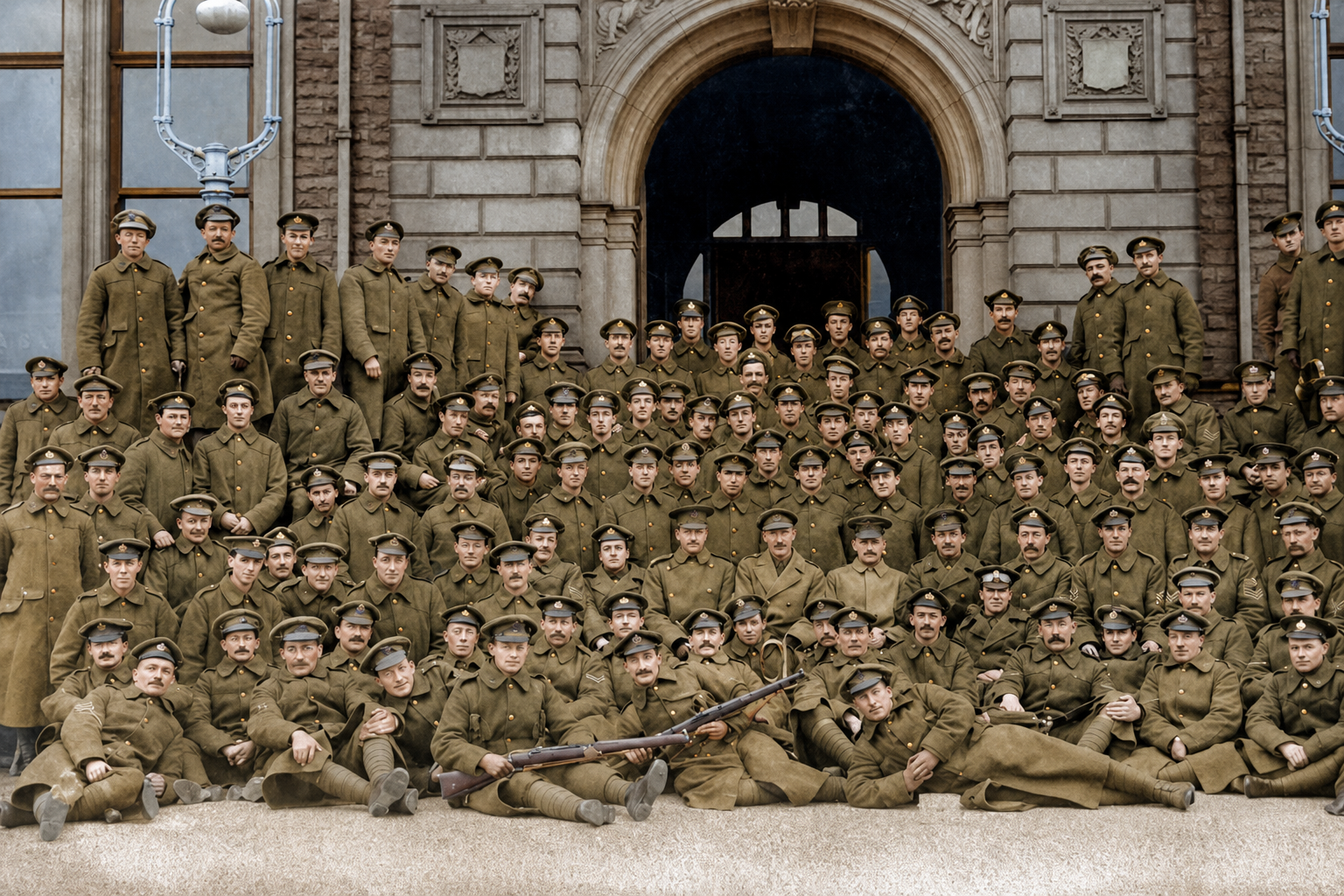






















Within days of landing at Gallipoli, the Isle of Wight Rifles had suffered more than 300 casualties.
The Gallipoli campaign was fought on a peninsula in what is now north-western Turkey. Allied commanders hoped the operation would break the deadlock of the Great War by forcing the Ottoman Empire out of the conflict. Among the battalions sent into the fighting were the 1/8th Hampshire Regiment, known as the Isle of Wight Rifles.
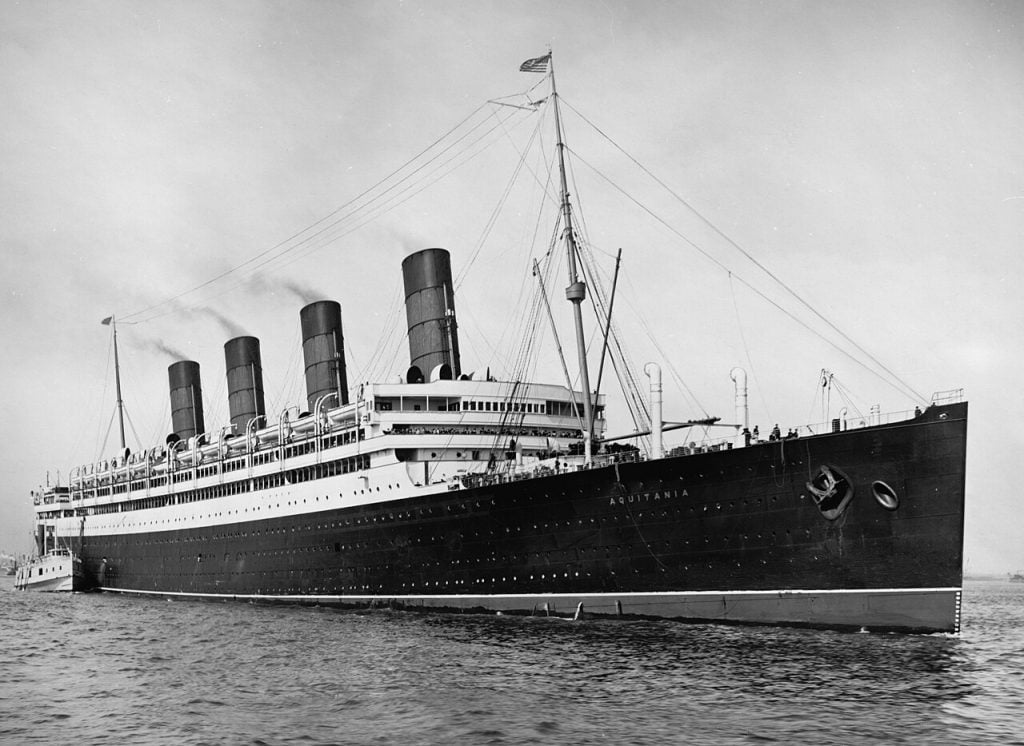
On the afternoon of 30th July 1915, almost 900 officers and men of the Isle of Wight Rifles assembled on Liverpool’s waterfront before boarding the RMS Aquitania. The liner, carrying more than 7,000 troops, sailed that evening for the eastern Mediterranean.


A severe gale forced the escorting destroyers to turn back during the first night, while the threat from German submarines sent Aquitania far out into the Atlantic before she eventually turned south. 6 days later, the battalion reached Mudros before transferring to smaller vessels for the final approach to Suvla Bay.
The Isle of Wight Rifles landed on 10th August. Before many had even stepped ashore, they passed around 2,500 wounded soldiers lying on the beaches awaiting evacuation. By the time they arrived, Turkish troops had occupied the commanding hills overlooking Suvla Bay. After 2 days in reserve, the battalion received orders to attack Anafarta Ridge.
At 16:45 on 12th August, the advance began. Rifle fire, machine guns and bursting shrapnel swept the exposed slopes as companies became separated and casualties mounted.
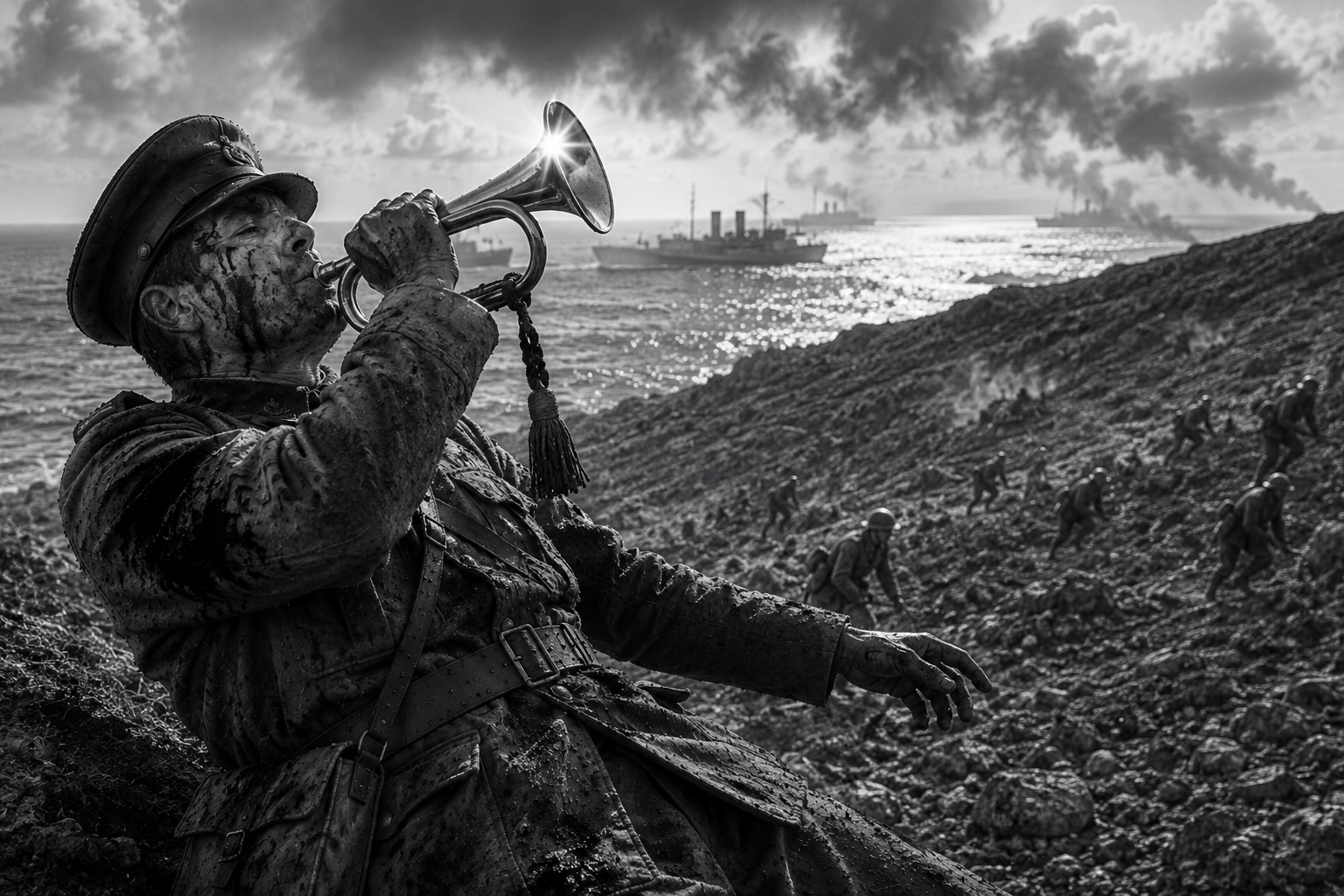
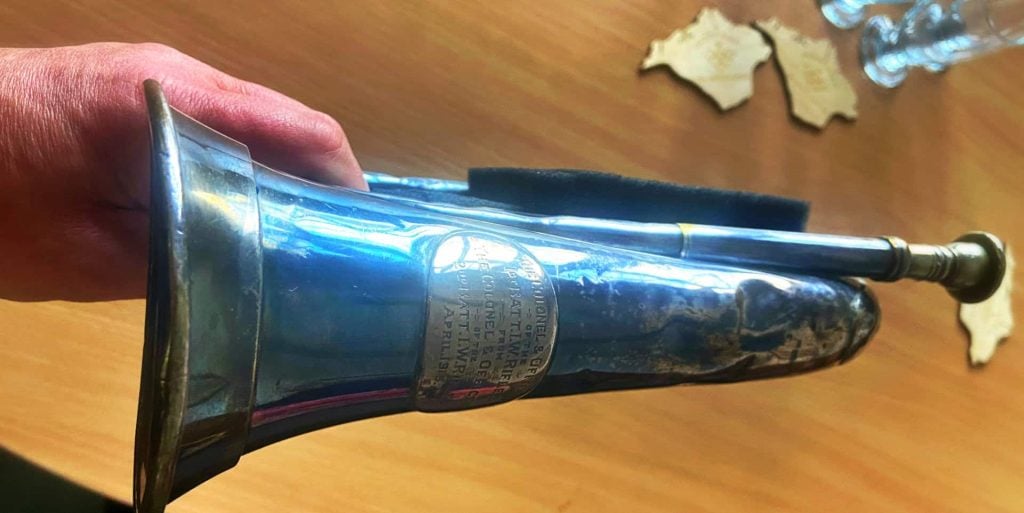
Before leaving the Isle of Wight, the officers and men of the 2nd Battalion had presented their comrades with a silver bugle, entrusted to Major Reginald Frank Peachey. As the battalion advanced, the polished instrument caught the afternoon sun. The flash immediately attracted Turkish snipers and Peachey was badly wounded. Invalided home, he later became an important source of information for anxious families desperate for news of loved ones still fighting.
Captain Clayton Ratsey, a member of Cowes’ famous Ratsey sailmaking family, is said to have remarked shortly before the advance: “My God, we’ll all be killed.” Before the campaign ended, both he and his brother, Captain Donald Ratsey, had lost their lives.

By nightfall, the scale of the disaster was becoming clear. In little more than 48 hours, the Isle of Wight Rifles had lost 8 officers and more than 300 other ranks killed, wounded or missing. Hardly a town or village on the Isle of Wight escaped untouched.
Among those who never returned were the 3 Urry brothers from Newport. Edward, William and Frederick were all killed during the advance on 12th August, one of the very few occasions during the First World War that 3 brothers died in the same action. Edward, a 35-year-old blacksmith, left behind his wife Florence and their 5 children. The family’s tragedy deepened further when Edward’s brother-in-law, Rifleman William Richardson, was also killed alongside them.
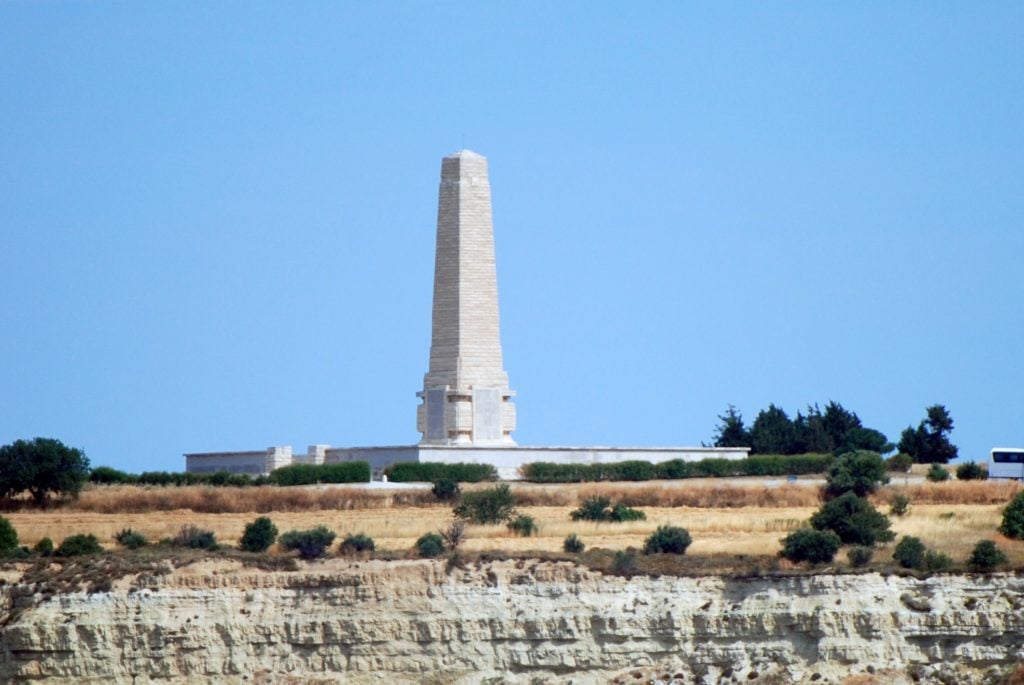
The battalion later occupied trenches around Hill 60, where the rocky ground made it almost impossible to bury the dead. Working parties spread lime across the battlefield under cover of darkness to reduce the stench from decomposing bodies.
Among those fighting back against Turkish snipers was Captain Charles Seely. Armed with a sporting rifle fitted with telescopic sights, presented by his father before the campaign, he patiently searched the hillsides for enemy marksmen, earning a reputation as one of the battalion’s finest shots.
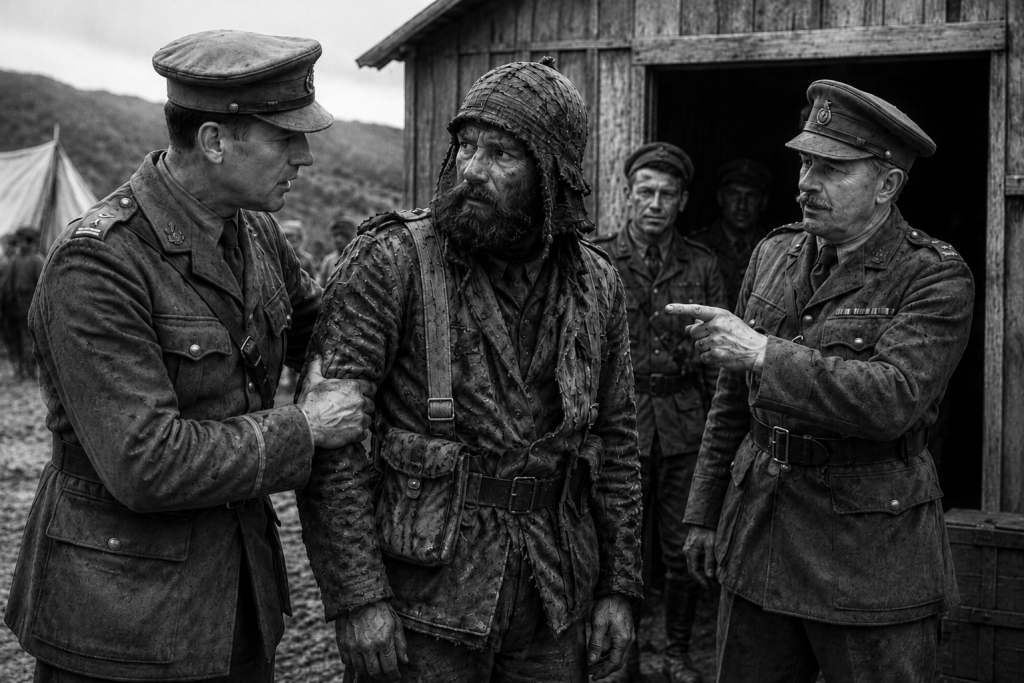
Even amid the misery, Gallipoli produced moments of grim humour. One newly arrived officer spotted a filthy, bearded soldier wearing a balaclava helmet and arrested him, believing he had captured a Turkish infiltrator. Only at battalion headquarters did he discover his prisoner was Sergeant Channing of the Isle of Wight Rifles, who had simply spent weeks in the front line.
 Another Island soldier, Rifleman Bill Weeks, survived through extraordinary good fortune. Separated from his comrades, he hid in thick scrub until darkness. During the night, a Turkish patrol led by a German officer chose exactly the same hiding place. The officer even rested his pack on Weeks’ feet before settling down to sleep. Weeks remained perfectly still until the patrol had fallen asleep, then quietly slipped away and eventually reached the British lines.
Heat, flies, polluted water and dysentery weakened almost every survivor before winter brought torrential rain, flooded trenches and freezing temperatures.
The Isle of Wight Rifles were due to be evacuated during the worst of the storms, but their transport was reassigned to Gurkha units that had suffered even more severely. When the battalion finally embarked from Anzac Cove on 3rd December, fewer than 200 of the original battalion remained. Most were weakened by dysentery, many were too exhausted to carry their own rifles and equipment.
At Mudros, the survivors found warm clothing collected by the Isle of Wight Gift Fund together with food parcels sent by families back home. After a fortnight’s recovery, they sailed on to Egypt, arriving shortly before Christmas, where many enjoyed their first real reminder of home since leaving the Island 4 months earlier.