












































For centuries, Bembridge stood apart from the rest of the Isle of Wight, protected by the sea and known simply as Bembridge Isle.
Long before the harbour, railway and Victorian villas, Bembridge was an island. At high tide, Brading Haven swept inland from the Solent while another arm of the sea reached in from Sandown Bay, separating Bembridge and neighbouring Yaverland from the rest of the Island. The tidal creeks, mudflats and salt marshes shaped life there for centuries.
Its natural defences attracted early settlers. Place-name evidence suggests Bembridge Isle was settled during the late Saxon period, and by the time of Domesday Book in 1086, five settlements occupied the island, including Wolverton and Yaverland. Together, they probably supported no more than about 200 people.


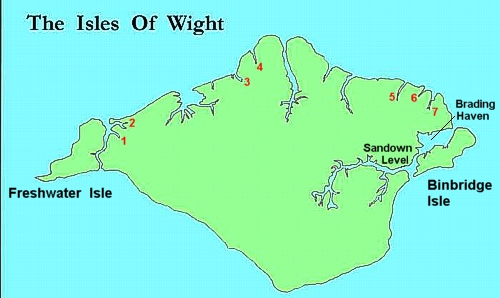
The village takes its name from a bridge across the haven. Under Edward I, Sir William Russell, Lord of Yaverland and Warden of the Isle of Wight, built a causeway across the narrowest part of Brading Haven at Yarbridge. Replacing the ferry, it provided an all-tide route to Yaverland Manor. Medieval records soon began referring to the area as Binbridge or Bembridge Isle.
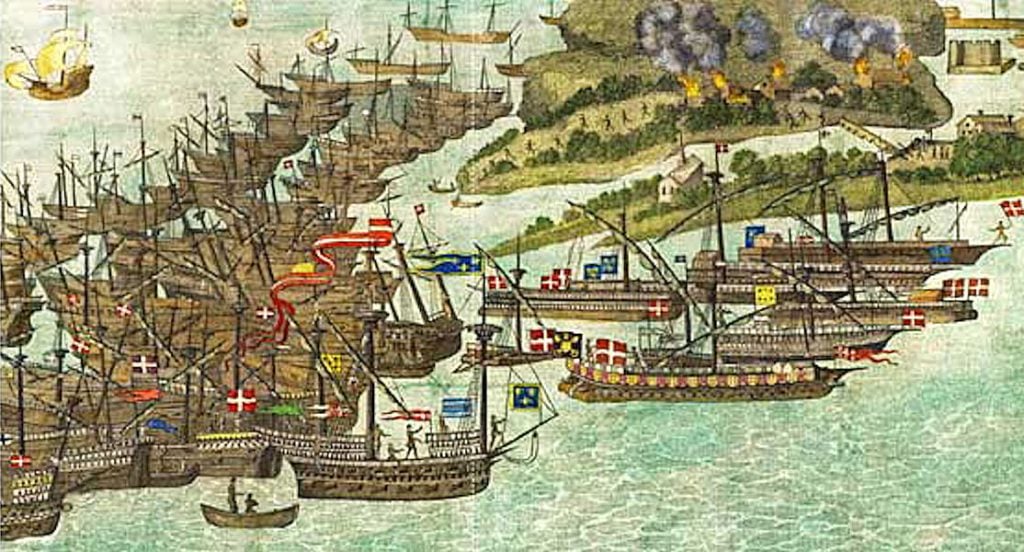
The causeway played an important part in the defence of the Island. During the French invasion of 1545, English forces fought a running battle with French troops across Bembridge Down before retreating over the bridge at Yarbridge. The bridge was cut behind them to slow the French advance, while French soldiers burnt property in Bembridge and Yaverland before withdrawing to their ships.
Little remains of the legendary lost village of Wolverton. It stood on low ground west of today’s Bembridge Airport with its own manor house, watermill and chapel dedicated to St Urian. Centurions Copse, widely believed to preserve a corruption of St Urian’s name, is one of the few clues that the medieval village once stood close to what is now Bembridge Airport.
Bembridge also produced one of the Island’s most enduring legends. Molly Downer, who lived at Witches Hatch in Hillway, was remembered as the Isle of Wight’s ‘last witch’. Some villagers sought her herbal remedies and charms, while others feared the curses she was said to cast. She belonged to the old Bembridge before visitors, hotels and railways changed it forever.

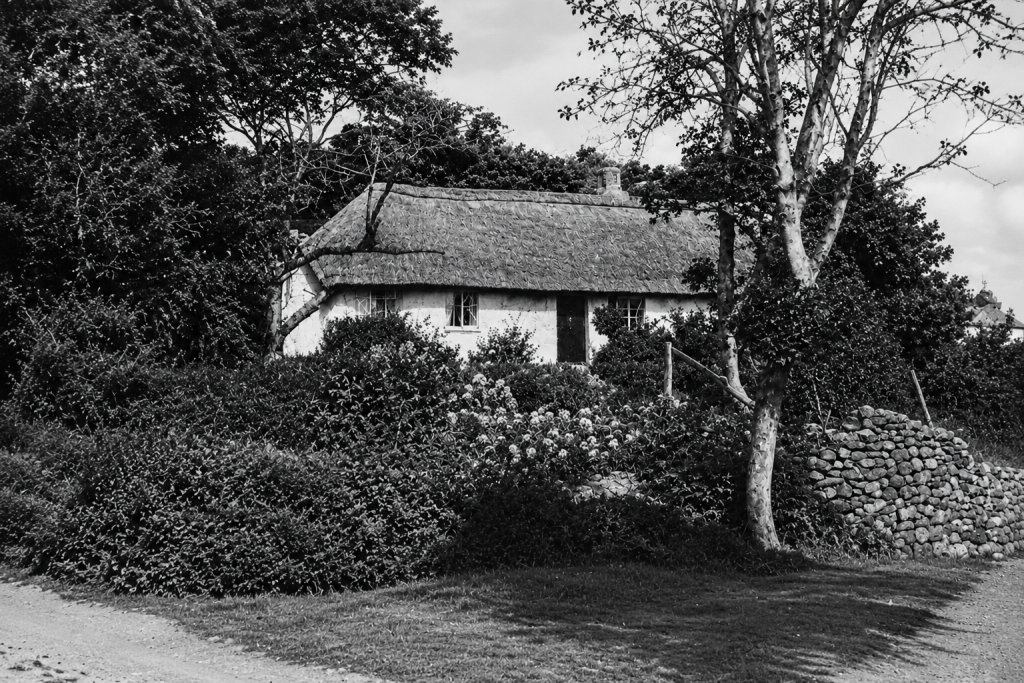
For centuries, most families relied on farming and fishing, often combining both to make a living. Most of what they needed was produced at home, while other goods came from Brading. Its small population supported only a handful of local trades.
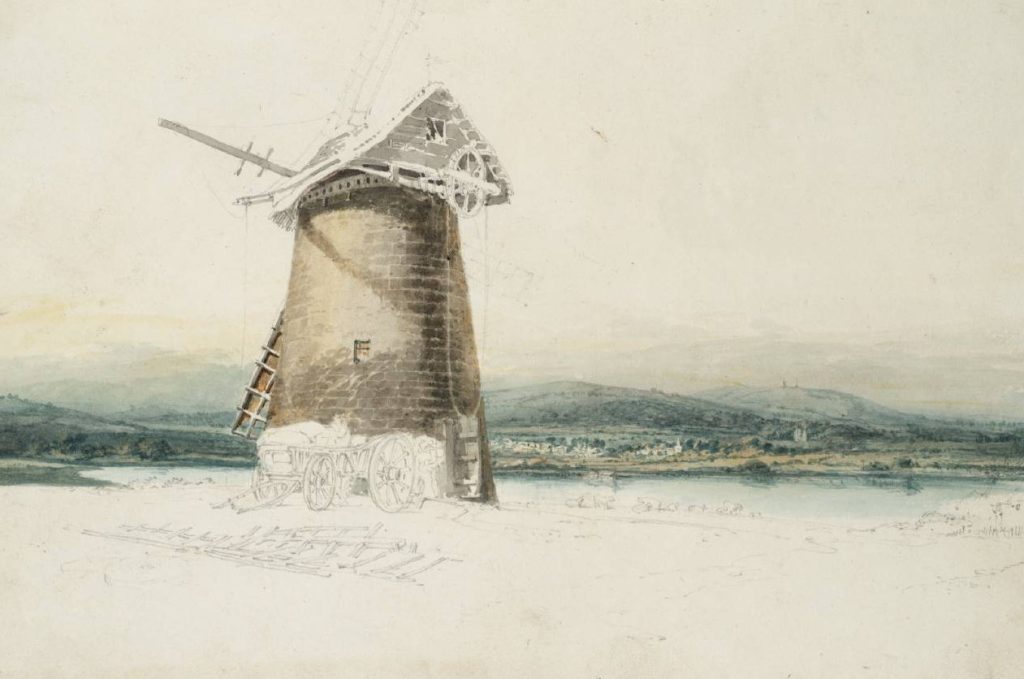
Looking down over this rural landscape was Bembridge Windmill. Built around 1700, it is the Isle of Wight’s only surviving windmill and the last of three mills that once stood on Bembridge Isle, the others serving Wolverton and Yaverland. It became a landmark for sailors approaching the eastern Solent and attracted one of Britain’s greatest painters, J. M. W. Turner, who sketched it during the 1790s. The railway that later transformed Bembridge also hastened the windmill’s decline by bringing cheaper imported flour to the village.
That transformation began in the late 19th century with one of the Isle of Wight’s most ambitious engineering projects. Earlier attempts to reclaim Brading Haven had failed, but Victorian engineers finally succeeded by constructing the great embankment that excluded the tide, created hundreds of acres of farmland and permanently ended Bembridge’s existence as an island.
The driving force was Liberal MP and financier Jabez Balfour. Through his Brading Harbour Improvement and Railway Company, he financed the reclamation of Brading Haven, improvements to the harbour and the extension of the railway to create an exclusive seaside resort.
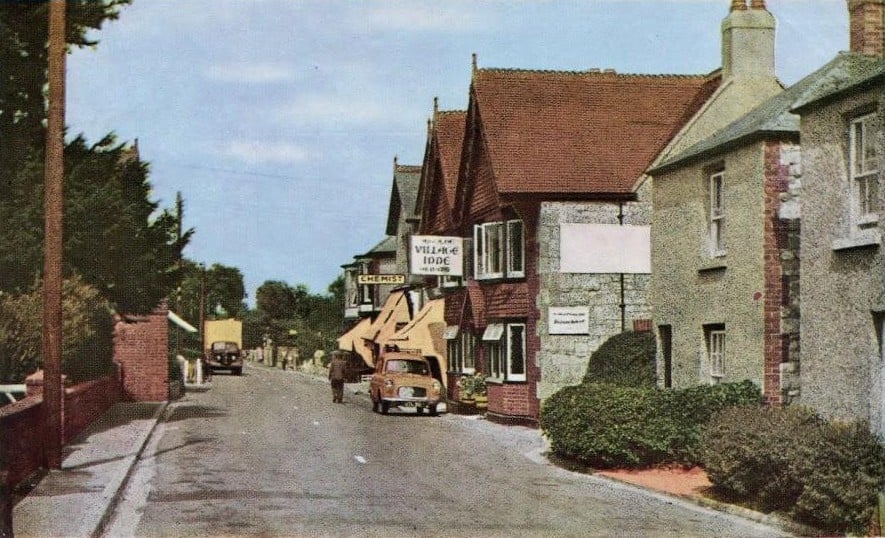
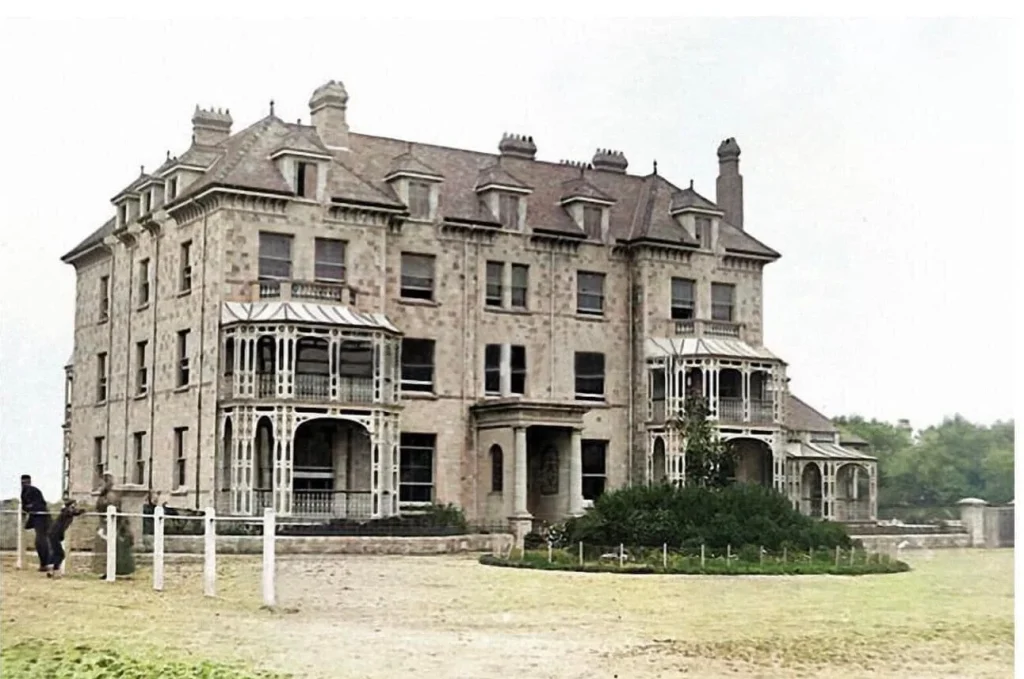
The railway reached Bembridge in 1882. Opposite the station stood the majestic Spithead Hotel, built as the centrepiece of Jabez’s vision. Visitors could step directly from the train into the hotel before enjoying sailing and the sea air. After receiving royal patronage in 1883, it became the Royal Spithead Hotel and helped establish Bembridge as one of the Island’s most fashionable resorts. New houses, shops and businesses soon appeared to serve residents and visitors.
Jabez’s own fortunes ended very differently. His financial empire collapsed in one of Victorian Britain’s greatest fraud scandals. After fleeing abroad, he was extradited, convicted and imprisoned, serving part of his sentence at Parkhurst. Yet the harbour, embankment and railway reshaped Bembridge forever.
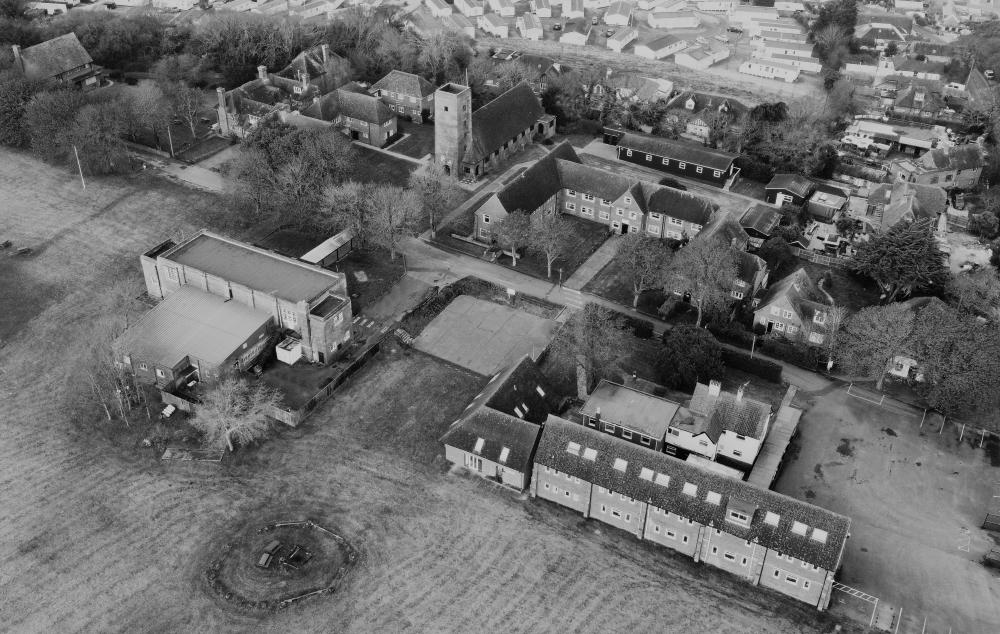
John Howard Whitehouse founded Bembridge School in 1919. Inspired by John Ruskin’s ideals, it became nationally renowned, housed one of the world’s finest collections of Ruskin’s work and counted future broadcaster Robin Day among its pupils.
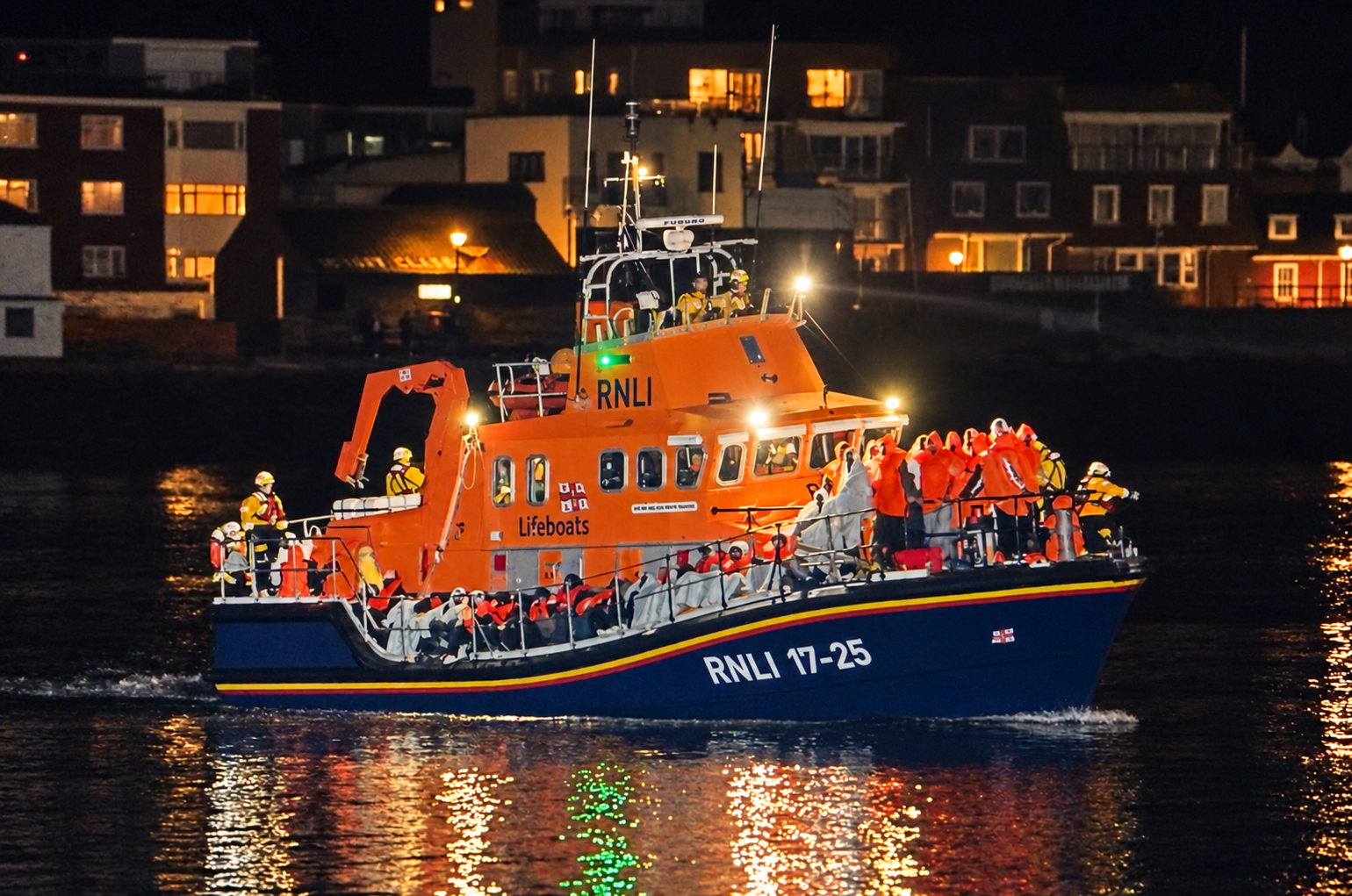
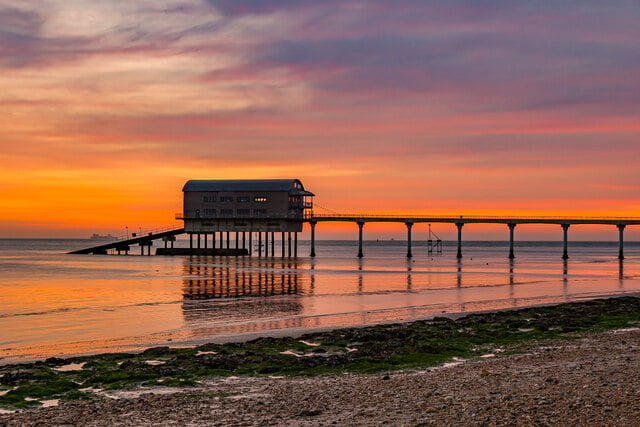
The sea has never lost its importance to Bembridge. Offshore, Bembridge Ledge remains one of the Isle of Wight’s most dangerous stretches of coastline. For generations, the village’s harbour pilots, coastguards and RNLI crews have guided vessels through these hazardous waters and responded when disaster struck. Among its greatest rescues was the troopship Empress Queen in 1916, when 110 men were brought safely ashore after the vessel grounded on Bembridge Ledge. It was one of countless rescues carried out by Bembridge lifeboat crews.
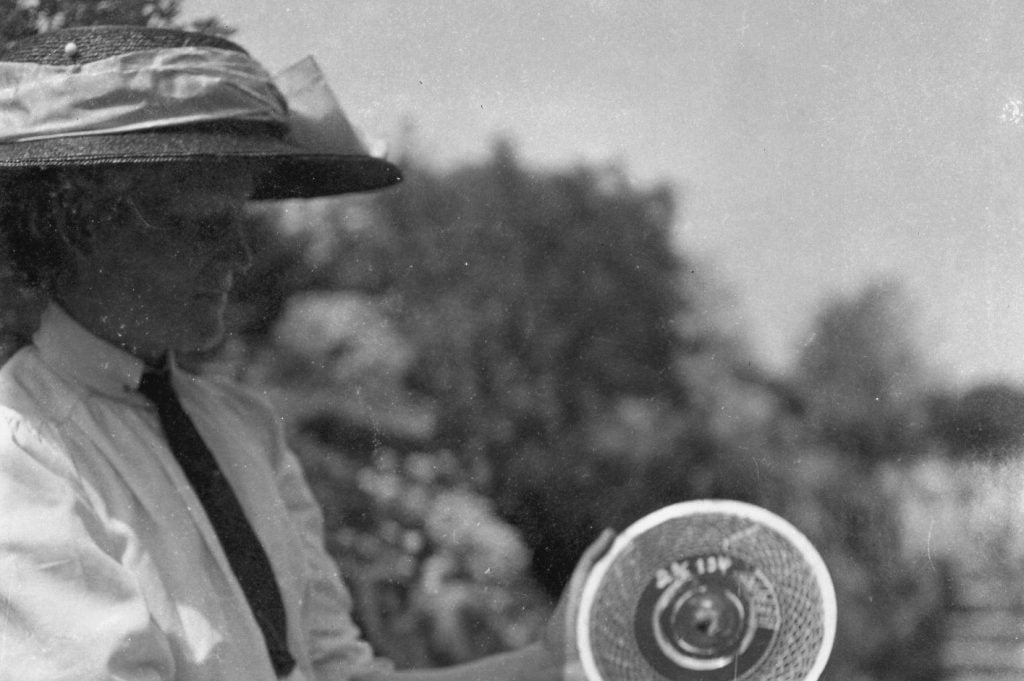
Bembridge also developed a reputation for engineering innovation. At Steynewood, pioneering naval architect Blanche Thornycroft carried out experiments on model boats that helped improve the design of high-speed naval craft and lifeboats, work that influenced British naval engineering for decades.
Bembridge’s tradition of innovation continued after the airport opened in 1920. During the 1960s it became home to Britten-Norman, where the Islander aircraft was designed and built. More than 1,300 have since been produced, serving airlines, military operators and emergency services across the world.