






































Roads, hotels, houses and even the landmark that gave Blackgang its name have all disappeared into the sea.
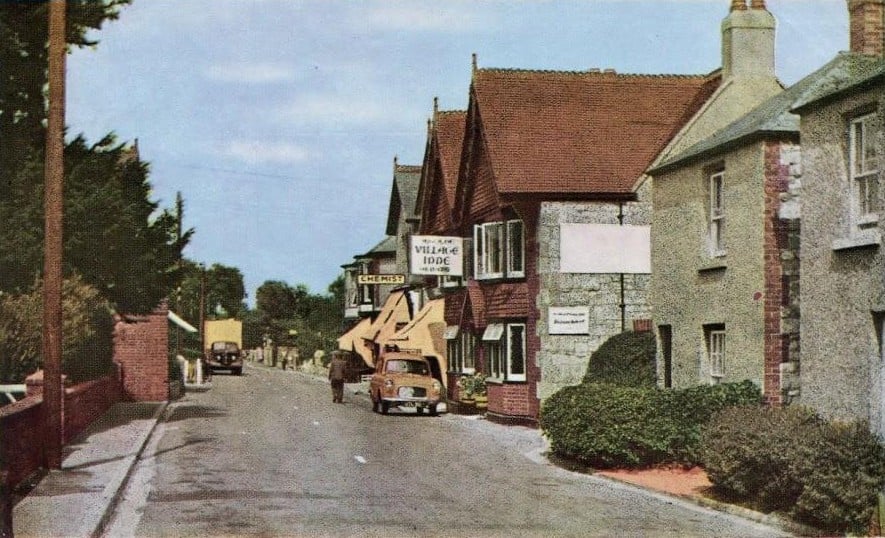
Few places on the Isle of Wight have lived such an extraordinary existence. Blackgang was never a large village. Instead, it grew from a lonely corner of Chale parish into a thriving Victorian resort before landslips gradually claimed roads, houses, hotels and much of the settlement itself.
Its name almost certainly derives from the Old English blæc and gang, meaning “dark path”, a reference to the deep chine that once cut through the cliffs to the sea.


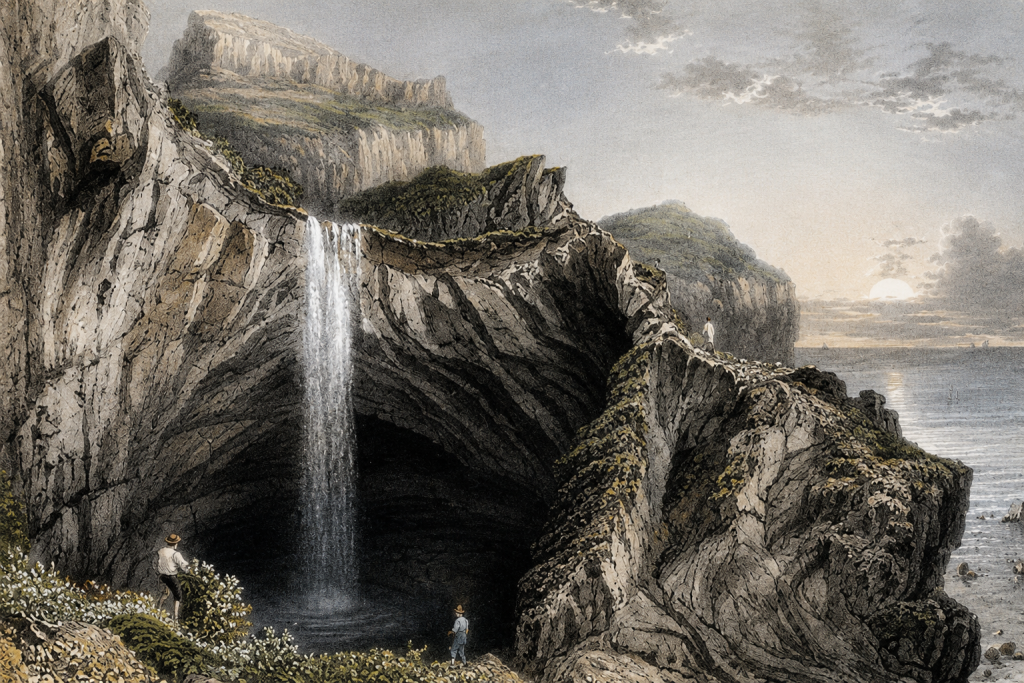
Long before tourists arrived, Blackgang had a more mysterious reputation. Local tradition claimed smugglers hid barrels of brandy, tobacco and other contraband in a vast sea cave beneath the cliffs. Nearby, a stretch of shoreline known as Money Hole was said to yield Spanish pieces of eight washed from the sea, fuelling tales of wreckers, hidden treasure and forgotten shipwrecks.
Behind Blackgang’s spectacular scenery lay one of the Isle of Wight’s most treacherous coastlines. Before St Catherine’s Lighthouse guided shipping around the Island’s southern tip, vessels frequently came to grief on the rocky shoreline. The most infamous disaster occurred in October 1836, when the emigrant ship ‘Clarendon’ was driven onto the rocks beneath Blackgang during a violent storm.
As terrified passengers clung to the wreck, former Royal Navy seaman John Wheeler raced down the steep path to the shore. Grabbing a coil of rope from a fisherman’s hut, he tied it around his waist and plunged into the breakers. 3 men leapt from the stricken ship. Wheeler dragged 2 ashore before a huge wave swept him and the third away. Both were hauled to safety by people on the beach. By a remarkable twist of fate, one of the survivors was John Thompson, the very man who had saved Wheeler from drowning 4 years earlier.
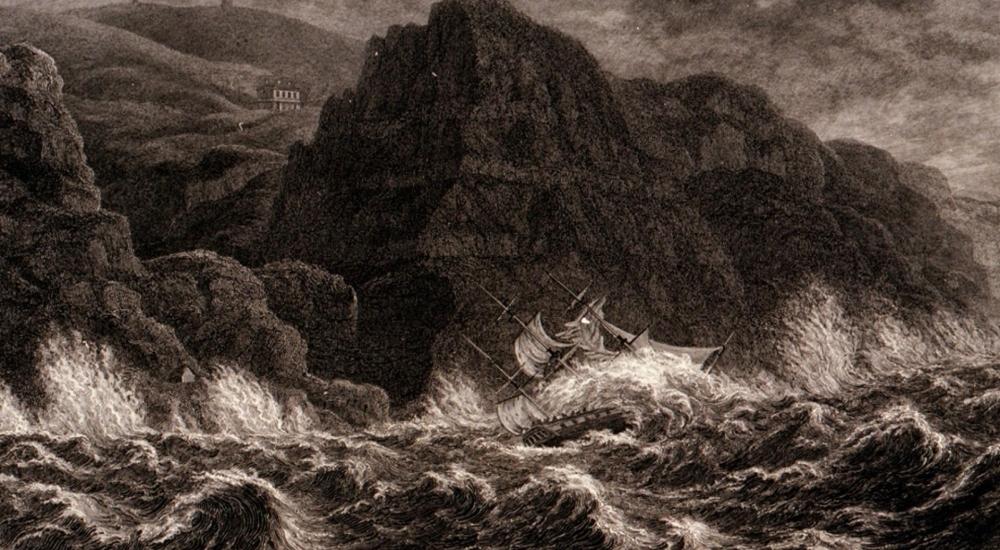
Some 25 passengers died in the disaster. Among them were the 3 Shore sisters, whose bodies were found together on the beach, prompting the moving observation that in death they were ‘not divided’. The wreck shocked the nation, strengthened calls for a lighthouse at St Catherine’s Point and introduced many people to Blackgang’s dramatic coastline.
The Clarendon tragedy brought Blackgang to national attention just as a new chapter in its history was beginning. Above the cliffs, the recently opened Blackgang Hotel had just become the centre of a tiny but fashionable resort, welcoming visitors drawn by the spectacular scenery and nearby Sandrock Spring. The mineral-rich waters were believed to cure ailments ranging from digestive complaints to nervous disorders, attracting health seekers from across the country.

Among those captivated by Blackgang was Alexander Dabell. Visiting the hotel in 1839, he recognised that the spectacular ravine below could become an attraction in its own right. Just 3 years later he leased the chine, laid out winding paths and viewing platforms, and opened Blackgang Chine in 1843, today recognised as Britain’s oldest amusement park.
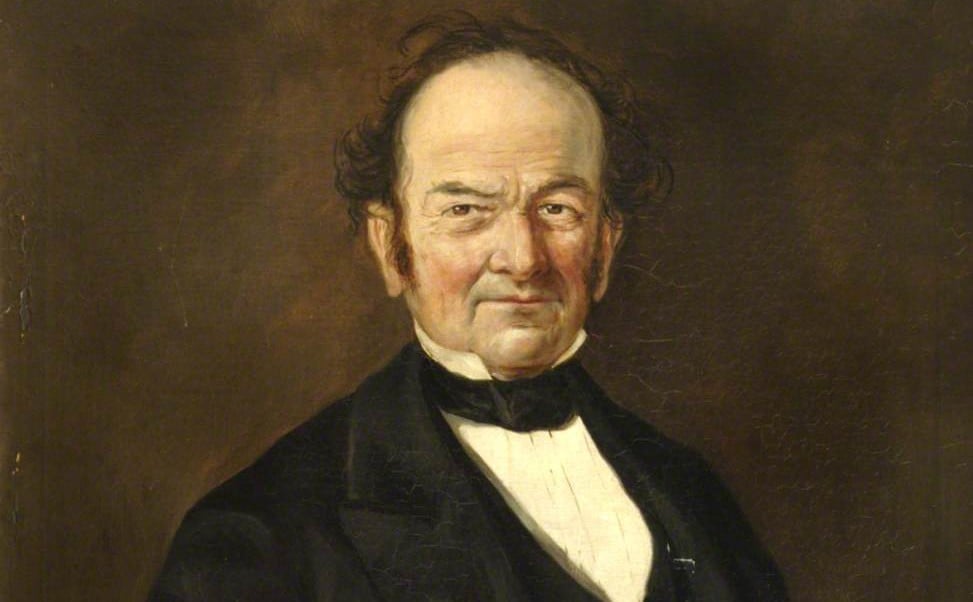
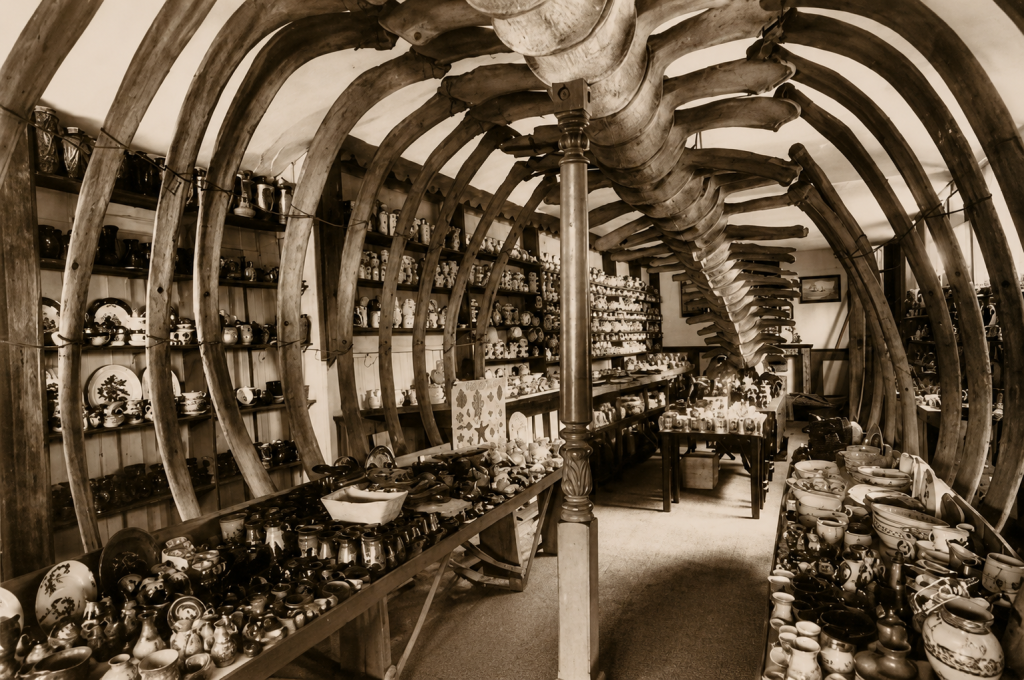
Its first attraction was unlike anything visitors had seen before. After a whale was washed ashore near the Needles in 1842, Dabell bought the carcass, sold the blubber and suspended the cleaned skeleton above the chine. The enormous bones became an instant sensation. Queen Victoria visited Blackgang Chine in 1853 during one of her stays at Osborne House, helping establish its reputation as one of the Isle of Wight’s must-see attractions.
In 1920, Queen Mary’s hat was reportedly knocked off by the whale’s jawbone, leading to part of the skeleton being trimmed.
Within a few decades, Blackgang had been transformed. Hotels, villas, boarding houses and pleasure gardens spread across the clifftop, welcoming wealthy Victorians.
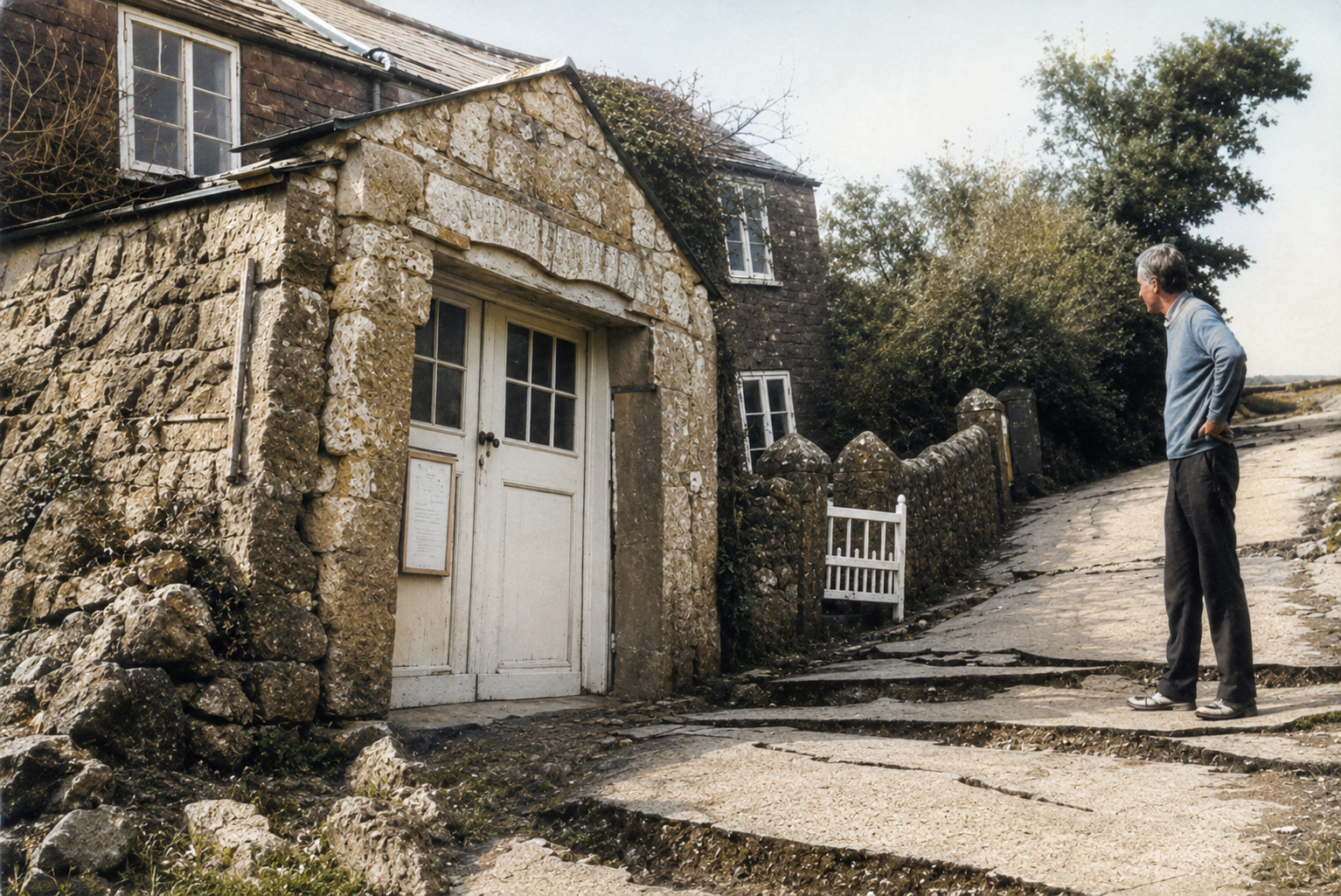
The coast once associated with smugglers, shipwrecks and hidden treasure was becoming a respectable Victorian resort. In 1873 Charles Reade and his family began holding informal religious meetings in their home, leading to the construction of a Mission Hall and later a larger corrugated-iron mission church. The original hall later found an unexpected second life as a tearoom at Blackgang Chine before eventually disappearing into the sea.
Among those born at Blackgang was future actress Dame Sheila Hancock, born there in 1933. Her birthplace later became Blackgang Chine’s famous Hall of Mirrors, giving one of the village’s houses an unexpected second life entertaining generations of visitors.

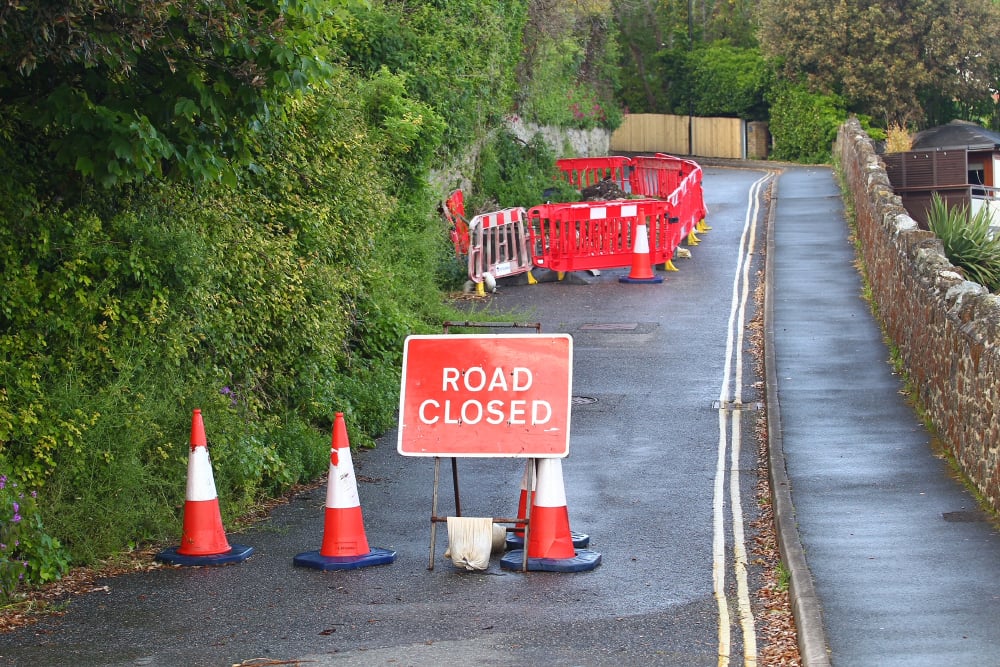
One of the most dramatic landslips came in 1928, when a huge collapse severed the old Undercliff Road between Blackgang and Niton. Rather than repairing it, engineers admitted defeat. Today, sections of the old road simply end at the edge of the landslip.
The same relentless process gradually destroyed the original chine itself. The ravine that had given Blackgang both its name and fame was transformed by repeated landslips until little remained. The great smugglers’ cave also disappeared, while hotels, houses and gardens were steadily abandoned as the cliff edge crept inland.
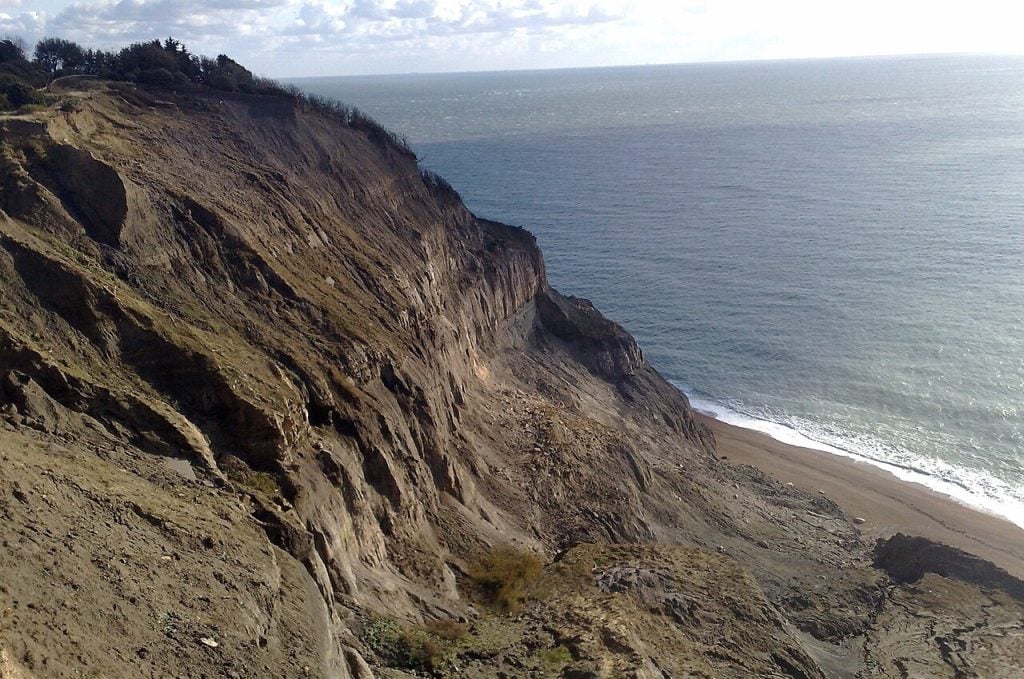
The Dabell family refused to surrender. Whenever the cliffs advanced, Blackgang Chine retreated. Victorian gardens gave way to new attractions and each generation rebuilt a little farther from the edge. The attraction survived because it could move. The village around it could not.
Blackgang continued to reinvent itself. During the 1960s and 1970s, part of the shrinking settlement became home to a small naturist holiday camp.
In the late 1970s, future Beat frontman Dave Wakeling and guitarist Andy Cox lived in a house overlooking the cliffs, spending evenings writing songs beside an open fire. Several of The Beat’s future hits were written there, while Wakeling later recalled that the lyric about the ‘gold on the hill’ in End of the Party was inspired by the gorse glowing across the Blackgang landscape.

Nature struck again in January 1994 when another major landslip destroyed part of Blackgang Chine and swept away more of the coastline. Attractions were rebuilt farther inland, but other buildings were left behind.
Among the last reminders of old Blackgang was Merlin’s Bistro, later an Indian restaurant, standing beside a road leading nowhere.
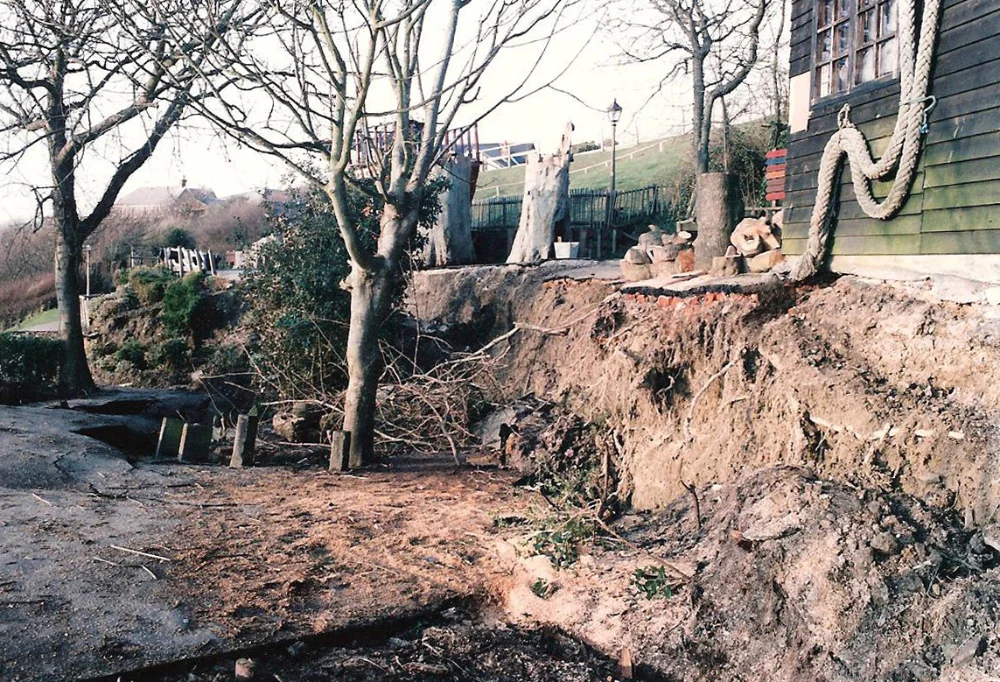
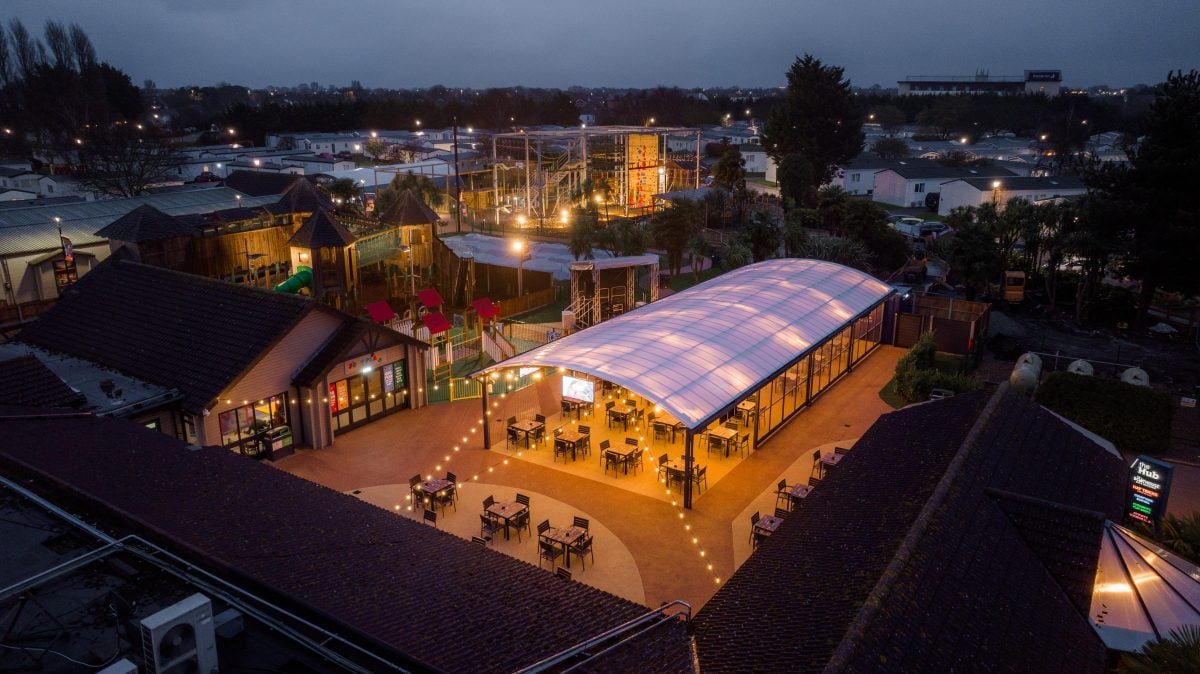
Today, thousands still visit Blackgang Chine, Britain’s oldest amusement park, but little remains of the Victorian resort that once surrounded it.
The road still ends abruptly, the smugglers’ cave has vanished and even the chine that gave Blackgang its name has almost disappeared beneath the moving cliffs.