
















































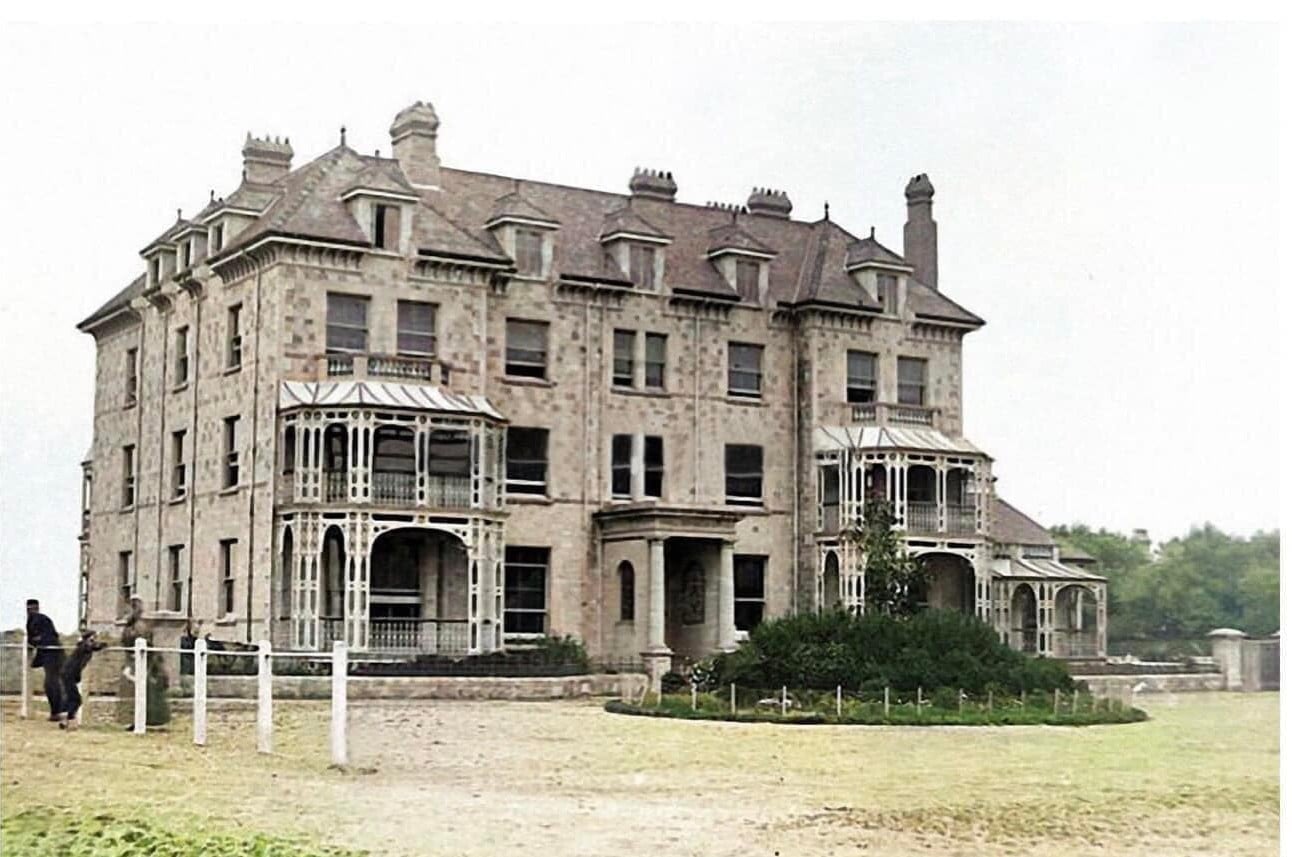

Built for the age of steamers, railways and royal patronage, Bembridge’s Royal Spithead Hotel once stood among the Isle of Wight’s smartest seaside destinations.
The Royal Spithead Hotel opened on 19th July 1882 amid scenes reflecting the extraordinary ambition behind the project.
Guests travelled from London Bridge aboard a specially arranged train to Portsmouth before crossing the Solent on a chartered steamer direct to Bembridge Harbour. After touring the new building, more than 100 visitors attended a champagne luncheon before the steamer departed on the high tide to cross the harbour entrance safely. For Victorian visitors arriving from London, the journey itself formed part of the luxury experience.


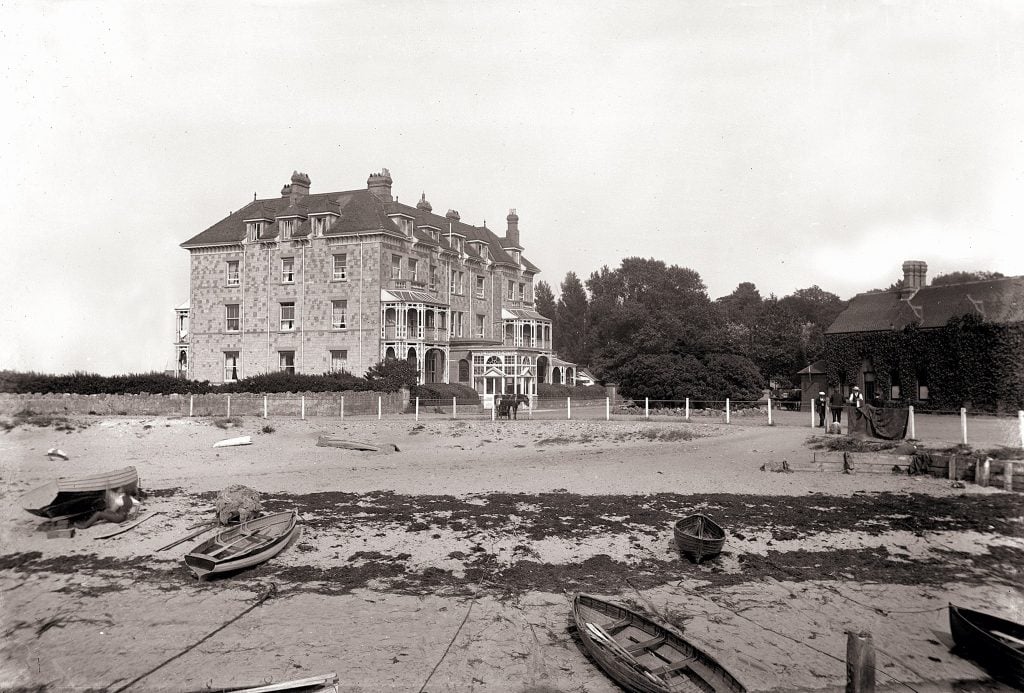
The hotel stood at the centre of a huge Victorian transport and tourism scheme that transformed Bembridge during the late 19th century.
That same year, the railway reached Bembridge for the first time, with the station positioned directly opposite the hotel. Visitors could arrive by train or steamer and be almost immediately inside the building. Contemporary accounts claimed passengers could practically step from the station platform into the saloon bar.
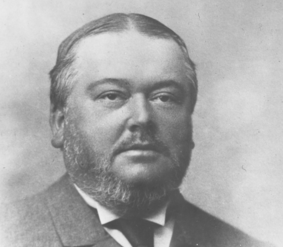
Behind the ambitious scheme stood Jabez Balfour, the flamboyant Victorian financier and MP whose Brading Harbour Improvement and Railway Company financed the harbour works, railway and hotel development. Balfour was later disgraced in one of Victorian Britain’s biggest financial scandals following the collapse of his Liberator Building Society empire.
The grand new hotel was overseen by Ventnor engineer and architect Theodore Ridley Saunders, while construction was carried out by local builders Ingram & Son. The interiors were furnished by the prestigious London company Maple & Sons of Tottenham Court Road, and no expense was spared in fitting out more than 30 rooms to a very high standard.

Beneath the grandeur, however, lay a serious flaw.
Writing in Bembridge Past and Present in 1911, Ernest Du Boulay described the site before construction as “a shallow muddy backwater, always full of decaying seaweed”.
To create foundations for the building, workers first constructed what Du Boulay called an “enormous concrete box or tank” before building above it. Ironically, the unstable reclaimed ground that allowed the hotel to be built would continue causing problems for the next century. Flooding remained a persistent issue throughout the hotel’s existence, with the basement regularly filling with water and occasionally needing to be pumped out by Bembridge fire brigade.
Despite those issues, the Royal Spithead flourished.
Wide verandas and sea-facing lounges overlooked the Solent towards Portsmouth and the busy shipping lanes beyond. The “Spithead” name itself linked the hotel with the famous stretch of water associated with Royal Navy reviews and royal ceremony.
Success came quickly. In 1883, only a year after opening, royal patronage was granted, allowing it to become the Royal Spithead Hotel.
Bembridge itself developed a very different atmosphere from resorts such as Ryde or Sandown. Rather than mass tourism, it became known for sailing, golf and quieter upper-middle-class holidays.
Visitors staying at the hotel helped establish the Royal Isle of Wight Golf Club on the sand dunes across the harbour, reinforcing Bembridge’s reputation as an exclusive marine resort. Bembridge Sailing Club also became closely tied to the village’s growing identity.
During the late Victorian and Edwardian years, the Royal Spithead was regarded as one of the Island’s smartest destinations. Sea-facing terraces, dining rooms and lounges formed the centre of hotel life, while drinks overlooking the Solent became part of the attraction.
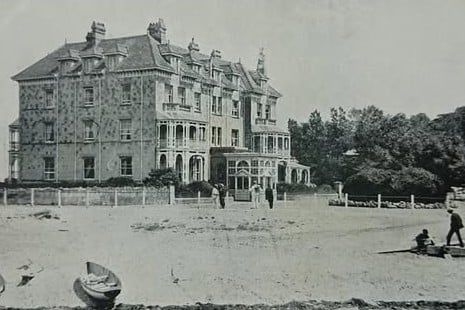
The building also played a role during wartime. During the First World War, RAF personnel were housed there, reflecting the strategic importance of the Solent coastline.
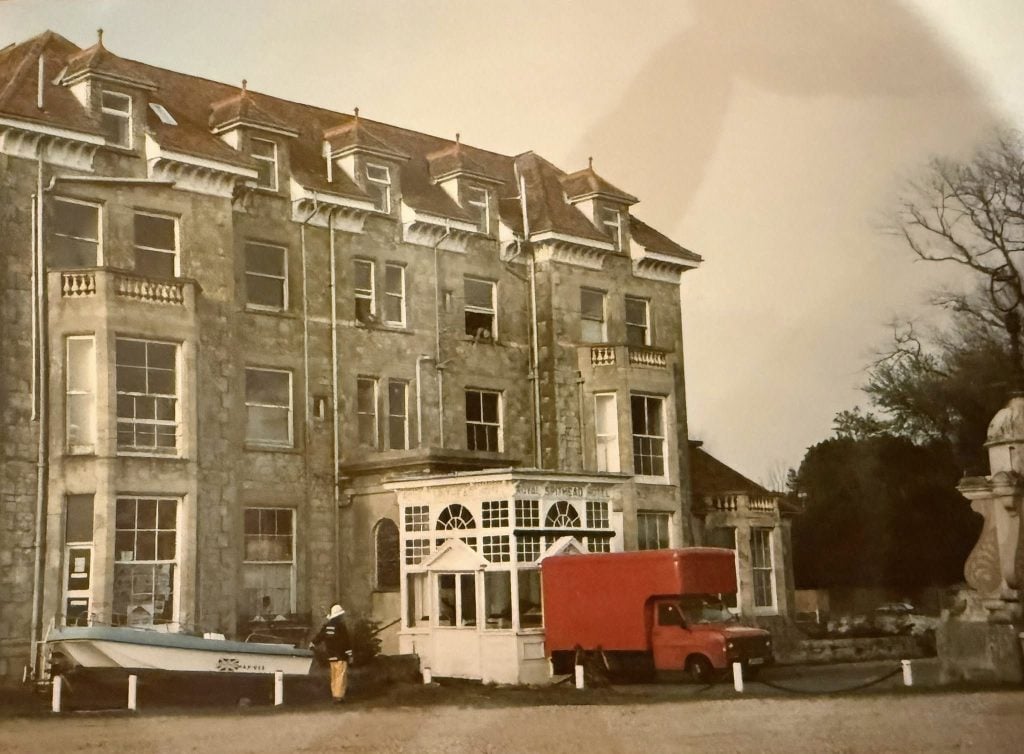
By the later 20th century, however, the economics of large seaside hotels were becoming increasingly difficult. In 1976, the Royal Spithead was sold for use as a private school dormitory linked to Greylands College.
Its condition deteriorated badly during the 1970s and 80s. When Greylands College closed in 1986, plans were announced to convert the building into flats.
Instead, demolition was chosen.
The decision sparked fierce local opposition. In June 1989, protesters staged an 11-hour vigil outside the building carrying placards reading “The Spithead Should Not Die”. Campaigners unsuccessfully attempted to secure listed status, fearing Bembridge was losing one of its best-known landmarks.
Despite the protests, demolition crews moved in later that year, ending more than a century of hotel history overlooking the Solent.
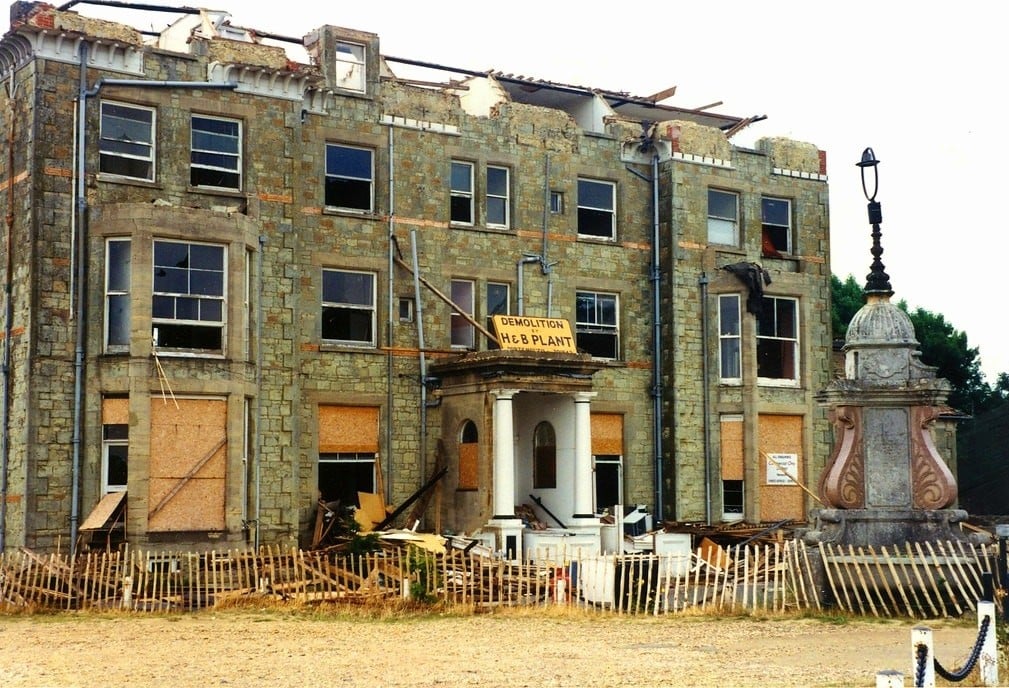
Today, little remains of the Royal Spithead beyond photographs, postcards and memories. The railway station opposite has long vanished, the line it once served has disappeared, and the grand Victorian hotel that welcomed visitors arriving by train and steamer survives only in local recollection.
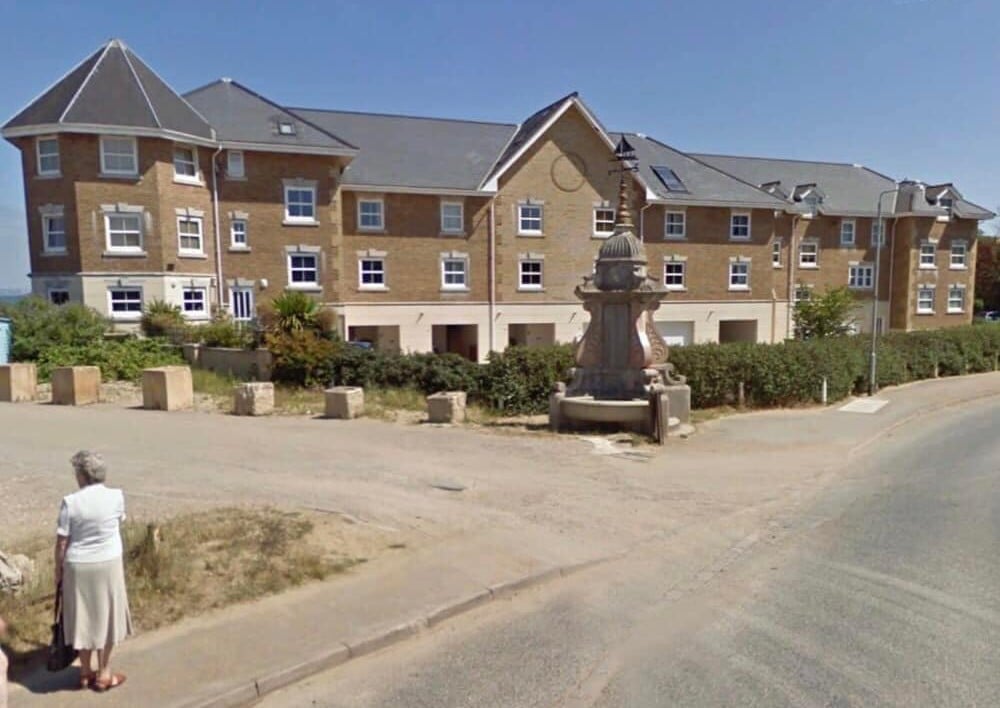
Do you remember visiting the Royal Spithead, or the campaign to save it before demolition in 1989?












Demolished before it was torched. Very forward thinking, for back in the day.
People were decent thosedays.
Such a shame they let this great place go
just like the old RNH in Ventnor.
Better to refurb than demolish.
Small correction. RAF personell would not have been there during WW1 because the RAF was only founded at the end of the war.
They would have been Royal Flying Corps (RFC) or Royal Naval Air Service (RNAS)