









































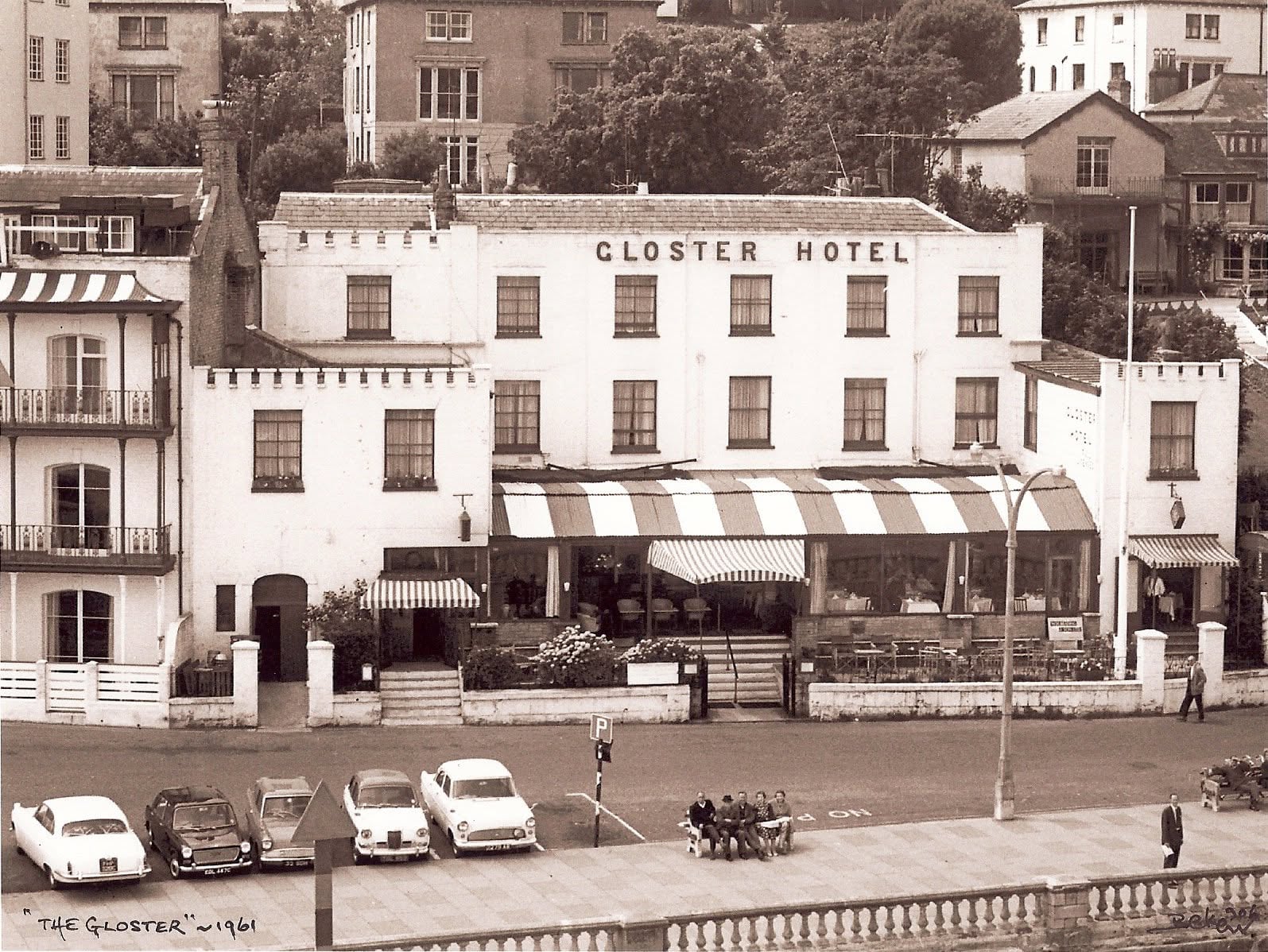

For more than 150 years, the Gloster stood on Cowes Parade, evolving from a prestigious waterfront hotel into one of the Island’s best-known nightlife venues.
Occupying a commanding position overlooking the Solent, the Gloster was for generations one of Cowes’ most prominent landmarks. By the time the building disappeared in 1989, it had served as a luxury hotel, the headquarters of the early Royal Yacht Squadron, a restaurant, a social hub and, in its final years, a nightclub remembered by generations of Islanders.
The hotel’s origins stretched back to the early 19th century, taking its name from a visit by the Duke of Gloucester and Princess Sophia in 1811. As Cowes developed into the centre of British yachting, the Gloster established itself as one of the town’s leading hotels and became closely associated with the social life surrounding the sailing season.

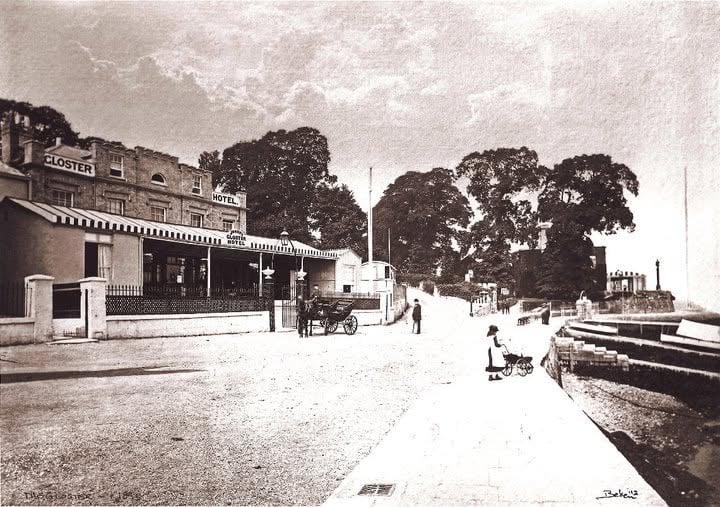
Before moving to Cowes Castle in 1855, the Royal Yacht Squadron operated from the Gloster, placing the hotel at the heart of an organisation that would become famous throughout the world. The hotel’s guest list reflected Cowes’ growing international reputation and included the exiled French Emperor Napoleon III and Empress Eugénie, while Lord Randolph Churchill was among the prominent figures associated with Cowes society during the Victorian era.
The Gloster’s reputation endured well into the 20th century. During a visit to the Isle of Wight in 1923, the King and Queen of Sweden took tea on the hotel’s terrace before departing for the mainland, underlining the establishment’s standing among visitors to the Island.
Long before discos arrived, the Gloster was one of Cowes’ principal social venues. During Cowes Week, visitors gathered on the terrace overlooking the Solent to watch the activity on the water, while dinners, receptions and private functions filled the hotel’s lounges and dining rooms throughout the year. At a time when Cowes attracted royalty, politicians and wealthy visitors from across Britain and beyond, the Gloster was one of the places where people came to see and be seen, helping cement its reputation as one of the Island’s best-known hotels.
The hotel’s position on The Parade made it one of the focal points of Cowes Week. Visitors arriving in the town inevitably passed its doors, while those staying there enjoyed uninterrupted views across the Solent. For many years, the Gloster formed part of the backdrop to the regatta season, its terrace and public rooms providing a meeting place for sailors, spectators and visiting dignitaries alike.
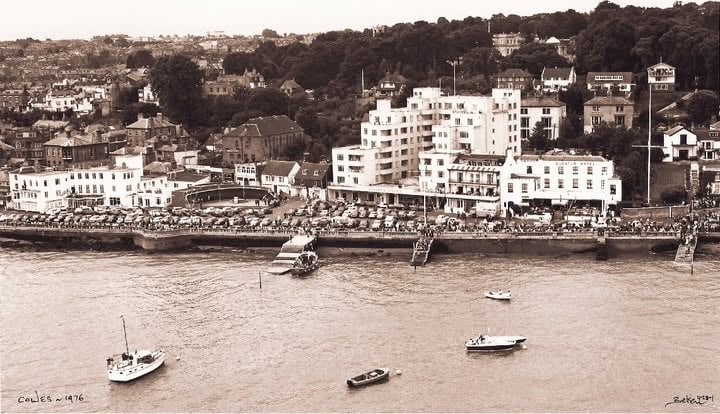
The Gloster continued to operate as a prominent hotel throughout the post-war years, remaining a popular destination for visitors and locals alike as Cowes retained its position at the centre of the British sailing world.

The building’s future changed dramatically in January 1975 when a major fire swept through the upper floors. More than 40 firefighters battled the blaze for around 90 minutes and, although the structure survived, the damage effectively brought an end to the Gloster’s traditional role as a hotel.
Following refurbishment, the former hotel evolved into a venue centred on bars, dining and entertainment. Music and dancing became increasingly important to the business as a new generation came to know the Gloster not as a hotel but as a nightspot.
The change reflected wider shifts in the Island’s leisure scene during the late 1970s and 1980s. Traditional waterfront hotels were facing new challenges, and the Gloster adapted by embracing entertainment and late-night trade. Its prominent position on Cowes Parade helped ensure a steady flow of customers, while for many Islanders who came of age during the period, the nightclub years became the chapter of the Gloster’s history they remember most clearly.
By the 1980s, the venue had become firmly established as part of the Island’s nightlife scene and was remembered by many as the place where a Saturday night often finished rather than began. The transition from hotel to nightclub was not without controversy. Licensing hearings referred to complaints about noise and disturbance associated with the venue, although management argued that many incidents were unrelated to the Gloster and there were no current police objections to its operation.
One former customer recalled:
“It was the place where most drinkers ended up on a Saturday night in the 80s. Bit of a dive, but not the only one on the Island. And after a few glasses, the sticky carpet wasn’t such an issue in the dark.”
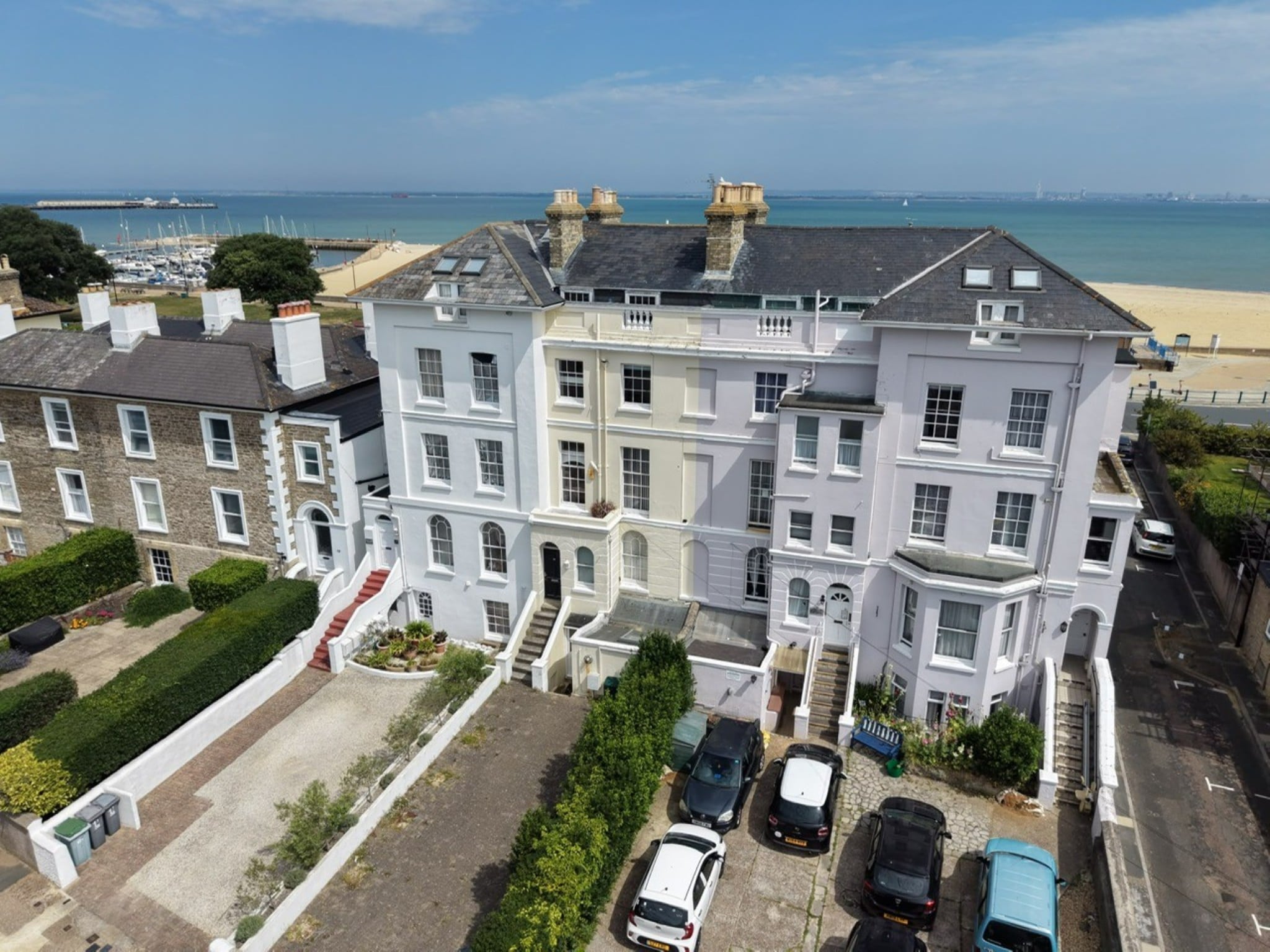
The Gloster’s long story came to an end in 1989 when the building was demolished after more than 150 years on the Cowes waterfront. In its place rose Gloster Court, a prestigious development of luxury apartments overlooking the Solent. Marketed as some of the Island’s most desirable waterfront homes, the apartments attracted considerable interest while retaining the historic Gloster name, preserving a link with one of the town’s best-known landmarks.
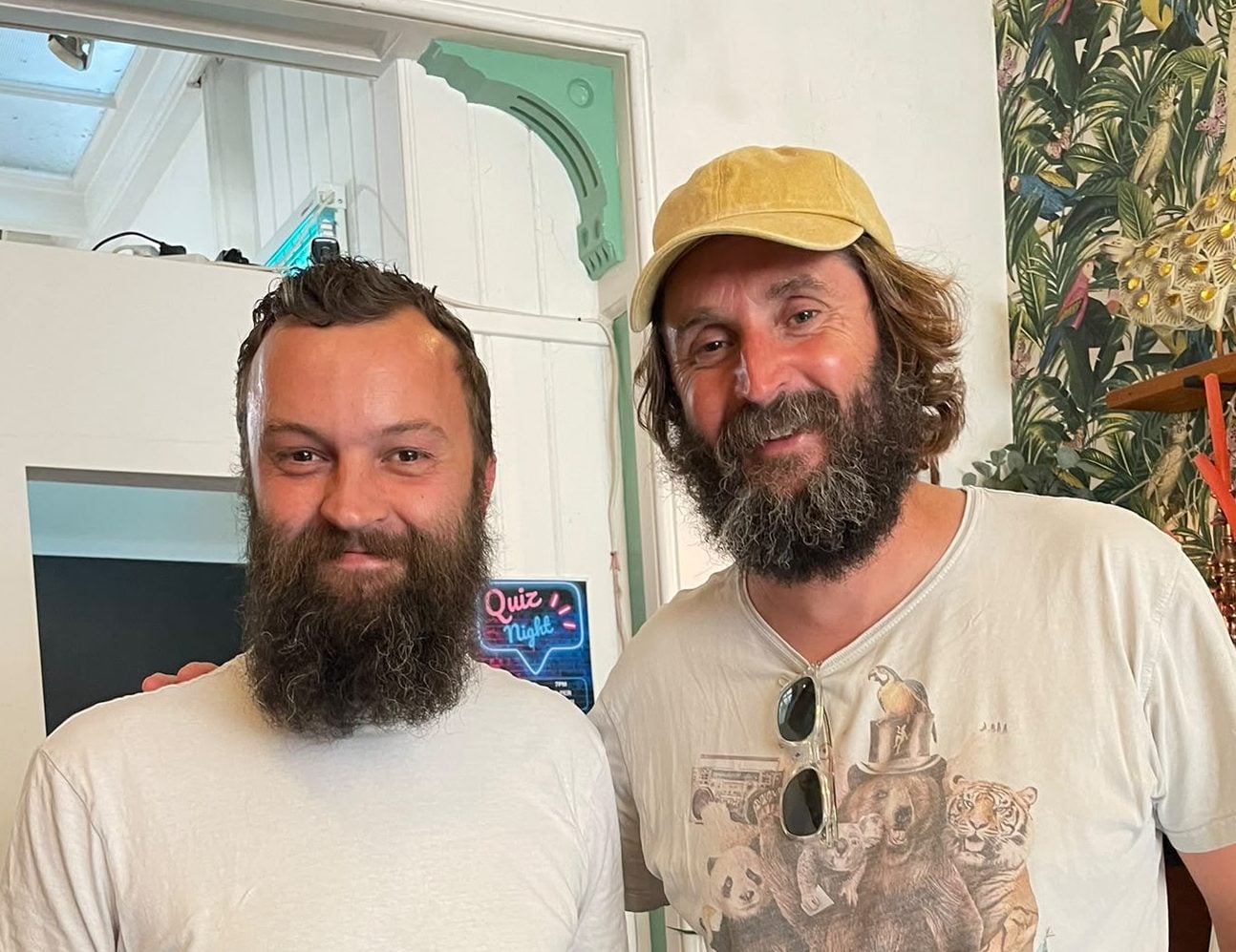
The Gloster name also survived long after the hotel disappeared. When Ben and Jack Cooke opened The Little Gloster at Gurnard, they chose the name in tribute to the former Cowes hotel once owned by their grandparents, Robin and Lillian Bateman. In doing so, they created a direct link between one of the Island’s most famous lost landmarks and a new generation of hospitality.
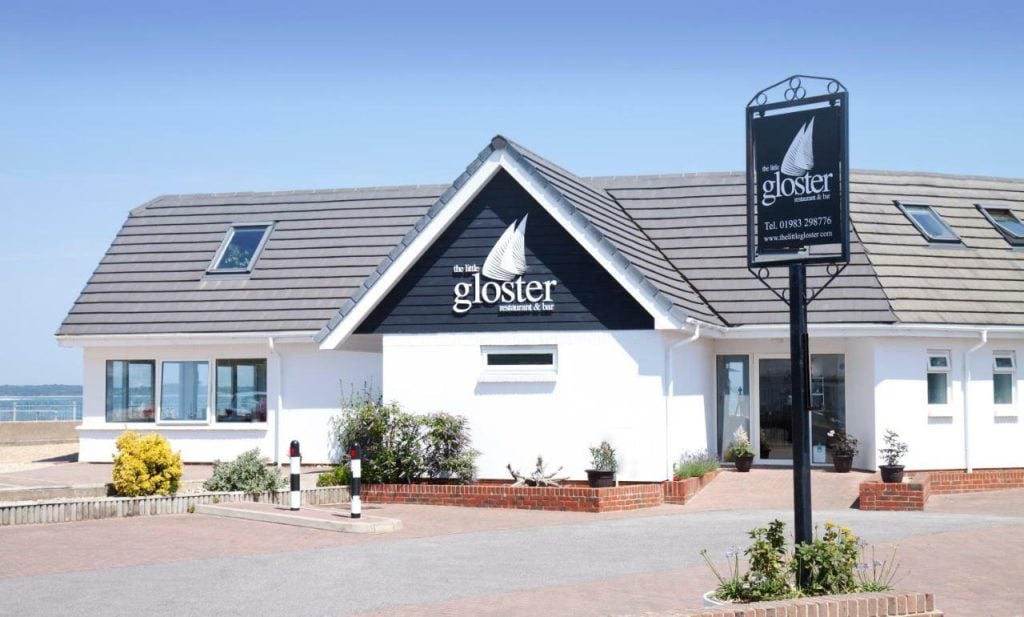
Over the course of nearly two centuries, the Gloster served as a grand hotel, a centre of Cowes social life, the early home of the Royal Yacht Squadron, a restaurant and one of the Island’s best-known nightspots. Few Isle of Wight venues experienced such varied lives or left behind such a diverse collection of memories.
Do you remember the Gloster? Share your memories in the comments below.









Had many a great night out there early 80s till it shut there most Friday Saturday even Sunday nights ..great time..
d.j ed there from’79 until it closed in ’87, great memories & good times!!