



























































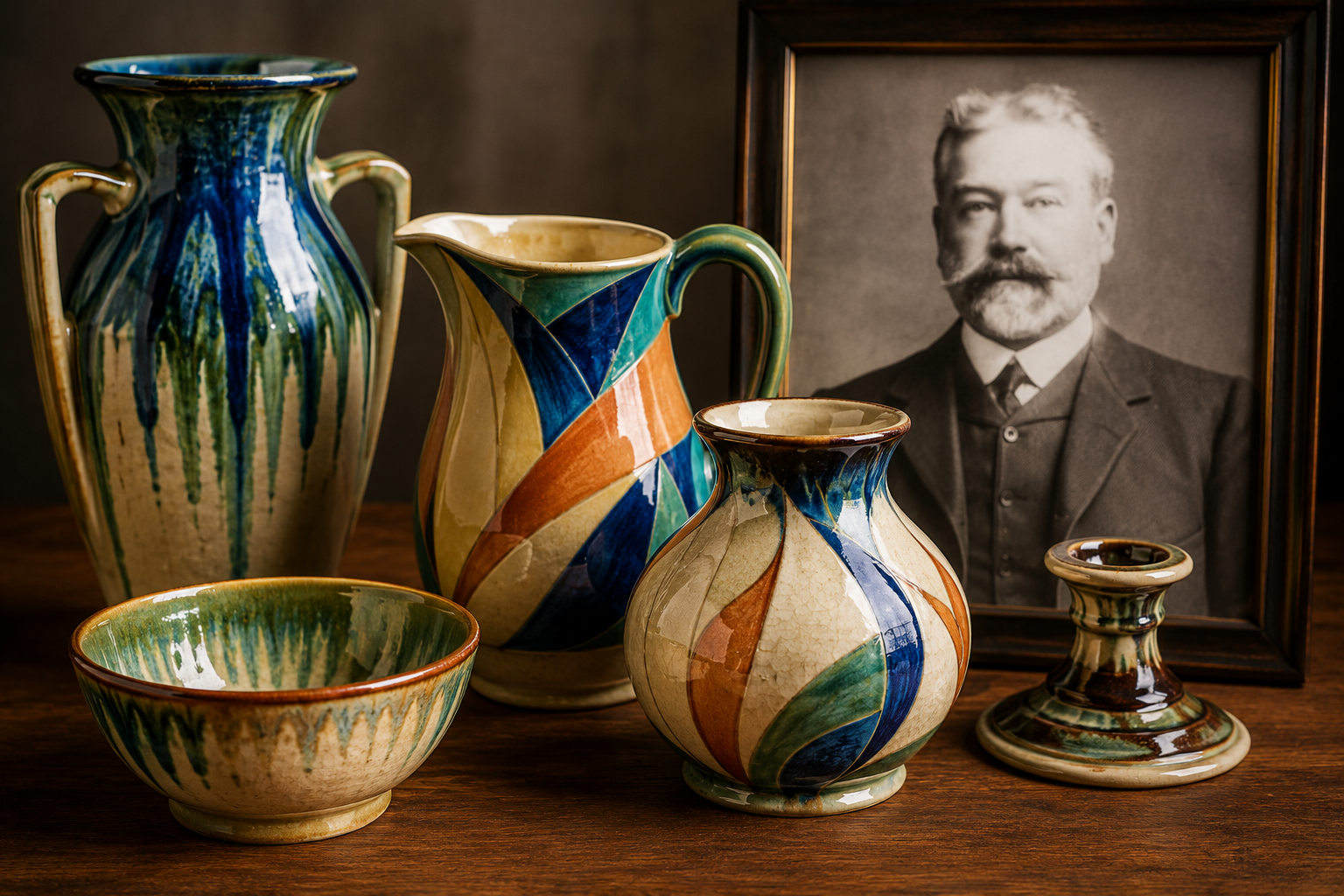

At a time when Art Deco design was sweeping Britain, a pottery in Gunville was producing striking ceramics still sought after by collectors today.
Cream-coloured vases streaked with flowing blues and greens, elegant jugs with geometric handles and distinctive bowls bearing the double “SS” mark can still be found in antique shops, auction rooms and private collections across Britain. Yet few people realise these eye-catching ceramics were once made on the Isle of Wight at a pottery that flourished for little more than a decade before disappearing.
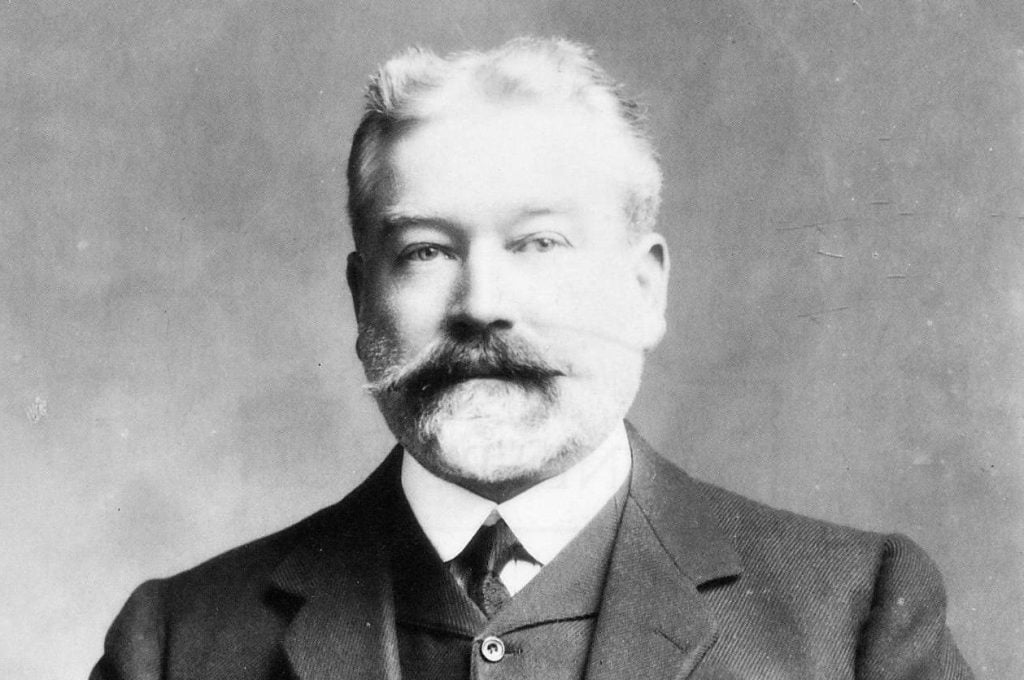
The story of Isle of Wight Handcraft Pottery began in the 1920s at the old Gunville Brickworks, an established local industry that had supplied building materials across the Isle of Wight for decades. By the time Samuel Edgar Saunders purchased the site in 1923, the brickmaking trade was in decline and the future of the works looked uncertain.


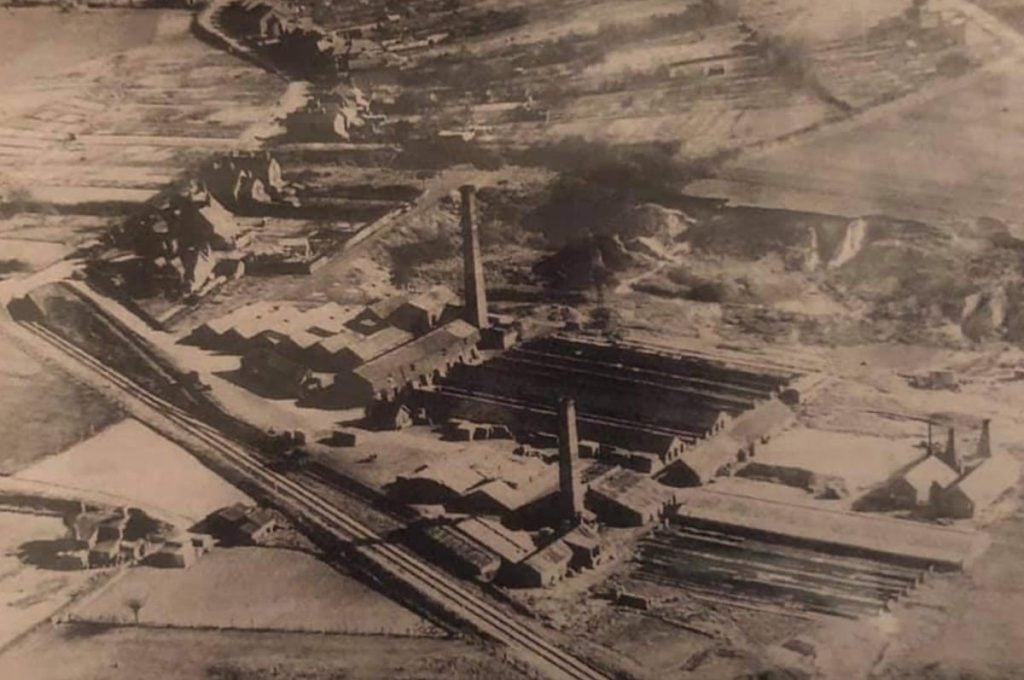
Rather than allowing the site to fade away, Saunders saw an opportunity to create something entirely different.
Today, Saunders is best remembered as the engineering entrepreneur behind Saunders-Roe, making his involvement in decorative pottery one of the more surprising chapters in Isle of Wight industrial history.
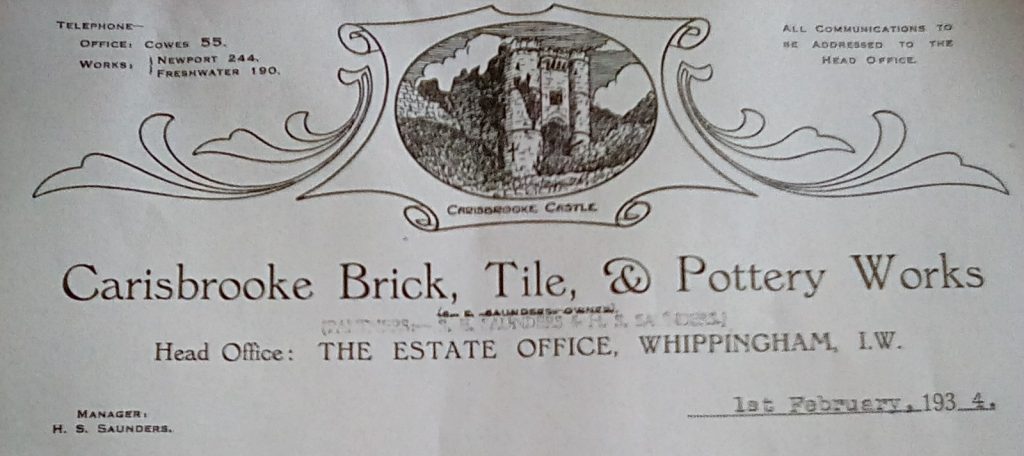
In 1926, he established the Carisbrooke Brick, Tile and Pottery Works, adding decorative ceramics to the existing operation and creating what would soon become known as Isle of Wight Handcraft Pottery.
Recognising that pottery required specialist knowledge, Saunders recruited experienced craftsmen from established English potteries. Edward Bagley joined from the respected Watcombe Pottery in Devon, while William Baker arrived from Upchurch Pottery in Kent. Together they brought valuable expertise to Gunville and helped create ceramics capable of competing with mainland manufacturers.
The pottery produced a wide range of decorative wares including vases, bowls, jugs, candlesticks and tea services. Unlike the bricks and tiles that had previously dominated production, these pieces were intended to bring colour and style into people’s homes.

The pottery emerged at the height of the Art Deco era and many surviving examples reflect the fashionable styles of the period. Clean lines, geometric forms and bold shapes gave the products a distinctly modern appearance that appealed to inter-war tastes.
Perhaps the pottery’s most distinctive feature was its glazing. Coloured glazes were often applied around the rim before flowing down the body of the piece during firing. Shades of blue, green and brown cascaded over cream-coloured pottery, creating patterns that were impossible to reproduce exactly. As a result, every piece possessed its own individual character.
Today, surviving examples range from small bowls and jugs to larger decorative vases. Their flowing glazes and distinctive styling have earned Isle of Wight Handcraft Pottery a loyal following among collectors of Art Deco ceramics and Isle of Wight memorabilia. Pieces regularly appear at specialist auctions, antique fairs and dealer catalogues, where their unusual Island origins add to their appeal.
The pottery’s products were sold through showrooms in Newport, including premises in the High Street and later God’s Providence House in St Thomas’ Square. For Islanders and holidaymakers alike, they offered the chance to buy decorative ceramics made on the Isle of Wight.
The venture appeared to have a bright future. Combining skilled craftsmanship and contemporary design, Isle of Wight Handcraft Pottery carved out a distinctive niche.
Its products carried the double “SS” mark, representing Samuel Saunders. Nearly a century later, that small stamp remains the easiest way to identify Isle of Wight Handcraft Pottery.
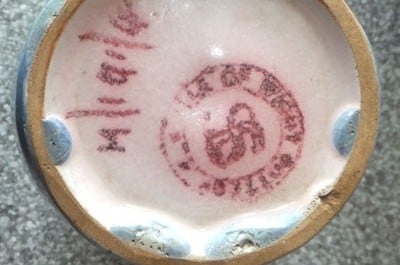
Although production lasted little more than a decade, the pottery left behind a lasting legacy. Nearly 90 years after the works closed, examples continue to surface across Britain, often attracting considerable interest from collectors who value their distinctive appearance and short production history.
The business survived the death of Samuel Saunders in 1933, with his son Hulbert taking over responsibility for the operation. However, by the late 1930s, difficulties had begun to emerge when the pottery’s manager was discovered producing and selling pottery independently from the company. The resulting dispute contributed to the closure of the business in 1938.
Today, the pottery’s story is largely overshadowed by the aviation and marine achievements that made the Saunders name famous. Yet the colourful ceramics that survive tell a different story – that of a forgotten factory whose products have outlived the business that created them.
Do you own a piece of Isle of Wight Handcraft Pottery, or have you spotted examples in antique shops, auctions or family collections? Share your photographs and discoveries in the comments below.













A great article. I had no idea about this pottery. I wonder if there are
any pieces still in existence.
Such a shame the island is known for Pot in other ways,
nowdays you can smell it all around the island.
Yes, nice vase on eBay.
I will have a looksy.