











































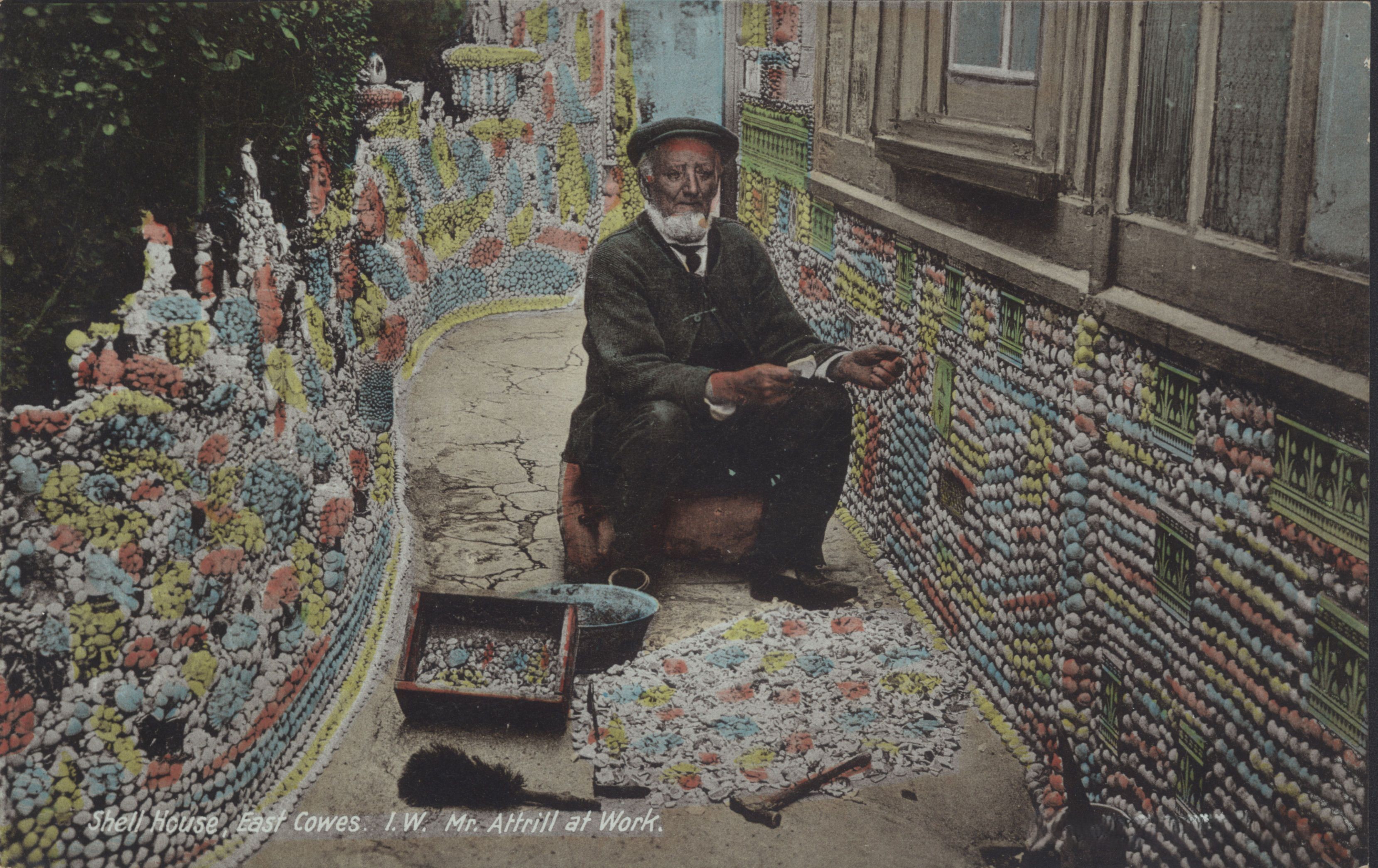

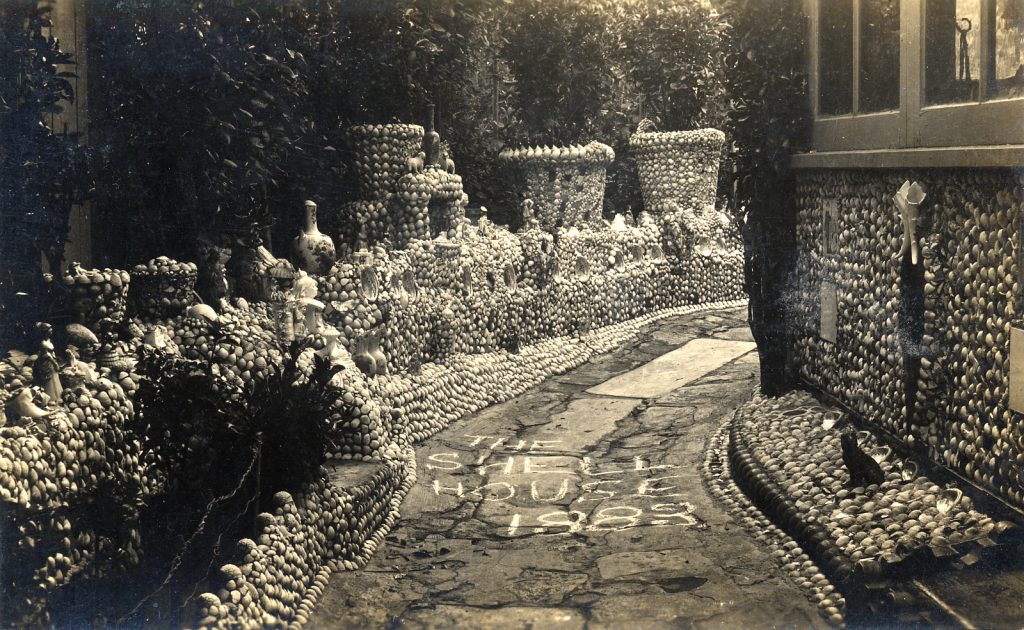
The Shell House in East Cowes was once a popular tourist attraction, famous for its detailed seashell decorations and a remarkable local legend.
A childhood encounter with royalty may have sparked one of the Isle of Wight’s most unusual artistic legacies…
In 1852, 10-year-old Frederick James Attrill was collecting shells on Osborne beach when another boy reportedly kicked over his bucket. That boy was Prince Albert Edward – the future King Edward VII. When Queen Victoria learned of the incident, she was said to be amused by the plucky local boy and gave him a reward.


That Royal moment may have been the beginning of Attrill’s lifelong fascination with seashells, which would later transform his home into one of East Cowes’ most curious landmarks.
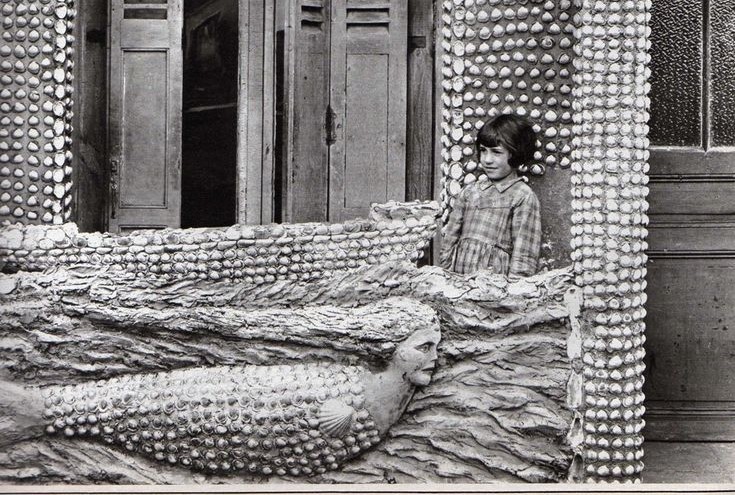
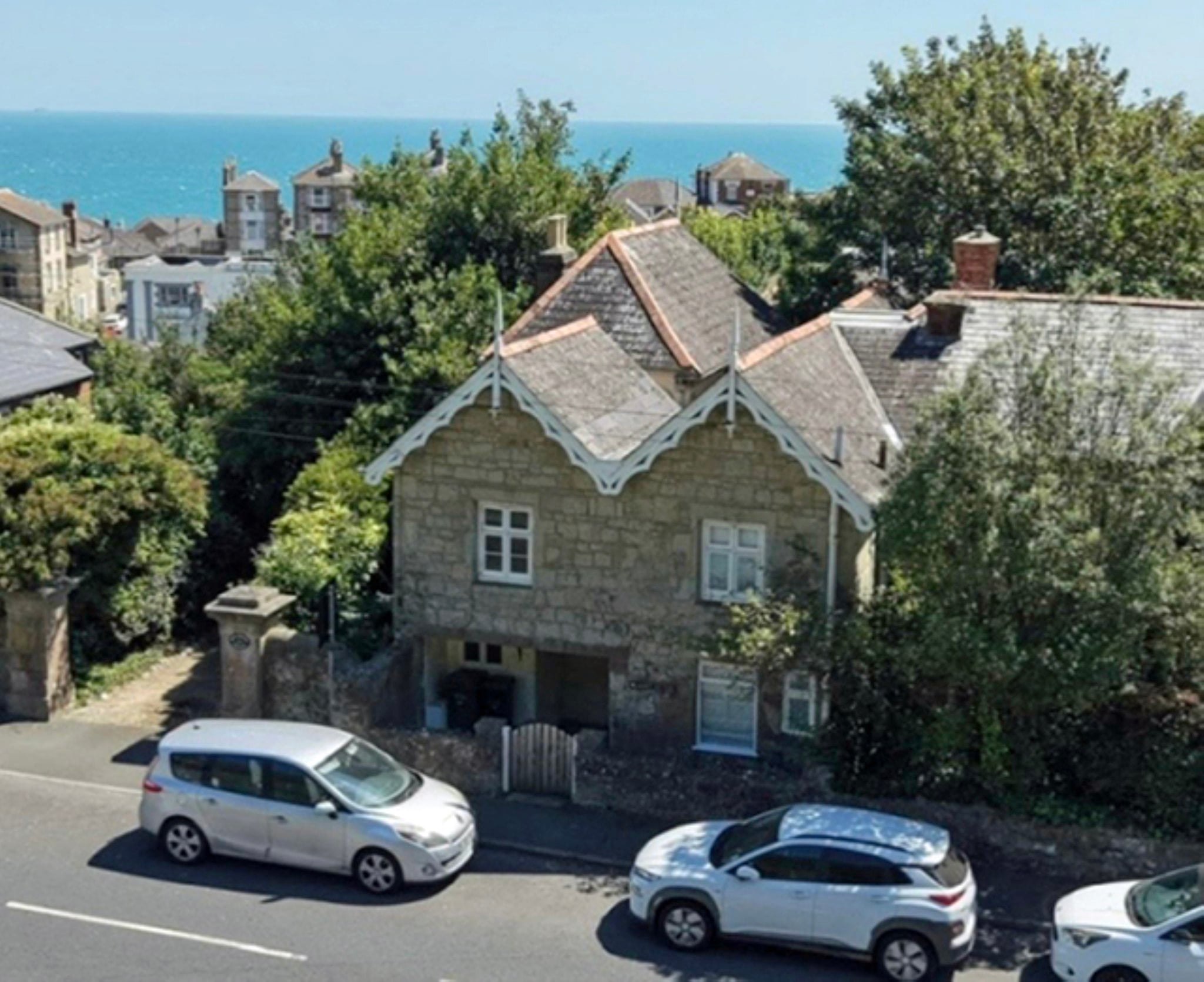
From 1916 until his death in 1926, Frederick Attrill devoted the final decade of his life to decorating his cottage at 1 Myrtle Cottages – now 35 Cambridge Road – with intricate shell designs.
Using shells collected primarily from Woodside beach in Wootton, he covered the walls, garden, and fencing in ornate mosaics. Some ornamental pieces were also sourced from further afield, including foreign curiosities gathered over the years.
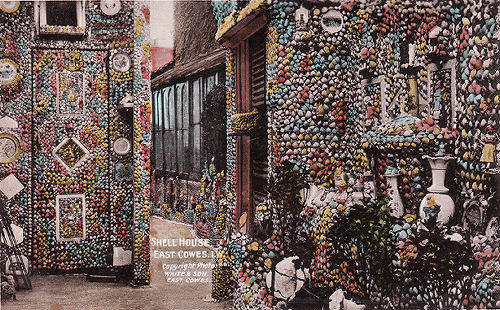
Despite having no formal training as an artist, Attrill’s work turned his modest home into a folk-art marvel. Visitors came from across the Isle of Wight and beyond to admire the elaborate display, which quickly became a well-known local attraction. Children, holidaymakers, and even day-trippers would pause at the gates to take in the unusual sight.
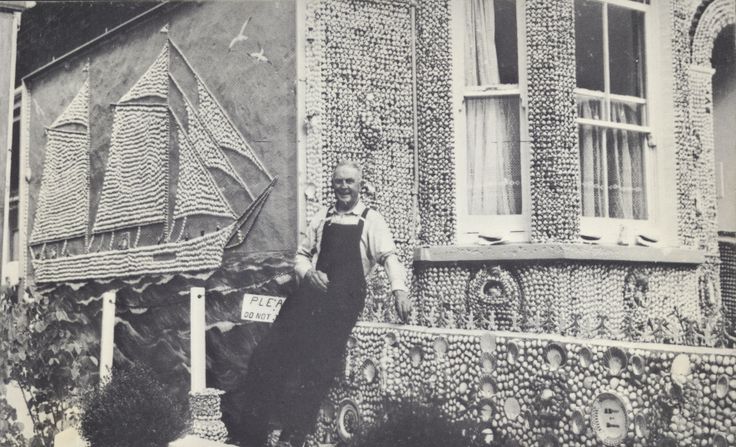
After his death, the Shell House continued to delight the town for many years. In the 1970s, the then-owner Fred Spencely added a large sailing ship panel made entirely of shells, expanding on Attrill’s vision and preserving its reputation as a living artwork. The addition became a defining feature of the site and stood as a tribute to both the sea and the creativity behind the original project.
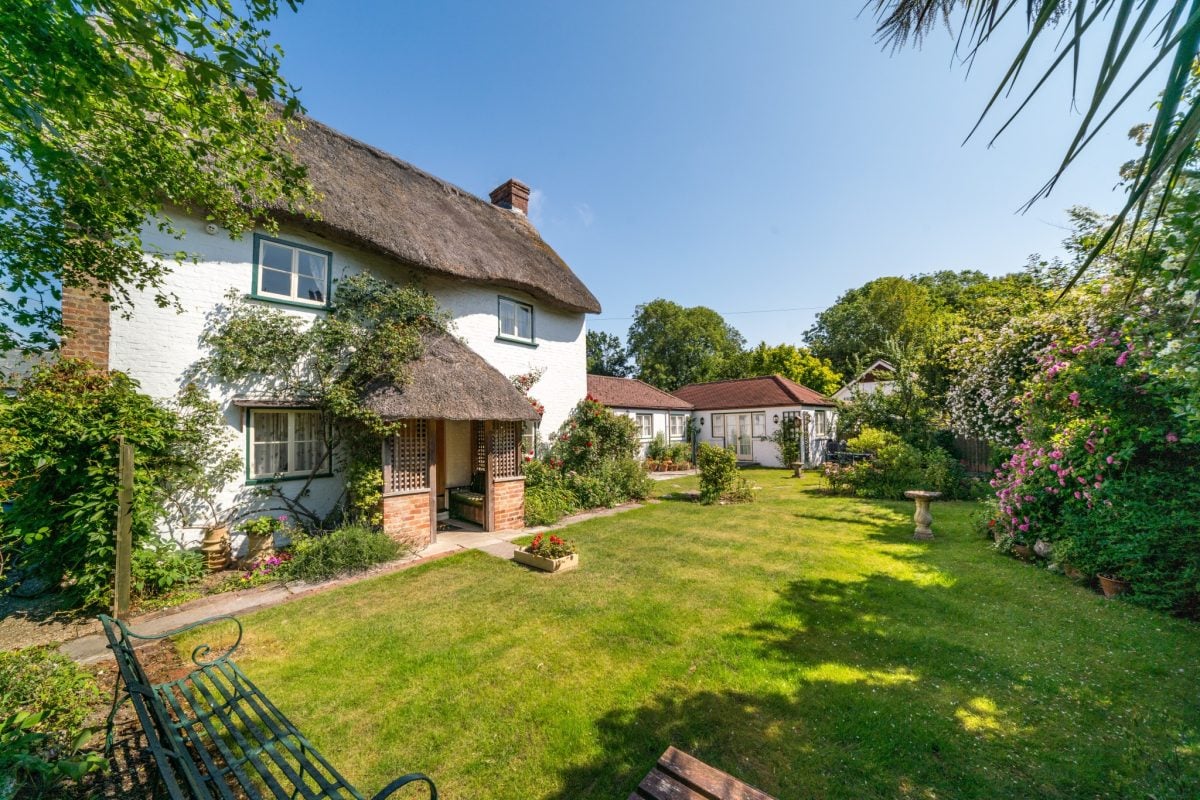
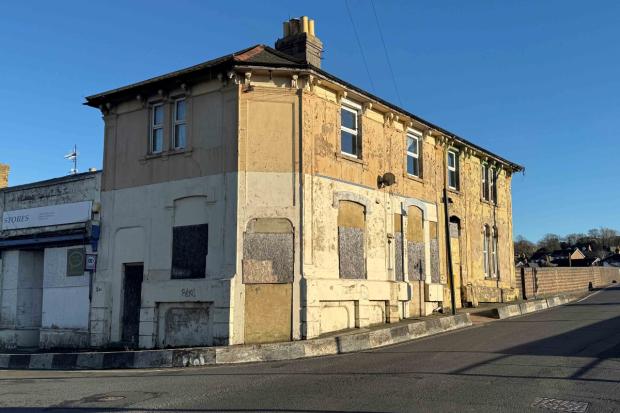
But by the early 1990s, the Shell House’s story took a quieter turn. New owners, seeking privacy, removed the shell decorations and later extended the property. The physical traces of the shellwork have since disappeared beneath modern alterations.
Today, little at the site reflects its unique past. The original cottage has been developed and updated, and the once-famous façade is gone. But its story lives on through local memory and permanent recognition.
In 2009, a commemorative memorial was installed on Columbine Road, just a short distance from the original home. Designed by East Cowes artist Glyn Roberts, the carved stone and plaque honour Attrill’s creativity and the pride his work brought to the community.
The Shell House may be gone, but its tale remains a celebrated part of East Cowes’ history — a reminder that imagination, dedication, and even a royal squabble over a bucket can leave a lasting mark on a town’s identity.
Did you ever visit the Shell House, or do you remember it from years gone by? Let us hear about your memories in the comments…








More articles like this please!
When we were young kids we had a bit of a trek coming home from the paddling pool in East Cowes We always stopped at the shell house,there were often a couple of elderly ladies having tea and cake in the garden,I used to I.agine one day we’d be offered caje but it never happened. What a shame the buyers later didn’t keep it as it was on the outside, but time marches on and tastes change .
Great article, shame Albert kicked over the bucket of shells
would expect better from such persons.
Just goes to show no matter who ones parents are,
some people still don’t know right from wrong!
Frederick Attrill done a great job in East Cowes such
a shame the new owners changed the design.
It should have been opened as a museum.
Thankfully there are still postcards of this great
establishment in circulation.
Andrew Windsor, comes to mind when thinking of those who behave badly!
The East Cowes Shell house was considered one of the best in the Country. Today categorized as a folly structure. There were 3 other shell houses on the Isle of Wight at St Helens, Sandown and Ventnor. Like Shell grottos many shell houses are in a poor state as the salts affect their ability to adhere to the surfaces.
if I remember correctly the shells had to be removed as they were creating a damp problem throughout the house.
When I was a nipper I used to Visit the Shell House with my Gran, it was enchanting. It would be nice to have some kind of shell grotto on the seafront now but people don’t seem to be interested in making such follies now just for the fun of it!