








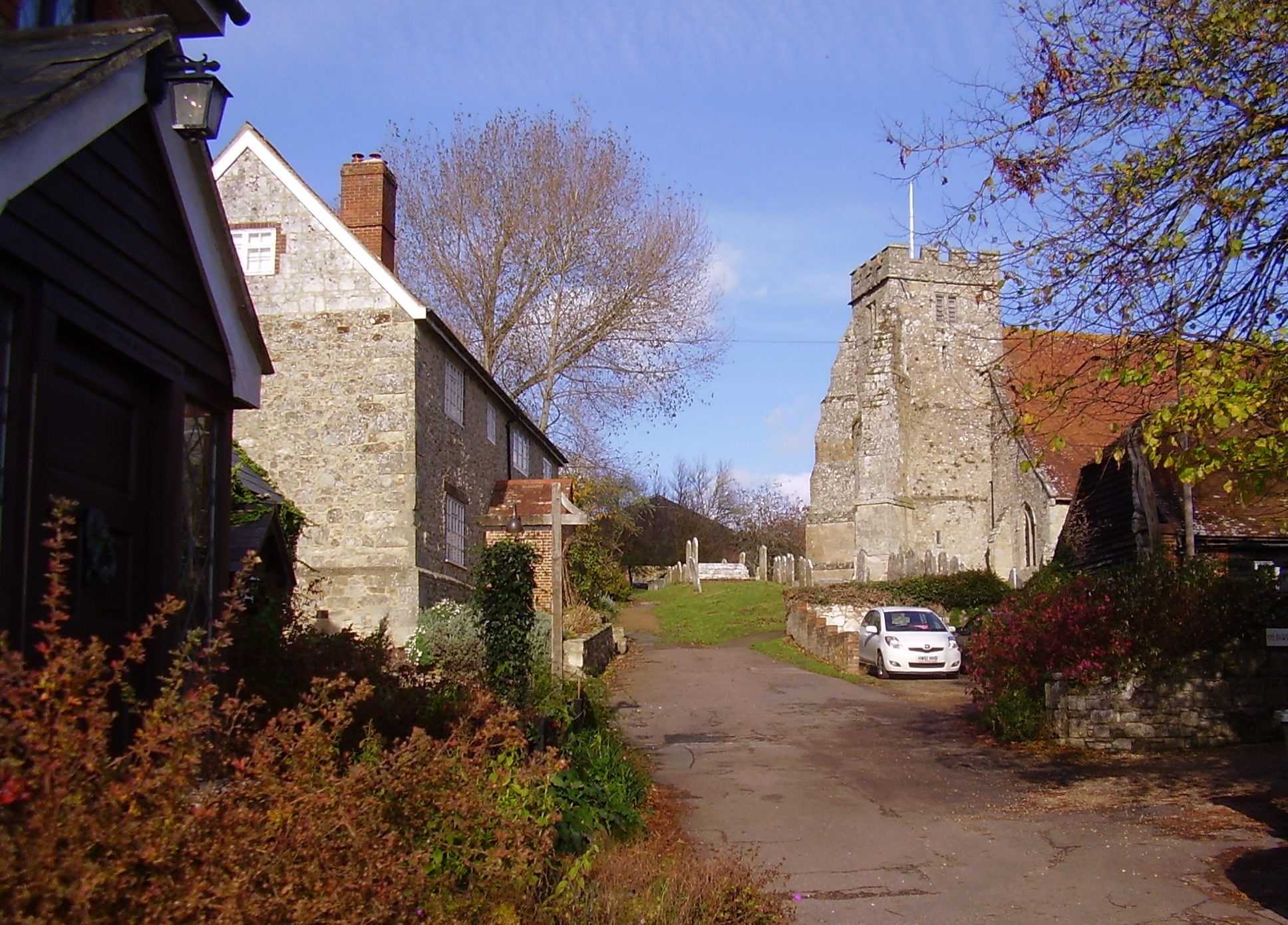

























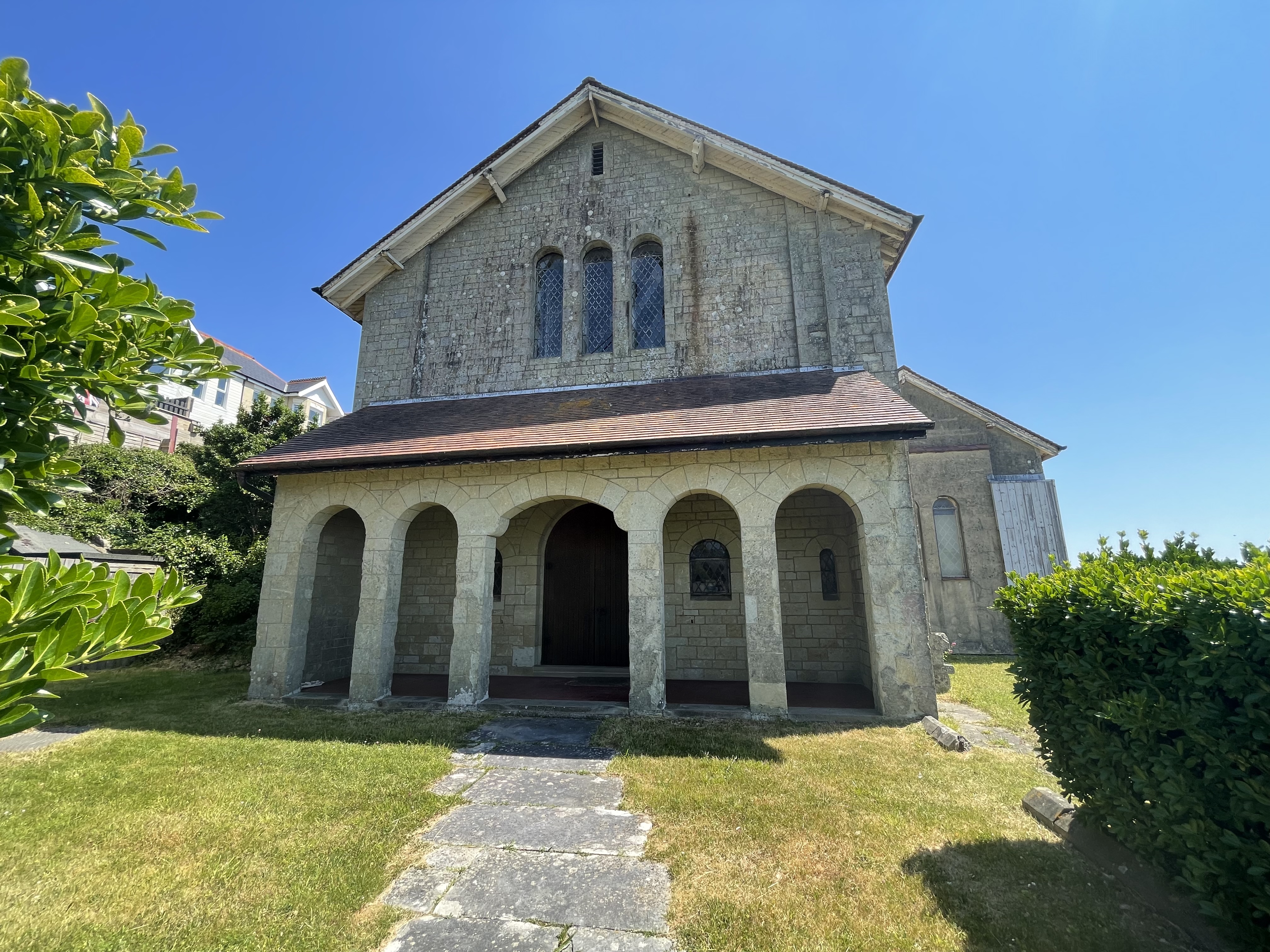

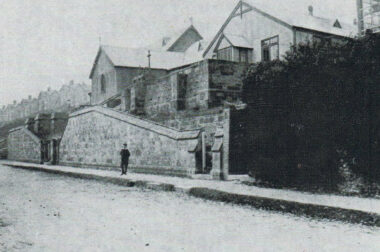
 Ventnor’s traditional Anglo-Catholic Church of St. Alban, known as the late Poet Laureate Sir John Betjeman’s ‘favourite Island church’, celebrates its centenary this month.
Founded in September 1889 under the Curate-in-Charge of the Parish of Godshill Rev. Richard Ussher, the church was formed as a place to allow for those in the furthest part of the parish in Upper Ventnor to worship due to being some four and a half miles from Godshill.
Dedicated to the memory of the 4th-century Roman soldier St. Alban (Albanus d. 209 AD) known as England’s first Martyr, the church was originally built from corrugated iron in May 1899 on a plot of land which was donated on St. Alban’s Road, off Zig Zag Road in Ventnor. It officially opened in September 1899 with the first service taking place on St. Alban’s Steps directly outside the main church gates.


By the outbreak of World War One the old corrugated “tin” church had begun to show signs of its age and a fund was set up to build the current permanent stone church. With many in the parish donating to the fund, plans were drawn up and finalised to build a permanent stone basilica for the people of Lowtherville (Upper Ventnor).
By 1922 the foundation stone of the Romanesque style basilica was laid and on the Feast of St. Alban, 22nd June in 1923 the completed St. Alban’s ‘stone’ Church was consecrated by the Bishop of Winchester, Rev. Frank Theodore Woods.
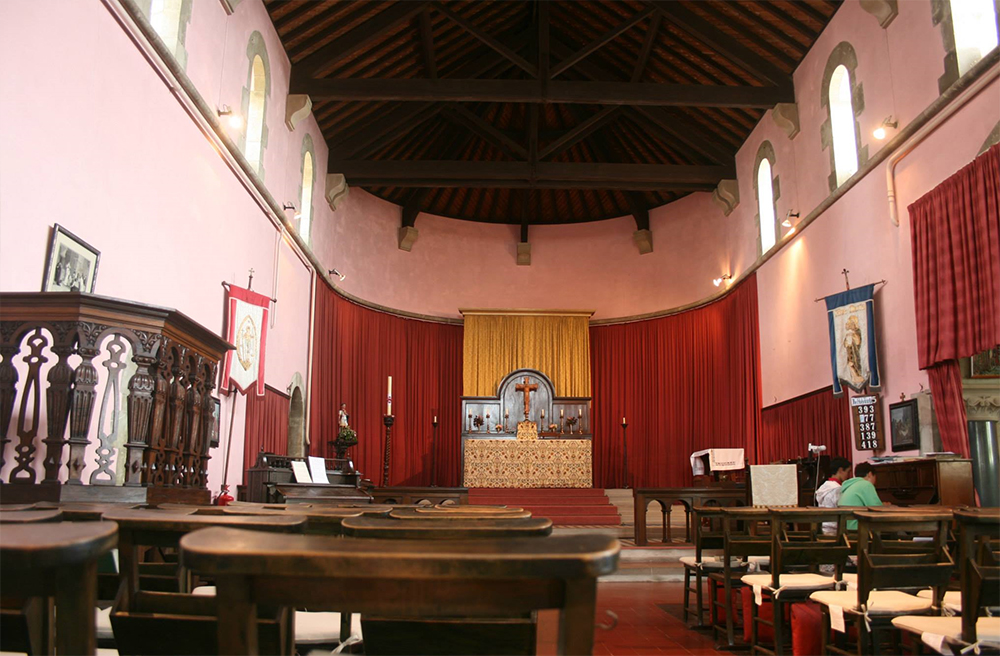
Throughout the decades St. Alban’s Church has continued to keep its Anglo-Catholic traditions within the Anglican community to counterbalance the extreme Evangelicalism that was prevalent in
Ventnor town during the 19th century. Weekly services are sung in traditional language and served with incense burning from the original 19th century thuribles and the large cast brass bell dating back to 1890 is still rung every week during mass.
Many of the old ‘tin’ church instruments are used today, including the silver processional cross and the stone baptismal font. While the ornately carved wooden pulpit is believed to have been crafted from the former beams taken from St. Alban’s Cathedral in Hertfordshire.
One oddity which is more than a coincidence and dates older than the church, is the ‘fossilised fish’. The fish symbol was used on buildings over 2000 years ago as a code to identify Christian homes and this practice is still popular today. What seems to be ironic is the appearance of a large
fossilised fish which was exposed on one of the large columns within St. Alban’s, which was carved from solid Purbeck Marble and has become somewhat of a pilgrimage in itself.

Currently awaiting the installation of a new priest after the retirement of the former Priest-in-Charge Fr. John Ryder in 2019, St. Alban’s hasn’t been deterred from pulling out all the stops to celebrate their centenary with a special Evensong service held in memory of St. Alban. The centenary service will take place on Sunday, 25th June at 16:00 and will be led by Organist Mr. Andrew Pellow F.G.M.S., F.A.S.C. following the Book of Common Prayer rite and supported by the Isle of Wight St. Barnabas Traditional Anglican Mission.
Those unable to attend or would like to make a virtual donation can do so online via the church website: www.stalbansiw.org.uk







A beautiful church and a lovely story well told. Thank you and God bless you.
A very unusual but delightful looking church. Agree an interesting story too.
A beautiful church I will attend the service, thank you
and God bless you all.
I was born in Upper Gills Cliff Road in 1962, at home, as the snow was so bad my mum couldn’t get to hospital. The midwife had to come up from the town on a tractor, with a police escort! I was baptised in this church the following year!
It is lovely to see that our event this coming Sunday, has been so well received.
Many thanks to you all for the lovely comments and we look forward to welcoming everyone to St. Alban’s Church – Ventnor to celebrate 100 years of worship. Blessings to you all! ✝️