


































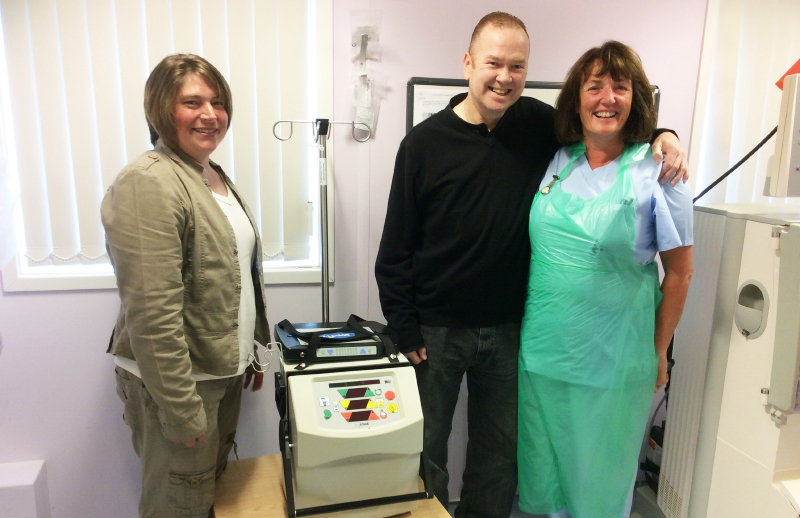

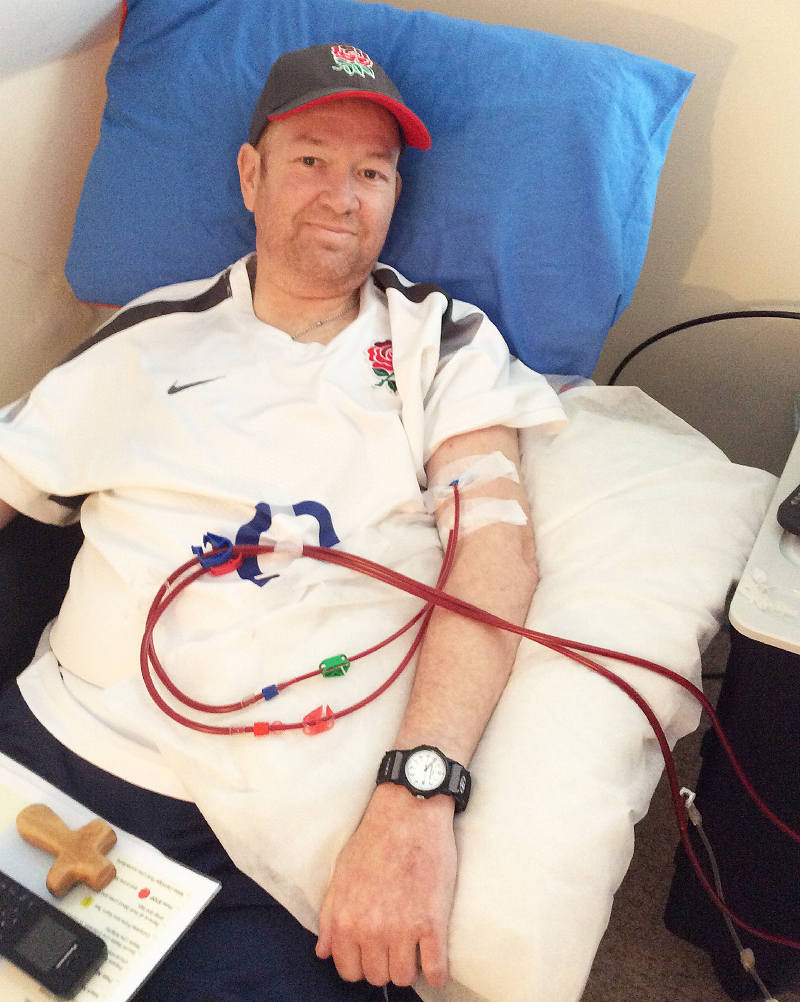
 An East Cowes man, who says he owes his life to the NHS doctors and nurses who treated him for acute kidney disease, is the first to have been trained on the Isle of Wight to use a portable dialysis machine at home.
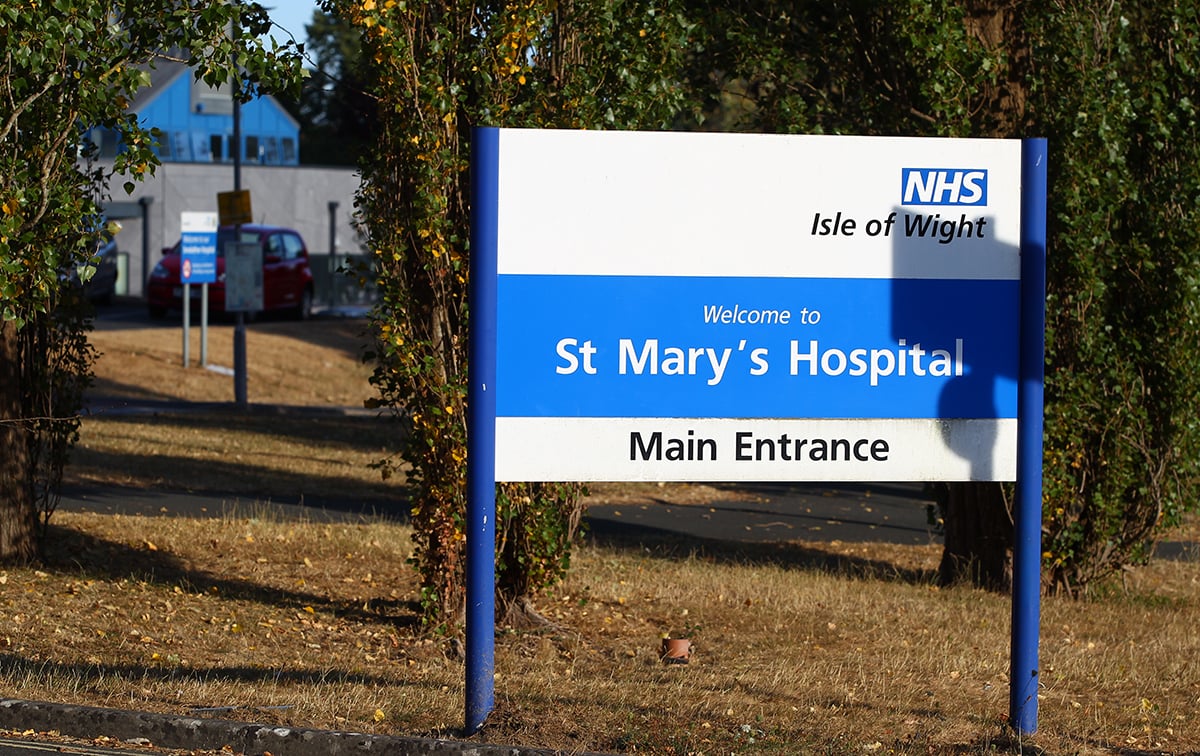
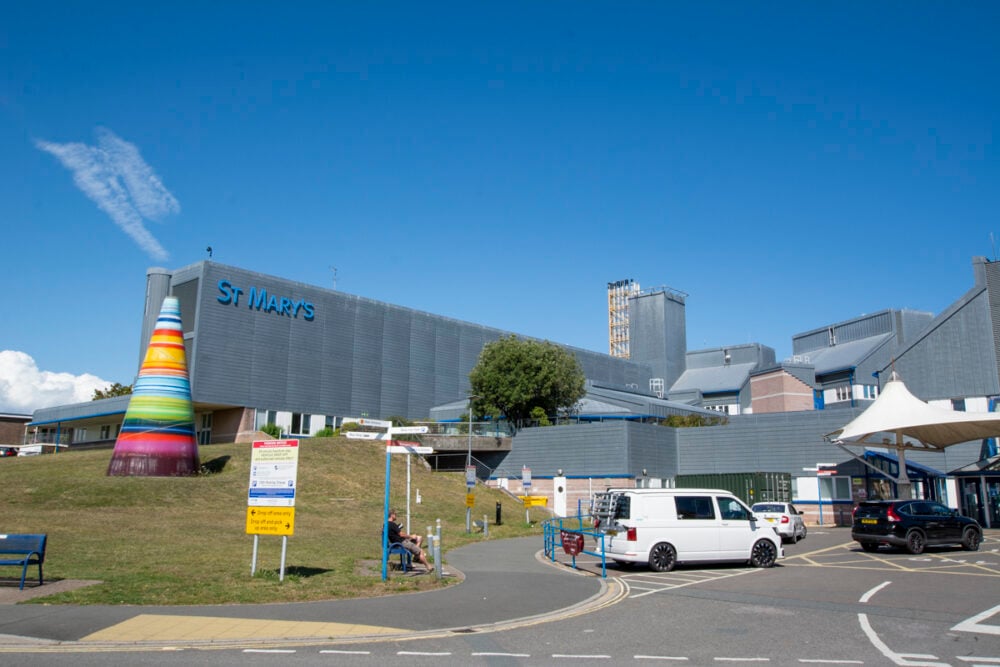
Tim Morris, 49, is the fourth patient on the Island to benefit from the technology, but the first to be fully trained in its use by staff at the Renal and Dialysis Unit at St Mary’s Hospital. Previously, patients had to travel to the mainland for training, but they can now be shown how to use the machine closer to home, thanks to a new training centre within the unit at St Mary’s.
Tim first started to suffer symptoms such as extreme tiredness in 2006 and, after a renal biopsy was diagnosed with Focal Segmental Glomerulosclerosis which is a Nephrotic Syndrome relating to Chronic Kidney Failure. Because of his symptoms and feeling so unwell, he was regularly seen in clinic for the next few years by his Renal Consultant Anna Sampson.


In July 2014, his condition worsened and Tim was admitted to Queen Alexandra Hospital in Cosham with severe Pulmonary Oedema.
Tim said:
“It got to the stage where Alison, my wife, and my son Sam had to help me get out of a chair. Eventually, Alison called the GP and they called for an ambulance to take me to hospital. I was admitted on to the Medical Assessment Unit at St Mary’s and then transferred on to the Queen Alexandra Hospital, Cosham, where I spent the next eight weeks”.
Tim’s condition had become so serious that he had to be treated for Acute Renal Failure and was put on 24-hour filtration in the Intensive Care Unit. Tim’s wife Alison recalls receiving the phone call to say he had been transferred to Intensive Care.
“The wait to find out what had happened was really difficult. Eventually, we went in to see Tim and it was very emotional. He’d had a chest drain and his face was covered by a mask.”
Article continues below this advertisement
During his time on the Intensive Care Unit, 45 litres of fluid was drained from Tim’s body and, despite nearly succumbing to his condition on several occasions, he started to make enough progress to be allowed home.
“It was difficult, like going home with a new-born baby,” Alison recalls. “He was totally dependent on me, but the physiotherapists and team on the Island were great. They came to our house and fitted equipment to help. Tim had a bed downstairs and was able to get about using a Zimmer frame. The physios pushed him quite hard and gave him targets to achieve and set goals to get him more mobile.”
Tim’s condition means he will always be dependent on dialysis, a machine that replicates kidney function. This is usually carried out at the Dialysis Unit, based at St Mary’s Hospital in Newport, which is a satellite unit of Portsmouth Hospitals NHS Trust. The mainland trust works with the Isle of Wight’s NHS to enable the specialist service to be delivered locally. Tim has been receiving dialysis at the unit three times a week, for four hours per session, but was very interested to hear that he might be able to treat himself at home with the support of staff on the unit.
Tim admits:
“I’ve got really bad white coat syndrome and I’ve got a phobia of blood and needles! So, although I was keen, I knew I wouldn’t be good at using the machine on my own. Thankfully, my wife Alison agreed to come into the unit and learn how to use the machine and insert and remove the needles under supervision of the great staff in the unit. Her employees, Morrisons in Newport, were also fantastic and allowed Alison the time off to carry out the training. Within six days of training, we’ve been able to set the machine up in the comfort of our own home – we call him Sidney the Kidney!”
The couple are in no doubt about the improvements that the machine has made to their lives. Tim said:
“Before, when I was having dialysis three times a week, I’d often feel completely exhausted for hours afterwards. It was so intensive that it left me with a feeling much like a ‘hangover’. But the portable unit is much less intensive, and easier on the body’s system. I can relax in my own environment at home and I can also look forward to going on holiday, with the right support, which would have been much more difficult previously.”
Marion Collins, Ward Manager of the Renal and Dialysis Unit at St Mary’s Hospital, is delighted that patients can now be trained closer to home:
“We’re very proud of both Tim and Alison for achieving this milestone and being the first to be trained here at St Mary’s in home dialysis. We’re also grateful that they have been so positive and encouraging other patients to do the same. Patients who are able to do this can lead a near normal life and it gives them back a great deal of independence and quality of life.
“I’d also like to thank my staff; I’m so proud of the team’s achievements in setting up the training programme within the Isle of Wight Dialysis Unit. They are an amazing group of Nurses and Healthcare Support Workers with such a positive attitude to promoting this initiative on the Island.
“This has enabled us to take ownership of the training programme and, with the support of the Queen Alexandra Hospital Home Haemodialysis team, we will be able to carry on training and expanding the programme. This will mean that more patients will have the choice of the treatment they want and ensure we cater for the growing demand from the local population to begin Dialysis within the home environment”.