














































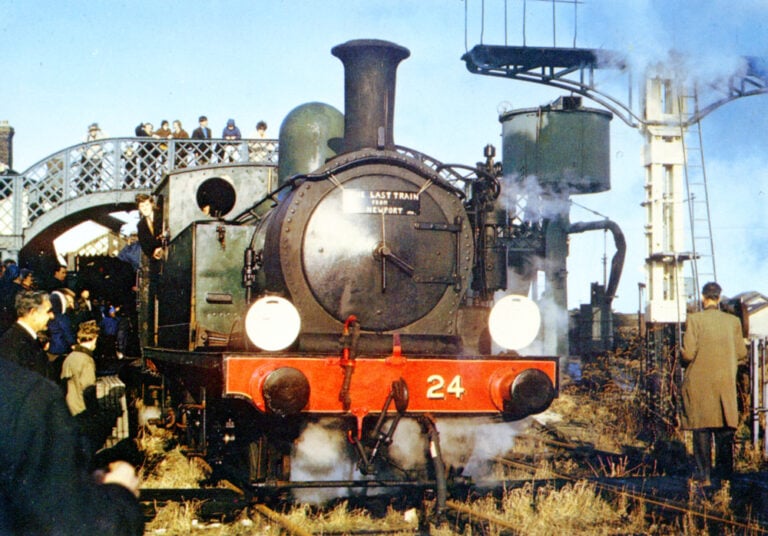

The Ryde–Newport line carried its first passengers on 20th December 1875 – 150 years ago today.
The long-awaited launch of the Ryde & Newport Railway transformed the way Islanders travelled, providing the first reliable inland link between Ryde and the county town of Newport.
The single-track line ran from Smallbrook Junction via Ashey, Haven Street, Wootton and on to Newport. Although relatively modest in scale, it marked a major leap forward from the slow and dusty road journey that had previously connected the two towns.

Opening day brought festive scenes despite the cold weather. Crowds gathered at every station and at farm gates along the route, waving flags and cheering as the inaugural train departed Ryde St John’s Road with railway directors, dignitaries and invited guests aboard.
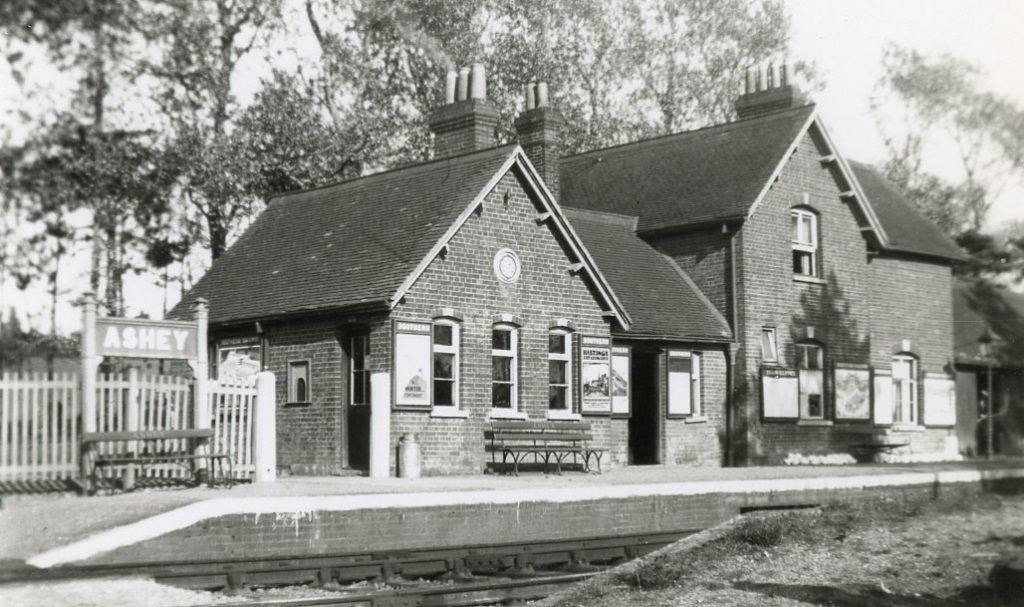
The line also featured a small but noteworthy branch at Ashey. Constructed to serve the chalk quarry on Ashey Down, the short spur proved surprisingly useful for more than just stone traffic. On race days at Ashey Racecourse – located on the downs above the station – special trains ran to carry spectators, who would then walk up the hill to the course. These lively occasions became a distinctive part of Ashey’s railway history, with packed platforms and a carnival atmosphere whenever race meetings were held.
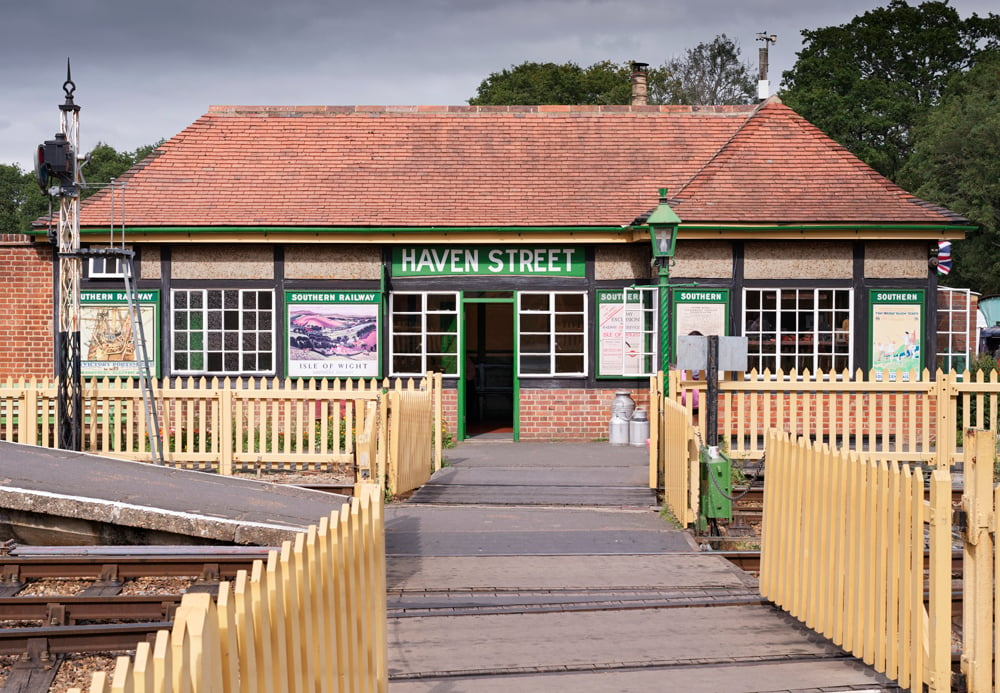
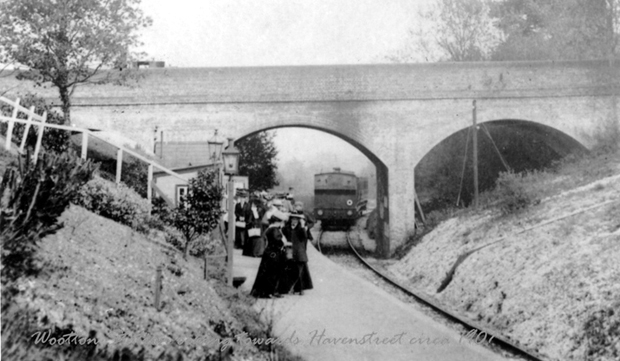
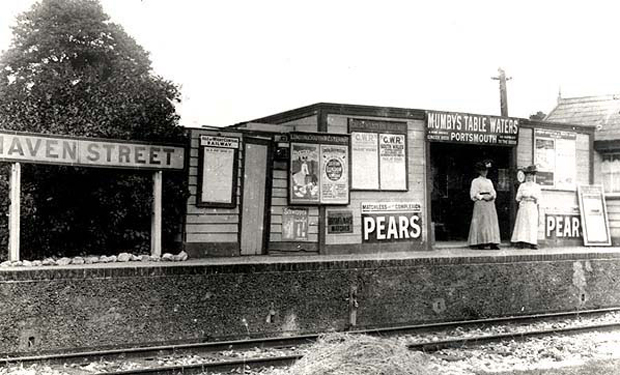
Early stations along the main line had their own quirks. Haven Street – now Havenstreet – began life as little more than a simple wooden hut before receiving a more substantial Southern Railway building in 1926. Wootton, meanwhile, famously opened without nameboards, clocks or even toilet facilities, with improvements added only gradually.
For Newport, the new railway was transformative. It provided faster, more dependable travel and a direct link to Ryde Pier’s busy steamer connections, strengthening trade, tourism and daily mobility for Islanders. Villages such as Ashey and Havenstreet enjoyed new access to markets and opportunities previously out of easy reach.
Although the Ryde–Newport line closed in 1966, part of its story was revived in 1971 when the section centred on Havenstreet reopened as the Isle of Wight Steam Railway. Havenstreet soon became the operational hub, with its restored station building, workshops and museum forming the heart of today’s award-winning heritage line.