

























































It’s not unusual in Ryde to be woken up by the sound of birds singing or even England fans singing, but when local resident Caroline Diamond woke up on Friday morning she heard a loud and unusual buzz from her garden near the seafront.
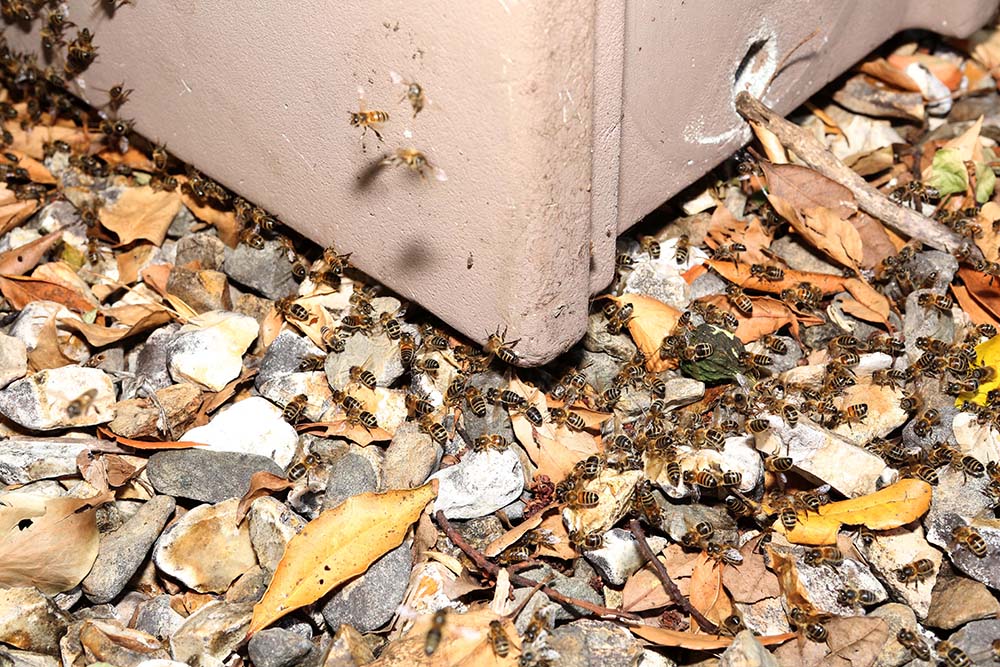
Upon closer inspection Caroline discovered a huge swarm of what she thought was wasps circling around the garden. A quick message to 5 Star Pest Control pointed her in the direction of Bunbury Bees as it was thought likely to be a swarm of bees than wasps.
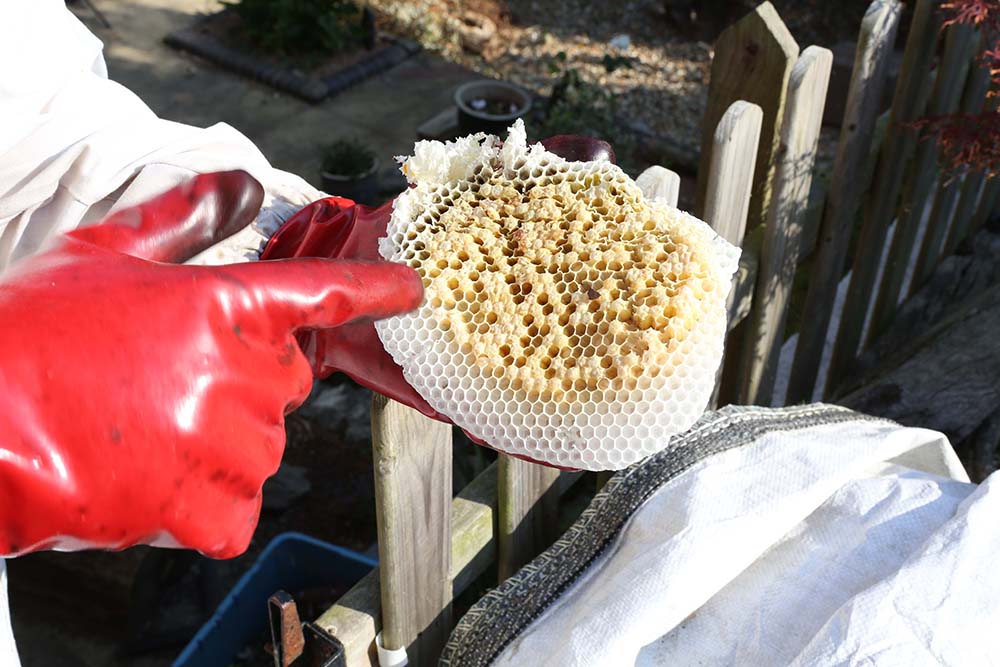
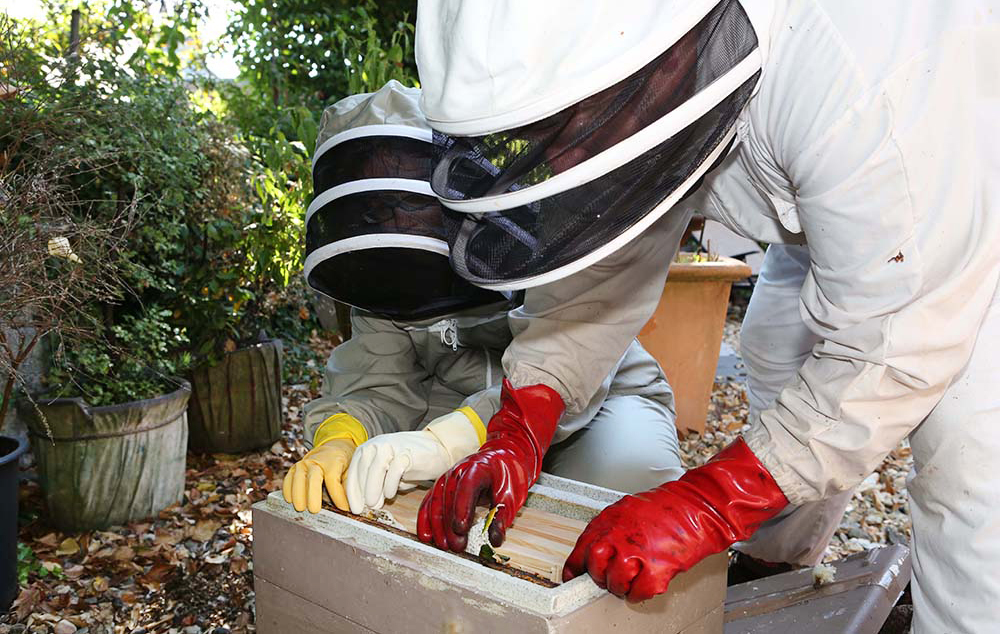
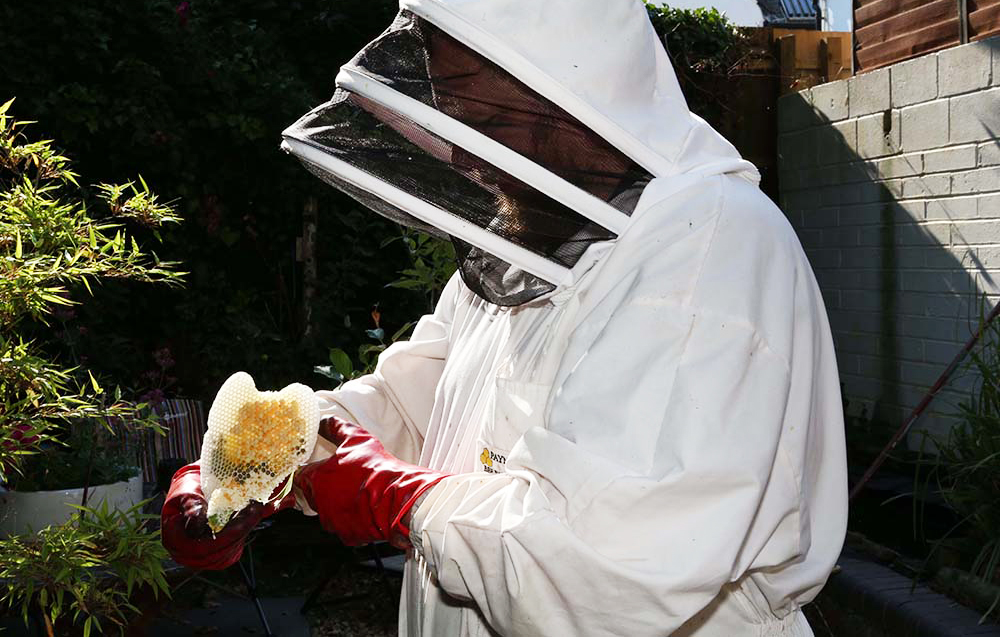
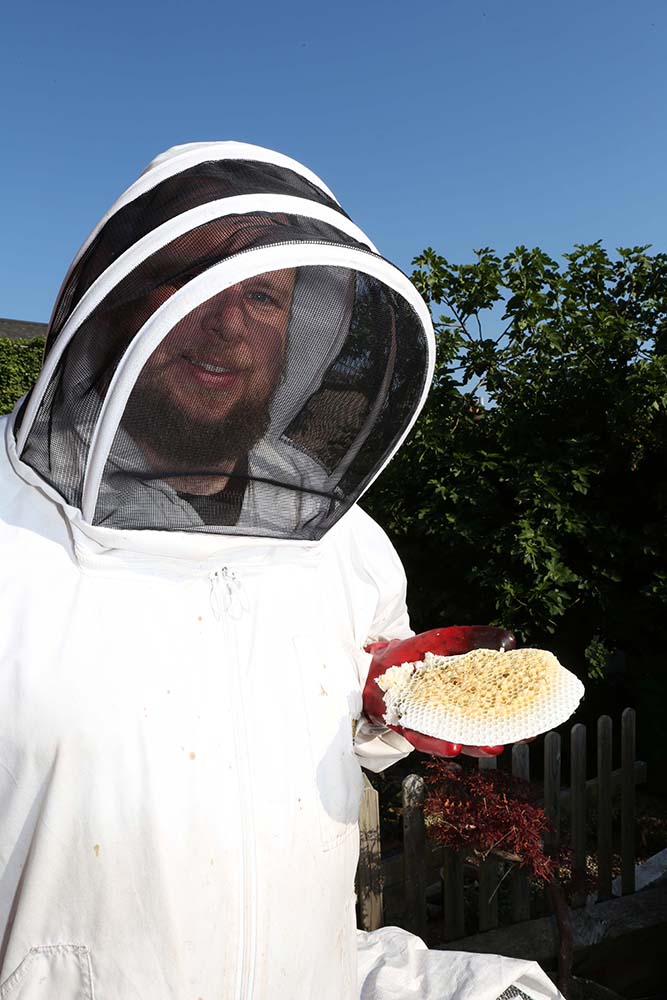
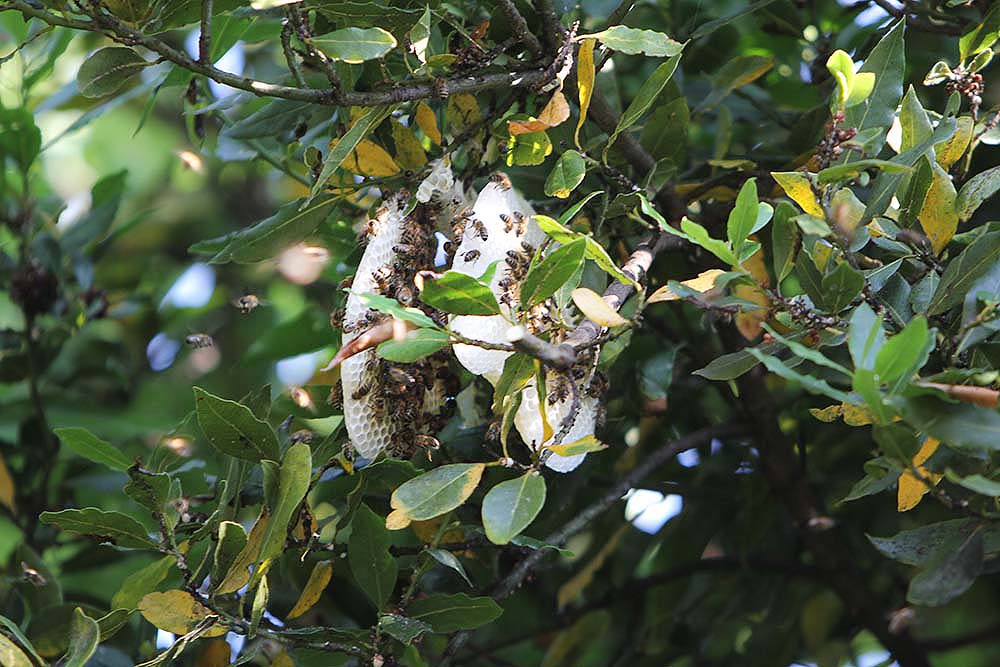
Chris Van Wyk and Kate Bucci from Bunbury Bees came to the rescue. Dressed from head to toe in bee suits and wellies, they found a large nest of honey bees in a fig tree in the garden. Part of the nest had broken off and fallen to the floor, leaving 2,000 honey bees very angry and agitated!


It is not unusual to find a swarm of bees, it is part of their natural lifecycle and Bunbury Bees are happy to come out and collect them. However, you would not expect bees to make a honeycomb out in the open – they would usually find them in an unused chimney, hollow tree or enclosed space. The unseasonably hot, dry weather means that they are ‘bee-having’ in a way that they normally would in other parts of the world.
Chris has explained that bees make hives perhaps hanging off a branch out in the open in Southern Europe, India or southern states of America but, in the same way that people are behaving differently in the heatwave, so are bees. As soon as the weather changes, they would not survive outside.
To produce manuka honey, a swarm needs to be made up of 20,000 bees and because of this hot summer some of Chris’s hives have almost 40,000 bees.
The bees will follow the Queen and in the absence of a Queen they will follow where the honeycomb is and where the brood and the eggs are that she’s laid. During the daytime, half the bees will be in looking after the brood, eggs and larvae whilst the rest of the bees will be out foraging on flowers, looking for pollen and nectar. Others will be looking for water as they do get very thirsty.
Chris has said that there is a reasonable number of bees and there is a good chance of rehoming them to a hive and building them up over the summer and getting them through the winter. He doesn’t expect them to produce honey this year but there may be honey next year.

After a day by the sea, the bees have now been moved further inland.
Photos thanks to Graham Reading Photography.