




















































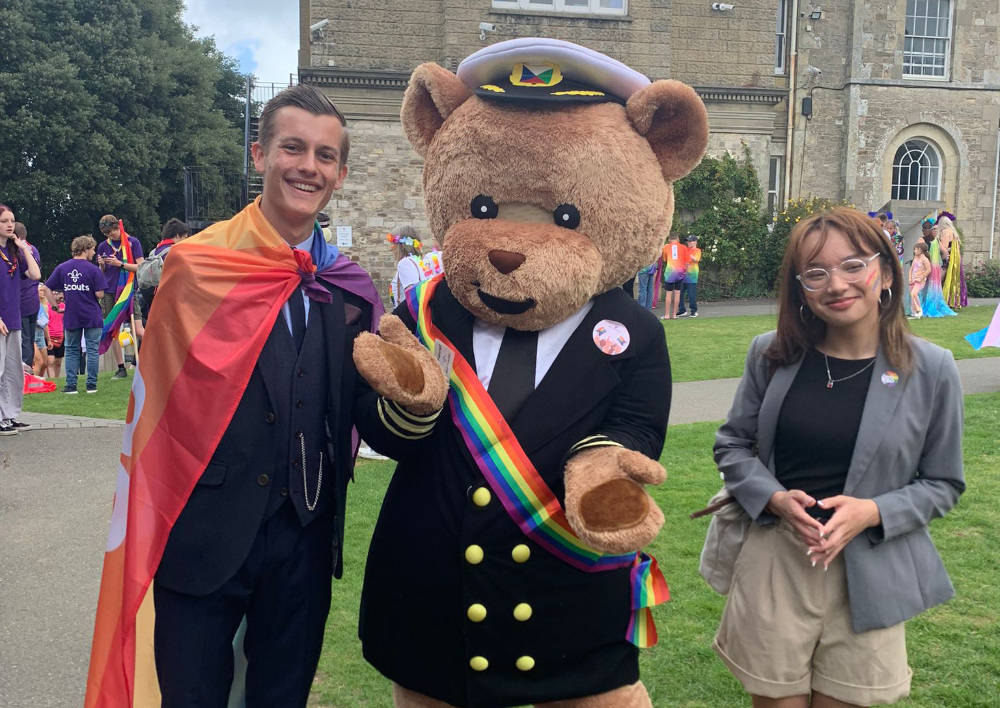
Members of the Isle of Wight Youth Council took part in the annual Pride parade last Saturday, championing gender and sexual diversity on the Isle of Wight.
The Isle of Wight Youth Council is an apolitical organisation working to ensure that the Youth voice is properly considered. Their work incorporates the ever-growing LGBTQIA+ youth community, with the recent election of the position ‘LGBTQ+ Secretary.’
According to a survey, composed by the Secretary of LGBTQIA+ Youth, Kato Paul, 63% of LGBTQ+ students have experienced homophobia in an academic setting from students and teachers alike. 81% of LGBTQIA+ identifying youth have had their mental health compromised due to conflict regarding their identity.


This survey is yet to reach a broader community, spreading across various Island schools.
Kato says:
“The Youth Council wishes to assist LGBTQIA+ youth to feel safer and unified. Our involvement demonstrates work with organisations to improve the livelihoods of LGBTQ+ young people.
“Frequently overshadowed by our elders in many spaces, our voice is crucial. By allowing us a say, we demonstrate that young individuals, regardless of identity, are listened to and deserve the freedom to display their identity without judgement.”
On a broader scale, stated by surveys conducted by Stonewall, 42% of LGBTQIA+ pupils have experienced bullying in the past year, double the number of non-LGBTQIA+ pupils (21%); 48% have had little to no positive messaging about being LGBTQIA+ at school in the last year; and half of LGBTQIA+ pupils hear homophobic slurs ‘frequently’ or ‘often’ at school, epitomising the necessity for local Pride celebrations.

Benson Hardy, the Chair of the Youth Council, has said:
“We were honoured to take part in the events for Pride. It is such a vibrant and inspirational source of the Island community, celebrating a diverse array of people.
“We have identified the importance to young people of receiving support from those around them, preventing them from hiding their identity. Being exposed to discrimination is detrimental to one’s mental well-being, a clear signal that we must work towards a more inclusive community.
“The voices of young people must be considered in relation to LGBTQ+, as well as in many other sectors of society, allowing young people to contribute to finding solutions for problems they face. At events like these, it is also a chance for young people to learn from others, connecting with the history of LGBTQ+ and remembering those who fought for acceptance”.
For more information or if you are interested in introducing your organisation to the Youth Council, email the Chair of the Youth Council at [email protected] or visit Isle of Wight Youth Council.