















































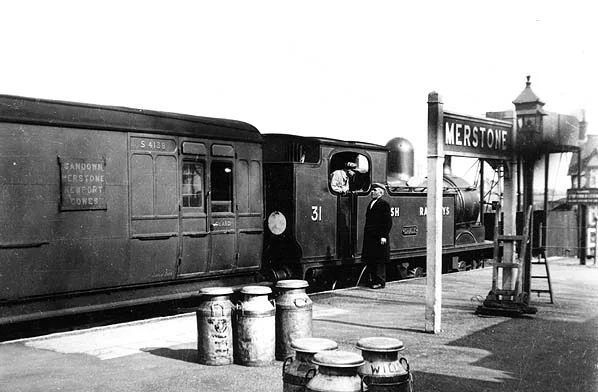

Trains on the Newport to Sandown railway made their final runs on 6th February 1956, bringing to an end a significant chapter in Isle of Wight railway history.
The Newport to Sandown line was one of the Island’s key cross-country railways for more than 80 years, linking the county town with the east coast and serving rural communities in between. Built by the Isle of Wight (Newport Junction) Railway, and later part of the Isle of Wight Central Railway, the route was never a major financial success but played an important part in Island life until its closure.
Work began after Parliament passed the Isle of Wight Newport Junction Railway Act of 1868, authorising construction of a nine-mile route from Newport towards Sandown. The first sections opened in 1875, with the full link finally completed in 1879 when the extension into Newport and the viaduct over Coppins Bridge were finished.


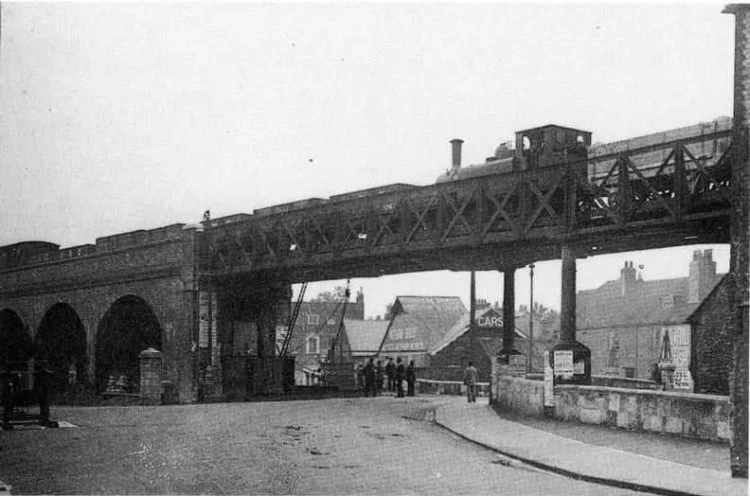
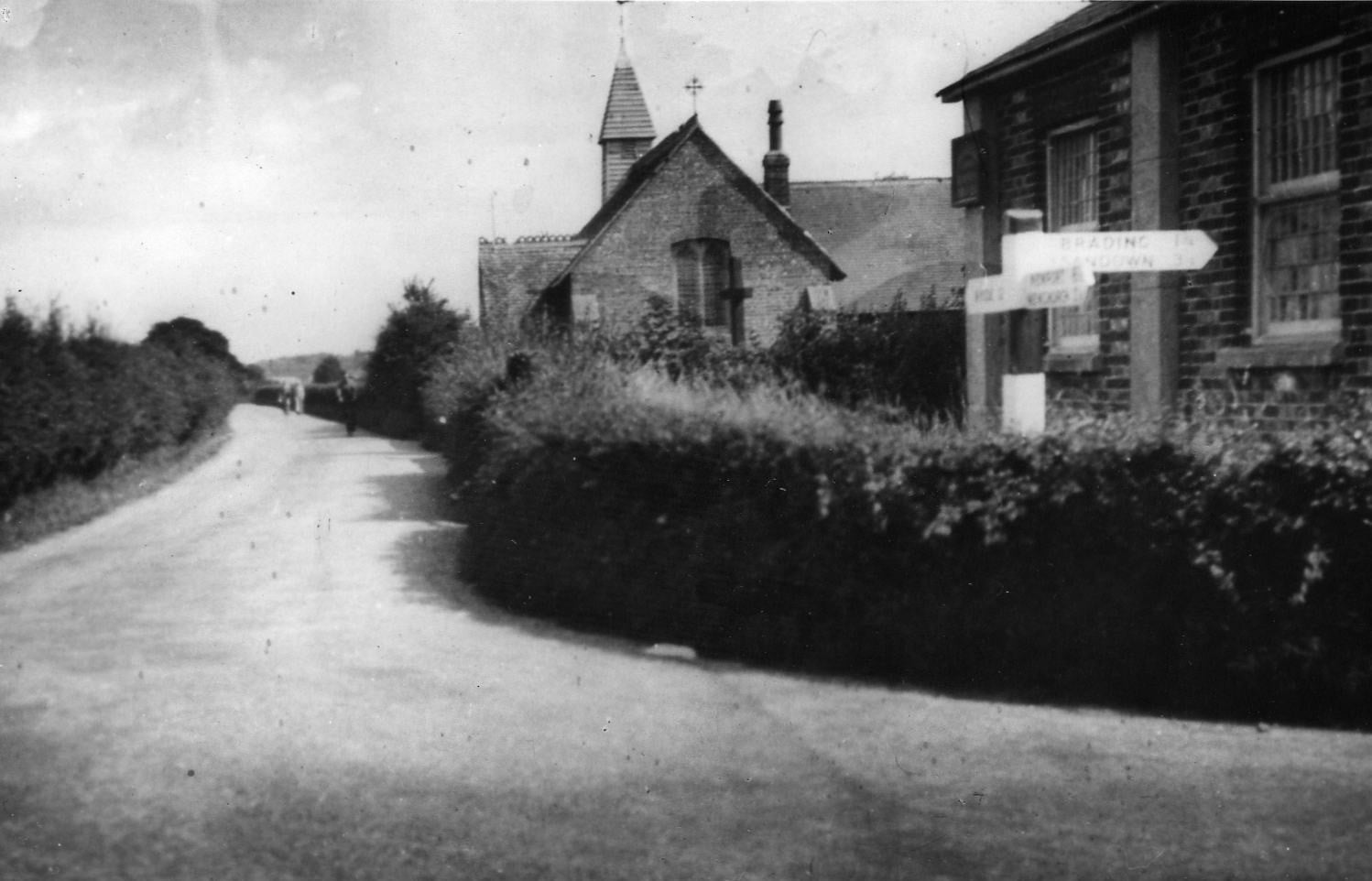
The railway wound through the heart of the countryside, serving stops at Shide, Blackwater, Merstone, Horringford, Newchurch and Alverstone before reaching Sandown. Shide was a suburb of Newport, while Horringford was a hamlet surrounded by farmland. Blackwater, Merstone and Newchurch each had their own simple platforms, waiting shelters and sidings, serving local farmers, schoolchildren and commuters for 8 decades.
In its early years, the railway was greeted with enthusiasm and excitement. Reports of the first train through Horringford in February 1875 describe cheering crowds and passengers waving flags as they travelled through newly opened cuttings and embankments. The line was regarded as a symbol of progress for the Island.
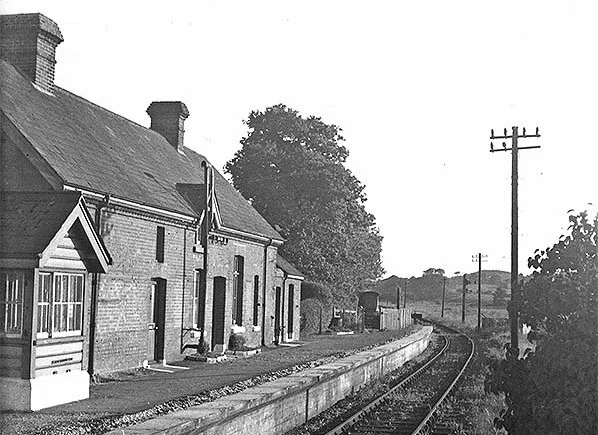
Despite this optimism, the route never generated much profit. Its rural nature and small catchment areas made it vulnerable, and by the 1920s buses offered faster and cheaper journeys. The railway continued under the Southern Railway and then British Railways, but by the 1950s passenger numbers were in steady decline. Maintenance costs rose, and officials began preparing for closure.
The last day of service, Monday 6th February 1956, was far from quiet. Hundreds turned out to mark the occasion, turning what could have been a sombre end into a celebration of Island rail history. At Merstone station, crowds lined the platform and waved handkerchiefs as the final trains crossed. Oil lamps were lit, car horns sounded at the level crossing and photographers documented the moment. It was said to have been the busiest day in the station’s history.
More than 100 people bought tickets for the final eastbound train from Newport to Sandown, far exceeding the normal handful of evening travellers. Two trains passed each other at Merstone that night, the only section of the route with a passing loop. One of the drivers, a veteran of more than 50 years on Island railways, was presented with a wreath bearing the message “For good and faithful service”.

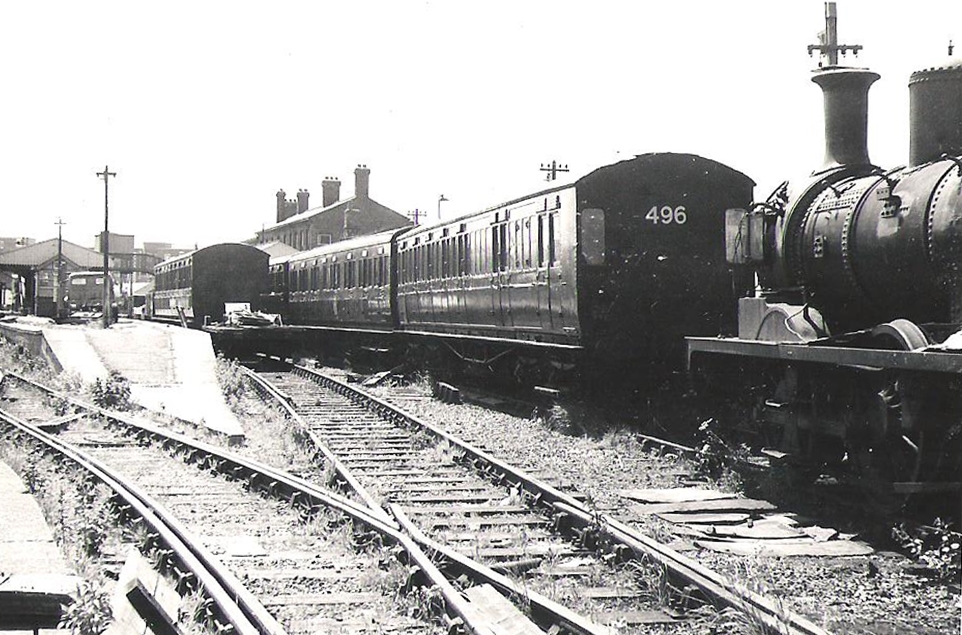
For many of the railway’s staff, it was a difficult day. Guards, signalmen and stationmasters faced transfer to other parts of the Southern Region or redundancy. One guard was due to start work at Woking the very next morning, marking an abrupt change from the quiet rural routine of the Isle of Wight.
The line’s importance stretched beyond passenger trains. For decades, milk churns, livestock and farm produce were loaded at tiny wayside stations. Horringford was once a small freight hub, shipping milk and sugar beet to markets. Children from nearby farms used the train to travel to school, and in summer months the line carried families to the seaside at Sandown.
When the line finally closed, the track was lifted within months. However, the route has never truly vanished. Its gentle curves and embankments still mark the landscape, and many sections now form part of National Cycle Route 23 between Newport and Sandown. Walkers and cyclists follow the same alignment once travelled by steam engines, passing hedgerows that still trace the old formation.
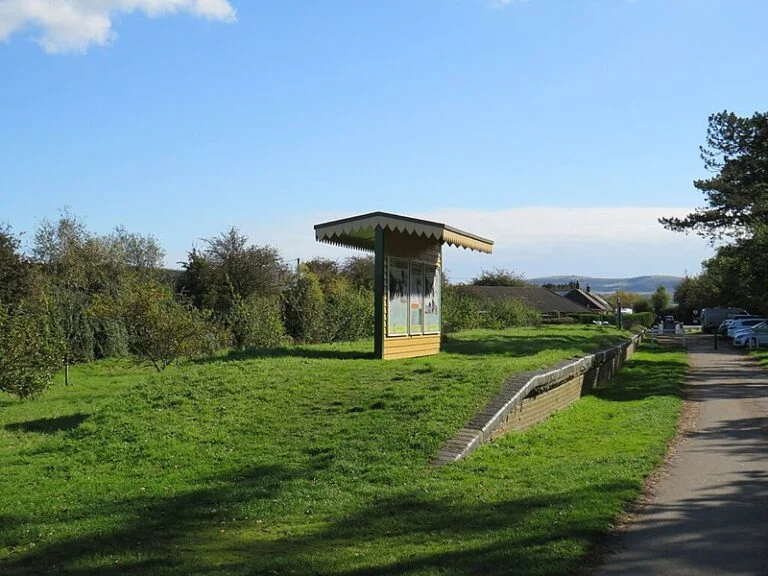
Some station sites have found new life. Merstone, once the busiest point on the line, is now a nature reserve managed by Gift To Nature. The old platform remains, now bordered by wildflowers. Horringford’s platform still exists in private grounds, while fragments of bridge abutments and culverts remain visible near Blackwater and Newchurch. In Sandown, the junction has long gone, but the surviving station remains active as part of today’s Island Line between Ryde and Shanklin.
Seventy years after the last whistle echoed across the Arreton Valley, the Newport to Sandown line is remembered with warmth and nostalgia. Though its trains are gone, its memory lives on through the paths and meadows that now occupy the route – a quiet but lasting reminder of an era when steam linked town and countryside across the Isle of Wight.











With all the road works and speeding on the island
no better time to bring the railways back.
Let the train take the strain
If the milk churns in the picture are full of milk i wonder how much water is in them i worked on the farm yearsaag a go