














































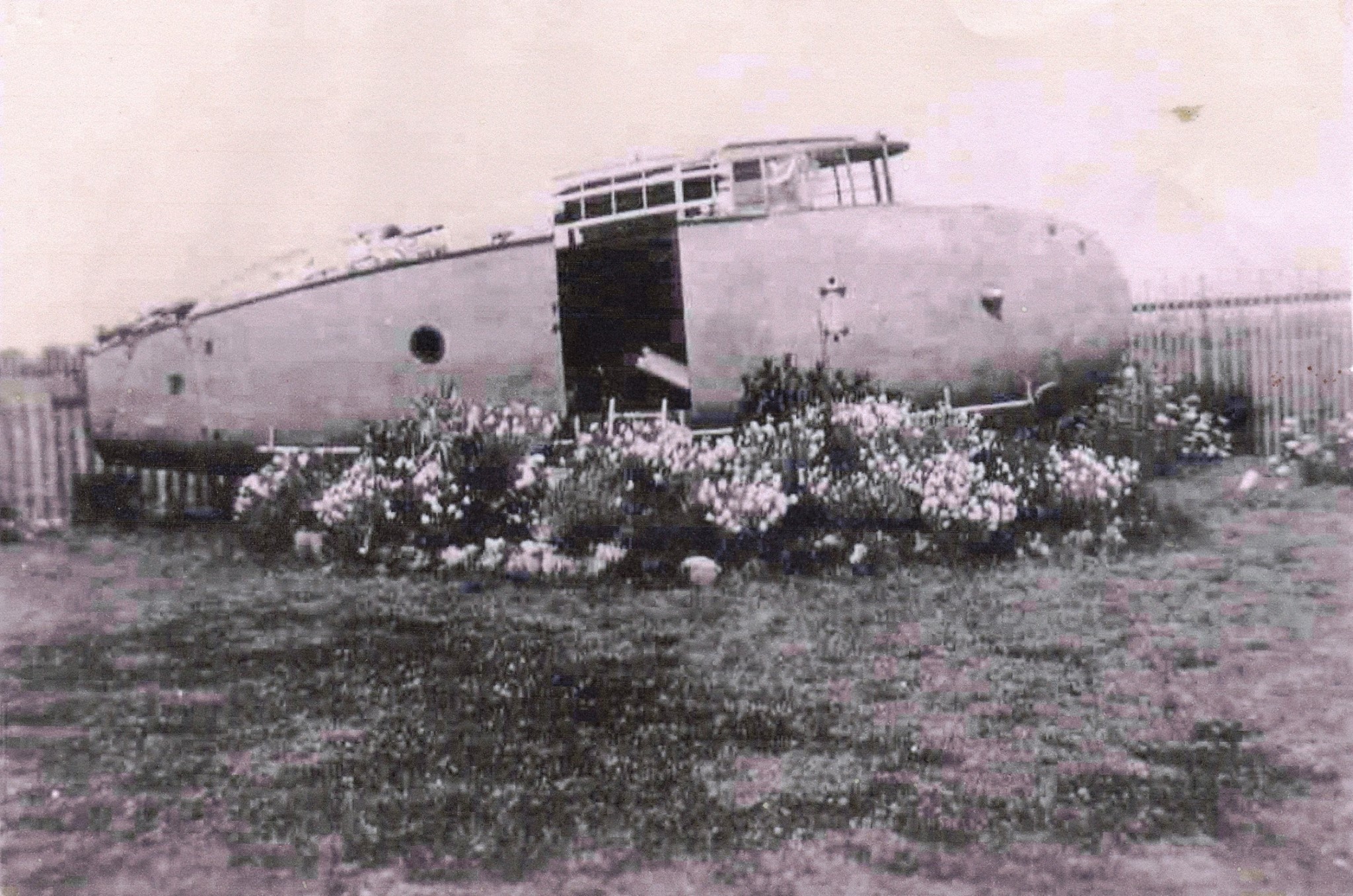

In the first of our new series, Made on the Isle of Wight, we look at the story of 3 ill-fated airship gondolas made in the Sam Saunders yard in East Cowes.
The 1st effective air raids in Britain were not by fixed-wing aircraft but rather by German Zeppelins, which created panic in London during the First World War. The British Admiralty decided to create a British version of the Zeppelin, both before and during the war, to combat the German technological lead in such machines.
In July 1908, Captain Reginald Bacon, the Royal Navy’s Director of Naval Ordnance, recommended that the Navy construct an airship to compete with the early German rigid airships designed by Count Ferdinand von Zeppelin. The British Government agreed to pay £35,000 (£3.9million today) for a ‘dirigible balloon’.


In March 1909, Vickers advised that they could construct the ship for £28,000 (£3.1million today). The contract for the airship gondolas were awarded to the S.E. Saunders company here on the Island.
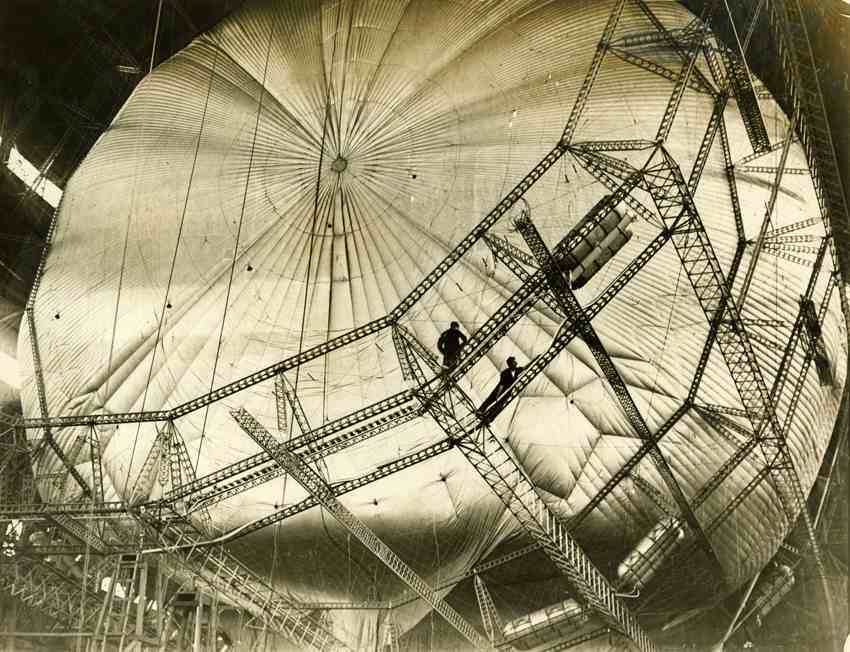
An airship gondola is where the engine is housed and the passengers are carried. Sam Saunders – founder of the Saunders Yard which later became Saunders Roe in the 1920s – had developed a material known as ‘Consuta’, inspired by the canoes of native American Indians. This material was strong, lightweight and waterproof.
The airship was to carry 2 gondolas, with the forward gondola containing the captain’s bridge. The gondolas were to be waterproof and strong enough to carry the weight of the airship while on the water.
By 1910, construction of the first ship had begun. It was called HMA No. 1 and commonly known as ‘The Mayfly’. The design team hoped the ship could compete with current Zeppelins of the time. These could fly 100 miles, carry a crew of 26 and get to 5,400 feet with an endurance of 12-and-a-half hours.
Unfortunately, the British version of the Zeppelin broke in half during a test flight.


The Inquiry Report read:
“By 24th September 1911, the decision was made to move her out of her hanger for full testing. However, disaster struck in the form of a sudden forceful beam-side gust causing the ship to lurch, just clearing the shed but laid her on to her beam ends.
“She righted and was them being pivoted so that her nose would point back out to the dock when there were cracking sounds amidships and she broke in two. She started to rise in an inverted “V” formation but the crew in the after gondola dived overboard and the stern flew up into the air.”
The Court of Inquiry decided that no one was responsible for the accident and the squall was to blame. It was of such force that any airships would have been severely damaged had they encountered it.
The broken Mayfly was left to rot in her shed. She never flew.
The-then 1st Lord of the Admiralty, Winston Churchill, made the following statement to the House of Commons:
“Altogether, compared with other navies, the British aeroplane service has started very well… I have a less satisfactory account to give of airships.
“Naval airship developments were retarded by various causes. The mishap which destroyed the May-fly, or the Won’t Fly, as it would be more accurate to call it, was a very serious set-back to the development of Admiralty policy in airships.”
The 2nd 2 airship gondolas to be made on the Isle of Wight at the Saunders’ Yard were for the R31 and R32. Like the ill-fated Mayfly, the R31 had an unlucky history, although she never crashed.
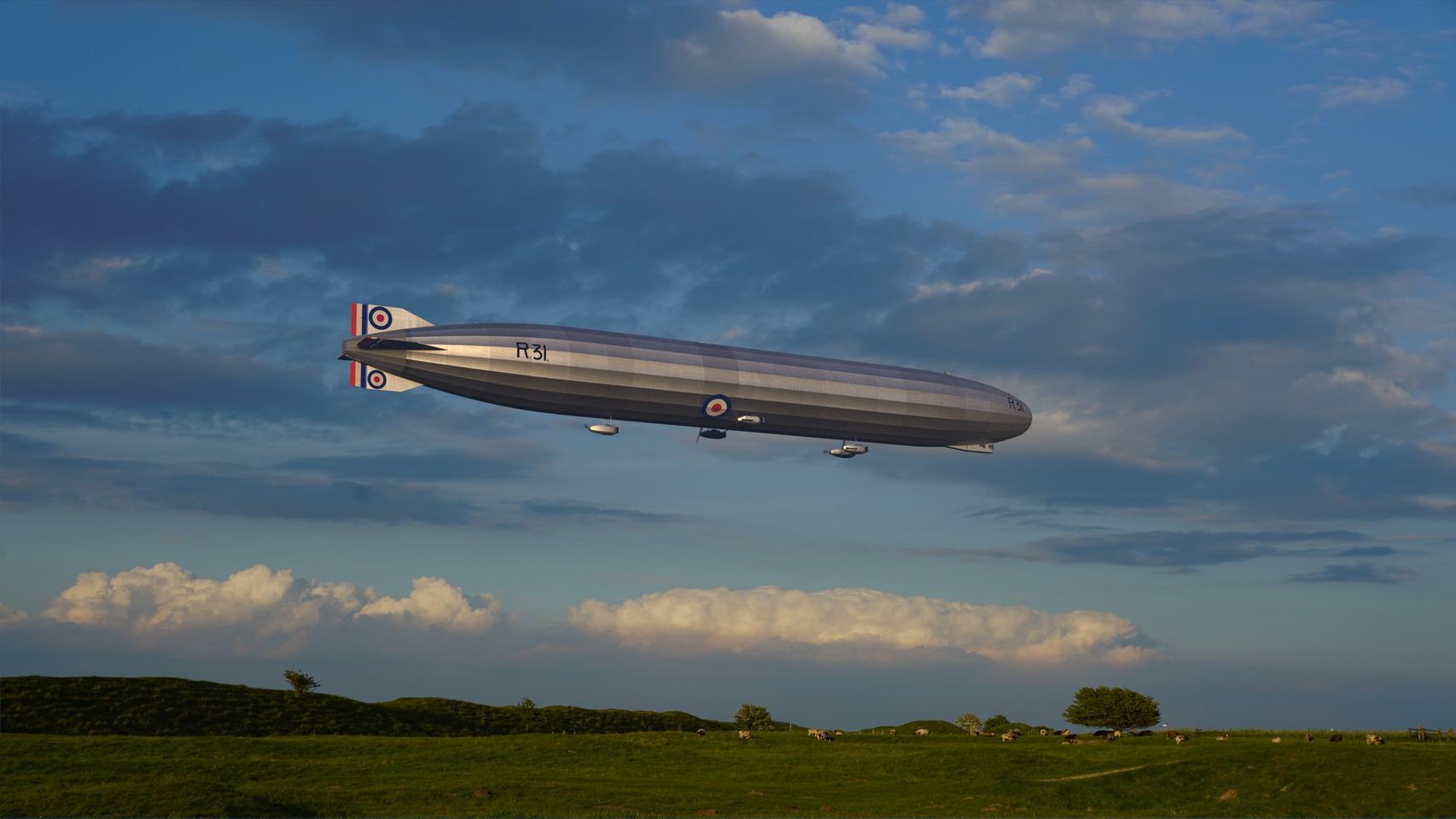
The R31 class of British rigid airships was constructed in the closing months of World War I. Their design owed much to the work of a mysterious Swiss-German Herr Müller, who had previously worked for the Schütte-Lanz airship company – which built the German Zeppelins – before defecting to Britain.
R31 was the largest British airship to fly before the end of the war, and the class remains the largest mobile wooden structures ever built. It made its first trial flight, lasting 2 hours, in July 1918. A top speed of 70 mph was achieved, faster than any other airship then in service. It was commissioned on 6th November 1918, 5 days before the armistice with Germany.
Mystery surrounds what happened to the R31 at the end of the war. Apparently, it was left to rot in a hangar in the Yorkshire Moors, where it perished through neglect. An airship the length of 2 football pitches would appear to be too large an object to lose, but that seems to have been what happened.
In 1919, the R31 was dismantled and the frames of the largest, fastest, and most powerful British airship yet to be built were sold for firewood. However, the wood did not burn as it had been fireproofed for use in an airship.
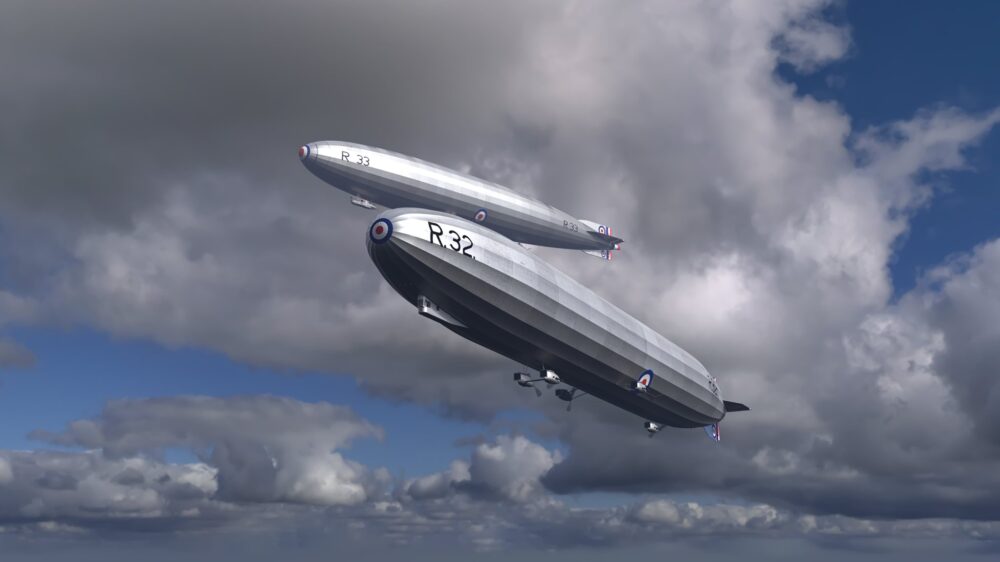
The R32 had a more successful career after being commissioned in 1919, a year after the end of WW1. She was put into operation straight away in a flight over the Netherlands, as part of Britain’s Power in the Air campaign. She flew over Amsterdam, where the 1919 aircraft exhibition was being held, before continuing her tour over Brussels, Antwerp, and the battlefields of Flanders.
The National Physics laboratory then used the R32 to carry out experimental work. In 1920, the airship was deployed to train American crews. The explorer Sir Hubert Wilkins proposed to use the R32 for flights over the poles. However, this plan never came to fruition.
In April 1921, it was decided that the R32 was no longer required for military purposes, and she was sadly broken up to save money.











And if Sam Saunders was to see what has been done to the site of his factories now, he would more than cry. Where has all the technology this Island one boasted gone? Yes, the foundations of even more houses, a super store, and a near pointless existence here. Well done the IOW Council’s over the years.
That’s the way of the island, trash it and not care, then look back at what has been lost in regret.
Very interesting article. Two queries:
The second photo appears to show R32 and R33 Was there an R33?
The article states that R31 was hangared on the Yorkshire Moors and lost, but also that the frames were broken up for firewood. Which is correct?
Yes, there was an R33, and an R34 and R38. This flight actually happened as well. Both ships flew to Holland and back for an exposition. (That’s actually my digital artwork.)