































Did you know that the Isle of Wight once sent 6 MPs to the House of Commons?
At the next General Election, the Island will elect 2 parliamentary representatives. However, if the idea of our Island having 2 MPs appears over the top, imagine the situation 200 years ago when we were blessed (or burdened) with 6 members of parliament.
Before the Great Reform Act of 1832, the boroughs of Newport, Newtown and Yarmouth each sent 2 MPs to the House of Commons. The Isle of Wight was also represented by the Hampshire County Constituency.


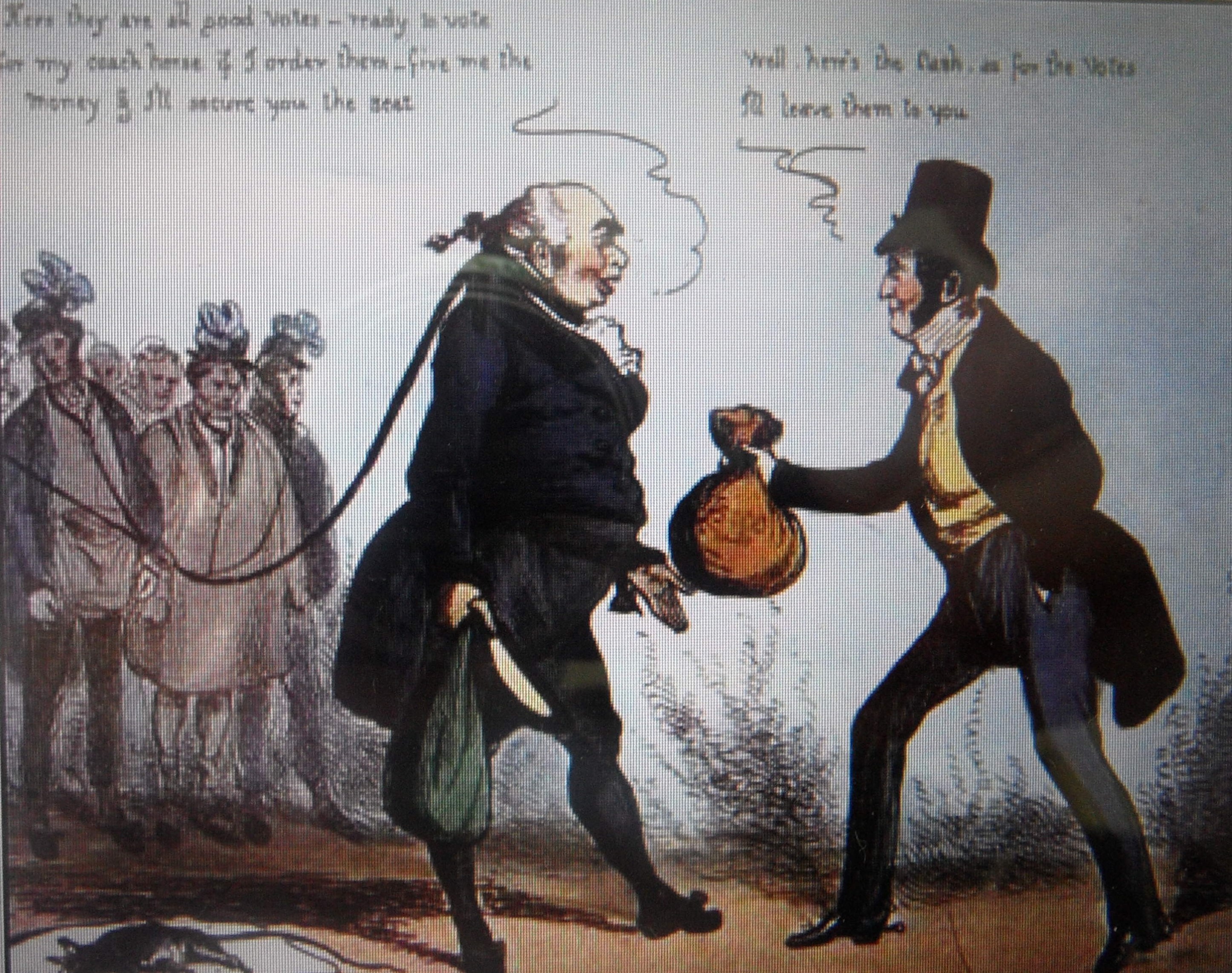
However, at that time, very few people had the vote. The 3 Isle of Wight constituencies were ‘rotten boroughs’ – in the pocket of the local gentry.
The Borough of Newport
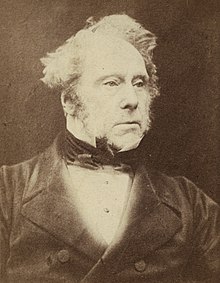
Remarkably, the Borough of Newport was represented by 4 19th century Prime Ministers. These were Arthur Wellesley (the Duke of Wellington), Henry Temple (Lord Palmerston), George Canning and William Lamb (Viscount Melbourne).

Newport first received a parliamentary representative in 1295. Between 1584 and 1868, it returned 2 members. In 1868, its representation was reduced to 1. The constituency was abolished in 1885.
Up until 1832, the power to vote was given to the Mayor and Corporation of Newport (11 aldermen and 12 burgesses).
Did this mean that the corporation chose the most able candidate? The short answer to this question would be no. The position of MP was simply sold to the highest bidder. In 1754, for example, the cost was £600 per candidate (a cool £210,000 in today’s values). The Government ‘fixer’ was said to have been the local Holmes family, which held Newport in their pocket.

In 1832, the electoral franchise was extended to the rich and propertied. Only at this point were genuine elections held. In that year, the town of Newport had an electorate of 421 (which excluded women and the less well-off) out of a total population of 6,700.
The Borough of Yarmouth
Yarmouth sent 2 MPs to the House of Commons between 1584 and 1832. Like Newport, the constituency was said to have been in the pocket of the local Holmes family.
It was a ‘rotten borough’ in the sense that the town was tiny and therefore the electorate minuscule. At the time the constituency was abolished, Yarmouth had 114 houses and a population of just 586 (most of whom were unable to vote).

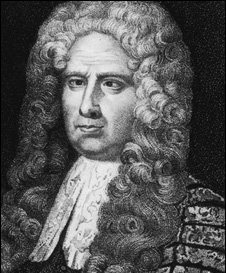
Yarmouth’s most infamous MP was Sir John Trevor (elected 1690), who became Speaker of the House of Commons. Unfortunately, he was severely cross-eyed, which was confusing to members of the House, as they were uncertain which had caught the Speaker’s eye and would talk out of turn.
In 1695, Trevor was found guilty of taking a bribe of a thousand guineas (£180,000 in today’s values) to allow a bill passage through the House and expelled from the Commons. However, he was allowed to keep the money.
The Borough of Newtown
Newtown was the worst example of a ‘rotten borough’ on the Isle of Wight. Between 1584 and 1832, it also returned 2 MPs. However, at the time of the constituency’s abolition, it had just 68 inhabitants living in 14 houses.
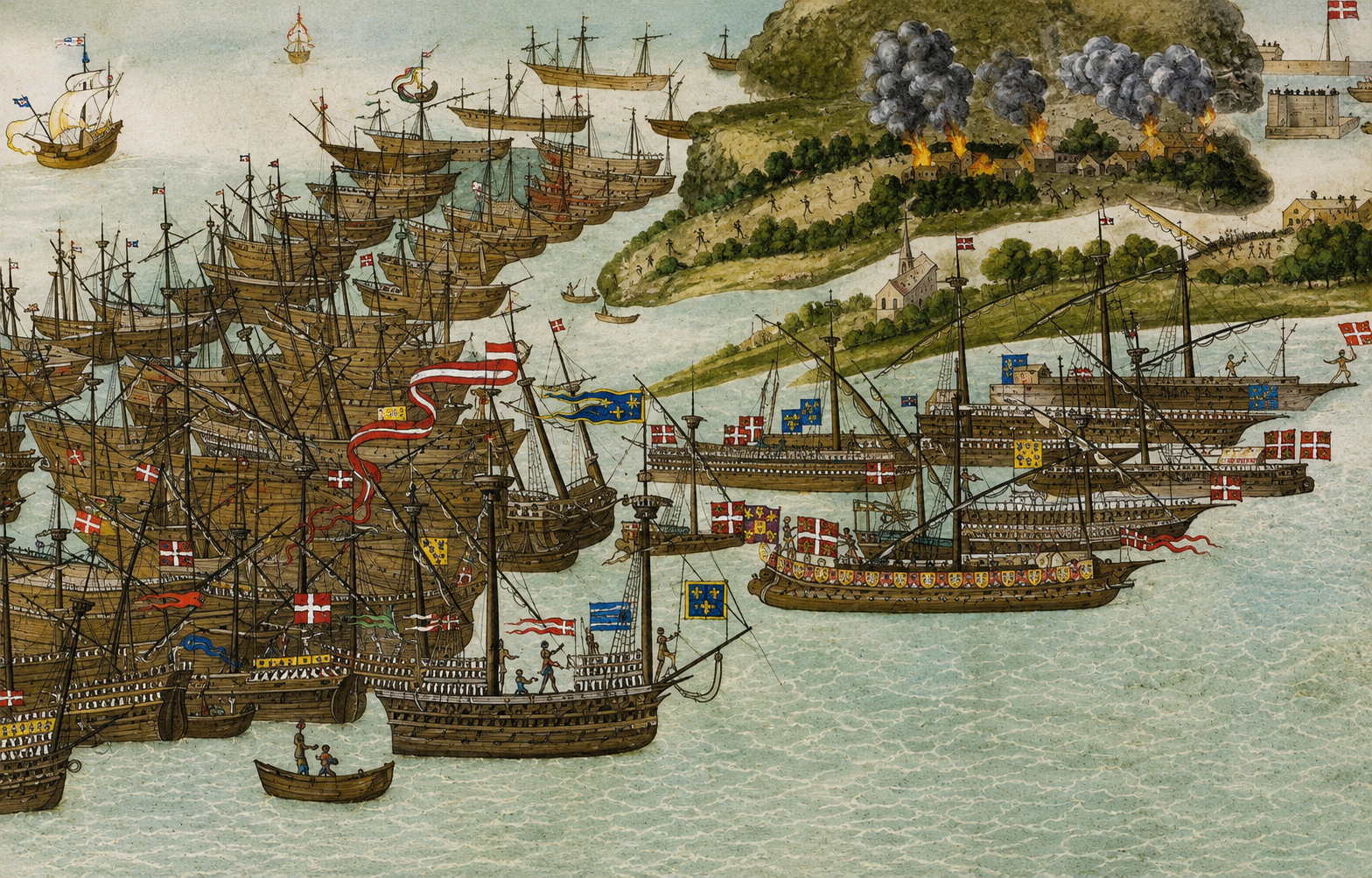
Newtown thrived until it was destroyed by a French raid in 1377. Elizabeth I hoped that by granting it 2 MPs the ‘town’ might once again prosper. This, sadly, never happened.
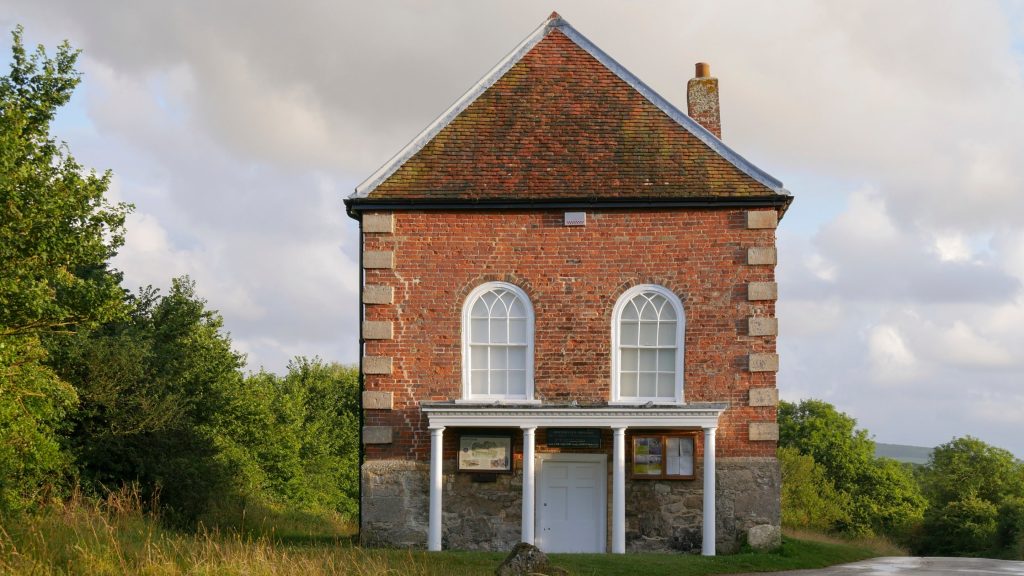
Newtown may prove to be a valuable lesson for us. A greater number of politicians does not create any greater prosperity.
The right to vote in Newtown was limited to 23 burgesses, not all of whom actually lived in the borough. If the burgesses did not vote the ‘right’ way, then they could be expelled from their properties and replaced by someone more amenable.
The land at Newtown was held by the Barrington, Holmes and Anderson-Pelham families. This meant that considerable expense and negotiation was required to get the desired result at election time.
By the late 18th century, the Borough of Newtown was said to have been in the pocket of the Barrington family.
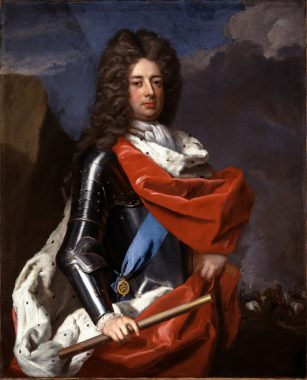
Newtown’s most famous MP was John Churchill (elected 1679), 1st Duke of Marlborough, hero of the wars against Louis IVth of France in the early 18th century. Winston Churchill was his direct descendant.
Island Echo will soon be publishing a new series Isle of Wight MPs focusing on our most famous former political representatives, including Newport’s 4 former Prime Ministers.
The 1st in our series will be about Lord Palmerston, who was twice elected MP for Newport in 1807 and 1809.







Thank you for letting us know, an interesting article.
What a waste of money that was all those years ago, it’s bad
enough now with just Barbeque Bob.
Cowboy builder Paul are you coming to fix that wall you put up for me that fell down over night
What I put up, stays up.
Thank you. Love finding out about the Islands past (good or bad).
The weird thing is, as we are looking back, it is all obvious to all that Politicians were so corrupt, yet in a few decades time people will look back to now and accept the corruption which clearly still goes on in such circles.
But the long passage of ‘time’ gives a romance to such, but for the people who are being ‘used’ as we are being now with excuse to make us pay more under the guise of climate change, or Politicians pretending that then can do little to prevent illegal or masse immigration, or the pricing thus forcing cars off the road etc, by lying about such the politician are doing so for their own agendas, then WE currently are being used to make life better for those at the top, all under the guise of fake concern
Insightful as usual… lol
I V Searle is Hitler’s last loyal supporter.
Full stops are a thing, you know.
Great read seems nothing changes lesson learned more doesn’t mean better the trough was even bigger in those days
Actually things have not changed much, In my opinion I bet there is still a lot of bribery going on,, no doubt including the Ferries too…
Were all these people born and bred islanders? I have read factual evidence that since the prisons have been adult holdings, in 1863, approximately 38 percent of those released each year have stayed and lived on the island, seems a high level of offenders not born or bred here may have had many children. Birth registration began the 1st july 1837. How many people think they are caulkheads but are just mainlanders from prison fathers?
Do you realise that your notion of a “caulkhead” is both racist and offensive? Perhaps you imagine that “caulkheads” evolved independently on the island, which would explain a lot if true. Can you give me an estimate of when the caulkhead lineage diverged from the path that led to Homo sapiens in other parts of the world? Homo caulkheadius certainly has some clear features that may be attributed to overuse of a limited gene pool. Evidently, these 19th century prisoners provided some much needed diversity and saved H. caulkheadius from extinction. You should be grateful.
I dought that many people even know the true origins of a “caulkhead”.
Yes most caulkheads are probably descended from criminals. That figures!
Very interesting articles, just shows how things haven’t improved with the HoP – will be interesting when we get two MP’s just to see who does the better job, although being such a small Island I am still confused as to why we need 2, the only positive is hopefully they will both put the Island first and not themselves.
“the only positive is hopefully they will both put the Island first and not themselves.”
not a chance,.. especially if one or both (disasterously) turn out to be conservative 🙁
It’s up to the voters of the Isle of Wight to remember just how corrupt and self-serving that lot are, and make sure it doesn’t happen.
(but alas, with the blinkered and brainwashed voters on the IoW, who still believe all the lies & broken, empty promises, I fear that will not happen)
The island has by far the largest electorate among the current 650 constituencies in the UK. The change to two MPs is long overdue.
HoP was a great laugh when Sir John Trevor was speaker.