


















































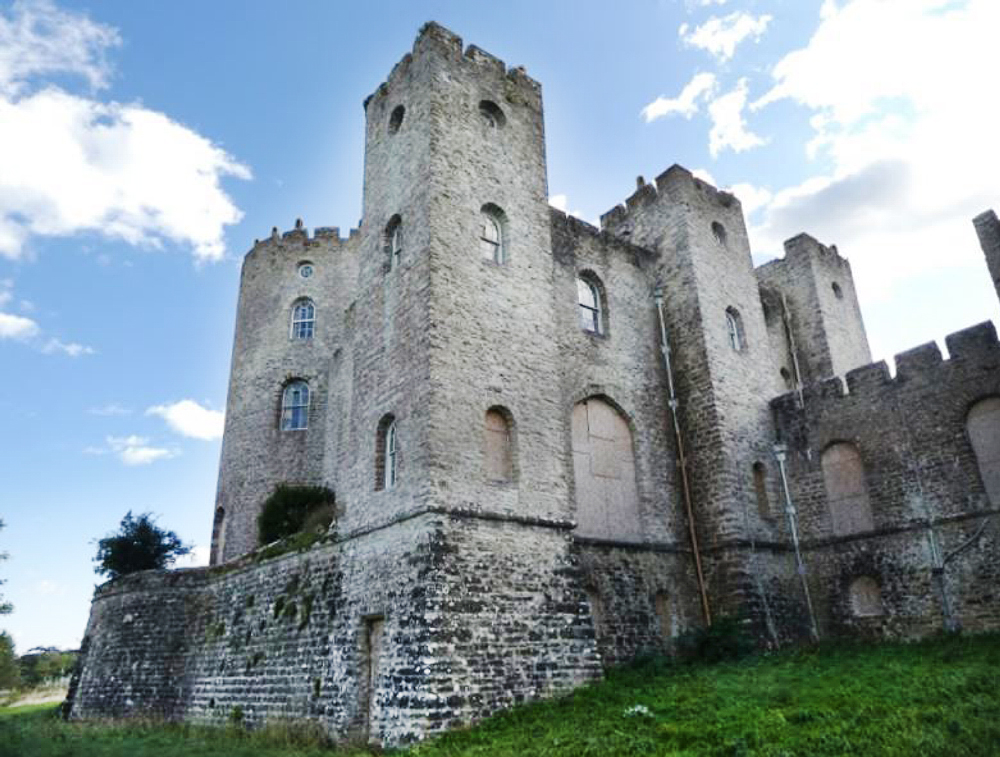
 After years of setbacks, plans to restore the dilapidated Norris Castle have finally been submitted to the Isle of Wight Council – but it will take 5 years to complete at a cost of £110million.
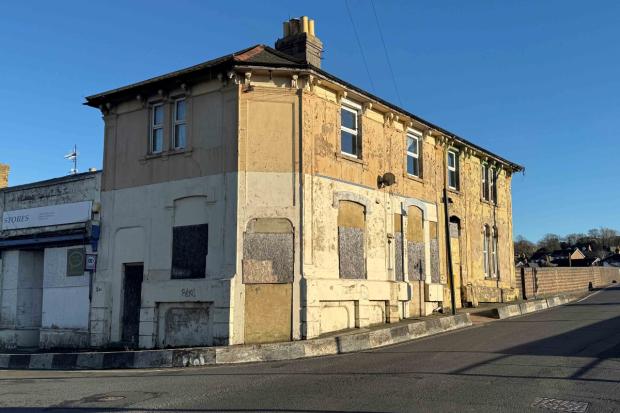
The castle has been empty since it was bought by its current owners, for £4.7million, in September 2015. It is said to be in a precarious condition, due to neglect because of the lack of sufficient funds available to previous owners to keep up with its extreme expenses.
Now, plans to turn the estate into a ‘year-round heritage and natural environment-led destination’ resort have been unveiled by the Norris Castle Estate Group (NECG).


In a staggering 184 planning documents, agents lay out the development’s purpose, which is primarily to conserve the significance of its 3x Grade I and 8x Grade II listed assets.
It is estimated the current repairs to the estate would be £16.55million, with added conversion costs of £90.74million. A market value estimation of the completed resort is £96.19million — leaving an £11.1million deficit, which NCEG will look to make up elsewhere.

Some changes have been made to proposals since they last came forward, with the castle’s glass-roofed restaurant removed and further hotel accommodation added separate to the main building.
The plans include:

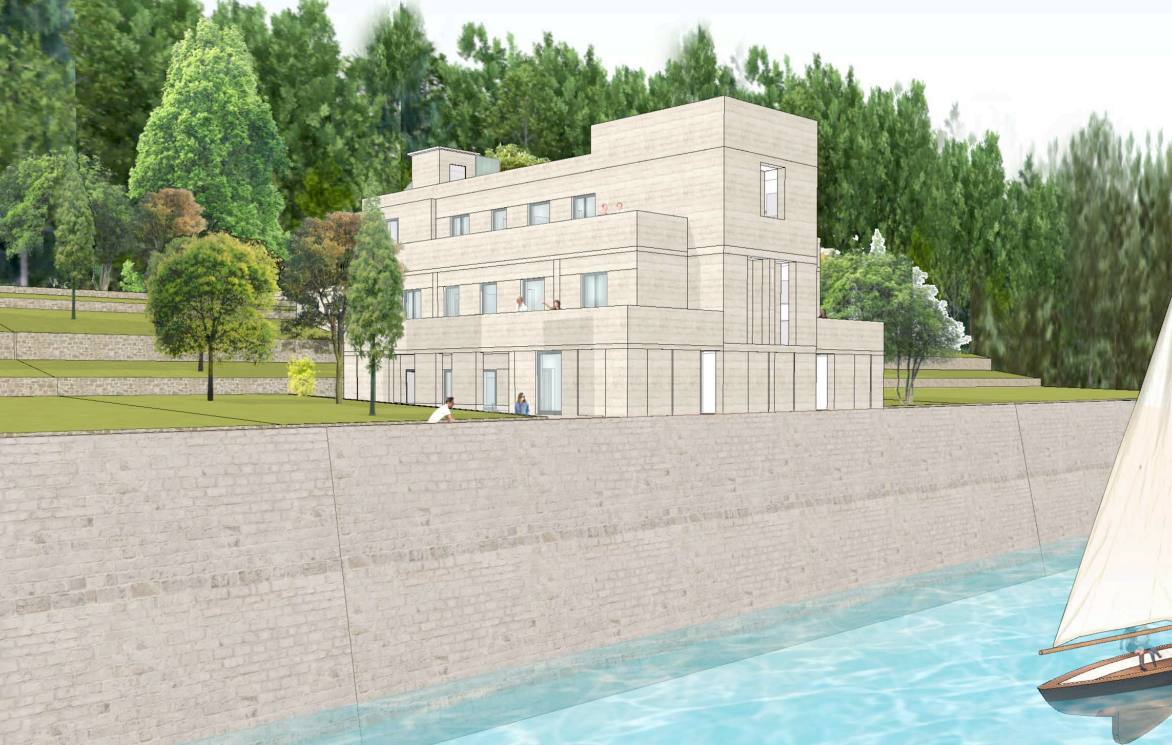
- The conversion of the castle into a 17-suite hotel with a bistro, bar and restaurant. A connected terrace and crescent buildings, built into the landscape, providing 57 additional suites, spa treatment rooms and a swimming pool.
- The restoration and conversion of the buildings in the farmyard into Farmstead Spa and Wellness Centre, with treatment rooms, a gym and library.
- Restore the Grade II pumphouse into a clubhouse
- Repair the bathing house, constructing a new, single-storey 80-cover restaurant
- 55 Resort Residences in seafront buildings, coastal cottages and lodges across the estate including 15x 4-bed houses
- Restoration of the seawall, park and gardens and a new slipway and boathouse
- 152 car parking spaces with 22 disabled spaces and 270 cycle spaces
To make the development viable proposals include housing beyond the Norris Castle estate boundary, on the land owned by the NECG, next door at the Springhill Estate.
An estimated 120 dwellings are proposed — a maximum of 105 on 4 parcels of land at Springhill which include 55 units in a senior living scheme.
As part of a legal agreement with the council, should plans be approved, Islanders would be prioritised for buying homes in the first 3 months and the Resort Residences would also not be allowed to be primary accommodation.
It is estimated if the plans get approval it would take 5 years to build but at the end of it nearly 160 full and part-time jobs would be created.
To view the plans (21/02437/FUL and 21/02438/LBC) photos and other documents you can visit the council’s planning register. Comments on the application can be submitted until 8th April.








Here we go again, house building on a large scale.
Yes, but at least it will be built on an already private estate and may even be good for the local community and economy. Nobody visits this part of the island because of all the PRIVATE PROPERTY and KEEP OUT signs.
I’d like to see commitment to public access in a form of public pathway under National Trust scheme.
Entry from the esplanade would need restructuring. By definition esplanade is a pedestrianized area to relax by the sea and we already have a lot of cars taking space there instead. Access road nearby could tempt more to erode any esplanade-ism left.
Hotel, restaurant at a bathing house etc. seem great! – but the sheer # of other houses seems environmentally unfriendly: area is marketed as a “20-minute city” but it’s Britain so 90%+ of people will drive a car anyway, increase noise and pollution, scare wildlife and so on.
Don’t get me wrong, if it was in Netherlands and I’d know that most residents would pick bikes or walking instead of cars I wouldn’t mind the number of houses – but reality in Britain is different, with 175 houses even though it’s a “20-minute city” in theory, in practice we’ll end up with 200 cars or more probably 🙁