




























































Island Echo examines the strange tale of Maurice Holbrook, who inexplicably murdered a child at Barrack Field Parkhurst in a case that shocked and horrified the Isle of Wight over a century ago.
On 26th August 1898, the gaunt figure of 42-year-old Maurice Holbrook walked into Newport Police Station and said: “I wish to give myself up. I have cut a boy’s throat.”
Initially, an incredulous Sgt Adams, who was on duty at the time, disbelieved Holbrook. But the murderer was insistent. He produced a pocket knife and said: “Here is what I did it with.”


Holbrook was then cautioned by the sergeant. Adams examined the knife, which was bloodstained, and spotted specks of blood on his fingernails.
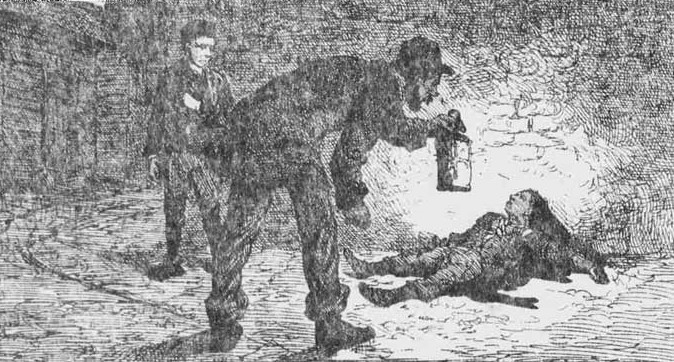
The man was taken into custody while the sergeant and Chief Inspector Ayers investigated the case, which they tragically found to be true. The victim – 9-year-old Percy Hayter – was found on the field under a tree with 2 gashes to his throat that had severed his windpipe. The area around where his body lay was saturated with blood.
The body of Percy Hayter was taken to the nearby workhouse mortuary, where he was pronounced dead.
There was no report of a missing child in the area; it took some time for the Hayter household to hear the terrible news.
Percy’s father, Henry, recognised his son’s clothing at the police station, but could not bring himself to identify the body. A neighbour of the family from Worsley Road, Hunnyhill, undertook this unpleasant task.

Maurice Holbrook was a native of the Isle of Wight, who had been away from the Island for a decade. During this period, he had travelled throughout America. After returning to England, he caught typhoid fever, after which he was placed in the workhouse for 2 months, before leaving the institution 2 weeks before the murder.
Under questioning, the killer complained of feeling ill and declared he had not eaten anything for 3 days, other than some ha’penny buns. He claimed to have slit the boy’s throat under the mysterious orders of “a man in red”.
An inquest was held at Newport the following day, where the jury returned a verdict of wilful murder. Holbrook appeared in court the following day.
A court reporter described him as follows:
“the prisoner is a man standing about 6ft. high, of cadaverous appearance, and wearing generally a dejected, woe-begone look. He has dark hair and moustache.
“He was attired in a dark jacket and trousers, a light corduroy waistcoat, and he wore round his neck a thick light and dark blue striped kerchief. He stood with one hand grasping the front of the dock, and looking down at the table in front of him, rarely raising his eyes.”
On being asked whether he had anything to say, he replied negatively.
Holbrook was bundled out of the court by police officers, only to be confronted by an angry mob outside. At Cowes, he faced a further hostile crowd, before being taken by steamer to Kingston Prison in Portsmouth.
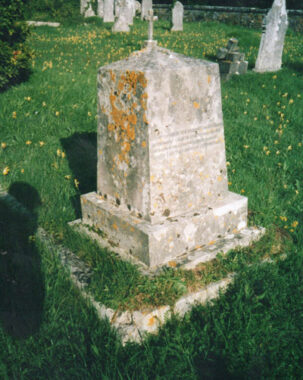
Poor Percy Hayter was buried the following Tuesday in Carisbrooke Cemetery. Hundreds gathered to watch the funeral procession make its way through the County Town with many women in tears and men doffing their caps as a mark of respect.
A cornet which Percy had played in the Salvation Army band was placed on the coffin. 935 people contributed 6d (2-and-a-half new pence) towards his headstone.
On 22nd November, Holbrook appeared at Hampshire Assizes, charged with ‘feloniously, wilfully and with malice aforethought, killing and murdering’ Percy Hayter.
Prosecuting, Mr Giles said:
“There is no evidence whatsoever by which we could assign any motive whatever for this offence. Indeed the only explanation it seems to me upon the facts is that the offence was committed by an uncontrollable impulse of a mad man.”
Giles called on the evidence of a Dr Norgate, who stated:
“In May this year, in his opinion, the prisoner at the bar was suffering from epileptic fits, brain disease, and that the nature of his ailment was permanent, and that he was totally incapacitated from carrying out his usual calling.
The judge, Mr Justice Kennedy, instructed the jury to deliver a verdict of guilty but insane.
The jury found that Holbrook was: “Guilty of the act charged, but was so insane as not to be responsible, according to law, for his actions at the time the deed was done”.
The judge responded: “Then I order that the prisoner, Maurice Holbrook, be kept in custody as a criminal lunatic in Winchester goal until Her Majesty’s pleasure is known.”
Holbrook – who had taken little interest in the proceedings – was promptly escorted away by warders to a life incarcerated in an asylum for the criminally insane. He died in Broadmoor in 1917.












How sensible judges were then. As they saw that any evil act was either caused by a deliberate cruel vile person OR a mental person.
But the sentence was either locked up in an asylum for life or in prison for life or hung
They could never imagine how weak and pathetic sentences are now and even acts of terror killing and maiming scores of innocent British people are rarely real life sentences
Really enjoy these articles thank you.
I’m also enjoying reading them. Very interesting.
Really enjoyed yhis so another one please