




































The Isle of Wight’s pre-schools, nurseries and primary schools are ready to welcome children back to school next week.
From Monday (1st June), schools across the Isle of Wight will open their doors once more to youngsters in nursery, Year R, Year 1 and Year 6.
Most schools closed on 20th March to help stop the spread of COVID-19. Many, however, remained open for vulnerable pupils and the children of key workers throughout lockdown.


Health and safety risk assessments
Every educational setting that opens from Monday will have undertaken a thorough health and safety risk assessment to identify the measures they will need to have in place to reduce the risk of spreading infection.
This includes minimising contact by having smaller class sizes and avoiding mixing between groups.
Education settings will have their own approach, based on the amount of space and number of staff available.
Parents and carers are advised to follow the information they receive from their education setting about the arrangements, including those for the home to school journey, that will be in place from Monday.
The additional numbers some schools will be taking in on Day 1 will be cautious, and schools are planning to build up numbers over time, safely.

Parents and carers are asked to exercise patience over the first few days as schools will be working in new ways and it is better to be careful and safe, than rush too many children in at speed.
Unfortunately, in some schools it will not be possible to accommodate all children in all priority year groups while adhering to the national guidance, mainly due to school and classroom sizes presenting logistical problems.
Back to school transport
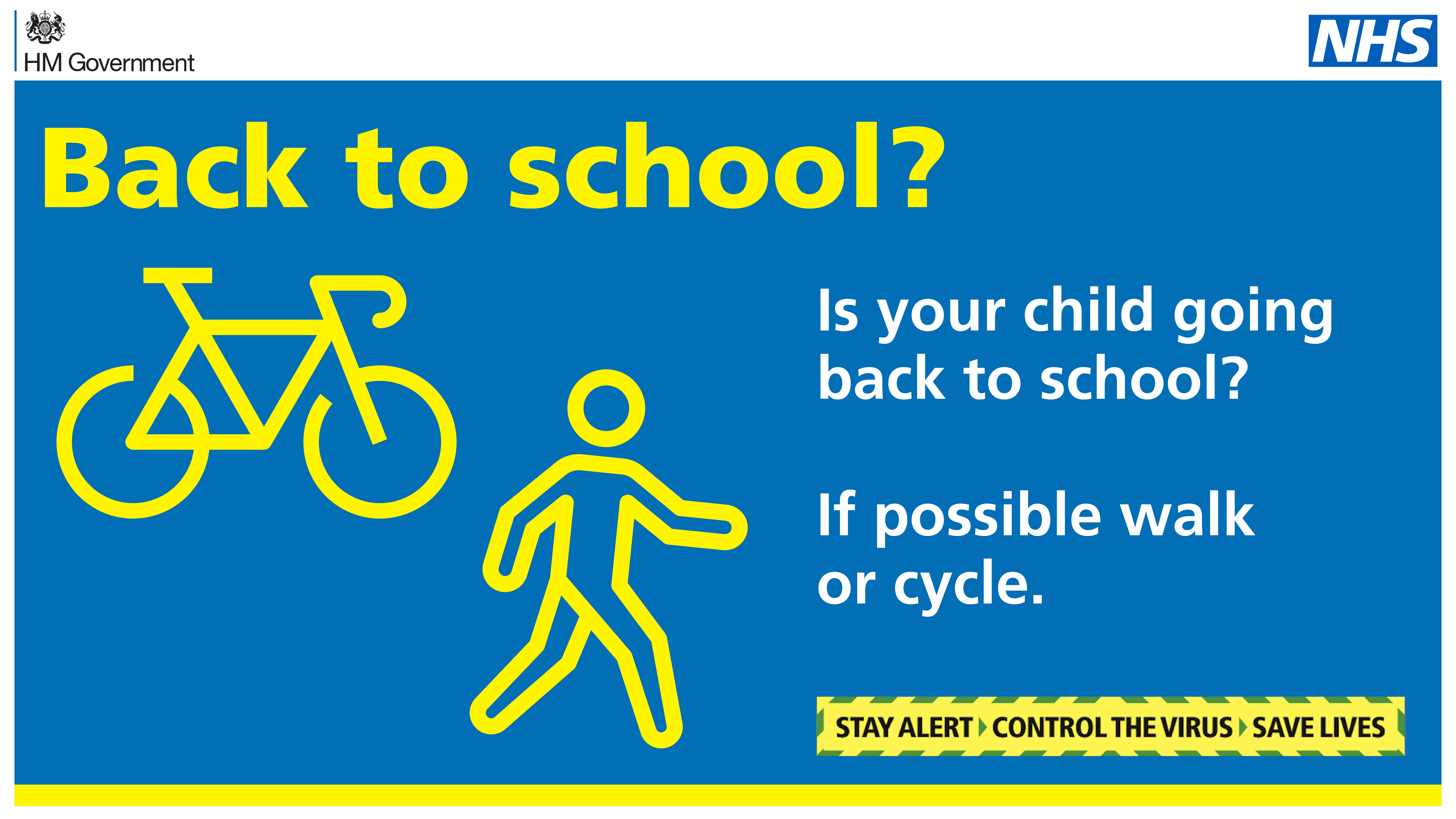
With the government advising that people should avoid using public transport as far as possible, children and young people are encouraged to walk, cycle or scoot to school where it is safe to do so and to continue to follow the two metre, social distancing advice.
If parents and carers must drive children to school, they are urged not to car share but to transport only their own children.
Those who have no alternative to public transport should follow the government’s advice.
Councillor Paul Brading, Cabinet member for children’s services, education and skills, has said:
“I’d like to reiterate my thanks, once again, to all early years education providers and our family of schools who have been looking after the children of key workers and vulnerable children since 20 March, including during the Easter and half-term holidays.
“At the same time, they have maintained contact with, and provided ongoing educational support to, those children and young people who, on the government’s instruction, have stayed at home.
“In addition, over the past three weeks, they have dealt admirably with the enormous and unprecedented challenge of preparing for a phased return to school for specified year groups.
“It is a complex task and early education providers, school leaders and their governing bodies have had to work hard to plan and implement measures that will ensure that staff, children and young people can adhere to national guidance and operate as safely as possible.
“In so doing, they have been building on the government’s plans for a gradual, phased and initially small-scale return, allowing for local flexibility within schools in terms of class size, staffing, and the constraints of school buildings.”
Councillor Brading adds:
“Our services for young children and school improvement team have been working with Island schools and early years settings to help early years providers and schools prepare for wider opening.
“Resources, experiences, and approaches are being shared across education settings, giving school leaders a wealth of information and support, which has helped them to make the best decisions to support their school community.
“That work will continue over the coming weeks to ensure schools have access to high quality advice and support.”
As announced by the Government, secondary schools are now planning for some part-time face-to-face contact with young people in Year 10 and Year 12 from 15th June.







Classes are supposed to be reduced in numbers, how do you know if your child can actually attend?
What?
If it’s in reception, yr 1 or yr 6 it goes back. What’s hard to understand?
It does state smaller class sizes, so Jules does have a point..
Perhaps “reduced in numbers” might give you a clue…obviously YOU don’t understand.
Four prominent members of the Government’s own scientific advisory body have broken ranks to express worries about the safety of wider primary school opening on Monday.
A SAGE member Professor Peter Horby, who is chair of the Government’s New and Emerging Respiratory Virus Threats Advisory Group (NERVTAG) said some relevant things on Saturday’s BBC Radio 4 Today programme. He said SAGE has always been very clear that test, trace, isolate must be fully running BEFORE lockdown is relaxed. Why are we not listening to these scientists? The system needs to be tracking most new cases and following them up within 48 hours.
Professor Horby added that SAGE does not have a good handle on the role of children and schools in transmission and stated that returning to another lockdown would be much worse than delaying another two or three weeks until contact tracing is fully up and running.
Opening schools more widely runs the risk of increasing the R rate and therefore the level of risk to staff and to parents. That risk can only be mitigated if contact tracing is running successfully. The Prime Minister’s earlier excessive optimism of being ‘world-beating’ is at odds with Baroness Dido Harding, who is heading up the NHS Test and Trace system. She told MPs on a Zoom call on Thursday it would not be fully operational until the end of June.
We do realise there are many other considerations, but ultimately, this is why the National Education Union believes, we should be more cautious and not widen opening on 1st June.