






































































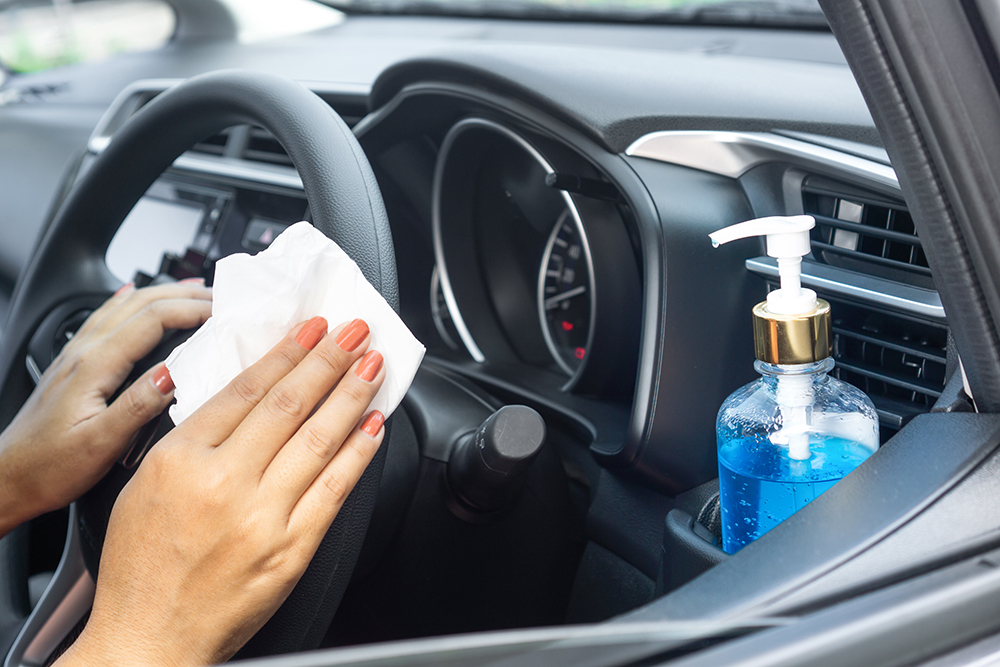

 Following national widespread news coverage claiming that hand sanitiser kept in vehicles can pose a fire risk, the National Fire Chiefs Council (NFCC) has refuted these reports and confirmed there have been no cases of such fires in the UK.
NHS Property Services issued a warning about what is considered to be the dangers of keeping sanitisers in vehicles to its front line staff. It has now retracted this advice following further evidence.
Roy Wilsher, NFCC Chair, has said:


“We want to reassure people that this product will not combust if left in a car – even on the hottest day. For hand sanitiser to cause a fire it would need to come into contact with a spark.
“Hand sanitiser is very important in the fight against the spread of COVID-19, therefore it is is essential we debunk this myth. We advise people to ensure they store their hand sanitisers in vehicles safely, which includes keeping bottles closed and out of direct sunlight. such as in the glove box. This will ensure the contents do not deteriorate and means bottles cannot be magnified by the sun. Sanitiser should also be kept away from naked flame.”
The initial reports stemmed from media articles in the USA. Following this, NHS Property Services issued an internal message to frontline staff, highlighting what is believed to be a potential risk.
NHS Property Services has said:
“This decision to raise awareness across colleagues was made in good faith. It is now our understanding that the risks associated with hand sanitisers in vehicles only become apparent when in contact with a spark. We will be issuing a formal alert to our frontline teams to clarify this situation.”
Article continues below this advertisement

Things to know:
- The possibility of alcohol-based hand sanitiser gels causing a fire in vehicles is very low.
- The alcohol in the sanitiser would need to be open to the air in order to evaporate if the container was sealed it is unlikely that alcohol would escape into the atmosphere.
- The boiling points of the materials in hand sanitiser would need very high temperatures inside a vehicle to vaporise these common alcohol products.
- The vapours would need to reach a Lower Explosive Limit in order to form an ignitable mixture; this would result in a “flash” when ignited rather than produce a sustained fire likely to ignite combustible materials.









Yet a ‘bottle’ caught fire to a council house, a fag butt caused a fire proof gas meter box to ignite.
‘Stranger’ things have ‘allegedly’ happened here.
My gel bottle left in my car shot right across the car when I pumped it, as pressure was built up inside. No fire thankfully