































































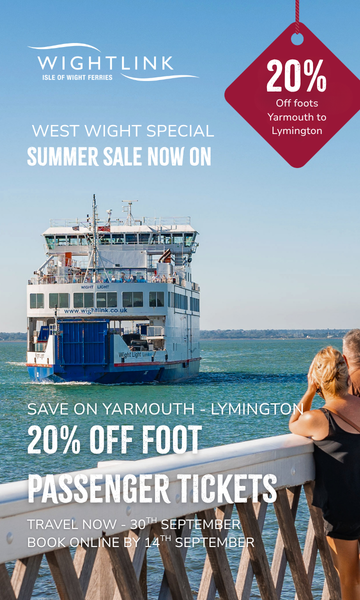
Ask anyone who’s booked a Wightlink crossing lately what a night off the Island actually costs, and the ferry fare is usually the first number they mention. A return car crossing can run well past £80 depending on the time you travel, before you’ve paid for parking on the mainland, dinner, or whatever you actually went over for. For a lot of households here, that’s enough to make you think twice about a cinema trip in Southampton or a shopping day in Portsmouth. It also makes you start looking harder at what you get back from the money you spend closer to home.
That’s not a complaint about the Island being cut off, it’s just the maths of living somewhere the rest of the country reaches by boat — pressure serious enough that our MP has taken the case straight to the Prime Minister, pointing to return crossings that can run into hundreds of pounds. It’s pushed a lot of people here toward a habit that’s spreading well beyond the Solent: paying attention to what comes back on spending you were doing anyway.
Loyalty schemes were just the start

Supermarket points cards used to be the obvious example: Nectar, Clubcard, the lot. Then cashback credit cards became a mainstream personal-finance staple, and insurance comparison sites started pushing “cashback if you switch” as a headline feature. None of that felt unusual by the time it arrived; it just became how a sensible household manages money it was going to spend regardless. The logic is simple enough that it barely needs explaining: if two products cost the same and one gives some of it back, you take the one that gives some back.
What’s changed more recently is how far that logic has spread into categories that never used to bother with it. Streaming services now bundle cashback perks. Some petrol stations run rolling forecourt promotions. And over the last couple of years, UK online casino sites have seen search interest shift hard toward cashback casino offers available to UK players, overtaking the one-off welcome bonuses that used to dominate that end of the market.
It sounds like a small shift, but it says something bigger about where UK consumer habits are right now. People aren’t necessarily spending less on entertainment. Plenty of Islanders still want a flutter, a night at the pub quiz, a subscription or two. But they’re increasingly unwilling to spend it without some form of return attached. Entertainment has had to catch up with the same expectations already baked into how people do their weekly shop.
Operators have had to adapt
Online casino operators noticed the same pattern everyone else did: players comparing offers the way they’d compare a bank account or a broadband deal, not just picking whichever site had the flashiest sign-up banner. The response has been a steady move away from one-off welcome bonuses that vanish after a single use, and toward cashback casinos running rolling percentage-back deals that pay out over a week or a month, regardless of whether that particular session went well.
For a player weighing up whether an hour on a slot app is worth the money, that’s a meaningfully different proposition to a bonus that only ever mattered on day one. It rewards the ones who actually stick around, rather than the ones who sign up, claim, and leave, which fits exactly where loyalty schemes elsewhere have already ended up.
What it actually means for spending decisions here
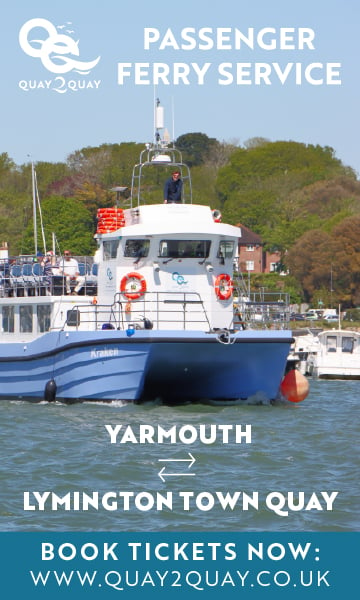
None of this changes the basic reality of living on the Island. The ferry still costs what it costs, and nothing about a cashback offer puts more petrol in the tank or knocks money off a Red Jet ticket. But it does change the calculation a bit for how people choose to spend the entertainment budget they do have left after getting to and from wherever they’re going, whether that’s a Friday night in front of the telly with a takeaway, a punt on the pools, or an hour on a phone app after the kids are in bed.
The next time you’re totting up what a night out actually cost once the crossing’s factored in, it’s worth checking whether there’s something coming back on the bit you spent having fun — because increasingly, on the Island and off it, that question isn’t optional anymore. It’s just what spending money well looks like now.