





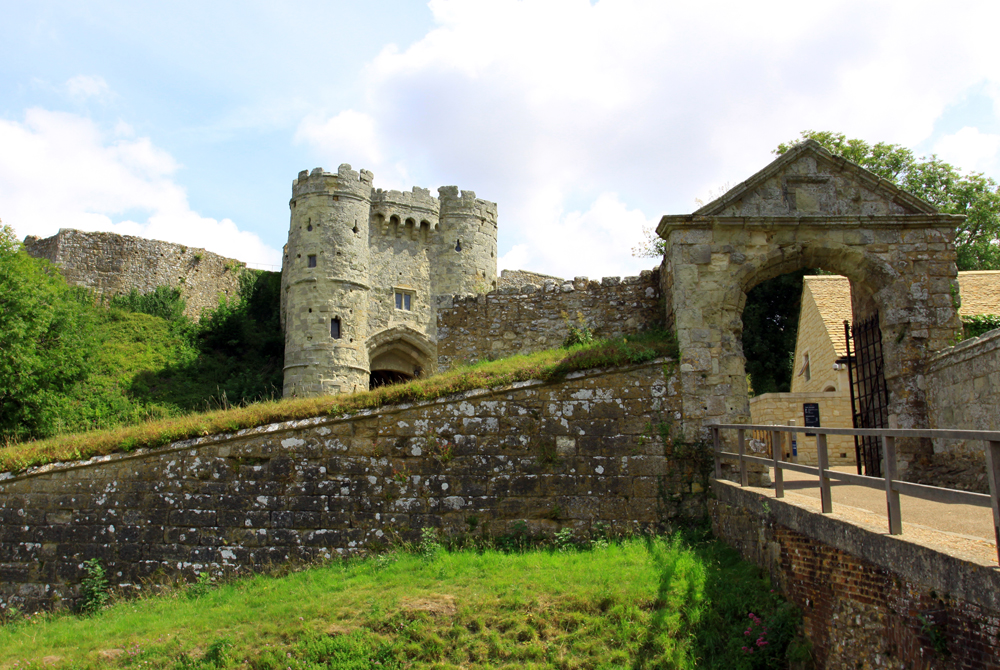













































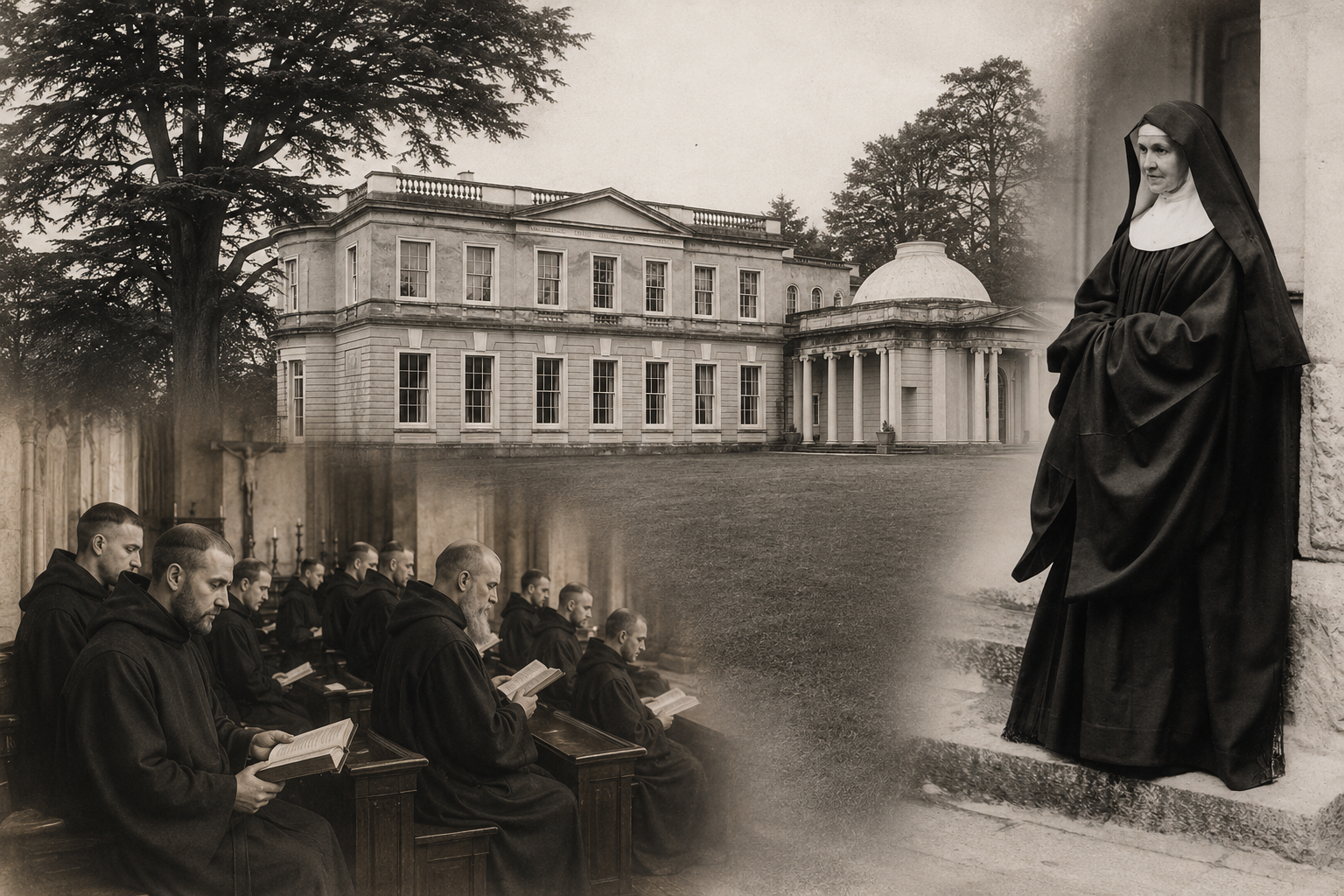

A lease signed for Appuldurcombe House on 19th August 1901 paved the way for nearly 170 French monks and nuns to settle on the Isle of Wight.
At the beginning of the 20th century, religious communities across France faced an uncertain future as new laws placed increasing restrictions on religious orders. Seeking a refuge where they could continue their way of life, members of one of the country’s most famous Benedictine communities turned to the Isle of Wight.
On 19th August 1901, a lease was signed securing Appuldurcombe House near Wroxall as a temporary home for monks from the renowned Abbey of Solesmes. Just over a month later, on 21st September, almost the entire community had arrived on the Island.


The Abbey of Solesmes was known throughout Europe for its scholarship and its role in preserving Gregorian chant. Around 80 monks settled at Appuldurcombe, where plans were announced for a seminary and chapel. At the same time, around 90 Benedictine nuns were preparing to move into Northwood House in Cowes, meaning that nearly 170 members of French religious communities would soon be living on the Isle of Wight.
Although the monks insisted they had not been driven from France, there was little doubt that the changing political climate had prompted the move. Appuldurcombe House, with its extensive accommodation and grounds, provided a suitable base for a sizeable monastic community.
For the next 6 years, the former Worsley mansion served as a monastery and seminary while the Benedictines searched for a permanent home. Among the monks was Dom Paul Bellot, the architect whose distinctive use of brick would later help shape the appearance of Quarr Abbey.
Northwood House became home to an equally remarkable community. The ballroom was converted into a chapel and the nuns lived a largely enclosed religious life within the grounds. Among them was Princess Adelaide of Löwenstein-Wertheim-Rosenberg, the widowed Queen of Portugal, who had entered religious life following the death of her husband.
The community attracted considerable attention and was visited by King Edward VII and Queen Alexandra in 1902. Other members of European royalty also called during their years in Cowes. Their presence left a lasting reminder in the town, with the steps through Northwood Park becoming known as Nunnery Steps.
By 1906, the nuns had moved to Appley near Ryde, where the foundation stone for a new abbey church was laid the following year. The community became associated with St Cecilia’s Abbey, renowned for its Benedictine traditions and Gregorian chant.
The monks remained at Appuldurcombe until 1907, when they acquired Quarr Abbey House near Binstead. Work soon began on a new monastery, and the abbey church was consecrated in 1912.







































Thank you IE.
Really enjoy historic articles like these.
More please.
Another excellent story
Asylum seekers? Here on the island?? Did anyone tell the pitchfork brigade?
After 125 years were still helping the French