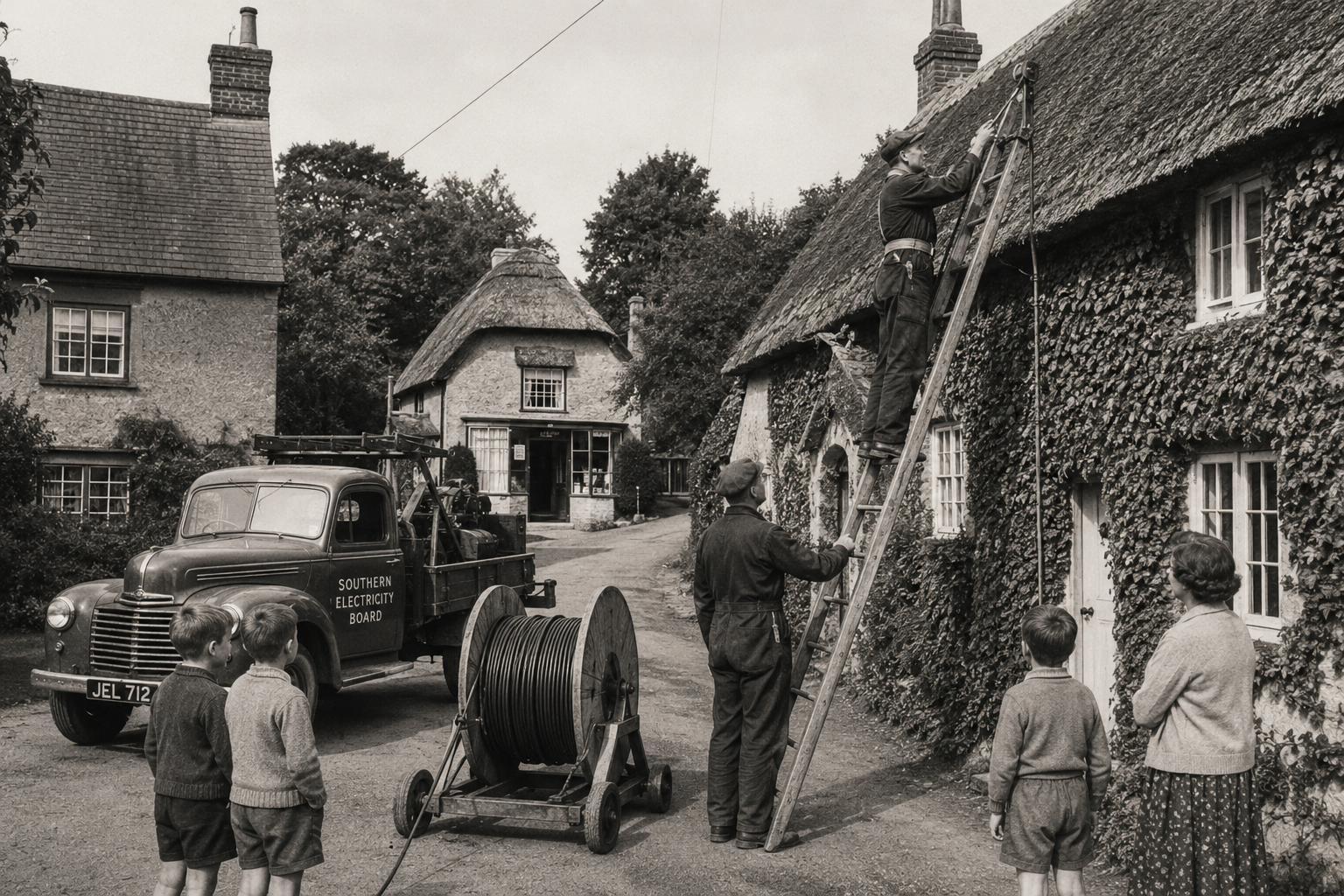





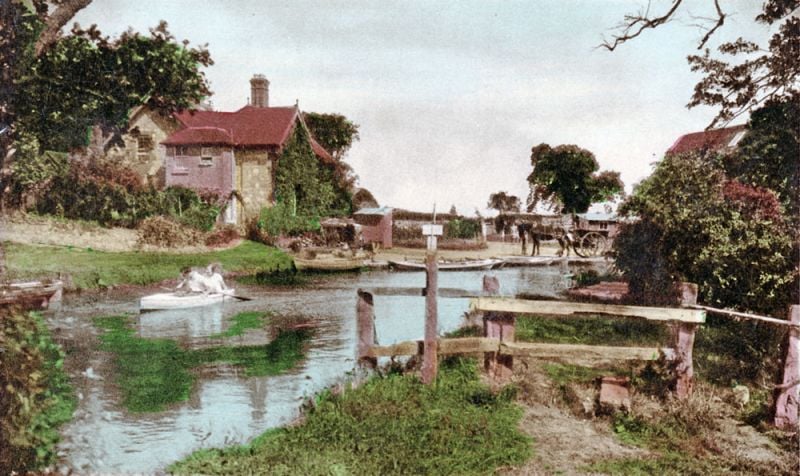




























During September 1956, one of the Isle of Wight’s best-known villages finally received mains electricity – nearly 60 years after the Island’s first public supply.
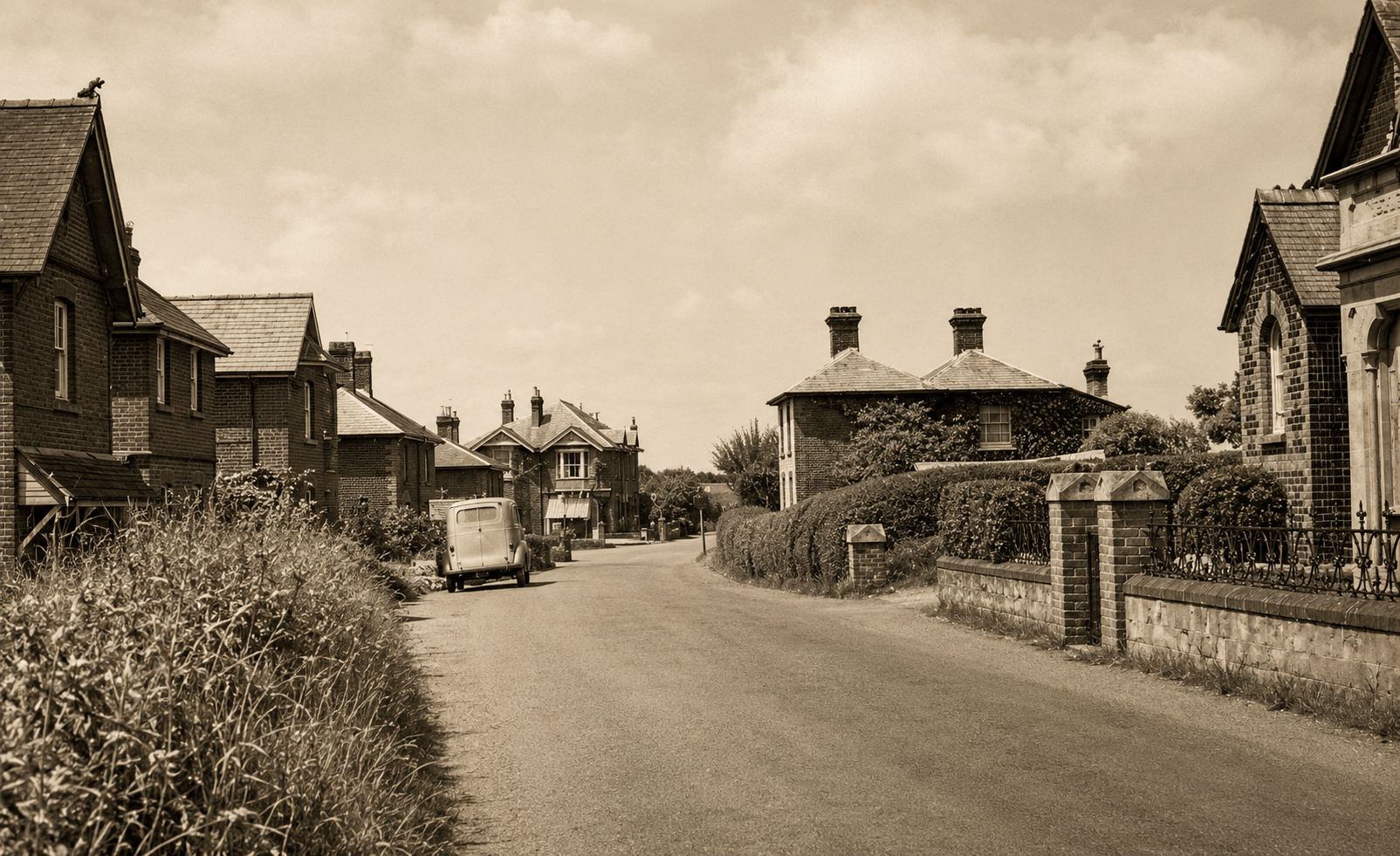
By the mid-1950s, electricity had become an ordinary part of everyday life across Britain. Godshill was the exception. According to national newspapers, it had the dubious distinction of being the largest village in southern England still without a mains electricity supply. Although gas was supplied from Shanklin, electricity remained beyond reach.
Godshill’s long wait had begun in 1899, when Ventnor became the first town on the Isle of Wight to receive a public electricity supply. Newport followed in 1901, while Ryde and Seaview were connected in 1903. Even so, Godshill would have to wait until September 1956.


Until then, darkness brought its own routine. As daylight faded, families lit candles or paraffin lamps, carefully trimming wicks and cleaning soot-blackened glass chimneys. Some homes were lit by gas, but electric light remained out of reach.
Lighting every room was an unnecessary expense, so families often gathered around a single source of light. Reading the newspaper, darning clothes, writing letters and children completing their homework all took place beneath its gentle glow, while outside the village disappeared into darkness broken only by moonlight or the lantern of someone making their way home.
Many household tasks demanded far more effort than they do today. Clothes were washed by hand and passed through a mangle before being hung out to dry. Irons were heated on the kitchen range, milk had to be used quickly because there was no refrigerator, and wireless sets often relied on heavy accumulators that needed regular recharging.
In 1933, the Isle of Wight Electric Light and Power Company predicted that “very soon every village on the Island will have a supply available.” For Godshill, “very soon” turned out to mean September 1956.
The arrival of mains electricity during September 1956 changed Godshill forever. Lights came on at the flick of a switch instead of a match. Milk could be kept fresh in a refrigerator, kettles no longer needed the kitchen range, radios could simply be plugged into the wall, and electric washing machines and vacuum cleaners gradually replaced many of the most time-consuming household chores.

Can you remember the time before mains electricity? Tell us in the comments below…