































































Saving money is not the easiest thing to do – and not just because times are currently hard. The actual act of saving can seem arcane to some with less financial knowledge and experience, where complex-looking bank accounts and investment schemes seem almost alien. There are so many ways to go about protecting your cash holdings, but which are the best?
Savings
The first and most accessible route to safely storing away savings is through savings accounts. There are a wide variety of savings products available by conventional banks, alternative app-based banks and building societies, each of which have their own distinct benefits. ISAs, for example, allow you to save on tax by exempting interest from Income Tax. Bonds, meanwhile, require you to lock your money away for fixed periods of time, but pay out a high fixed rate in return.


Stocks
For the savvier saver, there is an alternative in the form of the stock market. Buying shares in companies enables you to effectively create your own rate of ‘interest’, derived instead from capital gains. There is an element of risk to doing this, particularly if you have no prior experience; even seasoned traders have bad trading days. However, long-term investments in global tracking funds enable you to benefit from stable, low-risk growth proportional to entire markets.
Assets
Another bountiful way to store money for the long term, with a surprising level of upside potential to boot, is in the purchasing of assets. Technically speaking, stocks and shares are assets, and indeed they act and operate as such – but here, we are making a distinction between the intangible and the tangible. Purchasing physical assets can be another way to store value, and often one with greater long-term stability. An excellent example for this is property.
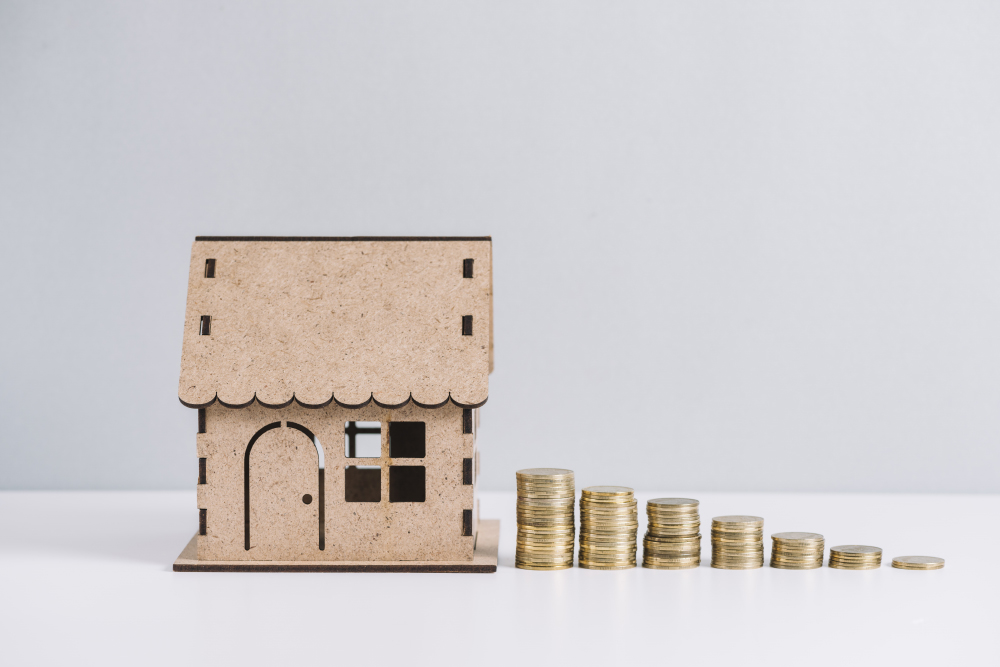
For many, their home is the most expensive asset they purchase in their life. Homes are always in demand, and tend upwards with regard to price against inflation too. Even in spite of current short-term shocks to the property market, long-term investment continues to make sense (provided you have the up-front capital to manage ancillary considerations such as rental and maintenance). This means if you have the capital to do so, buying property could be a safe way to shore up money against inflation.

A Safe
But what if the money you wish to store is, itself, tangible? Though we are moving inexorably towards some form of cashless society, cash will never truly be excised from the nation – and cash will always be king in times of immediate economic crisis. If you happen to have money, or assets such as gold and valuables, a literal safe in your home could be the best way to protect them from the spectre of potential theft.