





























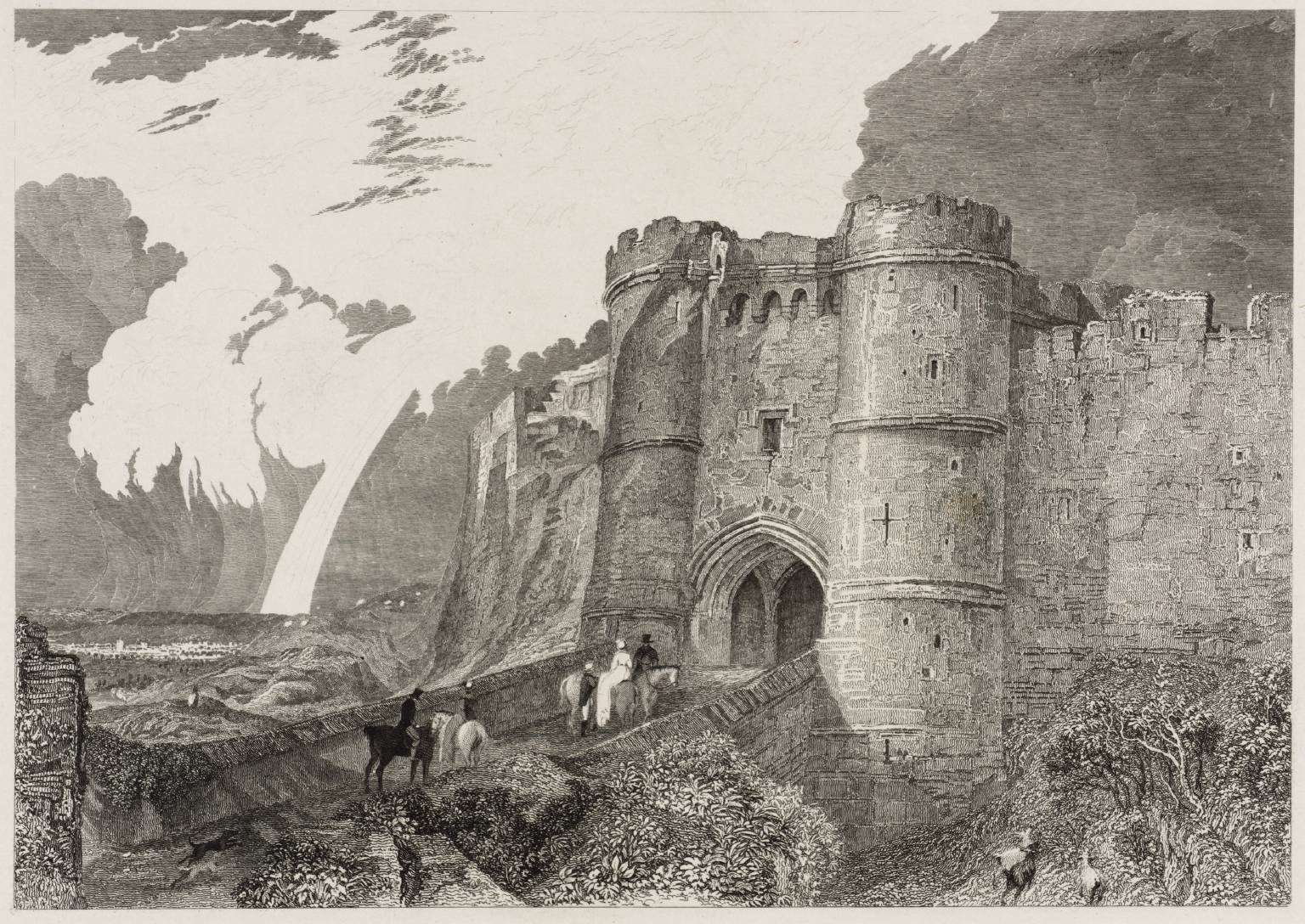

The end of the Crimean War 167 years ago was celebrated with a mock battle to mark victory over Russia.
The Depot Battalion at Parkhurst Barracks staged an attack on Carisbrooke Castle on 28th May 1856. 2,000 troops took part with thousands of spectators in attendance. As many as 3,000 children marched to Carisbrooke to watch the spectacle.
Scaling ladders were used for the soldiers to scale the castle walls, and banners flew from the keep when the imaginary garrison surrendered.


A mammoth bonfire lit up the sky on the nearby cricket ground in the evening, and the celebrations were rounded off with a ball organised by the officers at Carisbrooke Castle.
The Crimean War was fought from October 1853 to February 1856 between Russia and an alliance of the Ottoman Empire, France and the United Kingdom.
The war is remembered for the suicidal bravery of the Light Brigade, who charged at a battery of Russian guns at the Battle of Balaclava – due to an improperly understood order – leading to the unnecessary deaths of 118 soldiers and 335 horses.
The futility and recklessness of the action led the French Marshal Pierre Bosquet to comment: C’est magnifique, mais ce n’est pas la guerre. C’est de la folie. (It is magnificent, but it is not war. It is madness).
The Russian commanders are said to have believed that the British soldiers must have been drunk such was the madness of the attack.

The actions of the Light Brigade were immortalised in the poem The Charge of the Light Brigade by Alfred Lord Tennyson – Queen Victoria’s poet laureate – who lived at Freshwater.
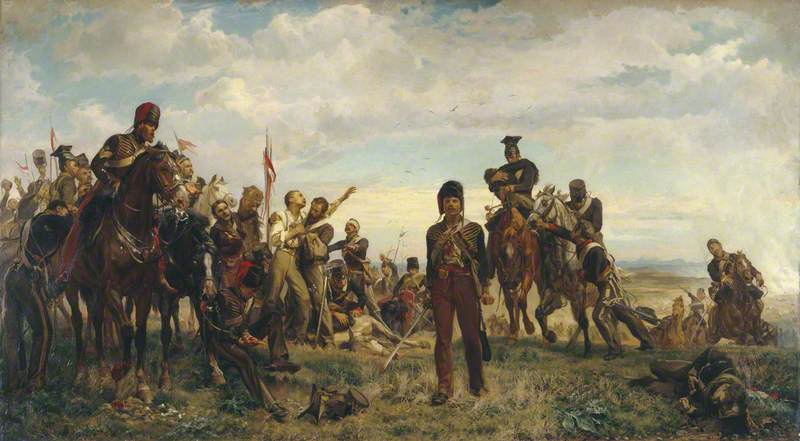
The 1st 2 verses of this famous poem have been reproduced below:
I
Half a league, half a league,
Half a league onward,
All in the valley of Death
Rode the six hundred.
“Forward, the Light Brigade!
Charge for the guns!” he said.
Into the valley of Death
Rode the six hundred.
II
“Forward, the Light Brigade!”
Was there a man dismayed?
Not though the soldier knew
Someone had blundered.
Theirs not to make reply
Theirs not to reason why
Theirs but to do and die.
Into the valley of Death
Rode the six hundred.







An occasion well worth remembering. But why use an image of “Scotland forever ” an 1881 painting by Lady Butler of the charge of the Royal Scots Greys at Waterloo ?
Very good point and well spotted.
https://livesofthelightbrigade.wordpress.com/2019/01/30/magnificent-but-its-not-the-charge-of-the-light-brigade/
The image is now the correct one.