












































At around 05:00 on 21st February 1917, a ship carrying 823 South Africans to the Western Front in France sank in thick fog 13 miles south of St Catherine’s Point.
Only 267 of those on board survived the sinking; 646 lives were lost in the cold and darkness of the English Channel.
SS Mendi had sailed from Cape Town carrying men of the 5th Battalion to the South African Native Labour Corps to Le Havre in northern France. She was escorted by the destroyer HMS Brisk.


On that fateful and tragic morning, the Royal Mail cargo ship Darro – 3 times the size of SS Mendi – ploughed into the Mendi at full speed, smashing a 20ft hole on her starboard side. Water soon rushed into the crowded holds where men were sleeping in tightly packed tiers of bunks.
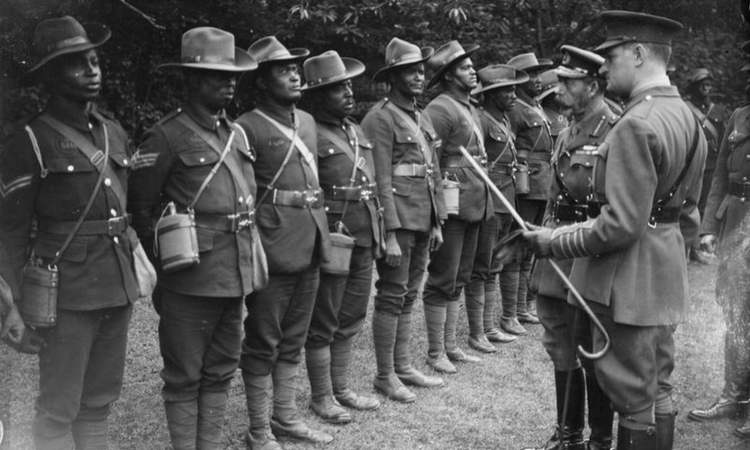
The South African Native Labour Corps had the role to build the railways, trenches, camps and roads upon which the Allied war effort in World War I depended. Most of the native soldiers had never seen the sea before this voyage, and very few could swim.
Some of the South Africans were killed outright by the collision; others were trapped below decks. Many gathered on Mendi’s deck as she listed and sank.
The men met their tragic fate with great dignity. A pastor on board – the Revd Isaac Wauchope Dyobha – is said to have comforted the doomed men.
He told his compatriots:

“Be quiet and calm, my countrymen. What is happening now is what you came to do… you are going to die, but that is what you came to do.
“Brothers, we are drilling the death drill. I, a Xhosa, say you are my brothers… Swazis, Pondos, Basotho… so let us die like brothers.
“We are the sons of Africa. Raise your war-cries, brothers, for though they made us leave our assegais in the kraal, our voices are left with our bodies.”
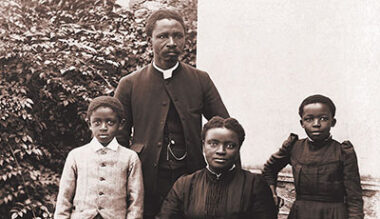
The pastor then led the Native Corps in a barefoot dance – the “death drill” – drumming their feet on the deck as the ship slowly slid into the icy sea.
Henry Stump, captain of the Darro (the ship that had struck the Mendi) stood by and watched but did nothing to save the lives of the South Africans. His ship had sustained only minor damage and there was plenty of room on board.
Survivors were instead picked up instead by the destroyer HMS Brisk and later other ships.

Following the disaster, bodies continued to be washed up on both sides of the Channel for several weeks.
At the tribunal Capt Stump explained his inactivity by claiming it was dark, and he couldn’t see in the conditions. However, the court found him guilty of:
“having travelled at a dangerously high speed in thick fog, and of having failed to ensure that his ship emitted the necessary fog sound signals.”
The report further stated:
“[Stump] must have heard the cries proceeding from the water for hours [after the accident].
“There was nothing to have prevented him from sending boats on the then smooth water… had he done so, many more lives would have been saved.
“His inaction was inexcusable.”
Despite calls for Stump to be jailed, his only punishment was to have his licence suspended for a year. It has been speculated that he did not stay to pick up survivors as he believed his ship to be vulnerable to submarine attack.
The news of the sinking reached South Africa 2 weeks later. Prime Minister General Louis Botha praised the labour corps for doing everything possible in the war and for their loyalty to the flag and the King. However, none of the servicemen from the South African Native Labour Force were awarded medals.
The Hollybrook memorial in Southampton lists the names of many of those who lost their lives.

The site of the wreck of the SS Mendi was discovered by an English diver in 1974. It has been designated an official military maritime grave.
The ship rests upright on the sea floor. She has started to break up, exposing her boilers.
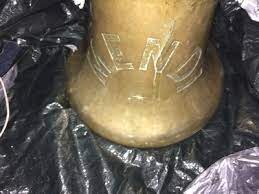
In 2017, the ship’s bell was handed in anonymously to a BBC journalist. The Prime Minister, Theresa May returned the bell to South Africa while on an official visit there in August 2018.










F’me…..disgraceful !
Surprised this ain’t been turned into a Hollywood Blockbuster ?
Interesting article, thank you albeit sad for those who lost their life.
Very sad story.
Great people South Africans
Yes a lot suffered greatly with burning tyres filled with petrol being placed around their necks when the indigenous took over.
So much more a law abiding, safe, caring place to live and work now I expect… Isn’t it?
IF so it would be a first.
What the f@#k has the got to do with a ship sinking?
As a South African raised in Basutoland (Lesotho) in the 1960s, the commemmoration of the sinking of SS Mendi in the chilly waters of the Solent off the Isle of Wight, means a lot to me as these were our countrymen in the South African Native Labour Corps (SANLC) who had volunteered their services to Country and King, a recognition that went largely unnoticed at the time in the eyes of the majority of the British people and authorites except for a memorial at a Southampton cemetery dedicated to “servicemen lost at sea” until decades later under pressure from the South African government, ordinary British subjects living in the Isle of Wight I grew up with in Basutoland and like-minded individuals at the Commonwealth War Graves Commission