











































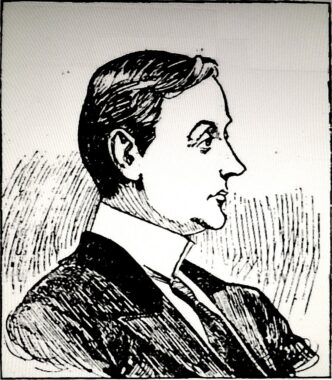
In the 4th of our series on Parkhurst prisoners, we examine the curious tale of the aristocratic swindler and author of Penal Servitude, William Beauchamp Nevill.
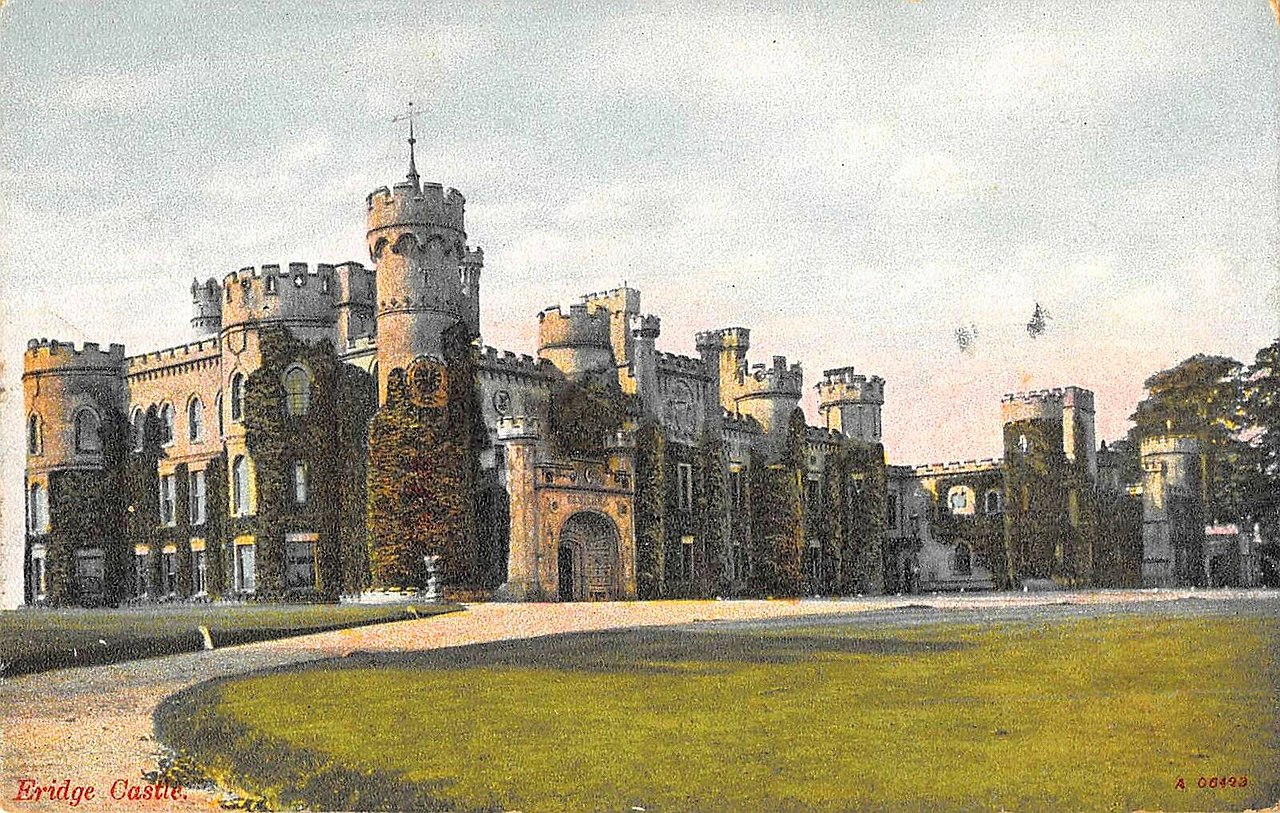
William Beauchamp Nevill – the 4th son of the Marquess of Abergavenny – was born on 23rd May 1860. He grew up at Eridge Castle in Sussex (which accommodated 31 servants) and attended Eton.
On 12th February 1889, Nevill married the heiress Luisa Carman del Campo Mello, daughter of the Marqués de Santurce. Her mother had reputedly been the mistress of Edward VII.


The wedding was a dazzling affair with the Prince and Princess of Wales in attendance together with a Who’s Who of the royalty and aristocracy of the time. The wedding gifts included a diamond horseshoe brooch from the Prince of Wales. After the wedding, the newly married couple took the royal train to Dover before honeymooning in Paris and Rome.
Prior to his marriage, Nevill had converted to Catholicism. This earned him the displeasure of his father, who ended his allowance. Henceforth, he was to be a ‘splendid pauper’ with status and titles but no money.
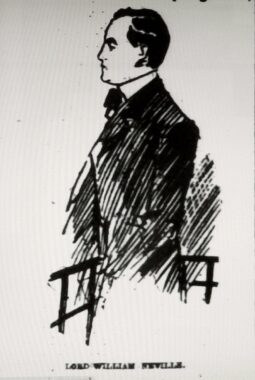
By 1896, Nevill was in debt to the tune of £80,000 (nearly 10 million in today’s money). In June of that year, he visited a moneylender with a promissory note he had obtained from the young Herbert Spender-Clay, heir of the Bass Brewery in Burton.
When Spender-Clay refused to honour the promissory note, the moneylender sued him for £11,000 (over 1 million today). Spender-Clay claimed Nevill had obtained his signature by hiding the document under blotting paper. The jury found in Spender-Clay’s favour. Nevill was then prosecuted by the Treasury.
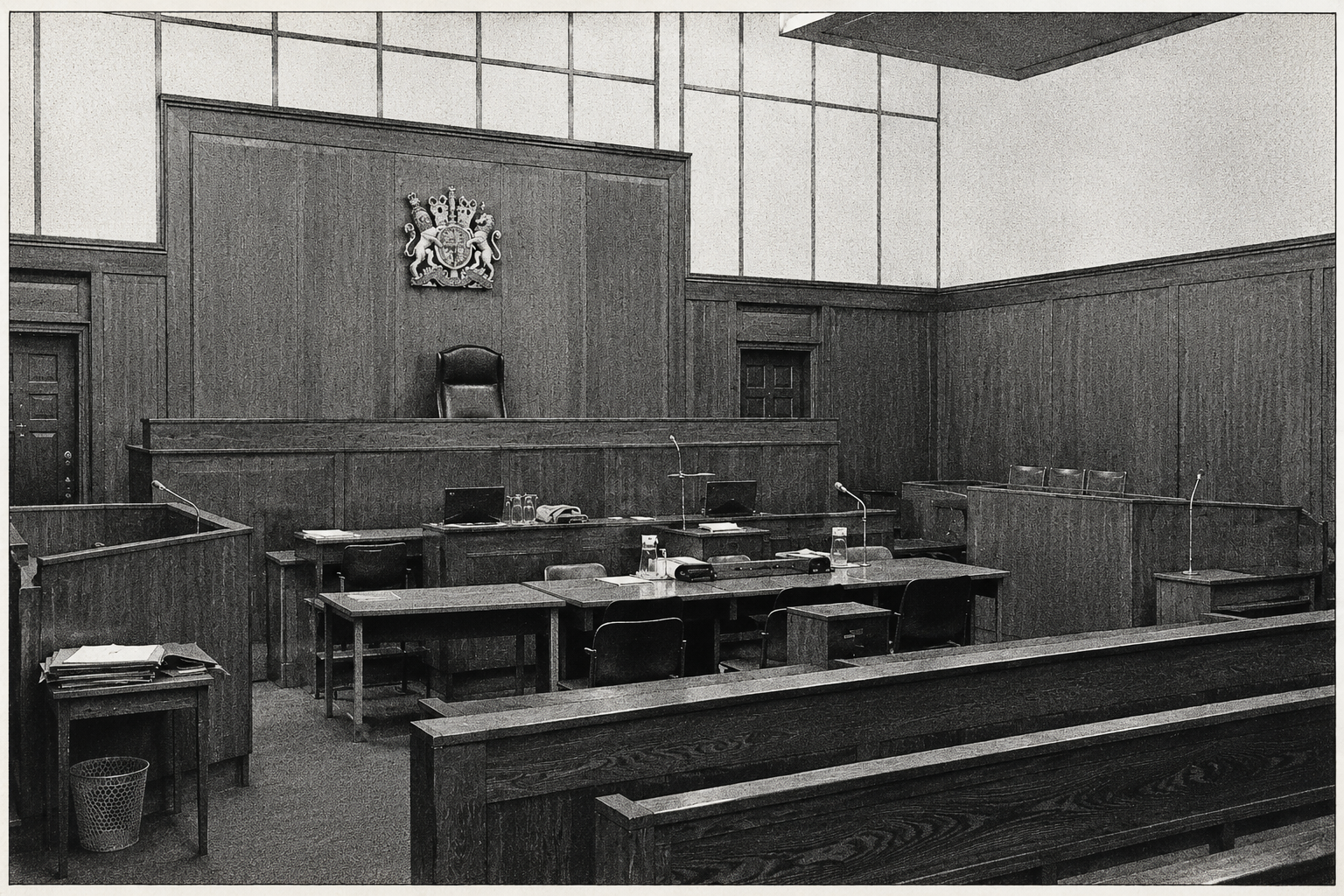
In what was known as the Hidden Signature Case of 1898, the errant aristocrat was charged with forgery. He was found guilty. The judge – Justice Lawrance – told him.

“You have brought dishonour upon an ancient and noble name, you have brought sorrow and suffering and shame upon those who are near and dear to you, you have forfeited the position which you held, and which ought to have been a guarantee for your honesty at least, if not for your honour.
“Your crime has been great, and your punishment must be great also. I sentence you to 5 years’ penal servitude.”
Nevill 1st served 7 weeks in Wormwood Scrubs, before being moved to Parkhurst here on the Isle of Wight.
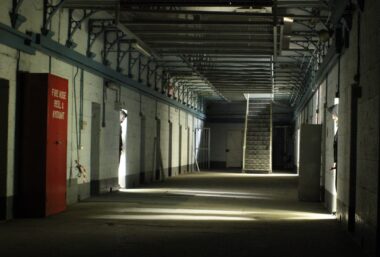
The old-Etonian convict began his term in Parkhurst in the prison hospital. He then worked in the infirmary, where he was an orderly from November 1898 to May 1899.
For the rest of his first 9 months, he served in separate confinement, where he exercised 1 hour per day, and otherwise knitted stockings in his cell. He was then transferred to the 1st offenders’ group and worked with them on the prison farm. After this, he was put to work printing and bookbinding.
Nevill was discharged from prison on 8th November 1901, having completed 3 years, 9 months of his sentence.
In 1903, William Beauchamp Nevill published a book about his experiences, entitled Penal Servitude. It was very well received by the public. Royalties from the book earned him £300 (around £33,000 in today’s money). However, the money he earned was required to pay off his creditors.
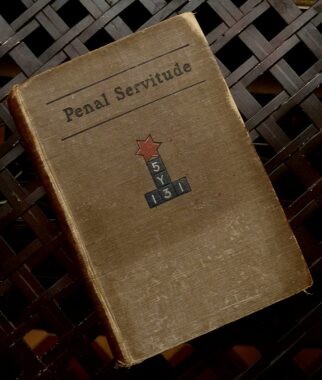 In Penal Servitude, Nevill informed his readers about some of the inhumane punishments used at Parkhurst …
“A boy of 16 or 17 was given 2 days’ starvation and 11 days’ extra imprisonment for the heinous crime of trying to feed the sparrows.”
He also described the prison diet …
“The food was not only insufficient but often bad. What with bad meat, bad potatoes and bad bread, the prisoners too often had to do their work on empty stomachs, while many of them fell sick from it.”
He made his readership aware of the effects of solitary confinement …
“The solitude and hopeless monotony, without anything to think of but the long years of suffering and disgrace ahead, produces nervous irritation, approaching in some cases a frenzy, and instead of softening a man, brings out all the evil there is in him.”
Unfortunately, becoming a published author did not end the aristocrat’s career as a swindler. On 13th April 1907, he was back in court in what became known as the Black Diamonds Case.

Nevill obtained money from a pawnbroker by showing him a sealed box containing: a diamond and emerald ring, a pearl necklace, two diamond and sapphire rings, a diamond half-hoop ring, a diamond necklace, a diamond pendant and a valuable diamond and pearl ornament.
He then replaced the jewellery with coals. When the pawnbroker opened the case and found the coals, police were informed and arrested Nevill.
Called as a witness at the trial, his long-suffering and devoted wife stated she usually paid off Nevill’s debts as she had a private income from mines and land in Spain, but that Nevill had nothing other than what she gave him. She paid off the debt to the pawnbroker herself.
As his wife appeared in court, Nevill put his head in his hands and wept. The jury took just 2 minutes to find him guilty, and he was sentenced to a year’s imprisonment with hard labour.
Following his release, the convict author lived a quiet life, and little was subsequently heard of him. In 1929, he suffered a fall from a bus, which left him crippled.
William Beauchamp Nevill died in Yorkshire on 12th May 1939, aged 78.











Thanks for that, a very interesting tale. I bet most of the inmates then were truly British, what a difference the passage of time and greedy Politicians make to our society.
Great article IE……I bet mr. Nevill would be turning in his grave if he knew what had became of HMP Parkurst, and Albany.
Nothing but Beast and Nonces.
I wonder how he fell off the bus ? To much spice imo..
Proper old school gentleman scoundrall.
If he was alive today, he would probably be working at County hall.
More like sitting on the benches in parliament and running the treasury.
Great article thank you.
An “old Etonian” who thinks he’s above the law?
Who’d have thought it?