






































 The Isle of Wight Youth Trust has revealed the findings from its candid COVID survey, shedding light onto how the COVID-19 pandemic has impacted young Islanders’ mental health and emotional wellbeing.
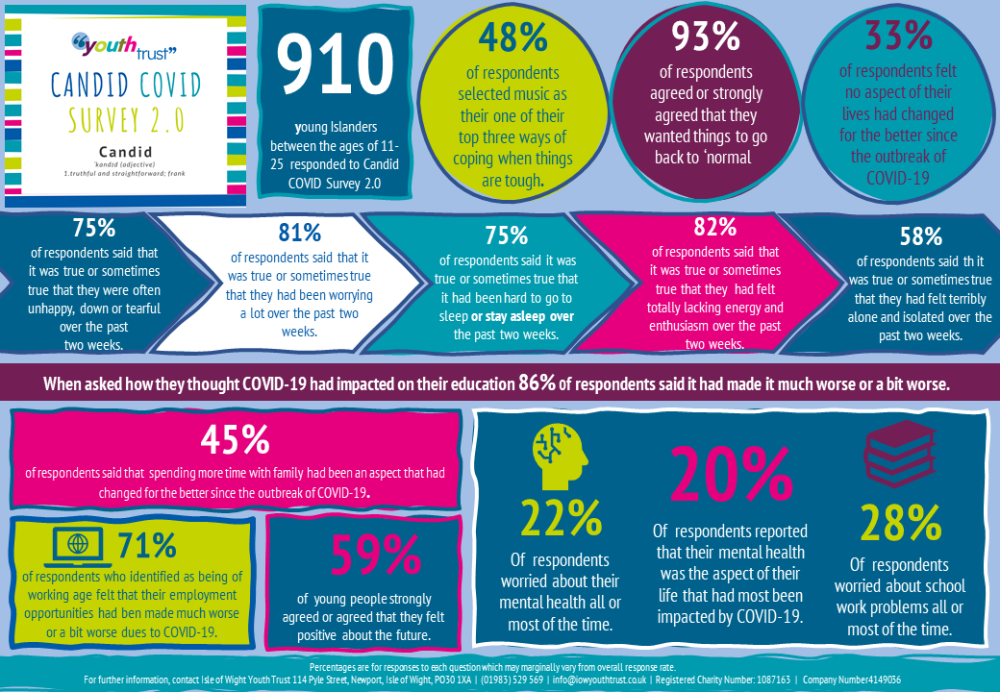
910 young people aged 11-25 from across the Island took part in the online survey in February of this year.
Key findings included:


- 81% of young people said it was true (39%) or sometimes true (42%), that they had been worrying a lot.
- 75% of young people said it was true (42%) or sometimes true (33%), that it had been hard to go to sleep or stay asleep.
- 75% of young people said it was true (32%) or sometimes true (43%), that they are often unhappy, down or tearful.
- 82% of young people said it was true (46%) or sometimes true (36%), that they had felt totally lacking in energy and enthusiasm.
- 58% of young people said it was true (23%) or sometimes true (35%), that they had felt terribly alone and isolated
- 86% of respondents, who were engaged in education, felt that the outbreak of COVID-19 had made their education either much worse or a bit worse
- 22% of young people worried about their mental health all or most of the time. 10% worried about their physical health most or all of the time.
Youth Trust Chief Executive, Jo Dare, has said that the survey’s findings offer valuable insight into some of the challenges facing young Islanders, in the wake of the pandemic.
“We would like to thank everyone who made their voices heard at this crucial moment. As a youth-led service, we believe it is essential that young people are provided with opportunities to set the agenda for the services that are here to support them.
“These findings largely reflect what we are seeing in our services with heightened levels of worry and anxiety. Since March this year we have consistently had over 100 young people reaching out for our counselling services each month. If this trend continues, 2021 will see us receive the most referrals in our 37-year history.
“This survey adds to the picture of young Islanders’ Mental Health we already have from our biennial Island Youth Mental Health Census and our 2020 Candid Covid survey. Comparing our findings from our 2019 Census to our Covid surveys, we see worry, unhappiness, fear and loneliness all increasing, as well as difficulties with sleep.

“We can see some concerning trends emerging if we look at responses from our young people over time. For example, in our 2019 Census, we found that 23% of young people said that it was ‘true’ that they had been totally lacking energy and enthusiasm, this increased to 45% in our 2020 Candid Covid Survey and very slightly increased to 46% in this survey.
“The top three areas that young people were most worried about out of 14 possible options were schoolwork problems, their own mental health and the physical health of someone in their family. We saw a marked increase in young people worrying about schoolwork problems, with 28% of respondents worried about schoolwork problems all or most of the time, up from 18% in our 2020 survey. For some young people, the recent exam results may have further heightened these worries.
“As with all our research, we hope these findings will prompt further discussion about how we, as an Island, can best serve our young people. It is a community effort to ensure that the mental health of our young people is a key priority going forwards, and that the appropriate funding and policy solutions are in place to support this.