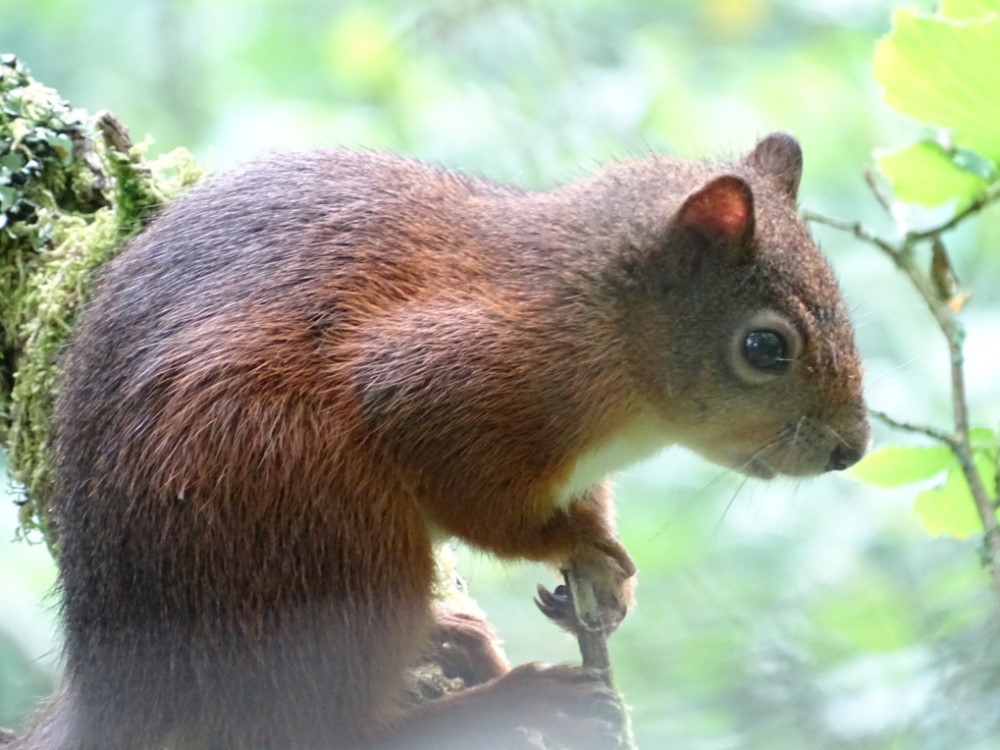
Red Squirrel Photo: Jane HollandIn the 1st of a new series looking at Isle of Wight Fauna, Island Echo examines the much-loved red squirrel. The Isle of Wight is 1 of only 4 locations in the South of England where the red squirrel can be found. The other 3 indigenous squirrel hotspots are also islands: Brownsea, Furzey and Green Islands in Poole Harbour in Dorset. Of the estimated 15,000 red squirrels in England, over 20% – around 3,500 – are to be found right here on the Isle of Wight. The Isle of Wight red squirrels – together with the Dorset red squirrels – are the only remaining ‘British’ red squirrels in the United Kingdom. There is (apparently) no trace of continental or Scandinavian genes in the local population. In past times, the British red squirrel population had been decimated, even before the introduction of greys in the 19th century. This led to the periodic importation of red squirrels from the remainder of Europe to mainland Britain to replenish squirrel stocks. In 1837, for example, 20,000 continental reds were imported to London. Robert Burton in his book Animal Life suggests that:
“Such introductions may have diluted the gene pool of the distinct British race of squirrel. Even before grey squirrels were introduced from North America, the ‘British’ red squirrel had been swamped by introduced continental reds.” Photo: Josh Thomas
The numbers of red squirrels on the Island are said to be sufficient to maintain a healthy stock of genetic diversity. But in locations where inbreeding has been suspected, autopsies have revealed the parents of several deceased squirrels to have been closely related. However, there are no obvious signs of large numbers of our squirrels suffering from ill-health, and the Isle of Wight is happily not a hotspot for congenital defects of the loveable rodent. The red squirrel is currently protected. Under the UK Countryside and Wildlife Act of 1981, it is an offence to ‘intentionally or recklessly’:
Article continues below this advertisement
kill, injure or capture a red squirrel
damage, destroy or obstruct access to any structure or place which a red squirrel uses for shelter or protection
disturb a red squirrel
Squirrel – Alverstone [Jane Holland ]However, the red squirrel has not always been protected. At one time, it was regarded as a problem. In the late 1800s, they were slaughtered in their hundreds of thousands as ‘pests’, who strip bark, rob birds’ nests and raid gardens. 100 years ago, George Jennison – curator of the Belle Vue Zoological Gardens – wrote:
“It invades gardens, and will take peas from their pods as cleanly as a man. In spring, it turns carnivorous and eats eggs and young birds. It damages trees by biting bark and preventing the flow of sap.”
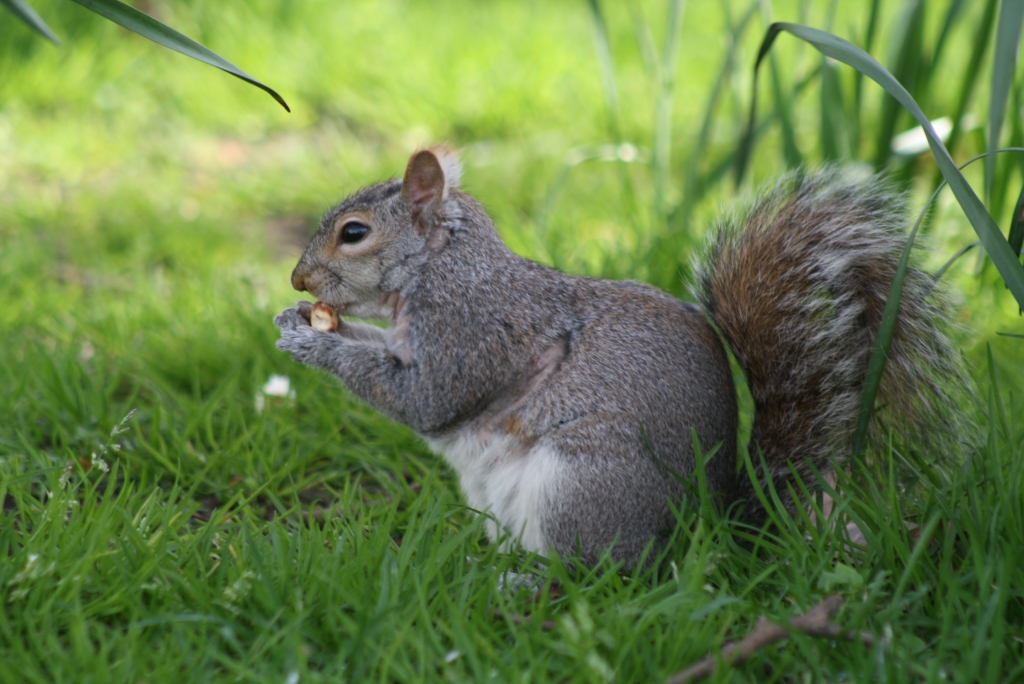
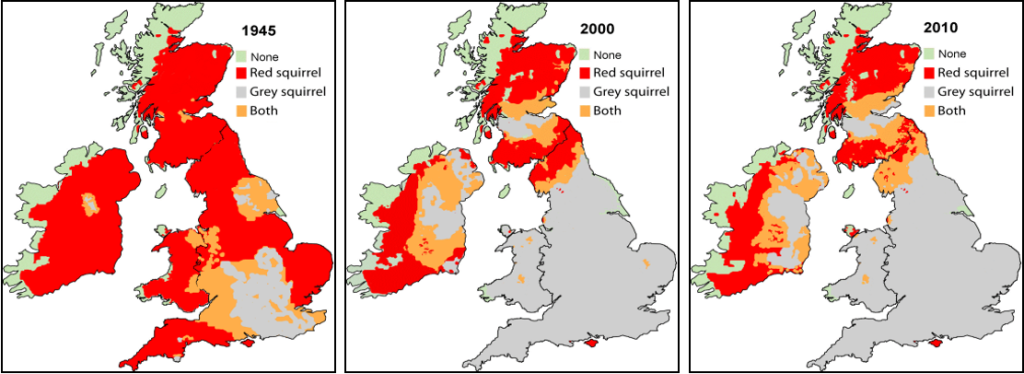
However, the main cause of the near disappearance of the red squirrel from the mainland is not human persecution but rather the introduction of the invasive grey squirrel from North America. The 1st introduction of a grey to North Island was believed to have been in 1828 in Denbighshire, Wales. In 1876, a pair were introduced to Cheshire. From 1902 to 1929, greys were released in Regent’s Park, London; Berkshire; Northamptonshire; Oxfordshire; Staffordshire; Devon; Warwickshire; Nottinghamshire; Suffolk and Hampshire (Bournemouth). Grey squirrel By the 1930s, greys were established in the South East of England; by the 1940s, they were found throughout the Midlands; by the 1960s, it was harder to say where they were than where they weren’t. There are currently believed to be over 2million greys in the UK. They outnumber the reds by a ratio of 133:1. The reason for the greys decimating the reds is the Parapoxvirus, which apparently does not affect the greys’ health but is fatal for indigenous reds. It is said to take just 15 years between the appearance of the greys in a vicinity and the disappearance of reds. Unsuccessful attempts have been made to eradicate greys from the mainland. In 1953, a bounty of 1 shilling (5p) was offered for every grey slaughtered. Over a million non-indigenous squirrels were eradicated. However, it was claimed that for every grey killed, 2 would turn up for their funeral. Maps showing grey squirrel spread and red squirrel decline by Craig Shuttleworth Red Squirrel Survival Trust. In June 1971, a grey squirrel came close to becoming an Isle of Wight resident. A national newspaper reported:
“A big hunt was launched when a feared illegal immigrant was seen trying to land on the Isle of Wight. He was captured trying to scale a rock wall and was deported without a trial. “The unwelcome immigrant was a grey squirrel. “The squirrel was spotted on the deck of a ferry steamer arriving from Lymington. The little invader leapt overboard, swam to the shore and tried to scale Yarmouth Castle. An RSPCA officer captured him there. “The squirrel was returned to Lymington where it was released.”
Only 2% of the Isle of Wight is ancient and semi-natural woodland – areas needed by the red squirrel to thrive. The fragmentation of their woodland is detrimental for their chances of survival. Do we require a ‘diverse’ squirrel population? Or should the Isle of Wight be a haven for indigenous ‘British’ red squirrels? What can we do further to protect our native squirrels? Let us know in the comments…
Wait for the comments about elderly (aka old farts) drivers being to blame for the reduction in populations of reds. Never mind the boy racers who hurtle along at breakneck speeds .
WILLY-NILLY
2 years ago
As we witness with other deliberate and unintentional arrivals to our shores, all too often the naively perceived good is then more than outweighed by the bad.
Since mass importation of timber and trees our own Elm and Ash have suffered terribly, with the unexpected cost and danger of Ash die back causing limbs or entire trees to suddenly collapse.
If you are old enough you will remember a time before we had endless ill thought out dangerous imports to ruin our indigenous species and truly all was so much better.
Luckily the young know no better.
Interesting article, thank you
Kevin Pidwell
2 years ago
So when the European red squirrels crossed the English Channel, where were the Police and Immigration Officers on the south coast beaches then? 😉
Helen Butler
2 years ago
Tissue samples collected by Wight Squirrel Project and tested by Bournemouth University show Isle of Wight red squirrels have 4 haplotypes (strains), two are unique to our Isle of Wight red squirrels. The Isle of Wight is nationally important for the species. A current study by a PHd student is underway look deeper into the genetics. Thank you to the public who picked up carcasses for me to post mortem and collect tissue at the same for these studies.
Helen Butler MBE BSc
Founder Wight Squirrel Project and The IOW Red Squirrel Trust
Gary Cooper
2 years ago
The main cause of the near disappearance of the red squirrel from the mainland is not the invasive grey squirrel but their systematic slaughter during the early part of the 20th century. Gamekeepers and others regarded red squirrels as pests and a bounty was offered on their tails. In Scotland alone, 102,900 red squirrels were slaughtered between 1903 and 1946.
Steve
2 years ago
The most iconic animal on the Isle of Wight is the drunk/drugged driver, they’re all over the place and appear to be thriving!
Colin Lambert
2 years ago
On summer days, I frequently took my lunch break in the peace of Parkhurst Forest, just down the road from work. Rather than having to search out red squirrels, I often saw at least one where I was eating my lunch, a real privilege and making me reluctant to leave my nature tourism behind for the realities of work.



































































Wait for the comments about elderly (aka old farts) drivers being to blame for the reduction in populations of reds. Never mind the boy racers who hurtle along at breakneck speeds .
As we witness with other deliberate and unintentional arrivals to our shores, all too often the naively perceived good is then more than outweighed by the bad.
Since mass importation of timber and trees our own Elm and Ash have suffered terribly, with the unexpected cost and danger of Ash die back causing limbs or entire trees to suddenly collapse.
If you are old enough you will remember a time before we had endless ill thought out dangerous imports to ruin our indigenous species and truly all was so much better.
Luckily the young know no better.
Interesting article, thank you
So when the European red squirrels crossed the English Channel, where were the Police and Immigration Officers on the south coast beaches then? 😉
Tissue samples collected by Wight Squirrel Project and tested by Bournemouth University show Isle of Wight red squirrels have 4 haplotypes (strains), two are unique to our Isle of Wight red squirrels. The Isle of Wight is nationally important for the species. A current study by a PHd student is underway look deeper into the genetics. Thank you to the public who picked up carcasses for me to post mortem and collect tissue at the same for these studies.
Helen Butler MBE BSc
Founder Wight Squirrel Project and The IOW Red Squirrel Trust
The main cause of the near disappearance of the red squirrel from the mainland is not the invasive grey squirrel but their systematic slaughter during the early part of the 20th century. Gamekeepers and others regarded red squirrels as pests and a bounty was offered on their tails. In Scotland alone, 102,900 red squirrels were slaughtered between 1903 and 1946.
The most iconic animal on the Isle of Wight is the drunk/drugged driver, they’re all over the place and appear to be thriving!
On summer days, I frequently took my lunch break in the peace of Parkhurst Forest, just down the road from work. Rather than having to search out red squirrels, I often saw at least one where I was eating my lunch, a real privilege and making me reluctant to leave my nature tourism behind for the realities of work.