











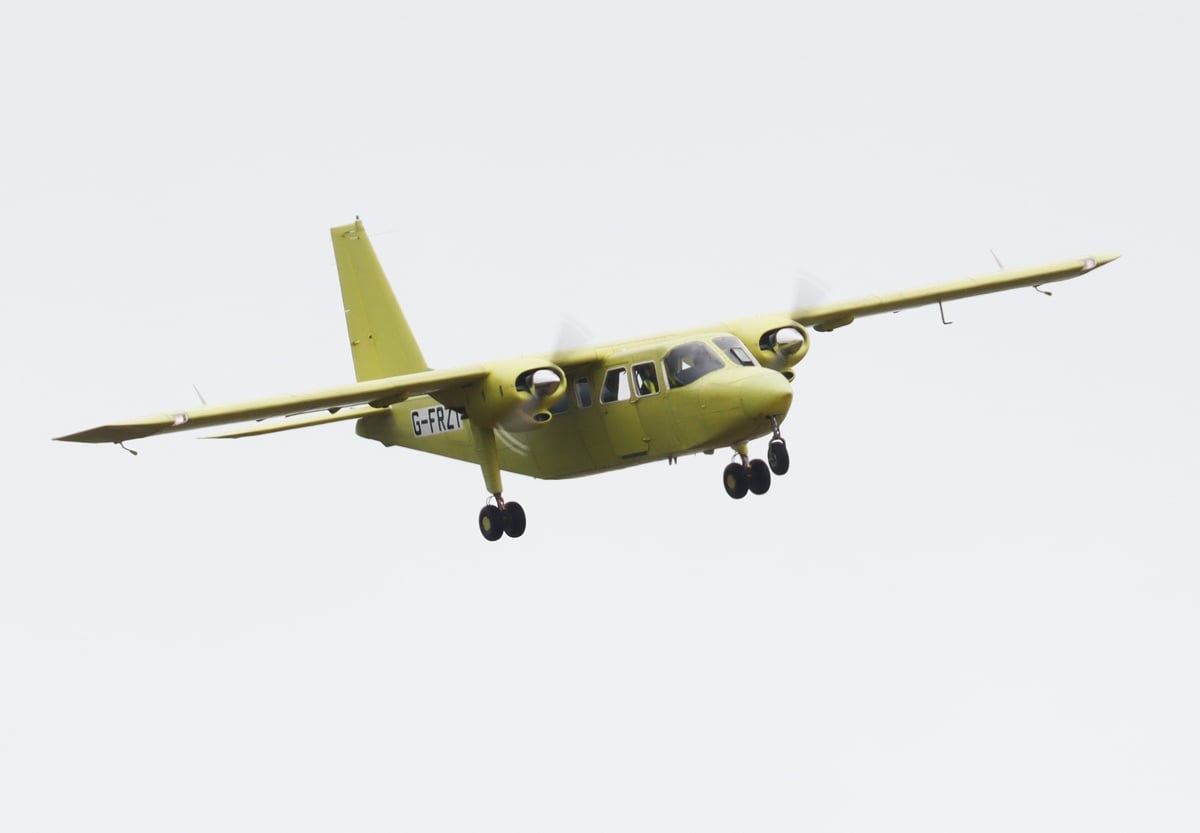



















In this week’s edition of Made on the Isle of Wight, Island Echo looks at the famous Islander aircraft, which, in 1974, became the best-selling British multi-engine commercial aircraft in history.
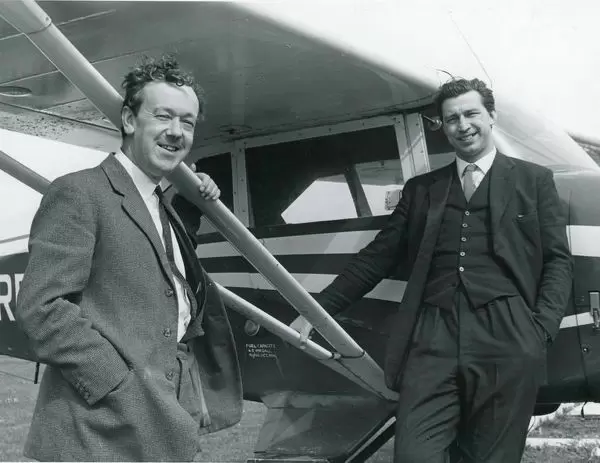
Britten-Norman was set up in 1955 by 2 enterprising engineers Forester Richard John Britten (John) and Nigel Desmond Norman (Desmond). The 2 engineers had both been apprentices at the de Haviland Technical School before moving to the Isle of Wight. Their idea was to build a small commuter and general-purpose utility aircraft. The pair succeeded beyond their wildest dreams…
The 1st aircraft they designed was the BN-1F Finibee, which is now preserved in Southampton’s Solent Sky Museum. It was built in John Britten’s house on the Island.

The pair then went on to found Crop Culture Ltd, then Micronair Ltd, specialising in spraying equipment. Their crop-spraying planes raised the money required to build further aircraft. Today Micronair operates from Bembridge Fort on Culver Down.
In 1954, Britten-Norman Ltd was set up. However, before their 1st Islander made it off the production line, they had branched into hovercraft, setting up their subsidiary Cushioncraft Ltd. Their 1st hovercraft project was for a vehicle designed to carry bananas to the docks in Cameroon for Fyffe’s.
Hovercraft production was, however, a distraction from their main goal – to create a rugged inter-island passenger and light utility aircraft. Work began in earnest in 1963 with BN-2. On 13th June 1965, the prototype made its 1st flight over the Isle of Wight. In 1966, the name ‘Islander’ was selected for the BN-2.
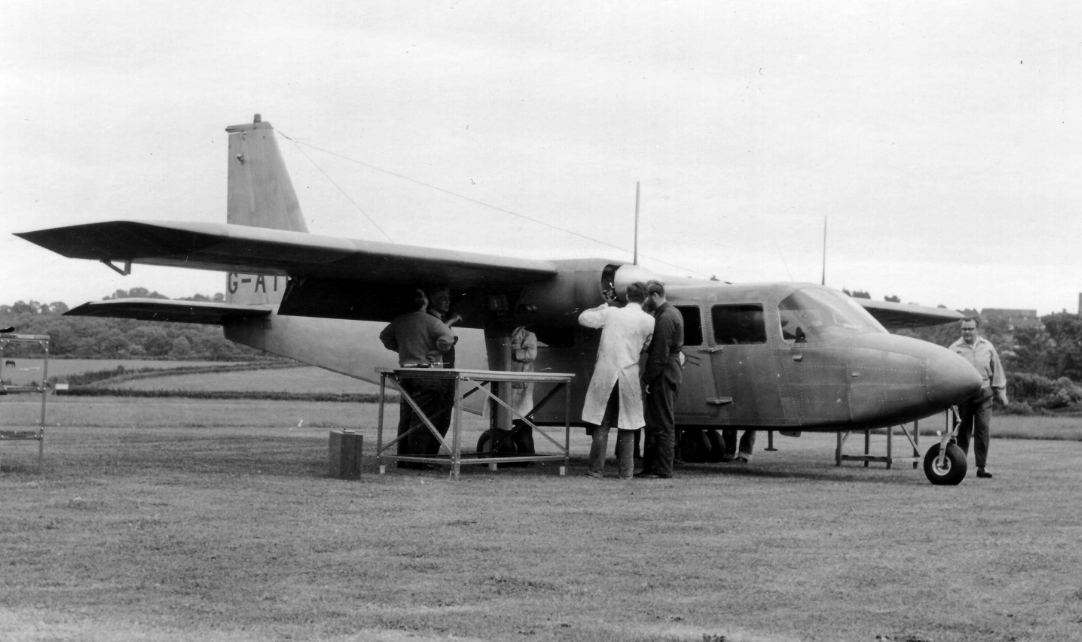
At the end of 1966, a new production factory was opened at Bembridge Airport to provide capacity to meet the growing number of orders. The 1st aircraft was delivered on 13th August 1967. By August 1969, 100 Islanders had been built. This was a very busy and exciting time for the small, innovative Isle of Wight company.
Within a few years, Britten-Norman found that it could not make the aircraft at a sufficient rate to keep up with the customer demand. A contract was placed with Intreprinderea de Reparatii Material Aeronautic (IRMA) of Romania, to assemble kit-form aircraft, which were then sent to the UK for completion. IRMA proved successful at economically producing the aircraft, completing roughly 30-40 aircraft per year at times.
In 1970, a military version of the Islander – called the Defender – made its first flight. The Defender has been bought by police and military customers for use in surveillance and counter-terrorism operations. A further variation of the Islander is the Maritime Defender, deployed in search and rescue, coastal patrol, and fishery protection.

In 1971, Britten-Norman ran into financial difficulties and was placed in receivership. In 1972, it was taken over by Fairey S.A. in the form of the holding company Fairey Britten-Norman. Production of some aircraft was then transferred to Belgium.
By 1974, the BN-2 Islander broke the British record for production of a non-military aircraft after 549 had been completed. In 1976, John Britten and Desmond Norman left the company, although they continued to be used as consultants. Again, the company found itself in financial difficulty and was rescued by Pilatus, becoming Pilatus Britten-Norman.
However, despite the financial difficulties of the company, the Islander aircraft continued to go from strength to strength. On 7th May 1982, the milestone of the 1,000th Islander aircraft was reached. Altogether, over 1,250 have come off the production line.
In December 2006, aerospace publication Flight International observed that:
“The only civil aircraft that remains in production in the UK is the tiny Britten-Norman Islander.”
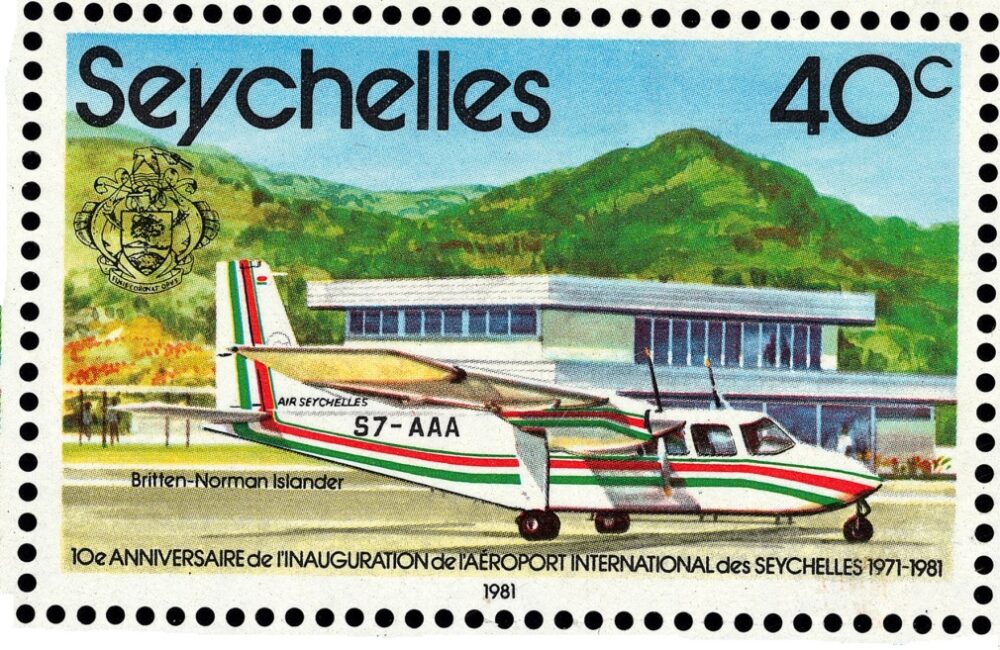
From the 1980s onwards, sales noticeably declined. The Islander became a victim of its own success – according to Britten-Norman Chief Executive William Hynett, this was due to the global market having become saturated due to the longevity of in-service Islanders.
Even in the 21st century, Britten-Norman claim that the Islander is still in daily service with roughly 500 operators in more than 120 countries.
Islanders became a lifeline for isolated island communities in Scotland. The Islander services Loganair’s Westray to Papa Westray flight in the Orkneys, the shortest scheduled flight in the world at 1.7 miles. The flight time, including taxiing, is just 2 minutes.
John Britten passed away in 1977. However, before doing so, he established Sheriff Aerospace to produce the Britten Sheriff aircraft – a monoplane intended for training and touring purposes. The construction of an airplane of this type had reached an advanced stage before John’s untimely death.
Desmond Norman went on to establish NDN Aircraft, initially based at Sandown Airport. The 1st of his new planes was the NDN-1 Firecracker – a single-engine monoplane military trainer – 1st flown in 1983. 4 were built, but it was unfortunately not selected as the replacement for the RAF Jet provost trainers.
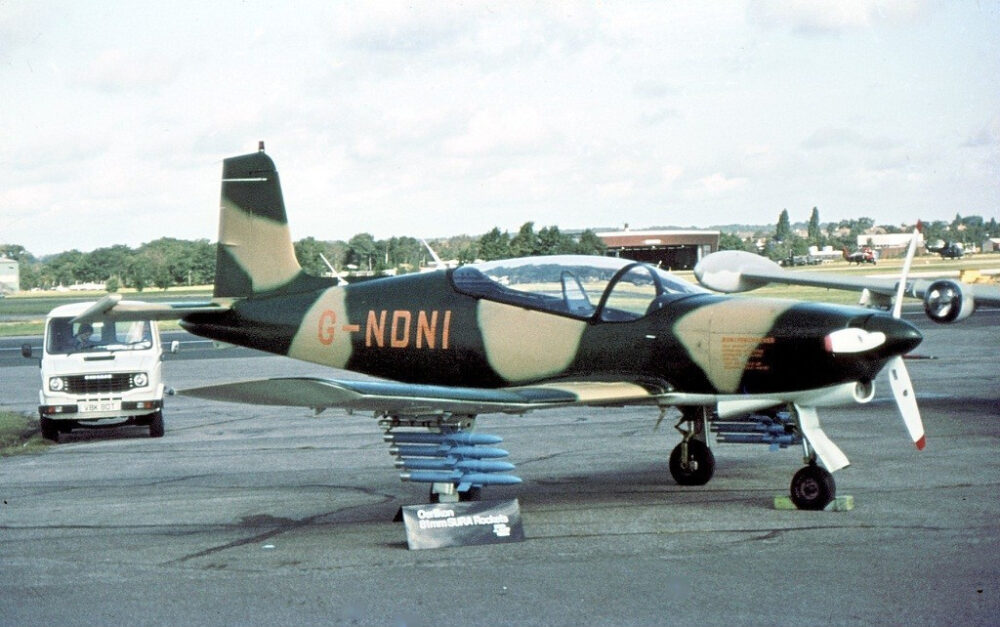
NDN Aircraft also made the NDN-6 Fieldmaster, designed specifically for crop spraying. The maiden flight of the Fieldmaster prototype was at Sandown in 1981. Altogether, 10 Fieldmasters were completed.
Desmond Norman died of a heart attack on 13th November 2002.








Many years ago we were passengers on this lovely plane. We flew from South island new Zealand across to Stewart Island. A great experience.
I believe they produced a three engine version which they called the Trilander. I think they were mainly for export purposes. I worked in a Ryde joiners shop where we made purpose made cocktail cabinets to fit these planes. One of the seats was removed and the cabinet was fitted in it’s place, which had fold out lids that made a table with black vinyl inserts and the inside was lined with padded green baize with inserts inside to hold glasses and bottles. I can’t remember how many we made, but I think it was about 10. They were made of mahogany and finished in a french polish coating. I often wonder if there are any still about.Again I think these too went into the planes for oversees market.
Readers might be interested to know that since 2010 the Isle of Wight based Britten-Norman Aircraft Preservation Society’s (BNAPS) team of volunteers have restored the oldest B-N Islander in existence, number 3 built, registered as G-AVCN (Charlie November). The Islander has been restored as a high standard static exhibit and currently resides at the Wight Military & Heritage Museum, Northwood, Cowes where it can be viewed by visitors. The official unveiling will take place at the “Saving Charlie November” launch event at 12.00 on Saturday 22 April 2023 as part of the museum open day event for St George’s Day. For more information please contact BNAPS [email protected]
John Britten and Desmond Norman have given a lot of work and skills to the island, but it has now almost gone, and forever. How sad. Thank you gentlemen, you deserve official recognition. You did something very positive for us all.
I know a chap who built the first of these, and after a ‘tea break miscalculation ‘ fitted the instrument panel one inch lower than blueprint, it remained after much checking, also I am told of rivet ‘dolly’s’ being left inside closed sections of wing panels, ah the good old days, when each plane had its own character, or more rightly, oddities!
My dad was on the first ever Islander. All staff were at the first flight. Mr Desmond asked for everyone not to take a photo of its first take off as they were both superstitious. Lots of photos taken second time round and I have film of its flight.
wow that really was an interesting read, thank you