




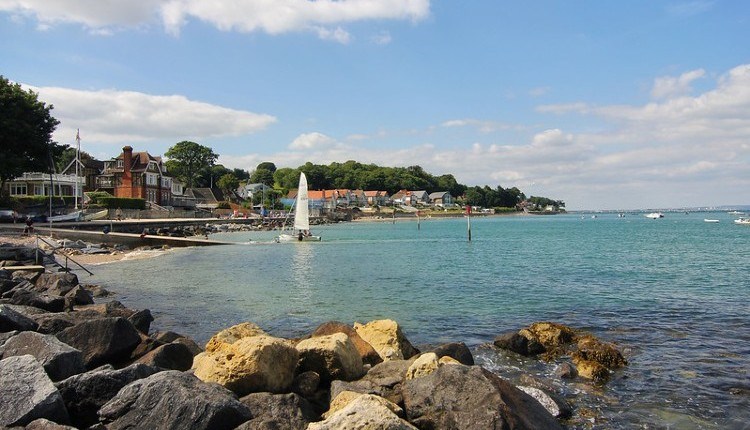







































Today Puckpool is a public park, but from 1865 to 1928 it was the strongest fortification protecting Portsmouth and the wider Solent.
The name ‘Puckpool’ derives from a pool belonging to a ‘puck’, an Old English word for demon or fairy.
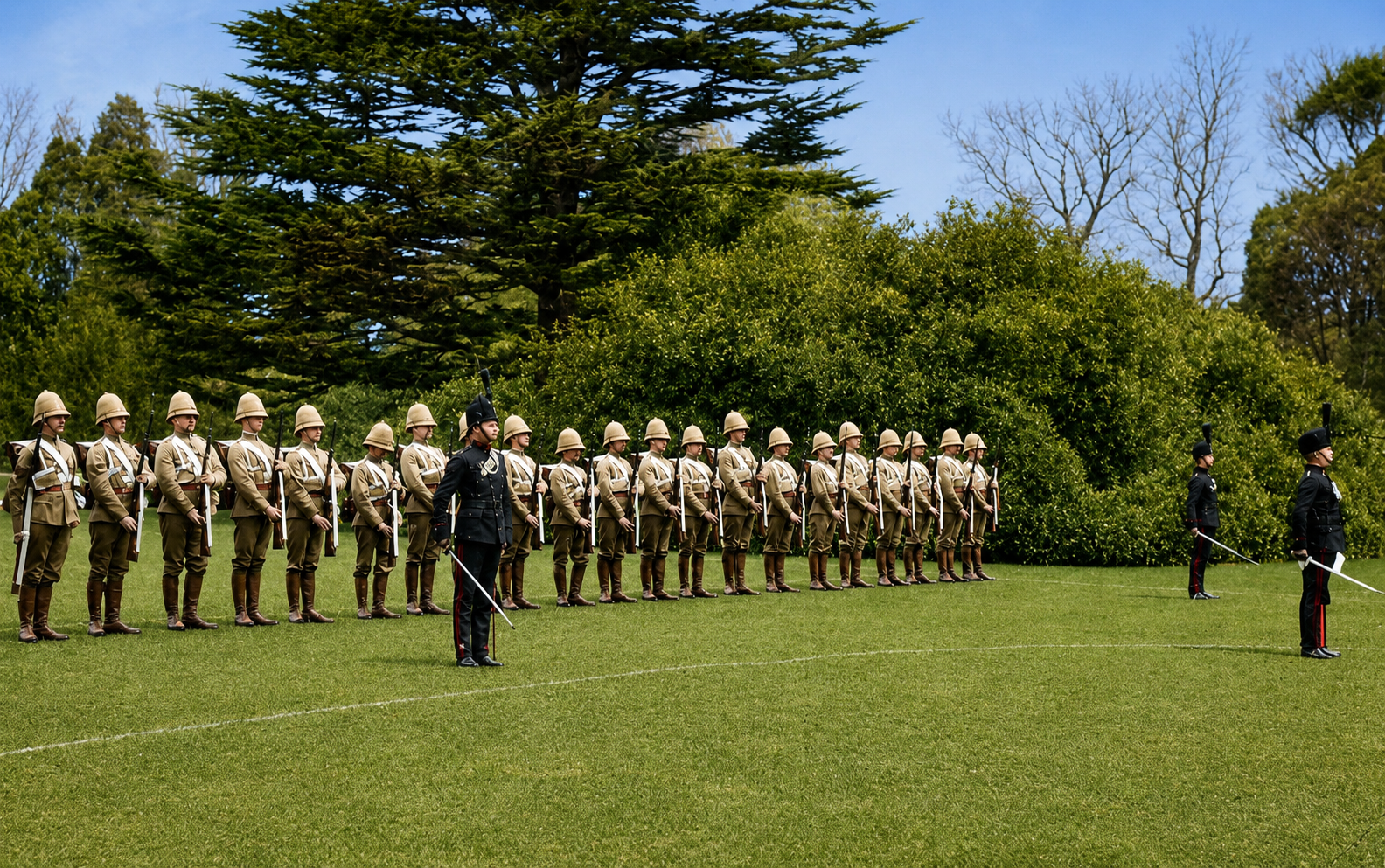
Puckpool Battery was one of a number of Palmerston Forts (or follies) to be built at enormous expense to protect Britain from the perceived dangers of a French invasion. However, an attack never came (hence the name ‘folly’). None of the thousands of soldiers to be deployed at Puckpool, in over half a century of active service, ever fired a gun at an enemy in anger.


Puckpool House was built in 1714. It had many owners (including a David Boyes of Appley, who ended up in prison). In 1853, it became the holiday home of Josiah Spode (of Spode China). Then, in 1861, it was purchased by the War Department, and Puckpool Battery was constructed on its grounds.

Construction of the battery began in 1853 and it was completed in 1865. The battery was armed with 50 13-inch smooth bore mortars – then the heaviest mortars at the time. Ridiculously, all the mortars were removed within 20 years due to obsolescence – they had been designed to sink wooden ships, which by then had been replaced by ironclad warships.

In 1873, gun positions were constructed for 4 11-inch Rifle Muzzle Loading (RML) guns. When the mortars were removed, these became the entire armament of the battery.
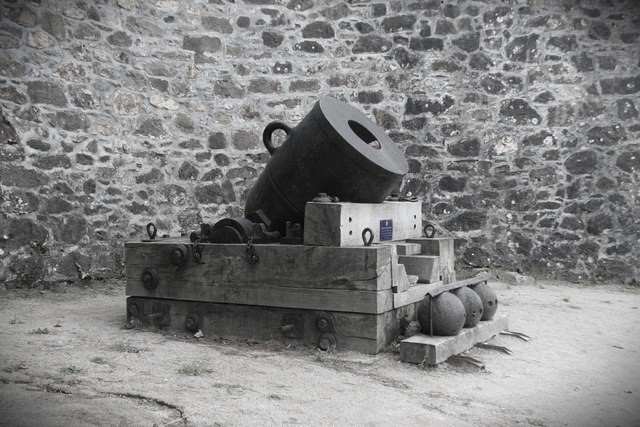
In 1892, more powerful 28 ton RML guns were added to the battery. Such was the importance attached to the fortification that these were the only guns of this type to be fitted in the UK.
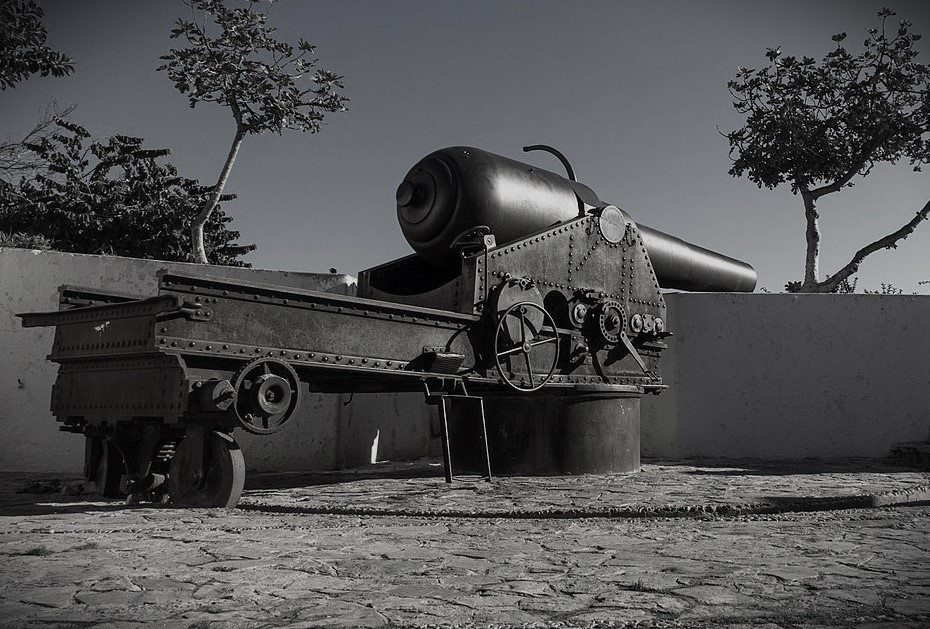
However, the advent of air power in the 20th century meant that Portsmouth was more likely to be attacked from the skies than the seas. Puckpool battery became surplus to requirements.

Happily, the site of the former battery was purchased by St Helens Council for £3,500 in 1929 for use as a pleasure park.
The Portsmouth Evening News reported on 29th June 1929:
“Puckpool Park, Seaview, was officially opened in the presence of a great crowd of residence and visitors.
“An army of workmen have transformed the battery into a beautiful pleasure ground and park. The bounds abound with pleasant walks and dells while a splendid view of the Solent is obtainable from the many mounds and hillocks.
“General surprise was expressed at the beauty and convenience of the Park and it was voted an ideal spot for a day’s holiday.”
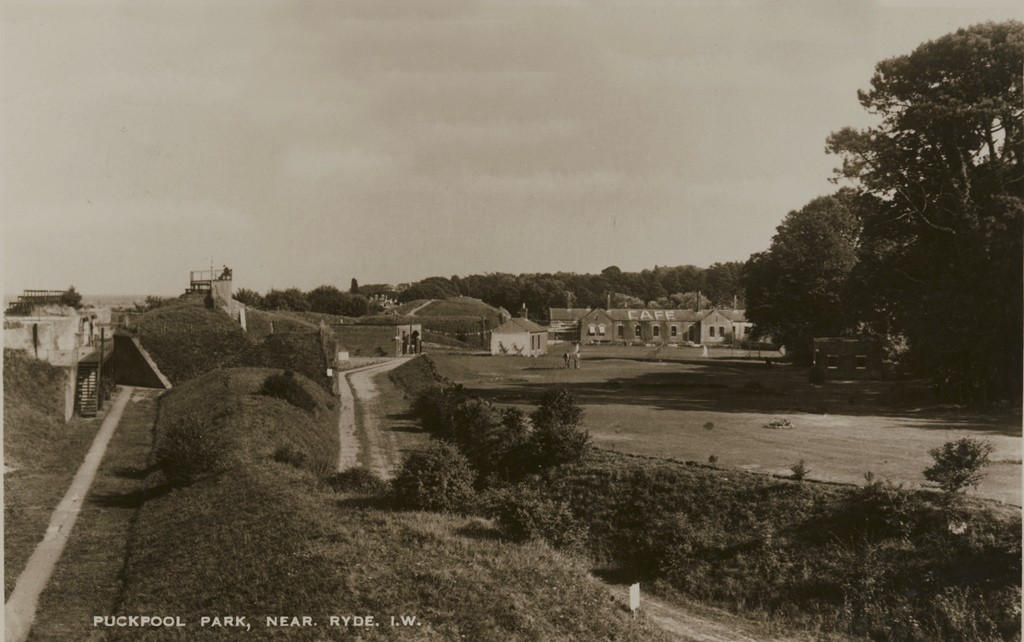
St Helens Council was subsequently amalgamated into Ryde Borough.
In 1936, the Dell Cafe was opened by the Mayor of Ryde, Major Dennis.
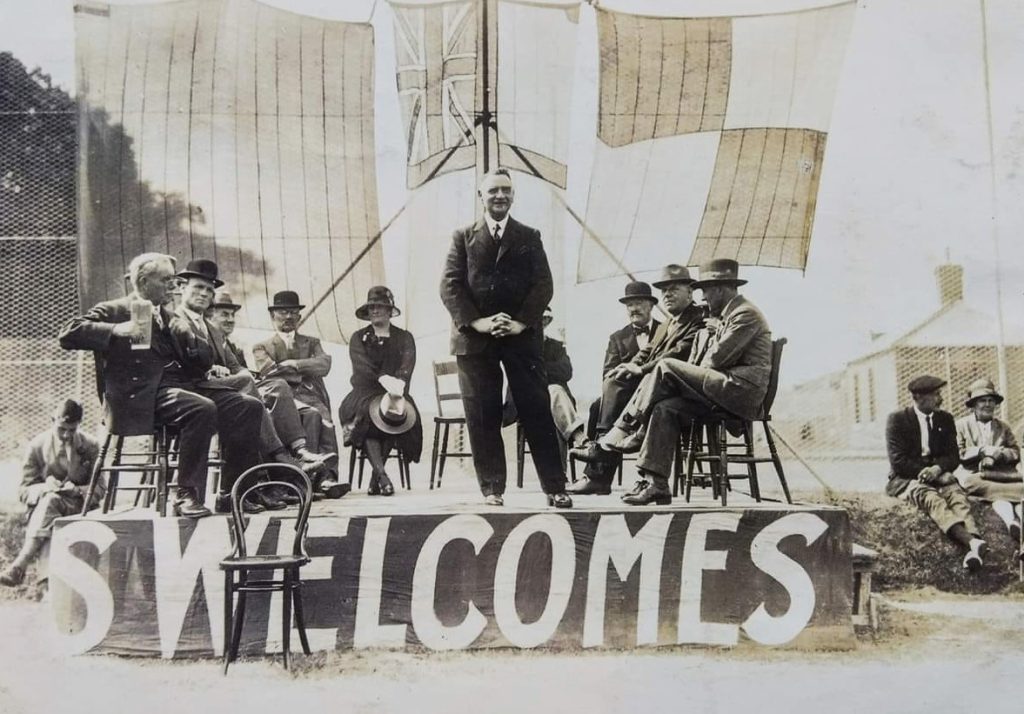
The Portsmouth Evening News Reported:
“From a shore battery complete with 9.2 inch guns, designed as part of a plan for the protection of Portsmouth Naval Base, to a delightful rendezvous for holiday makers, represents a peace time change that has overtaken Puckpool Park at Ryde.
“Dainty coloured bathing huts replace the barbed wire barriers, the old gun emplacements have been reconditioned and shorn of their grimness, waitresses in trim green uniforms trip unconcernedly in and out of the old guard room with plates of meringues, and the old formidable atmosphere of the battery guards have been changed to a gayer one with bowling greens, tennis courts, putting greens and aviaries.”
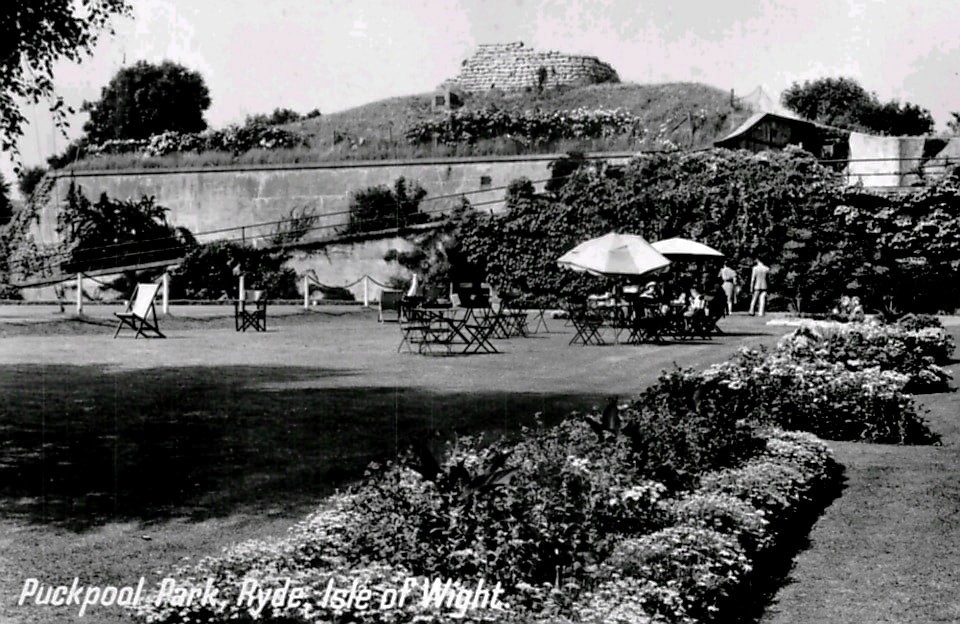
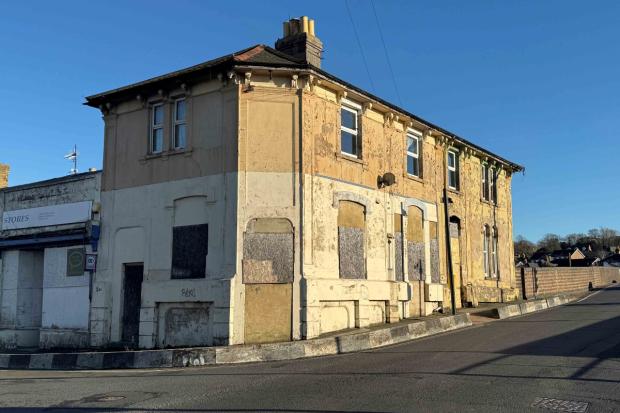
In 1938, the Isle of Wight Council approved the construction of a holiday camp on part of the site of the former battery, which subsequently became Harcourt Sands (now sadly derelict).
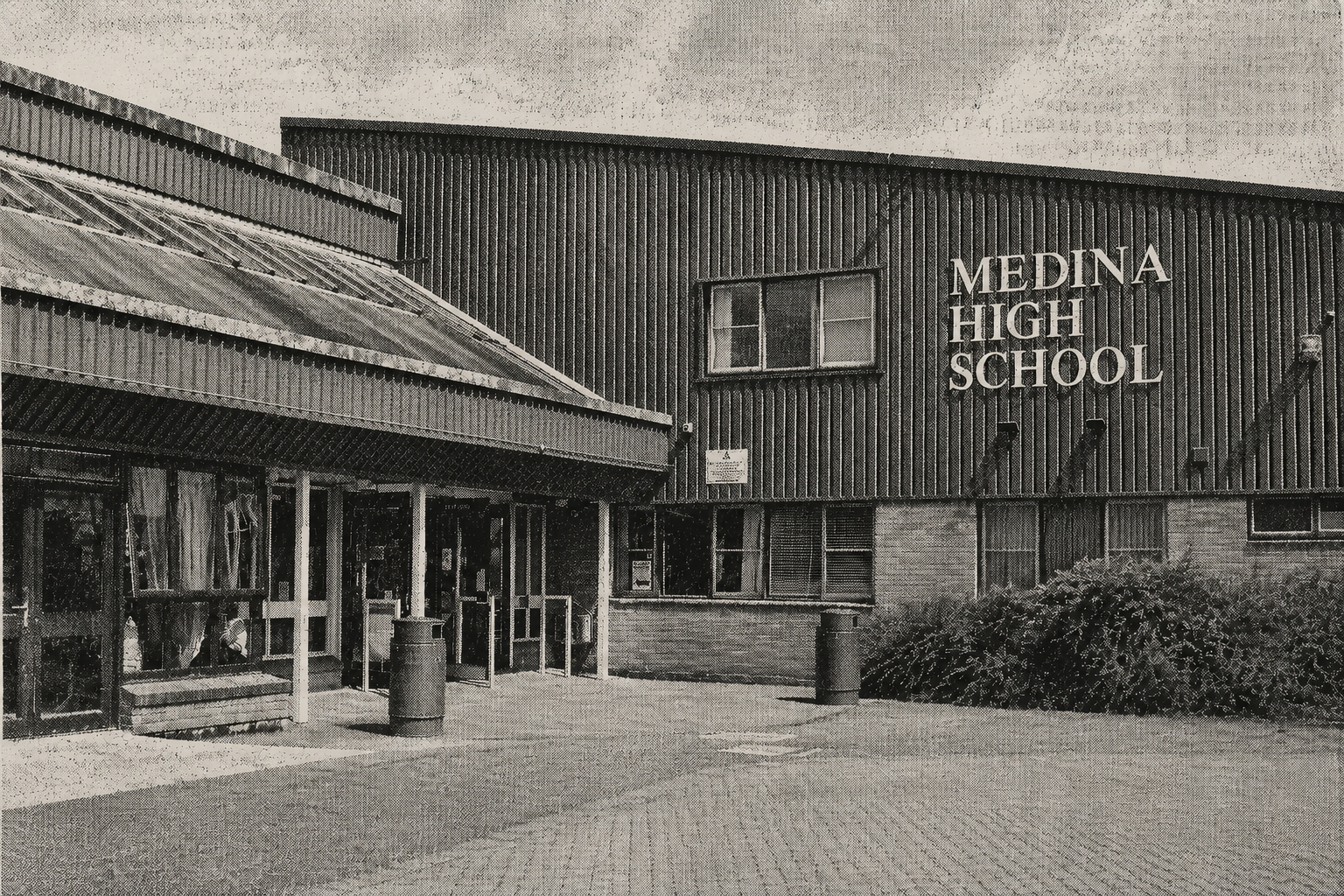
When war with Germany was declared in 1938, Puckpool reverted to becoming a military base: HMS Medina. It also housed the civilian ARP (Air Raid Precautions) and the Observer Corps. From 1943, it was used as accommodation for the Royal Navy’s Maintenance Unit, tasked with converting barges into landing craft in preparation for D-Day.
Tragedy struck Puckpool in June 1940 when a Fairey Battle RAF plane was downed by friendly fire, with 2 crewmen lost in the Solent. Happily. the pilot parachuted from the plane and escaped with his life.
In 1950, Puckpool reverted back to the care of Ryde Council.

Further developments followed after the war. In 1972, the former battery was chosen as a backdrop for the film Thal’ll be the Day, starring David Essex and Ringo Starr, as the area still had the look of the late 50s. A wireless museum was also set up at Puckpool (now sadly closed).
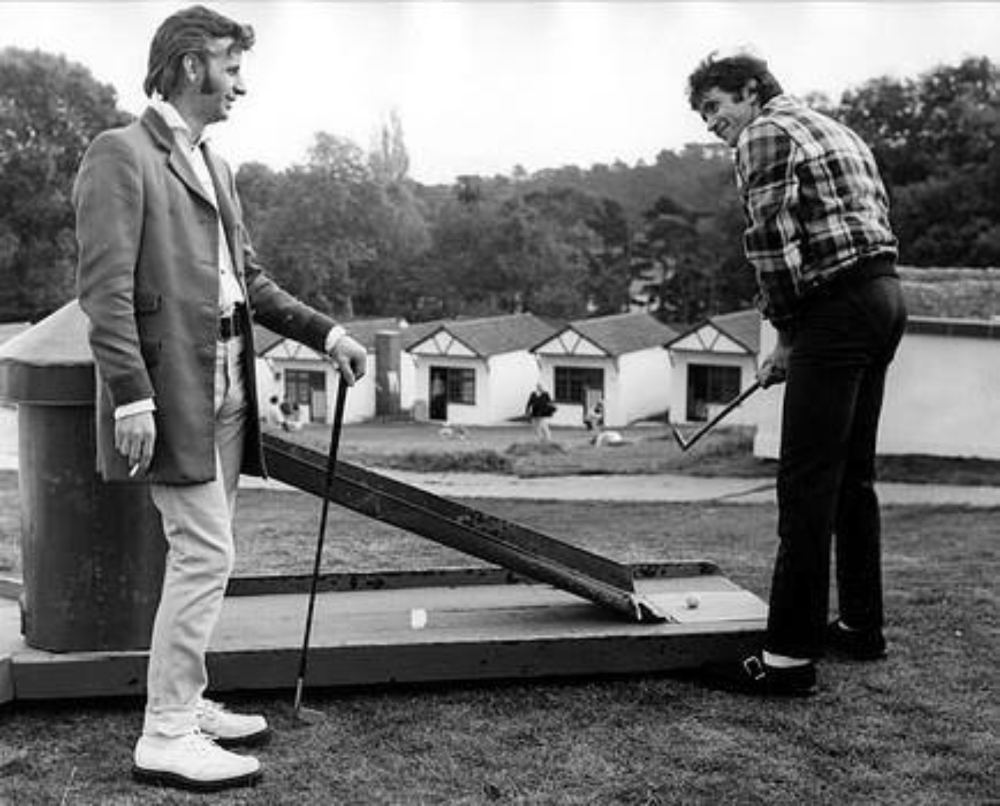
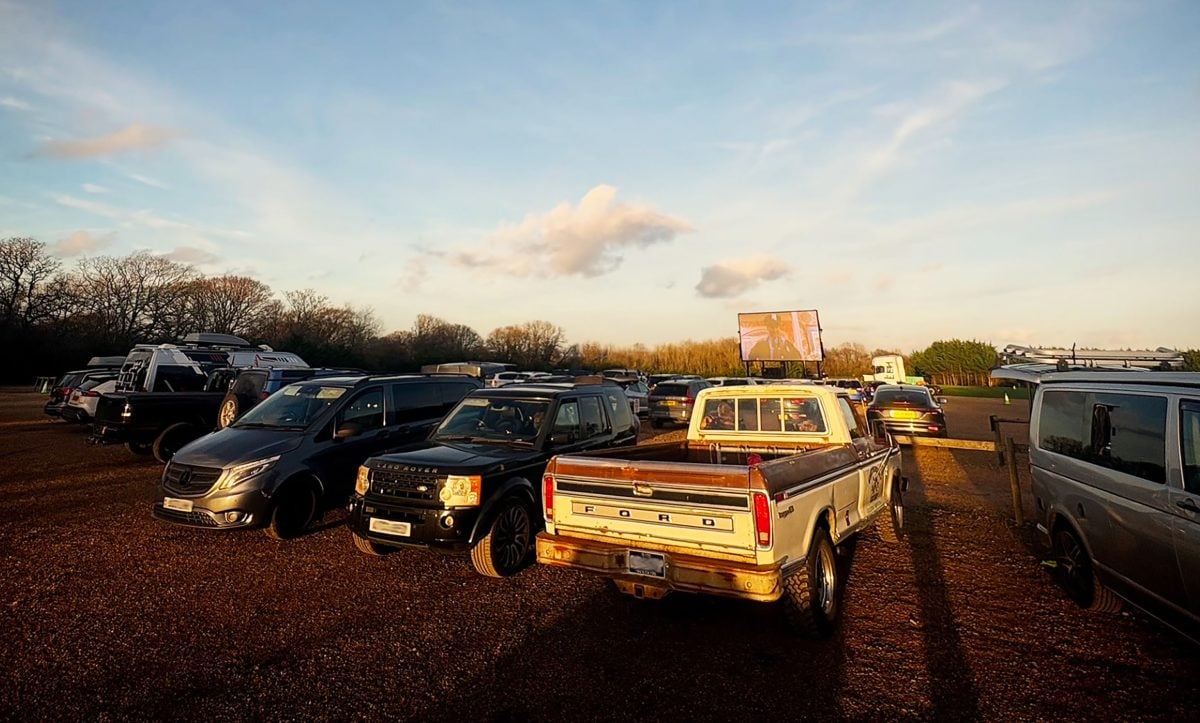
Puckpool continues to innovate in the 21st century as the home to Pictures in the Park – a free outdoor cinema experience – and Punk in the Park, featuring the best of local bands.
What are your recollections of Puckpool Park? Do you remember the aviary, aquarium and Wireless Museum? Local folklore has it that tunnels extend from Puckpool out to the Solent Forts. Is this merely a myth or is there any substance to the story?
Let us know in the comments…








Very interesting read.
What is lovely is the fact that Puckpool Park has not changed much over the last 100 years. Even the flower beds are in the same places as in the old photos that are on the walls of The Barracks Cafe.
Shame the Isle of Wight Council used a huge amount of the park for the holiday camp which will now be built on with the loss of the huge established trees. It will not look the same from the sea side. The whole area should have been kept preserved for the public – especially as there is more of us now to use it.
I can remember the playground with the double metal boat swing (which is now in the Ryde Heritage Museum), the seesaw and the crazy golf.
I also remember clearly the aviary with the golden pheasant and the aquarium.
Oh, bring back those days!
I don’t think Adam Faith was in ‘That’ll Be The Day,’ but he was in the follow up film ‘Stardust’.
I believe you are correct.
There were once either parrots or cockatiels at Puckpool Park. I do remember, and occasionally, they would squark out obscenities to passers-by.
Now it’s left to rot by the isle of wight cancel