






































Local companies are at the forefront of a major Southern Water project to reduce the discharging of stormwater into the sea off the Island.
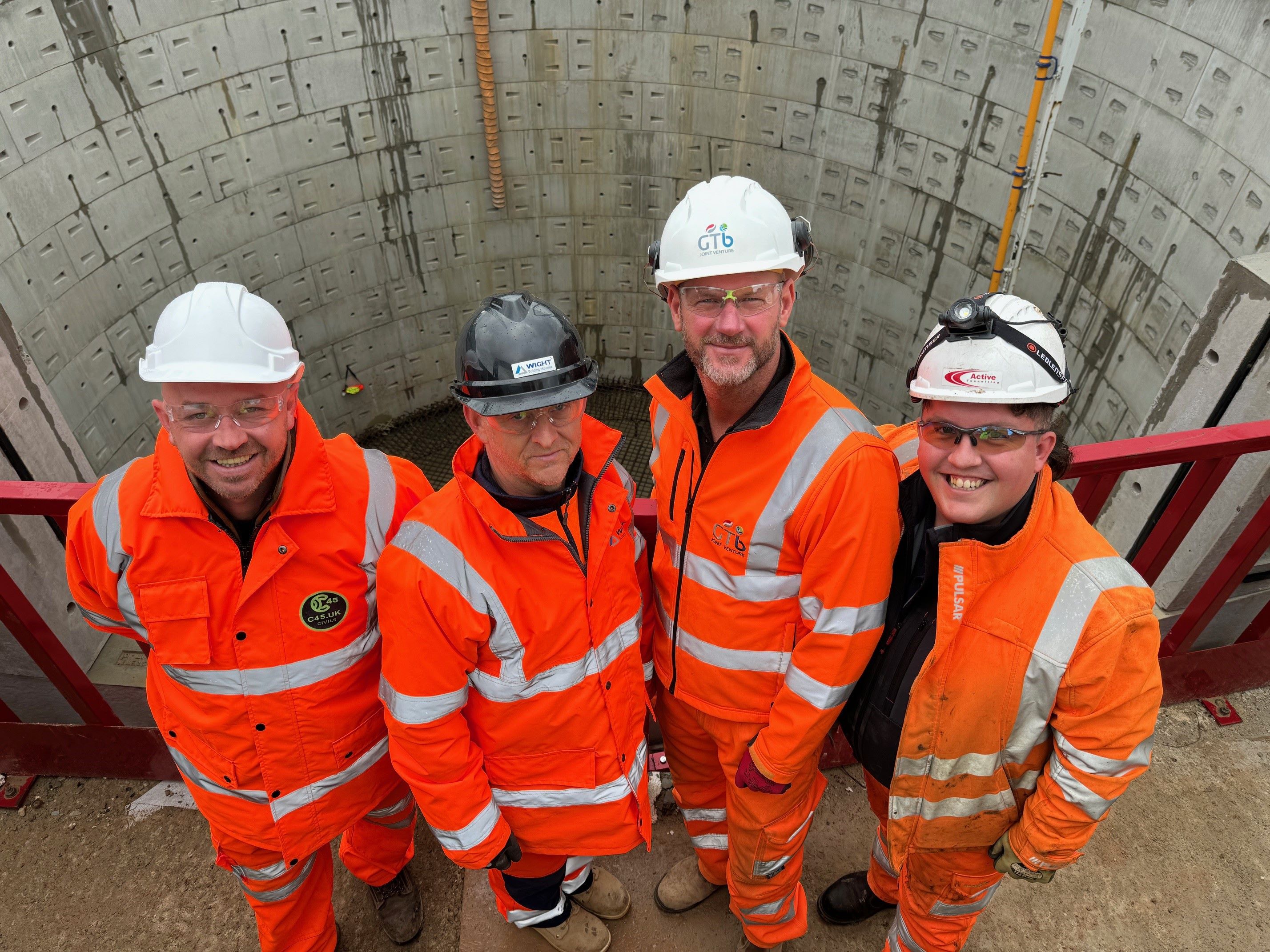
Wight Building Materials and Whippingham-based civil engineering company C45 are both key supply chain partners in the ongoing Southern Water scheme to greatly increase storage capacity at its wastewater treatment facility at Sandown.
By increasing the capacity of holding tanks, Southern Water can reduce the number of discharges into the sea when its systems become overwhelmed with storm water during heavy or prolonged rainfall.


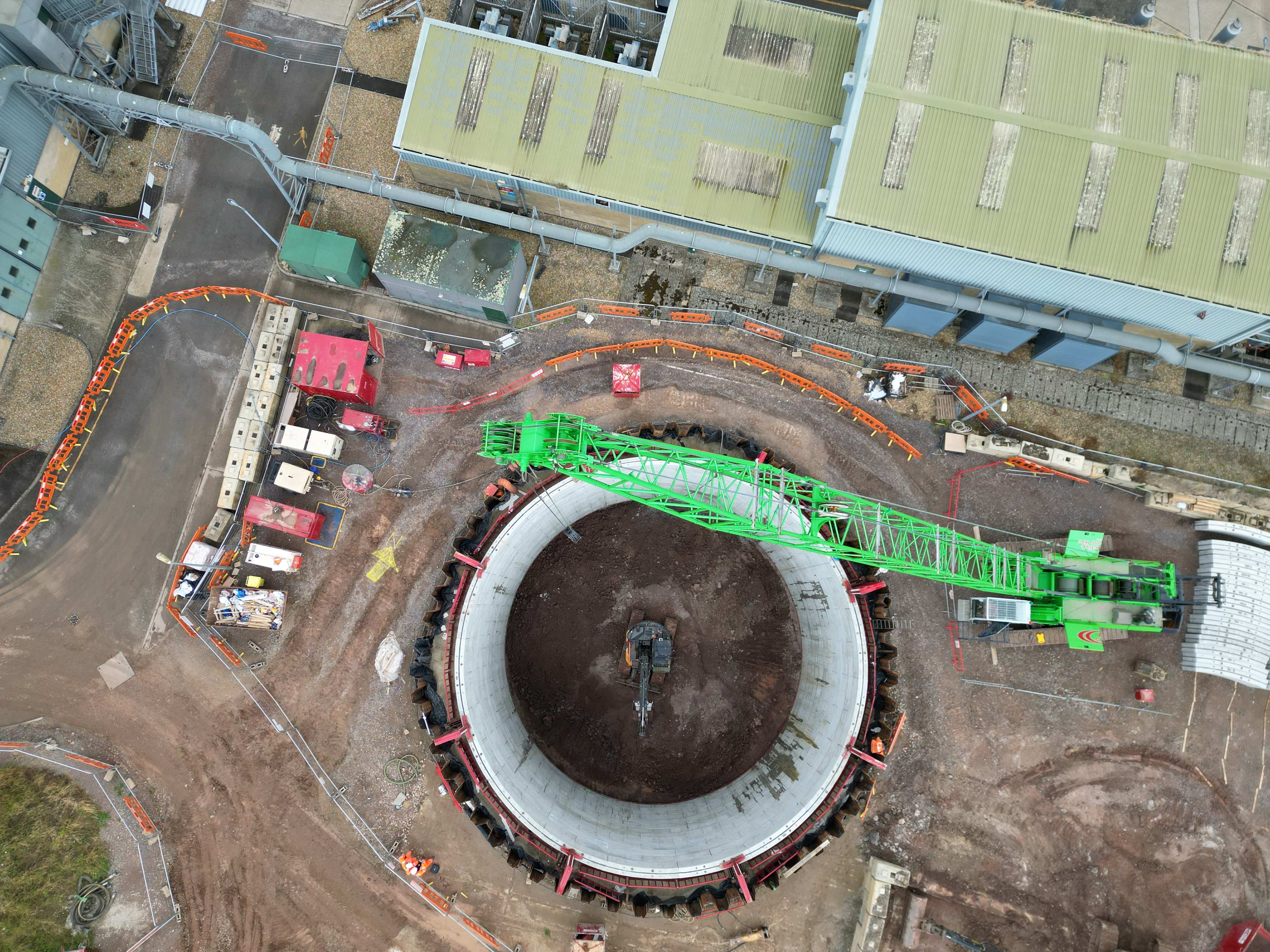
The project reached a key milestone this week as the concrete base was poured into a new 17m deep by 17.5m wide concrete storm tank. The new infrastructure, the largest of 7 such storm tanks on site, can hold 4,000 cubic metres of water if required.
The new base uses concrete specially developed at Wight Building Materials’ St George’s Down HQ to meet Southern Water’s stringent requirements to resist sulphate attack from the surrounding ground conditions.
It contains ground granulated blast-furnace slag (GGBS) which is a recycled by-product of the iron and steel-making industries and replaces 70% of the Portland cement normally used in concrete. GGBS is a sustainable, reduced carbon and durable alternative to cement and when combined with Island sourced aggregates minimises the overall carbon impact of this project.
In all 600 cubic metres, or 1,200 tonnes, of the specialist cement mix – which included Island sourced aggregate – was poured into the base by Wight Building Materials in three sessions over 30 hours.
John Pitfield, site manager with lead contractor Galliford Try, said:

“I am an Islander myself so it is great to be able to call on tried and tested local supply chain partners to play a role in delivering such an important local infrastructure project.”
Cameron Davies, project manager, of subcontractor Active Tunnelling added:
“The fact is that without locally sourced concrete, this project would not happen. It is the support and professionalism of companies like Wight Building Materials and C45 that makes large infrastructure projects such as this possible.”
Steve Burton, general manager of Wight Building Materials said:
“The project highlights how crucial it is for the Island to be able to source and supply local materials to the construction industry.
“We are delighted to be playing a part in supporting a project that is of such great importance to the local community. That we are able to do so is the result of our ability to meet the stringent specifications of major national customers by combining innovation with the ability to source local materials.”







Whilst this is no doubt a helpful move, I am still at a loss to understand why storm water discharge due to heavy rainfall should involve discharging raw sewage into the sea. It has always been my understanding that storm water and effluent have separate drainage arrangements. You certainly cannot have both your roof rain water and your bathroom fischarge running into the same sewer – planning would never pass it.
That’s how it was years ago. Back then we never had the number of houses and the population was much less than now. Combined flows will go through preliminary treatment screening and grit removal before being stored in storm tanks prior to storm discharge or return through the works when flows allow.
The island system is not simple and involves all of the large transfer stations which will not transfer to sandown if an issue arises there, which again could result in a storm discharge. I believe sites have a storm discharge concsent such as 4 times a year which is based on formula A which is 3 times dry weather flow.
Wastewater treatment and discharge consents are complicated and very expensive issue and much more complex than people think. That doesn’t make it right I know, but you can’t stop it coming in and it has to go somewhere.
Great stuff, that will not take long to fill up. All you need to do now is man the site so that maintenance can be done. 3 day operators down to 1. The site was designed for 3. And let’s ask how many inhibits on the transfers because not enough staff to do what’s required. Sandown wtw intermediate pump station stops transfers from fairlee, appley, Springhill, hope beach when it hits a high level potentially causing spills around the island.
I could write a book…