













































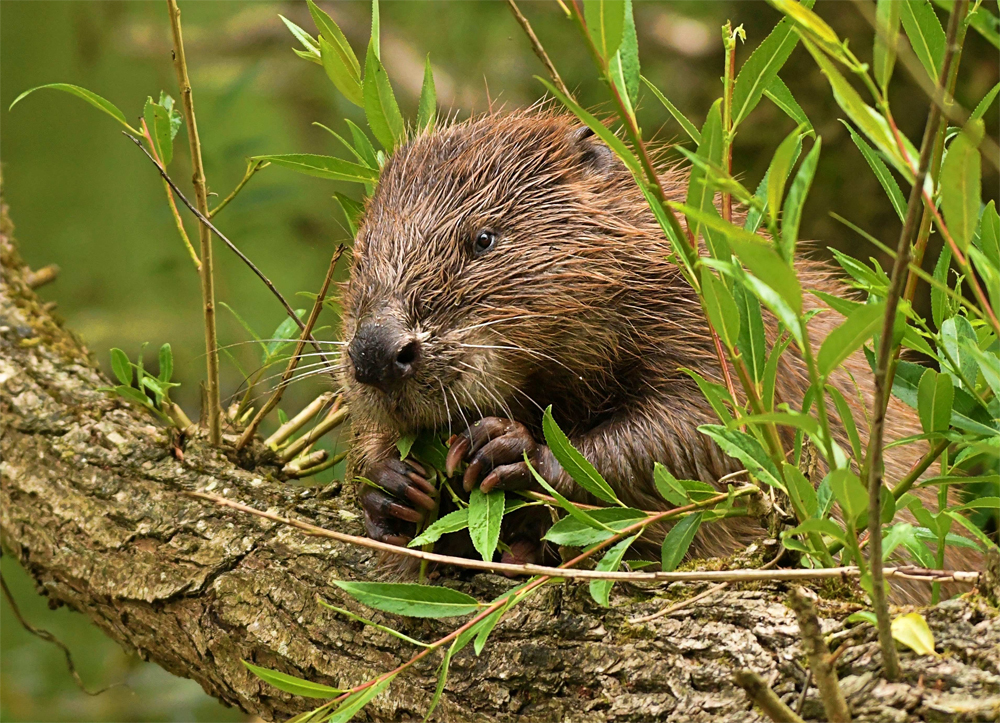

The release of beavers on the Isle of Wight has moved a step closer as the Labour Government has decided to legalise the wild release of Eurasian beavers in England.
The news has been welcomed by Hampshire & Isle of Wight Wildlife Trust, which has long recognised the Eastern Yar as a prime location for the wild release of beavers.
It’s said that beavers are remarkable ecosystem engineers whose natural behaviours have enormous potential to improve and enhance river health. By constructing dams in small, shallow streams and creating wetlands, they help regulate water flows, improve water quality, and reduce the risk of flooding.


The Trust says beavers can help restore this vital habitat by naturally slowing water flow and creating diverse wetland environments, which support a wide range of plant and animal species. Their dam-building activity can reconnect the river with its floodplain, helping to slow and store water, reducing the risk of downstream flooding.
Furthermore, the wetlands they create filter pollutants and improve the clarity and health of the water, addressing both water quality and flood management issues.
But not everyone is convinced… In 2022, local farmer Mark Coventry raised concerns about the introduction of beavers. He drew attention to the situation in the Argentinian island of Terra del Fuego, where 50 beavers were released in 1946. There are now estimated to be over 200,000 on the island. The beavers have devastated forests and gnawed through cables.
Jamie Marsh, Director of Nature Recovery, Wilder Wight, Solent and Seas at Hampshire & Isle of Wight Wildlife Trust, has said:
“This is a monumental day for wildlife and rivers in England. Beavers are a keystone species whose return to our landscapes will have lasting positive impacts on our ecosystems. They are part of the solution to improving river quality and wetland habitats for the benefit of both people and wildlife.”
Article continues below this advertisement

Nicola Wheeler, Senior Beaver Recovery Project Officer at Hampshire & Isle of Wight Wildlife Trust, adds:
“The journey to this point has been years in the making. We’ve carried out extensive engagement with the public, invested in meaningful discussions with stakeholders and communities, and dedicated time to raising awareness and education around wild beavers and their benefits. At the same time, we have rigorously assessed the landscape’s suitability to ensure the East Yar Catchment is a viable location for the wild release of these incredible ecosystem engineers. It has been a long-term, well-considered project, and with this announcement, we welcome the opportunity to advance it even further.
“Now that we’ve received the green light, we will be increasing our engagement and advancing conversations on coexistence with stakeholders and communities on the Isle of Wight. This builds on five years of extensive data collection, analysis, surveys, education, and consultation, all of which have shaped our plans for the wild release of beavers into the Eastern Yar.
“We are excited about the role beavers can play in restoring the Eastern Yar. Their natural behaviours will help tackle many of the challenges facing this river, from habitat loss to poor water quality. This marks a significant step forward in our mission to use nature-based solutions for flood management and biodiversity recovery, and we look forward to taking the next steps toward their wild release.”
The Trust has been working closely with riparian landowners, local communities, and the Eastern Yar Beaver Steering Group (established in 2022) to discuss the potential of a wild release on the Isle of Wight.
The Trust will now review the guidance published by Natural England and consider, in partnership with stakeholders, the next steps which could involve submitting an Expression of Interest for assessment and feedback.









I like beavers…
They are all part of this awonderful world a gift that’s given us and what we are failing to look after