
















































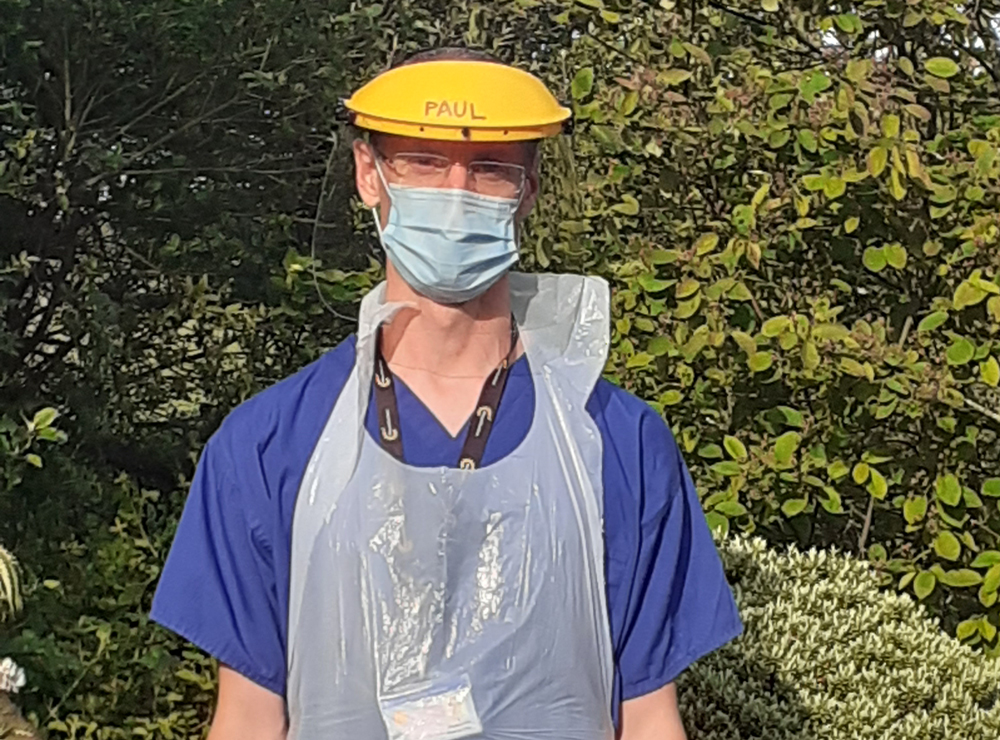

 The practicalities of dealing with the coronavirus outbreak are exhausting, but the response from Islanders has been overwhelming – that is the conclusion of a Mountbatten medical consultant, Dr Paul Howard, 4 weeks into the current crisis.
Hospice care focuses on pain management, emotional and spiritual care for those who would no longer benefit from active treatment; the aim for every patient is to provide comfort and dignity in death and for family members to provide bereavement support through their grief. The coronavirus outbreak has meant more phone consultations than usual, with some patients in the community contacted daily. Home visits continue unabated for those closer to the end of life or where a phone assessment is inadequate.
With no testing available in the community, visits are treated with the utmost caution in full Personal Protective Equipment (PPE) for all patients.


For hospice professionals so focused on giving sensitive emotional support to those in the last days of their lives, the wearing of PPE creates a real physical barrier.
Dr Howard says:
“Non-verbal communication is so important when caring for a dying patient, but can be really difficult when you’re wearing a mask. The patient or family can’t even see your face properly. It’s physically challenging too; trying to put a stethoscope in your ears while wearing a visor is not easy. Often our patients can’t hear you properly either; it’s definitely making the day job much harder.”
According to Dr Howard, perhaps one of the most distressing aspects of the coronavirus is that there is sometimes not enough time to build a rapport with those being cared for; deaths from COVID-19 can sometimes be rapid. This means providing relief from pain and other symptoms in a patient’s own home can be preferable to an ambulance journey involving moving them from the comfort of their own home and potential separation from loved ones. If a hospital admission is needed, Mountbatten’s end of life care is extended through a small, expert team working in partnership with St Mary’s.
Dr Howard continues:

“When someone is not expected to survive our Mountbatten team is there to help control the patient’s symptoms and offer emotional support.”
Among some distressing scenes, it is the community’s response that is giving the team strength, according to Dr Howard.
“You can be standing in the middle of Newport putting on your mask and visor, getting ready to go into someone’s house and the warmth from passers by is so encouraging.
“There have been examples of impromptu support, where our Mountbatten nurses might be leaving a property and the whole cul-de-sac has turned out in applause. People can be so kind”.











Full respect to those working at the hospice anyway, but even more so now.
I understand how hard it must be as many people in there are elderly and to see the staff smothered in PE gear is not easy for some to understand, and, even if they do, it removes the ‘human’ touch to some degree.
Thank God we have such wonderful people working there, I know from bitter loss of my own how wonderful they treated us all.
So sad that such caring people have an even harder time in their profession, and I hope all Islanders support them financially as it is ‘all’ we can do to help them.
Thanks is never enough to say to these wonderful people, but ‘thanks’ anyway.