

































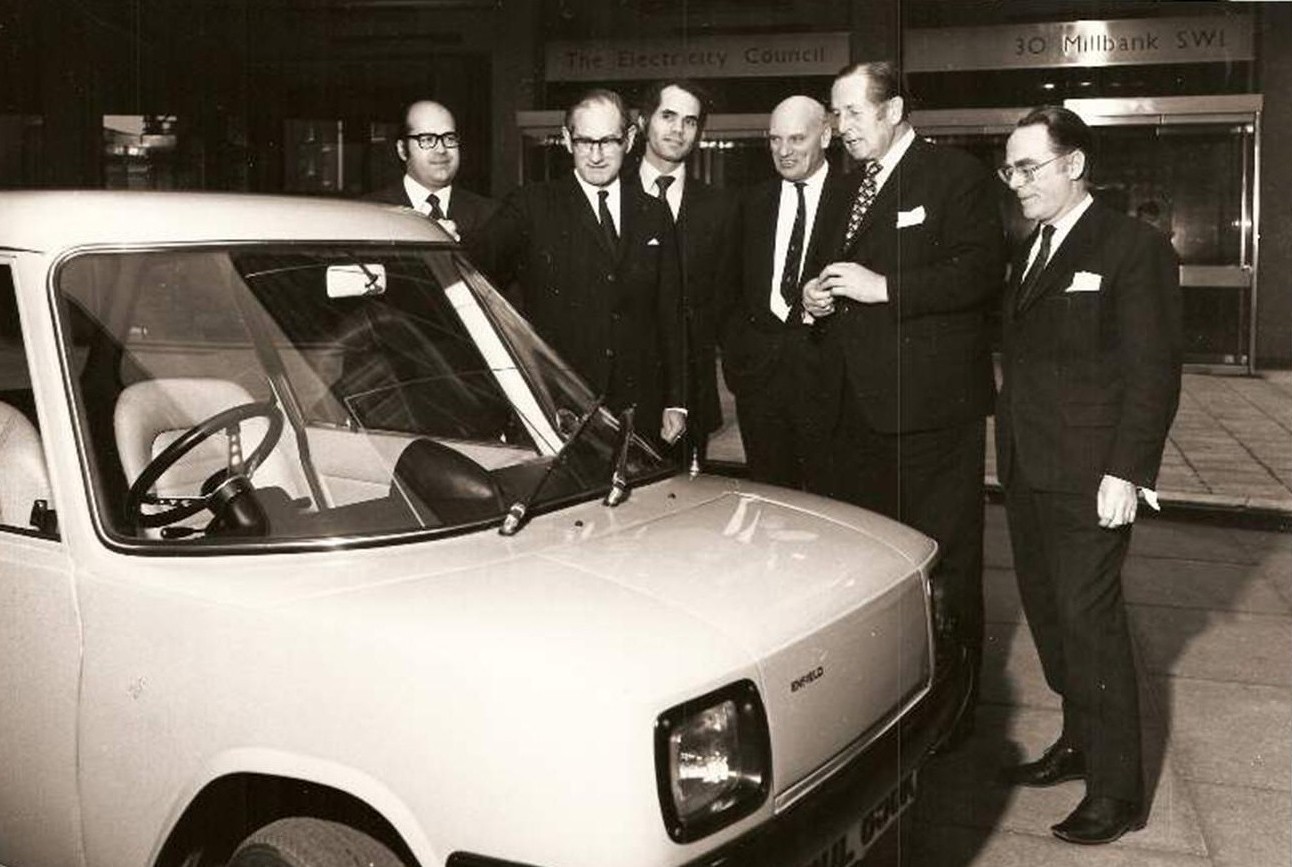

The pioneering Enfield 8000 electric car project came to an abrupt halt when its Cowes-based manufacturer announced closure – on 13th May 1976.
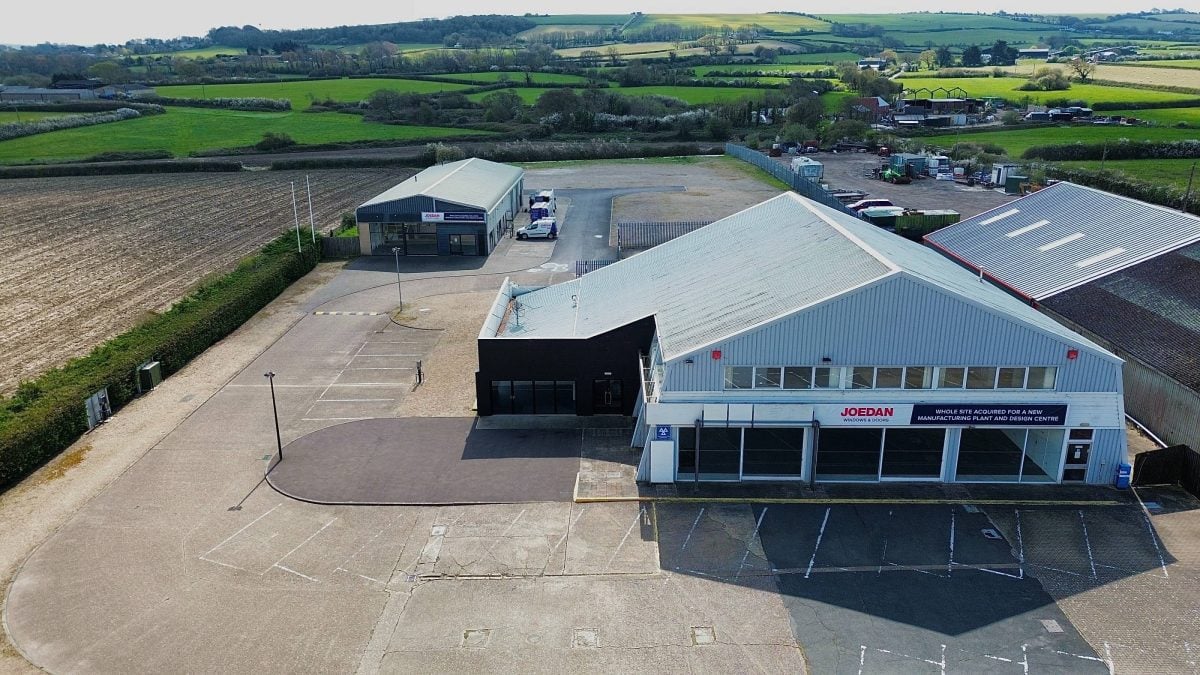
At Somerton Works in Northwood, on the outskirts of Cowes, the Isle of Wight was quietly producing what has since been described as the world’s first modern electric car. From 1973, engineers and assembly workers were building the Enfield 8000 – a small, battery-powered vehicle born out of fuel crisis fears and forward-thinking design.
But just 3 years later, that vision died.

On 13th May 1976, Enfield Automotive Ltd confirmed it would close at the end of the month, with 13 jobs lost and production of the Island-built electric car brought to an end. The announcement was brief, but its implications were far-reaching: one of Britain’s earliest serious attempts at electric motoring had run out of road.
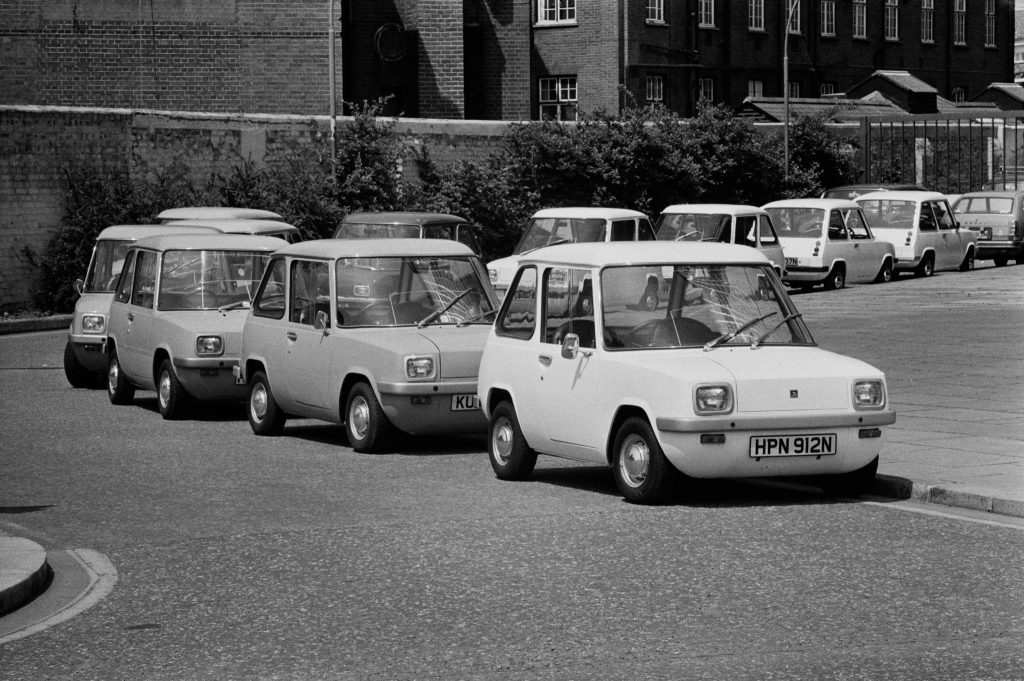
The Enfield 8000 was no novelty project. Around 120 cars were ultimately produced, with more than half purchased by the Electricity Council and used by meter readers across southern England. These were not prototypes hidden away in workshops, but working vehicles gathering real-world data on Britain’s roads.
Designed by Ryde engineer John Ackroyd, the car was a clever piece of engineering. It combined lightweight aluminium bodywork with components adapted from familiar British vehicles, including Mini doors and Hillman Imp suspension. On short urban journeys, it proved simple to drive, smooth in operation and surprisingly practical within its limits.
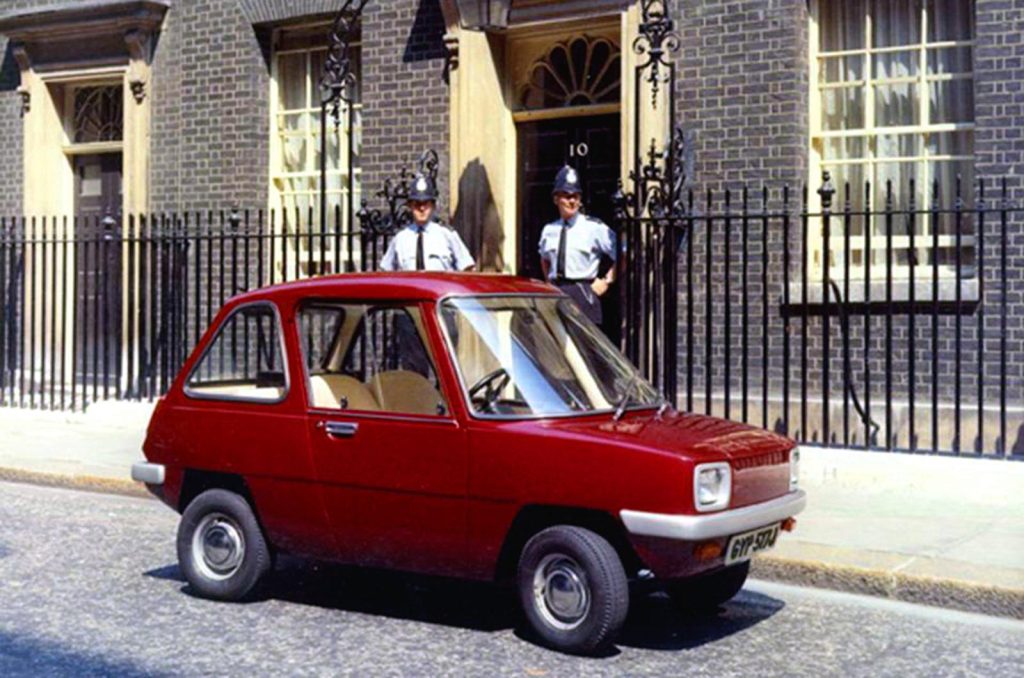

But those limits proved decisive.
The Enfield relied on lead-acid batteries, which restricted both range and performance. A full overnight charge could deliver around 40 miles in ideal conditions, but significantly less in cold weather. Charging infrastructure was virtually non-existent, and the car’s modest top speed made it unsuitable for longer journeys.
At the same time, petrol cars remained cheap, fast and widely available. For roughly the price of a large family saloon, buyers were being asked to choose a small 2-seater with limited range and few comforts. Unsurprisingly, demand struggled to materialise.
Managing director Mr S. Ackroyd acknowledged the reality at the time, citing a lack of demand for electric cars as the primary reason for closure. It was not that the Enfield 8000 didn’t work – it was that the world around it wasn’t quite ready.
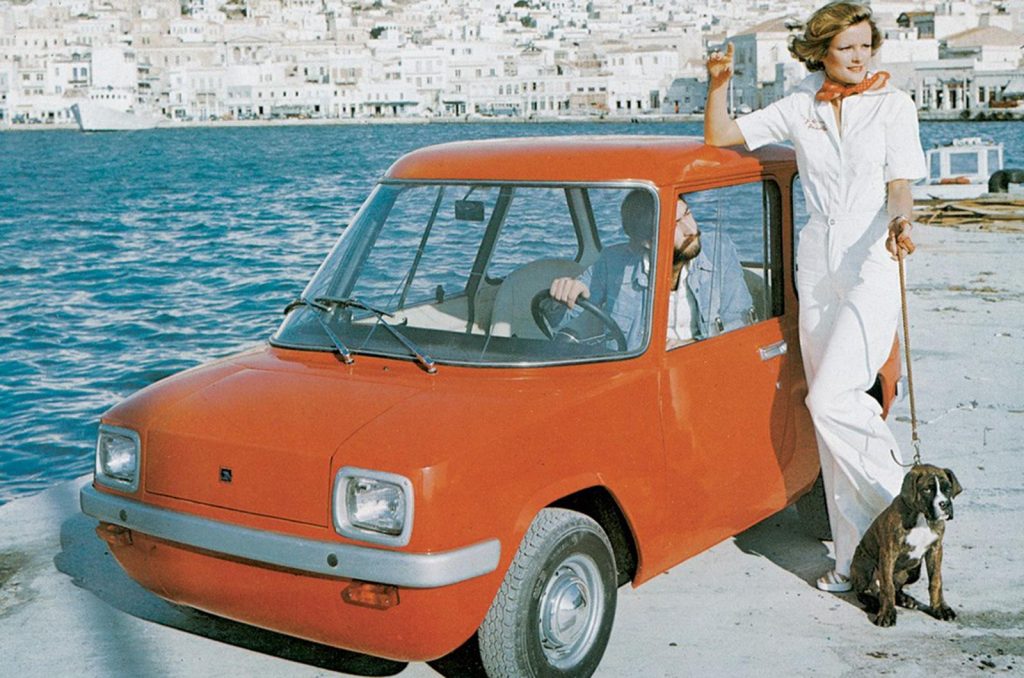
There had been genuine optimism that the Somerton operation might grow. The Isle of Wight, for a brief moment, stood at the forefront of a potential shift in motoring – not just observing change, but actively shaping it. Yet as fuel prices stabilised and interest waned, the project lost momentum.
Although production ended in 1976, the Enfield 8000 has never entirely disappeared. Surviving examples have returned to the Island in recent years, including public exhibitions in Newport and displays at Quay Arts, where restored vehicles have highlighted their local origins and pioneering design.
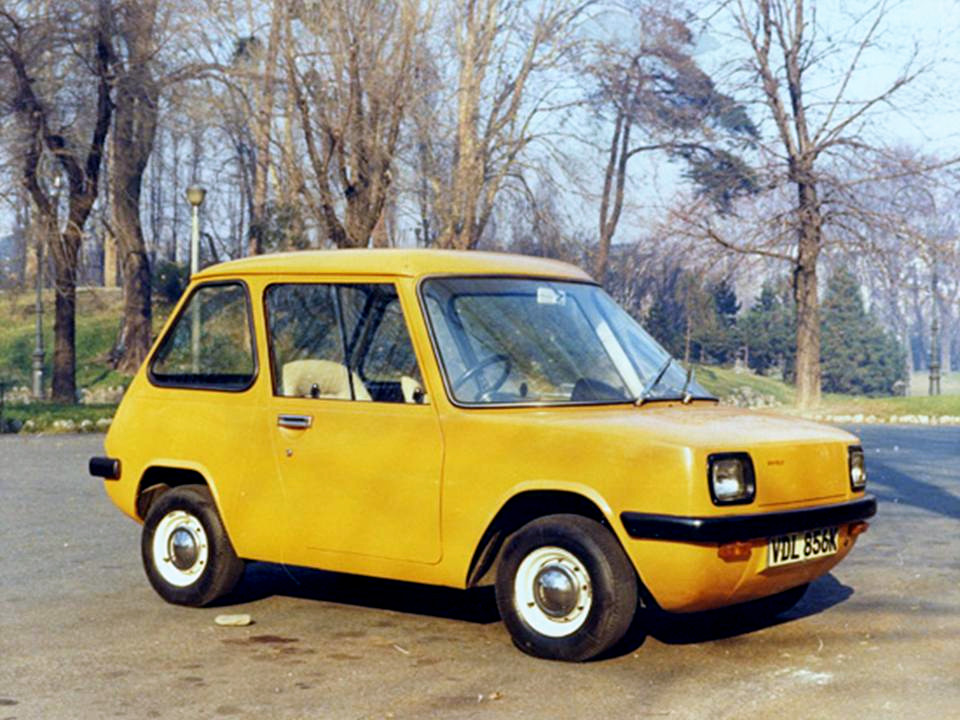
Today, the small, boxy Enfield stands as a reminder that the future does not always arrive on schedule. Half a century ago, on 13th May 1976, the Isle of Wight lost a company that had been building a new kind of car long before it became a global priority.
Have today’s electric cars have finally become a practical alternative to petrol vehicles, or are they still at risk of following the same path as the Enfield 8000?








Great article.
I must say I have now ditched my EV it was great when
road fund was free and there were no congestion charges
when visiting my son in the big smoke.
Now got myself a large diesel vehicle and it does 48 miles to the
gallon. Bargain at just under £2 a litre.
If the authorities want us to go electric or stay electric
don’t take away incentives.
It was great while it lasted.
shame you ditched the EV, car tax for that one only £20 a year, how much car tax on the gas guzzler?
Oh Dear, how the sanctimonious have fallen…