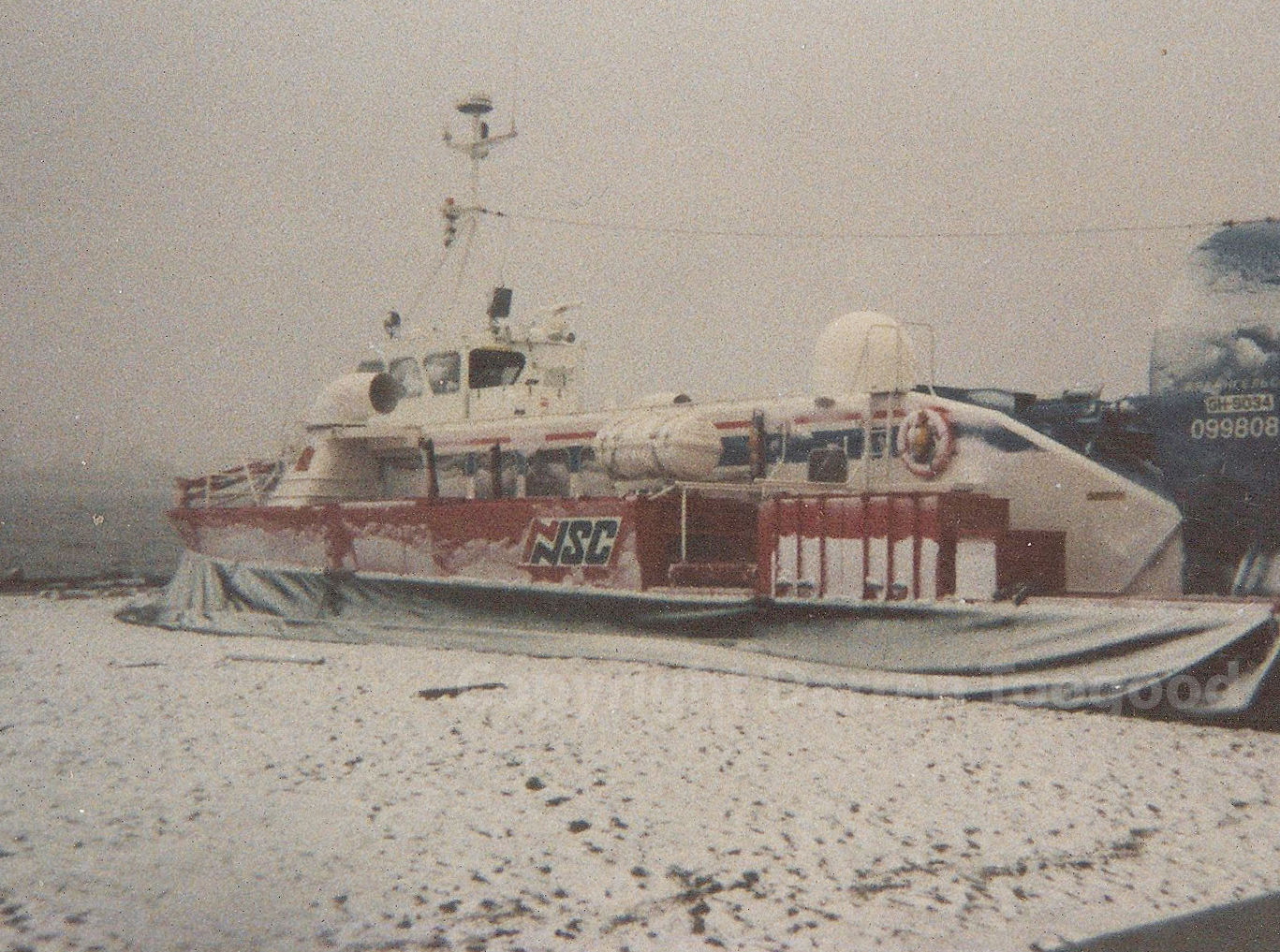







































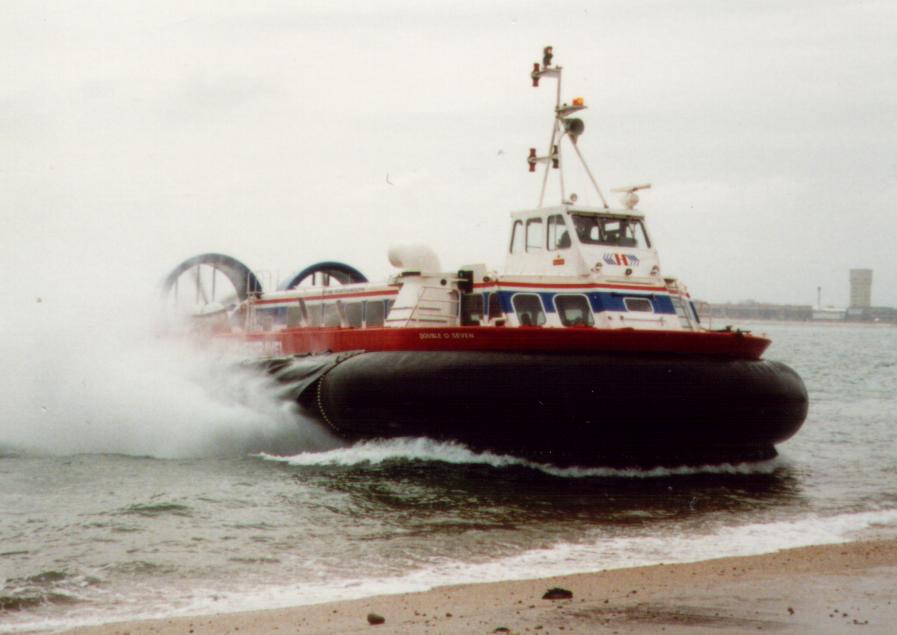

This month marks the 40th anniversary of the introduction of the AP1-88 hovercraft – an iconic craft that not only ran between Ryde and Southsea, but around the world.
From 1983 to 2018, AP1-88s were operated across the Solent, between Ryde and Southsea, by Hovertravel, becoming a symbol widely associated with the Isle of Wight.
Outside the United Kingdom, variations of the AP1-88 operated around the world including in Norway, Australia, Sierra Leone, Russia, Kazakhstan, Gibraltar, The Bahamas, South America, China and Taiwan – to name a few.


The name AP1-88 derives from the name Advanced Project 118. Some of the directors of British Hovercraft Corporation apparently found ‘one-hundred-and-eighty-eight’ difficult to say, so it became known as the ‘one-eighty-eight’.
The AP1-88, a medium-sized hovercraft, seats a maximum of 101 passengers. It has several advantages over earlier hovercraft because of its increased fuel economy and reduced noise output.

As a result of high oil prices following the 1973 oil crisis, the profitability of the 1st generation of commercial hovercraft was badly hit. Some operators began to lose money and customers demanded more fuel-efficient vehicles.
Advances were made in skirt technology to require less power to keep them inflated. In the 1970s, improvements in diesel engines made their use in this new, much larger generation of hovercraft increasingly attractive.

Hovercraft operators demanded vehicles that could transport higher numbers of passengers and generate less noise whilst in operation. Both British Hovercraft Corporation (BHC) and its clients saw the need for lower-cost vehicles, specifying that the new hovercraft could be constructed for just half the cost of the previous SRN.6 and be run at half the operating costs.
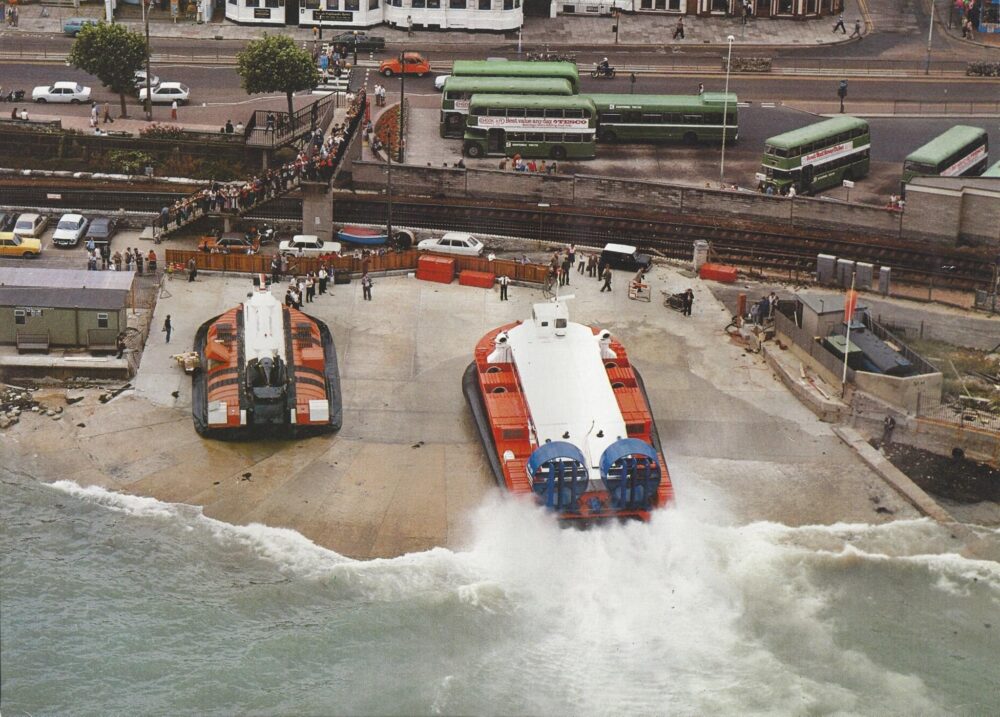
BHC formed a partnership with operator Hovertravel to develop a cheaper and quieter successor to the SR.N6. £237,000 was provided by the British Technology Group for the initiative, and BHC itself spent around £1million of its own money on the new craft.
During the late 1970s, development work at BHC commenced on the new hovercraft, led by the famed Isle of Wight designer, Ray Wheeler. The first prototype was completed in March 1983. Trials of the craft went smoothly and only minor modifications were made to the production AP1-88s.
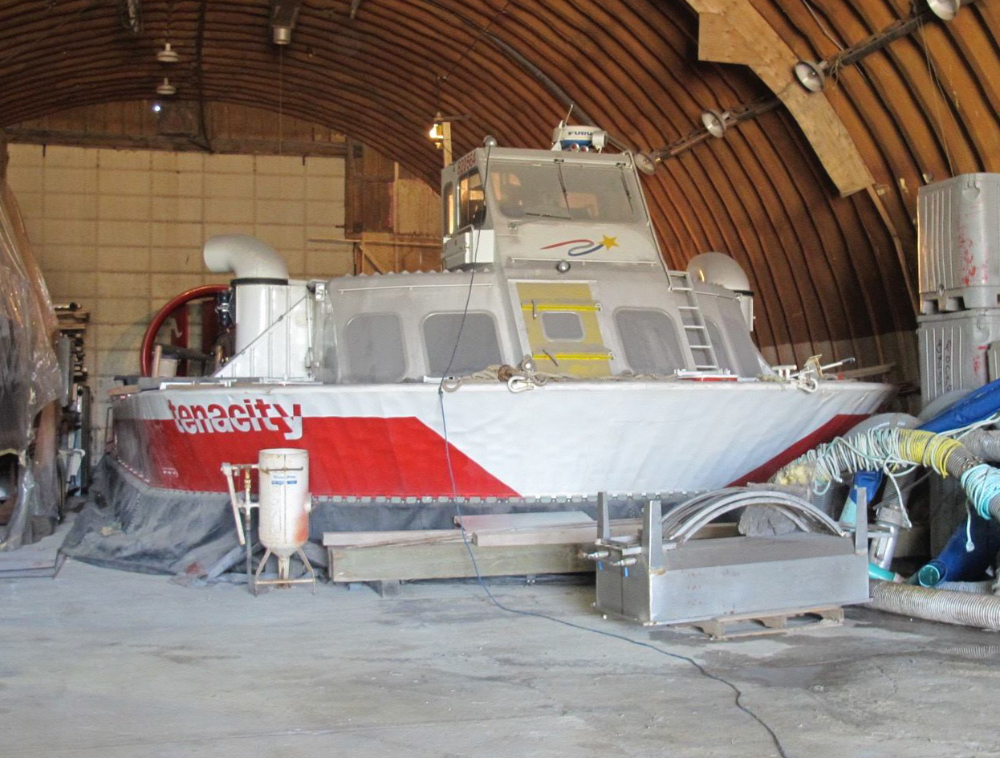
The 1st AP1-88 was named Tenacity which, 40 years on, is still around and is located in Canada.
3 months later, a 2nd craft, named Resolution, was completed, which was promptly sold to the United States Navy. In 1985, a 3rd AP1-88, Perseverance, was launched. In total, 14 AP1-88s were made.
Hovercrafts were initially built in the Columbine Building in East Cowes. Then, the AP1-88s had their aluminium hulls fabricated on the mainland before being shipped to Hoverwork at The Duver, St Helens for completion.
Unfortunately, after Hoverwork was taken over by Griffon, the Duver works were closed down and production transferred to Woolston, Southampton.

The AP1-88 could carry its maximum load of 101 passengers for 2.2 hours. BHC projected the operating costs to be around £120 per hour. It could be readily adapted for various roles, including search and rescue, icebreaking, firefighting, passenger transport and anti-submarine warfare.
British hovercraft operator Hovertravel procured a pair of AP1-88-100s for scheduled passenger services. However, the company found that the vehicles lacked the power to operate in strong headwinds and were unable to cross the Solent at winds greater than 30 knots. In response, BHC partially rebuilt both the company’s AP1-88-100s.
Hovertravel retired the last of its AP1-88 fleet – Freedom 90 and Island Express (formerly Freja Viking) – in 2018. They have since been replaced by the ‘Flyer’ hovercraft.
Island Express, built in 1984, saw out her days on the Solent but originally ran between Malmo City centre and the airport 17 miles away across the Oresund channel, separately Sweden and Denmark. When the service was wound up in the early 1990s, the craft ended up on the pad at Ryde where no less than 5 AP1-88s sat, at least until the 3 former Scandinavian Airline Services craft were taken to Fishbourne. Freja Viking was later transferred to The Duver, stripped and sandblasted before being renamed Island Express and put to work on the Ryde-Southsea route in 2001, where she would continue to operate for 17 years. She is now located in the Far East with Freedom 90 and Courier.

Not all Hovercraft come to a happy ending… Double-o-Seven left the Solent for Sierra Leone where she operated between Freetown and the airport for Diamond Airlines. Interestingly, she was later painted in a luminous yellow colour with zebra print interior, sporting the name ‘Prince Michael’. She was eventually scrapped after almost sinking on the approach to Freetown.
Falcon – the final hovercraft built at East Cowes in 1991, before production moved to Hoverwork in St Helens, can now be seen at the Hovercraft Museum at Lee-on-Solent. It’s the last AP1-88 left in the country.
The craft – originally named Siverko – was initially fitted out for a service in Russia, operating on a route from Arkhangelsk (Archangel). She then saw service in The Bahamas and South America before returning to the UK. She was laid up alongside 2 other craft at Hythe, Southampton for over 10 years before being transferred to the Hovercraft Museum.
Falcon can still be hovered, although she is not currently seaworthy.