























































Standing before the iron gate bearing the cynical words “Arbeit Macht Frei” (Work Sets You Free), you’ll feel time collapse. This isn’t just another historical site you’re visiting—it’s where humanity’s darkest impulses materialized into systematic murder. Over 1.1 million people, mostly Jews, died here between 1940 and 1945. Today, Auschwitz-Birkenau stands as the most powerful reminder of what happens when hatred, prejudice, and indifference converge. Visiting this place will confront you with uncomfortable truths about human nature and force you to examine your own moral compass. The experience stays with you long after you leave, reshaping how you see the world and your place in it.
Standing before the iron gate bearing the cynical words “Arbeit Macht Frei” (Work Sets You Free), you’ll feel time collapse. This isn’t just another historical site you’re visiting – it’s where humanity’s darkest impulses materialized into systematic murder. Over 1.1 million people, mostly Jews, died here between 1940 and 1945. Today, Auschwitz-Birkenau stands as the most powerful reminder of what happens when hatred, prejudice, and indifference converge. Visiting this place will confront you with uncomfortable truths about human nature and force you to examine your own moral compass. The experience stays with you long after you leave, reshaping how you see the world and your place in it.
Understanding Auschwitz: Historical Context and Significance
The Holocaust and Auschwitz’s Role in Nazi Genocide
The Nazis established Auschwitz in 1940 in occupied Poland as a concentration camp for Polish political prisoners. It quickly expanded into a sprawling complex of three main camps and dozens of subcamps. Auschwitz I served as the administrative center, Auschwitz II-Birkenau became the main killing center, and Auschwitz III-Monowitz provided slave labor for industrial production.


What made Auschwitz unique – and uniquely horrifying – was its industrial efficiency in mass murder. The Nazis transformed killing into a mechanized process. They built gas chambers disguised as shower rooms, installed crematoria to dispose of bodies, and developed logistical systems to process thousands of victims daily. Between 1942 and 1944, Auschwitz-Birkenau became the primary destination for Jews deported from across Nazi-occupied Europe.
The scale of destruction defies comprehension. Of the 1.3 million people deported to Auschwitz, approximately 1.1 million were murdered – 90% of them Jewish. Others included Poles, Roma, Soviet prisoners of war, and people persecuted for political or religious reasons. This single complex accounted for nearly one-sixth of all Jewish victims of the Holocaust.
From Death Camp to Memorial Site
Soviet forces liberated Auschwitz on January 27, 1945, finding approximately 7,000 surviving prisoners in catastrophic physical condition. The Nazis had already evacuated most prisoners westward in death marches, destroying much evidence of their crimes. Yet enough remained to document the horror.
In 1947, Poland established the Auschwitz-Birkenau State Museum on the site. UNESCO designated it a World Heritage Site in 1979, recognizing it as essential to human memory. Today, the museum welcomes over 2 million visitors annually – a number that continues to grow as people seek to understand this chapter of history.
Why Visiting Matters in 2026
You might wonder: why visit now, 80 years after liberation? The answer has never been more urgent.

Holocaust survivors are disappearing. Most are now in their 90s or have passed away. Their firsthand testimony – the living link to these events – won’t be available much longer. When you visit Auschwitz, you’re honoring their memories while you still can.
Rising antisemitism makes Holocaust education critical. Recent surveys show alarming ignorance about the Holocaust, particularly among younger generations. Some people even deny it happened. Walking through Auschwitz confronts denialism with irrefutable physical evidence.
The visit to Auschwitz isn’t about ancient history – it’s about understanding how ordinary people became perpetrators, bystanders, or resisters. These lessons apply directly to contemporary challenges: refugee crises, ethnic violence, and authoritarian movements. When you understand how the Holocaust happened, you recognize warning signs in your own time.
If you’re planning to visit, consider booking through professional tour operators who provide historical context and logistical support. Resources like https://krakowdirect.com/auschwitz-tours/ offer guided experiences that help you process this challenging site meaningfully.
The Visceral Journey: What You’ll Experience at Auschwitz
Arriving at the Site: First Impressions
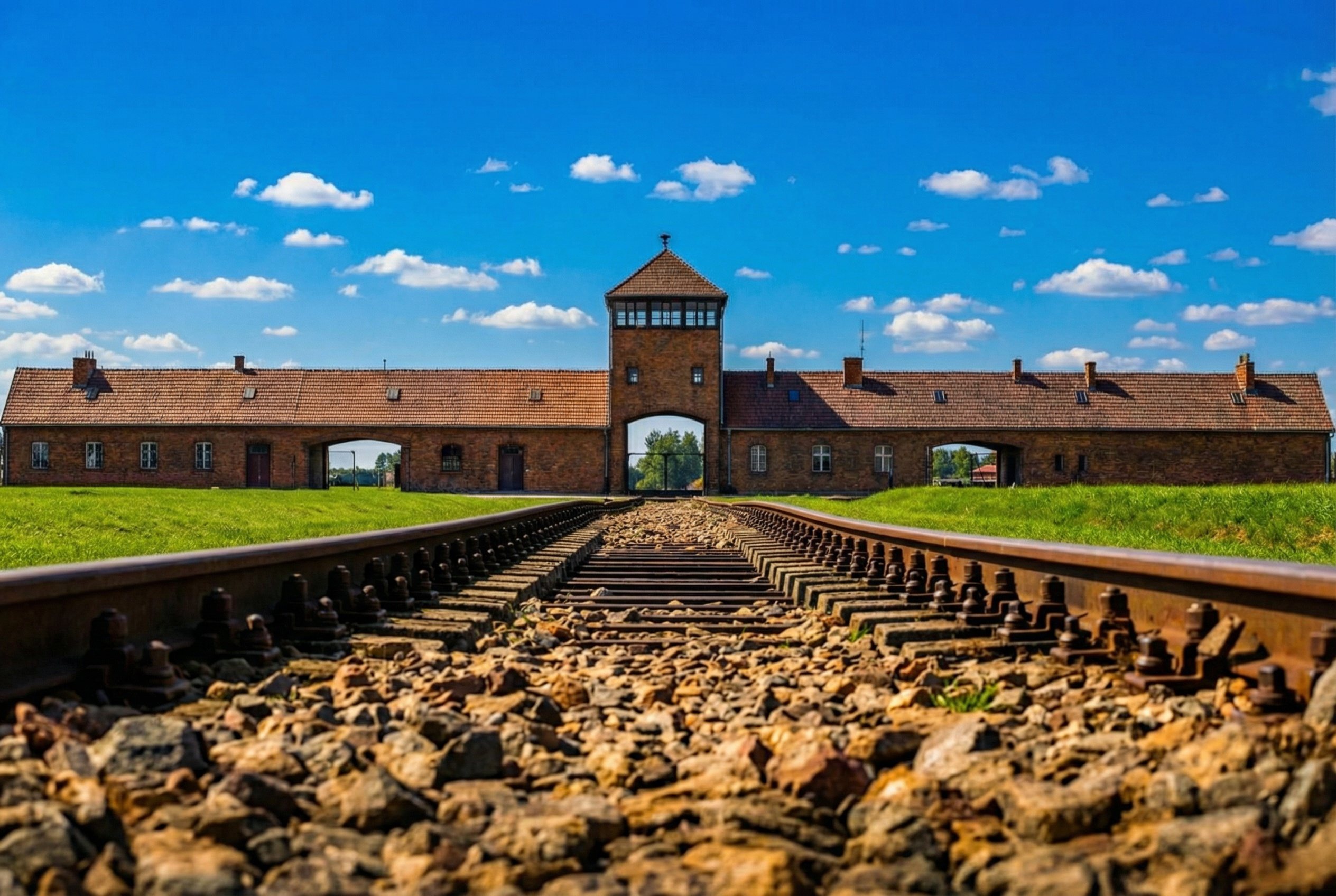
Your first glimpse of the “Arbeit Macht Frei” gate creates an immediate emotional impact. The ordinariness of the brick buildings contrasts sharply with what happened inside them. Red brick barracks line neat streets. Watchtowers punctuate the perimeter. Electrified fences stretch between concrete posts. Everything looks deceptively organized – exactly as the Nazis intended.
The atmosphere carries a palpable weight. Even on sunny days, the site feels heavy with absence. Visitors speak in hushed tones or maintain silence. You’ll notice this immediately – Auschwitz imposes its own code of conduct through sheer emotional gravity.
Confronting the Evidence of Systematic Murder
Inside the barracks-turned-museum displays, you’ll encounter the possessions of victims. Room after room contains items the Nazis confiscated:
- Mountains of shoes – from infant booties to adult work boots
- Suitcases marked with names and addresses, packed by people who believed they were being resettled
- Eyeglasses – thousands of pairs, representing thousands of individuals
- Human hair – tons of it, which the Nazis sold to textile factories
These aren’t abstract statistics. Each shoe belonged to someone who walked, ran, danced. Each suitcase represents hope that belongings would be needed in a new life. Seeing these objects transforms numbers into people.
The preserved gas chamber in Auschwitz I shows the mechanics of murder. You can walk through the undressing room, see the chamber itself, and view the crematorium ovens. At Birkenau, the Nazis destroyed most gas chambers before fleeing, but the ruins remain – testimony to their attempt to hide evidence.
Birkenau: Understanding the Scale
Auschwitz II-Birkenau, located 3 kilometers from the main camp, reveals the true magnitude of Nazi intentions. The railway tracks lead directly into the camp, passing under the infamous gatehouse tower. This is where SS officers conducted “selections” – deciding immediately upon arrival who would be worked to death and who would be gassed immediately.
Birkenau stretches across 425 acres – so vast you can’t see the far fence from the entrance. Over 300 prison barracks once stood here. Walking the grounds requires substantial time and physical stamina. The vastness itself communicates meaning: this wasn’t a spontaneous atrocity but a carefully planned infrastructure of genocide.
Memorial sites throughout Birkenau mark locations of destroyed gas chambers and crematoria. Plaques in multiple languages honor victims. The International Monument at the end of the railway tracks commemorates all who died here.
The Role of Guided Tours
Expert guides prove essential to understanding Auschwitz. They provide historical context, explain what you’re seeing, and help process the emotional impact. Guides share individual stories that personalize the statistics – like the fate of specific families or the resistance efforts of prisoners who sabotaged Nazi operations.
Many tours incorporate survivor testimonies through recorded interviews or written accounts. Hearing or reading firsthand descriptions while standing in the actual locations creates powerful connections across time. You can learn more about planning your visit at https://krakow.wiki/auschwitz-birkenau-museum/ for detailed information about the memorial and museum.
Appropriate conduct matters deeply. This is a cemetery where over a million people were murdered. Respectful silence, modest behavior, and thoughtful photography (photos are permitted in most areas but prohibited in certain locations) honor the victims and their families.
The Transformative Impact: How Auschwitz Changes Perspectives
Emotional and Psychological Responses
Expect powerful emotions. Shock, grief, anger, and helplessness are normal responses. Some visitors cry. Others feel numb. Many experience both simultaneously – overwhelming feeling coupled with the sense that any emotional response falls inadequate to the magnitude of suffering.
You’re experiencing what psychologists call “secondary witnessing” – bearing witness to trauma through evidence and testimony. This affects you psychologically. The challenge lies in comprehending incomprehensible evil: How did this happen? How could ordinary people participate? Why didn’t more people resist?
These questions don’t have satisfying answers, and that discomfort is part of the lesson. Evil on this scale doesn’t fit neat explanations. It emerges from countless individual choices, systemic structures, propaganda, prejudice, fear, and opportunism working together.
Shifts in Worldview and Values
Auschwitz confronts you with humanity’s capacity for cruelty. The perpetrators weren’t monsters from another species – they were humans like you. Many had families, enjoyed music, loved their children. This disturbing reality forces recognition: the line between good and evil runs through every human heart.
You’ll also recognize civilization’s fragility. Germany was among the world’s most educated, culturally advanced nations in 1933. Democracy, rule of law, and human rights can collapse with shocking speed when people choose to dismantle them. This realization often sparks renewed commitment to democratic values and human dignity.
Many visitors report heightened awareness of dehumanization in contemporary discourse. Once you’ve seen where dehumanization leads, you recognize its early stages: rhetoric that portrays groups as threats, vermin, or less than human; policies that strip people of rights and dignity; violence that escalates from discrimination to persecution to elimination.
Personal Responsibility and Moral Awakening
The Holocaust happened not just because of perpetrators but because of bystanders. Millions of ordinary Germans, Poles, and others across Europe witnessed their Jewish neighbors being rounded up and deported. Most did nothing. Some actively collaborated. Only a tiny minority risked their lives to help.
This confronts you with uncomfortable questions about your own courage. Would you have resisted? Would you have hidden people? Or would you have prioritized your family’s safety and remained silent? Most people who visit Auschwitz leave determined to never be a bystander to injustice.
The experience often prompts self-examination of personal prejudices. We all carry biases absorbed from culture and upbringing. Recognizing this tendency in ourselves – the same tendency that the Nazis exploited and amplified – becomes the first step toward actively countering it.
Long-Term Effects on Your Life
Studies of Auschwitz visitors document lasting changes. Some people alter career paths, moving into education, social justice, or human rights work. Others increase involvement in community activism. Many report enhanced empathy, particularly toward refugees, immigrants, and persecuted minorities.
The visit creates a sense of obligation – to remember, to speak out, to act. This isn’t burden but purpose. You carry forward the memory of those who died and the lessons their deaths can teach.
Carrying the Experience Forward: Living with Auschwitz’s Lessons
Maintaining Awareness in Daily Life
The intensity of the Auschwitz experience fades with time – this is natural and necessary. You can’t function in constant grief. The challenge lies in retaining the lessons without becoming numb to them or letting them recede into abstract memory.
Integrate your experience thoughtfully. Reflect on how it changed you. Journal about insights. Revisit photographs mindfully. Let the experience inform your choices without being paralyzed by it.
Practical Ways to Honor What You Learned
Share your experience appropriately. When discussing your visit, focus on what you learned rather than simply describing horrors. Help others understand why remembrance matters. Educate friends and family, especially younger generations who have no personal connection to Holocaust survivors.
Support Holocaust education institutions financially or through volunteer work. Organizations that preserve survivor testimony, conduct research, and provide educational resources depend on public support. Consider contributing to survivors’ foundations that provide assistance to aging survivors.
Most importantly, actively oppose hatred, bigotry, and dehumanization when you encounter them. This means speaking up when someone tells a bigoted joke, challenging discrimination in your workplace, supporting policies that protect vulnerable groups, and voting for leaders committed to human rights.
The Enduring Responsibility to Remember
“Never again” only has meaning if it guides action. Connect Holocaust memory to contemporary human rights issues. Recognize warning signs: scapegoating of minorities, erosion of democratic norms, acceptance of political violence, proliferation of conspiracy theories, and normalization of dehumanizing rhetoric.
The Holocaust didn’t begin with gas chambers – it began with words, then discrimination, then persecution, escalating over years. Understanding this progression enables you to recognize and interrupt similar patterns today.
Reflect regularly on how your Auschwitz visit continues shaping your life. What choices do you make differently? How has it affected your empathy, your courage, your values? Let these reflections guide your ongoing commitment to human dignity and justice.
Conclusion
Visiting Auschwitz changes you. It must change you – that’s the point. You confront the depths of human cruelty and the heights of human resilience. You witness evidence of industrialized murder and remember victims who remained human even as their persecutors tried to reduce them to numbers. You leave with uncomfortable questions and urgent responsibilities.
This isn’t a comfortable tourist experience. It’s an essential education in what humans are capable of – both evil and good. The victims of Auschwitz can’t speak for themselves anymore. Their voices were silenced. But their memory speaks through the preserved evidence of their lives and deaths. When you visit, you become a link in the chain of memory, carrying forward their stories and the lessons they embody.
The experience will stay with you – in moments when you witness injustice, in decisions about whether to speak up or stay silent, in how you treat people who are different from you. Let it guide you toward courage, compassion, and commitment to “never again.” That’s how you honor those who died and ensure their suffering wasn’t meaningless.