



























































Selecting the right shock absorbers for your VW depends on your car model and how you drive it. Whether you own a nimble Golf for city commuting, a versatile Tiguan for family duties, or a robust Touareg for off-road adventures, each model requires specific shock absorber characteristics to perform at its best. The key is matching the damper type to your intended use: OE replacement dampers (like Bilstein B4) for standard city driving, sport dampers (B6 series) for enhanced handling without lowering, and performance dampers (B8 series) specifically designed for lowered sports suspensions.
VW models use different shock absorber configurations based on their suspension setup and intended purpose. The Golf typically uses twin-tube dampers for comfortable city driving, while the Tiguan employs monotube designs for better load-carrying capacity. The Touareg features advanced air suspension or heavy-duty monotube systems for off-road capability. UK drivers can expect to pay £200-£500 for front shock absorber replacement, with rear units costing £150-£450, making proper selection crucial for both performance and value.
Understanding VW shock absorber types
Modern VW vehicles use three main shock absorber designs, each suited to specific driving needs. Twin-tube dampers offer excellent comfort for daily driving and represent the most cost-effective option, typically found on base Golf models. Monotube gas-pressure dampers provide superior heat dissipation and consistent performance under varying loads, making them ideal for the Tiguan and Touareg. Electronic dampers automatically adjust to road conditions and are increasingly common on premium VW models.

The choice between comfort and performance often comes down to your driving style. City drivers prioritising fuel efficiency and ride comfort should opt for OE replacement dampers that restore original ride characteristics. Those requiring better handling for motorway driving or occasional spirited country roads benefit from sport-tuned dampers. For drivers planning suspension modifications, shortened performance dampers ensure proper spring preload with lowering kits.
VW model-specific requirements
Golf models typically use 51mm front struts with twin-tube design, though GTI variants employ monotube systems. The compact size means lighter spring rates, making damper selection crucial for maintaining proper wheel control. Sports variants require specially tuned valving to handle increased power delivery while maintaining daily usability.
Tiguan requirements centre around versatility and load capacity. The SUV’s higher centre of gravity demands dampers with progressive valving to control body roll during cornering. Many UK Tiguan owners tow caravans or carry heavy loads, making dampers with consistent performance under varying weights essential.
Touareg specifications focus on off-road capability and luxury comfort. The larger SUV uses either conventional monotube dampers or sophisticated air suspension systems. Off-road variants require extended travel dampers to handle rough terrain, while on-road models prioritise refinement and stability at motorway speeds.
Cost-effective selection guide
UK market data shows shock absorber prices vary significantly based on type and brand. Budget twin-tube dampers start around £24 per unit, while premium monotube systems reach £325. For most UK drivers, mid-range dampers priced between £50-£120 per unit offer the best balance of performance and longevity.

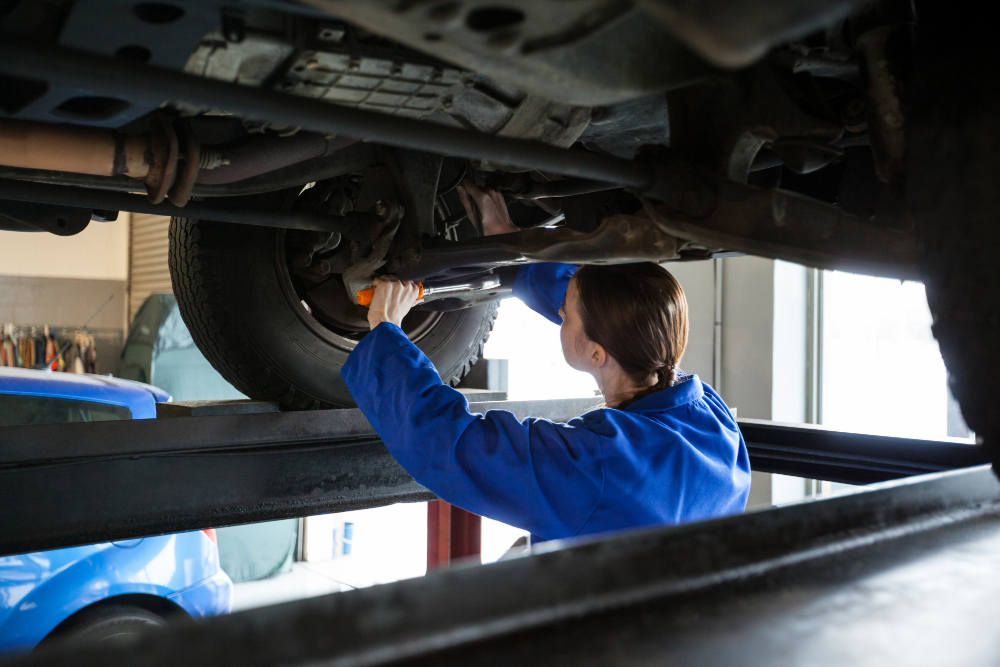
Labour costs across the UK average £35-£50 per hour outside London, rising to £50-£100 in the capital. Complete replacement takes 2-4 hours depending on model complexity.
Shock absorber selection flowchart
The flowchart above demonstrates the systematic approach to selecting appropriate dampers based on your specific VW model and driving requirements. Golf owners typically choose from three price ranges: £24-80 for standard city use, £80-150 for enhanced sports performance, or £120-200 for lowered suspension setups. Tiguan drivers have slightly higher price points, with comfort options at £50-100, heavy-duty variants at £100-180, and performance units reaching £120-220. Touareg owners face the highest costs, with standard road dampers priced £80-150, sport versions £150-250, and premium off-road or air suspension units commanding £200-325 per unit.
Application-based selection
| VW Model | City Driving | Sports/Performance | Off-Road/Towing |
| Golf | B4 OE Replacement (Twin-tube) | B6 Sport (Monotube) | B6 Performance |
| Tiguan | B4 Comfort (Twin-tube) | B6 Sport (Monotube) | B6 Heavy Duty |
| Touareg | B4 Standard (Monotube) | B6 Sport (Monotube) | B8 Off-Road/Air |
The comparison table reveals distinct patterns across VW’s model range. All three models utilise B4 series dampers for standard city applications, though the Touareg employs monotube design even in base configuration due to its larger size and weight. For sports and performance applications, B6 Sport monotube dampers are universally recommended across Golf, Tiguan, and Touareg models, providing consistent handling characteristics regardless of vehicle size. The most significant variation appears in demanding off-road and towing applications: the Golf relies on B6 Performance units, the Tiguan uses B6 Heavy Duty variants specifically designed for load carrying, while the Touareg requires either B8 Off-Road dampers or sophisticated air suspension systems to handle its maximum capability.
- City driving applications benefit from comfort-oriented twin-tube dampers that absorb urban road imperfections while providing economical replacement costs. These typically last 100,000-150,000 kilometres under normal UK driving conditions.
- Sports applications require monotube dampers with firmer valving to reduce body roll and improve cornering precision. These units provide better heat dissipation during spirited driving but may compromise some comfort.
- Off-road and towing applications demand heavy-duty monotube systems with progressive valving to handle varying loads. Extended-travel designs accommodate rougher terrain while maintaining control under maximum payload conditions.
Expert recommendations
Professional fitters recommend replacing shock absorbers in pairs to maintain handling balance. Warning signs include excessive bouncing over speed bumps, longer stopping distances, or uneven tyre wear patterns. The simple bounce test—pushing down on each corner and releasing—should result in no more than two oscillations.
Quality dampers from established manufacturers typically outlast budget alternatives by 50,000+ kilometres, making them more economical long-term. Consider your typical driving patterns when selecting: daily urban commuting favours comfort-oriented units, while weekend country drives benefit from sport-tuned alternatives.
Sources:
- Bilstein Academy Technical Documentation (2025)
- RAC Drive Maintenance Guide (2024)
- BookMyGarage Cost Survey (2024)
- Information about shock absorbers for VW on the website onlinecarparts.co.uk