










































A Rewilding Network has been launched across Hampshire and the Isle of Wight to bring together local rewilders passionate about creating wilder, more naturally functioning landscapes across the region, to help nature thrive.
Part of the Rewilding Britain initiative, the Hampshire and Isle of Wight network will enable landowners managing at least 40 hectares of land to connect with each other to share experiences, ideas, and expertise.
In the bid to give nature a fighting chance, rewilding aims to restore our ecosystems, saving wildlife, tackling climate breakdown and benefitting communities. It seeks to reinstate natural processes and reintroduce missing species, allowing them to shape the landscape and its habitats.


Rewilding provides essential ecosystem services such as nutrient cycling, carbon capture and pollution removal, complementing existing conservation work and sustainable land uses such as regenerative farming.
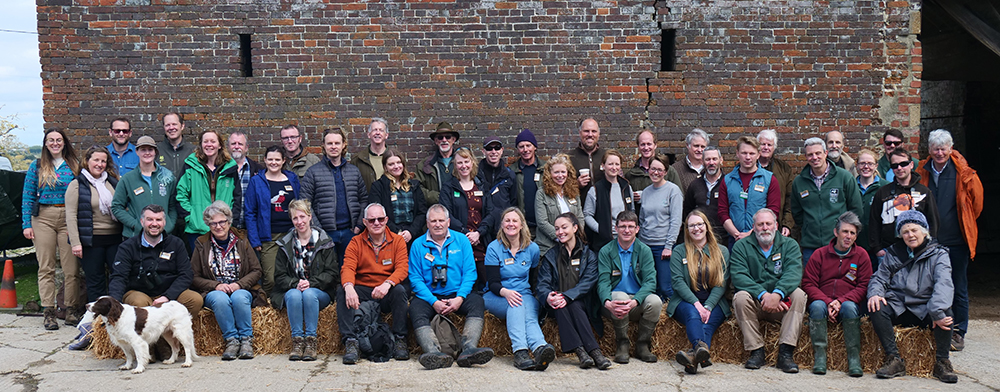
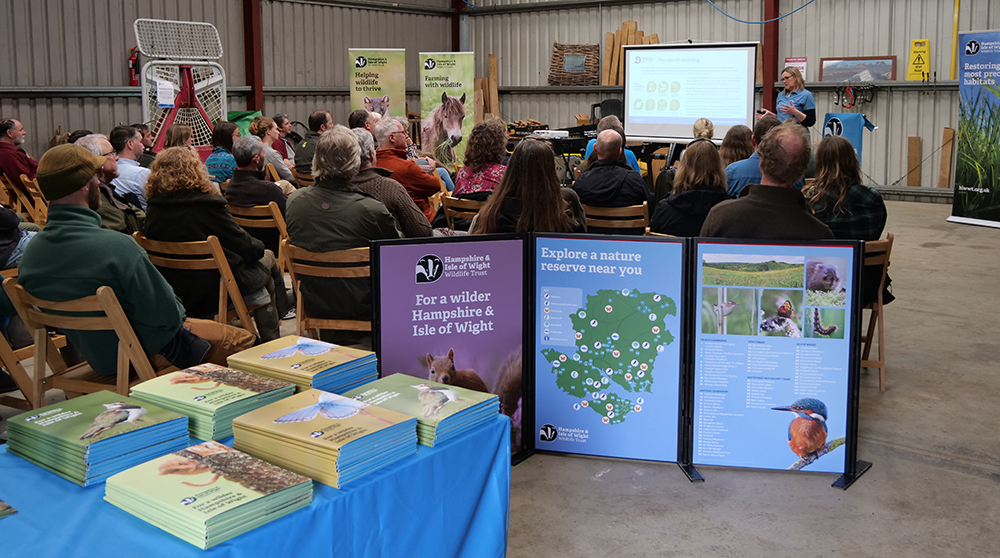
50 guests attended the launch hosted by the Hampshire & Isle of Wight Wildlife Trust, including Malaysian-born model, actress, entrepreneur and environmentalist Mandy Lieu, who bought the 925-acre Ewhurst Park Estate in Ramsdell, Hampshire in 2020 to embark upon an ambitious landscape recovery project promoting both biodiversity and sustainable food production.
The guests were given a tour of the Wildlife Trust’s 2 rewilding sites at Wilder Little Duxmore and Wilder Nunwell on the Isle of Wight. Both former low-grade quality, the Trust is rewilding the sites by kick-starting natural processes to help wildlife bounce back and thrive, reducing nutrient pollution and securing the land for wildlife in perpetuity whilst supporting local food production as part of a new partnership with Nunwell Home Farm.
Working with partner organisations such as the Environment Agency, Natural England, National Parks, and the Country Land and Business Association, the HIWWT wants to encourage those owning or managing more than 40 hectares to join the Rewilding Network and find out more about what they can do on their land.

The network aims to:
- Raise the standard of rewilding in Hampshire and the Isle of Wight through shared learning and promotion of ecological monitoring
- Contribute to nature recovery goals (e.g. 30% of land and sea managed for wildlife by 2030)
- Engage with local landowners and encourage positive action for wildlife
- Connect members with rewilding and wildlife experts
- Share experience through site visits and discussions
Debbie Tann, HIWWT Chief Executive, says:
“Nature is in crisis with more than half of our species in decline and our rivers and seas in poor health. Traditional conservation has done an amazing job over decades saving our most threatened wildlife but nature reserves alone are not enough to tackle the biodiversity crisis. As well as protecting the fragments of wildlife rich habitat that we have left, it’s vital that we start restoring ecosystems at scale.”
“As part of our vision for a wilder Hampshire and Isle of Wight we want to see rewilding making a meaningful contribution to nature recovery goals, so that at least 5% of our landscapes are rewilded by 2030. The launch of our new Network shows there is huge enthusiasm across our 2 counties for doing just that – which is fantastic news not just for wildlife, but for people too.”
The free Rewilding Network offers membership to landowners, land managers, marine project managers and local rewilding groups who are either already rewilding an area of land and sea over 40 hectares, or are planning to start. For more information visit https://www.hiwwt.org.uk/hampshire-isle-wight-rewilding-network.











“Nature is in crisis with more than half of our species in decline and our rivers and seas in poor health.
solution – reduce the population by kicking out all the illegals and other spongers and ban all housebuilding on any greenfield, ever.
And stop healthcare for anyone over 65. They are only not contributing to our society.
Forget “rewilding” and kick start a plan to encourage and support farmers to enable them to supply the food needs of this country, concreting over productive farmland such as in Ryde is crazy, the Ukraine conflict should have shown us that we need food security and providing our energy needs by using the natural gas under our land.
We should also close our borders as we are struggling to support the existing population and cannot cope with the extra numbers illegally entering our country.
Totally agree with most of what you are stating. I have long held the thought that as an Island we could be much more self sufficient than we are. We need more vegetable crop farming, definitely more reservoirs and no more building on greenfield sites. We should also be able to employ oversea workers to assist in picking crops etc or the self sufficient plan will not work. Those that are illegal and can offer no assistance due to restrictions imposed by government, and lack the ability to speak English need others to make that decision. I wouldn’t want to be responsible in sending some back to war torn countries, but they need to be able to prove they have something to offer society here and be benefit free.
Finally! I’ve been calling for modern homes to be demolished and rewilded for years now. No house built after 1945 is natural, destroy them all!
But not in my garden where I spend all of the spring de-wilding it after the destruction of the winter. The blackbirds like a mown lawn where they can get at the worms and not foot-high grass where they can’t even land. The wood pigeons like to amble about on a manicured lawn bobbing for fallen seeds. The crows likewise prefer a close-cropped lawn. Thank you but I’ll leave fashion gardening to the eco-activists and TV presenters.
Think the no mow was more for the bees and other pollinators, better to have both if your garden is large enough.
Perhaps we wouldn’t need to ‘re-wild’ if our Council wasn’t so keen on building new houses on every spare piece of land available?
Someone is definitely doing that already in E Cowes, I have never seen so many foxes in my garden as in the last year. I wouldn’t mind but they will insist on burying things in my freshly dug garden. Perhaps the person helping the foxes live would like to donate them to the above project.