





















































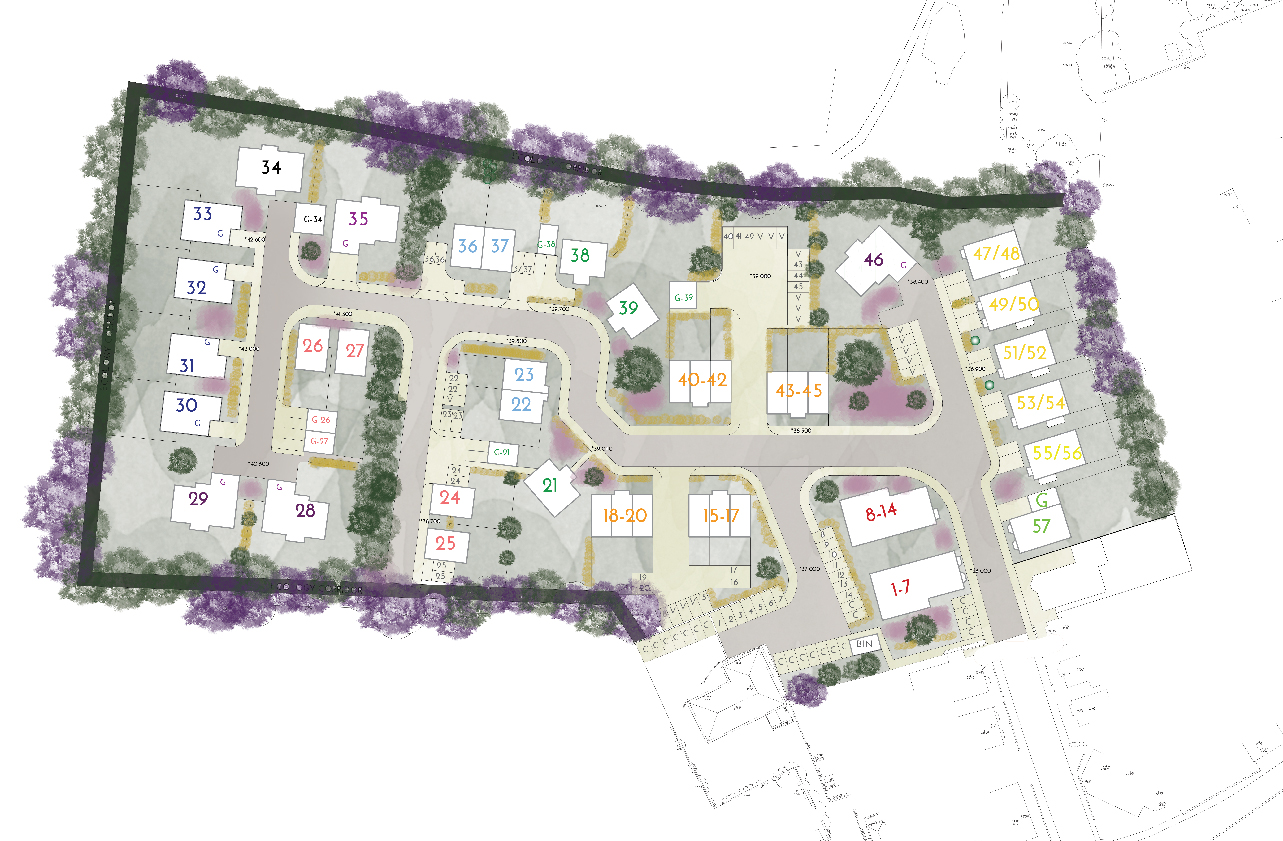

A developer is appealing the decision of the Isle of Wight Council to reject planning permission for 57 houses — over a disagreement about whether a road is actually a road.
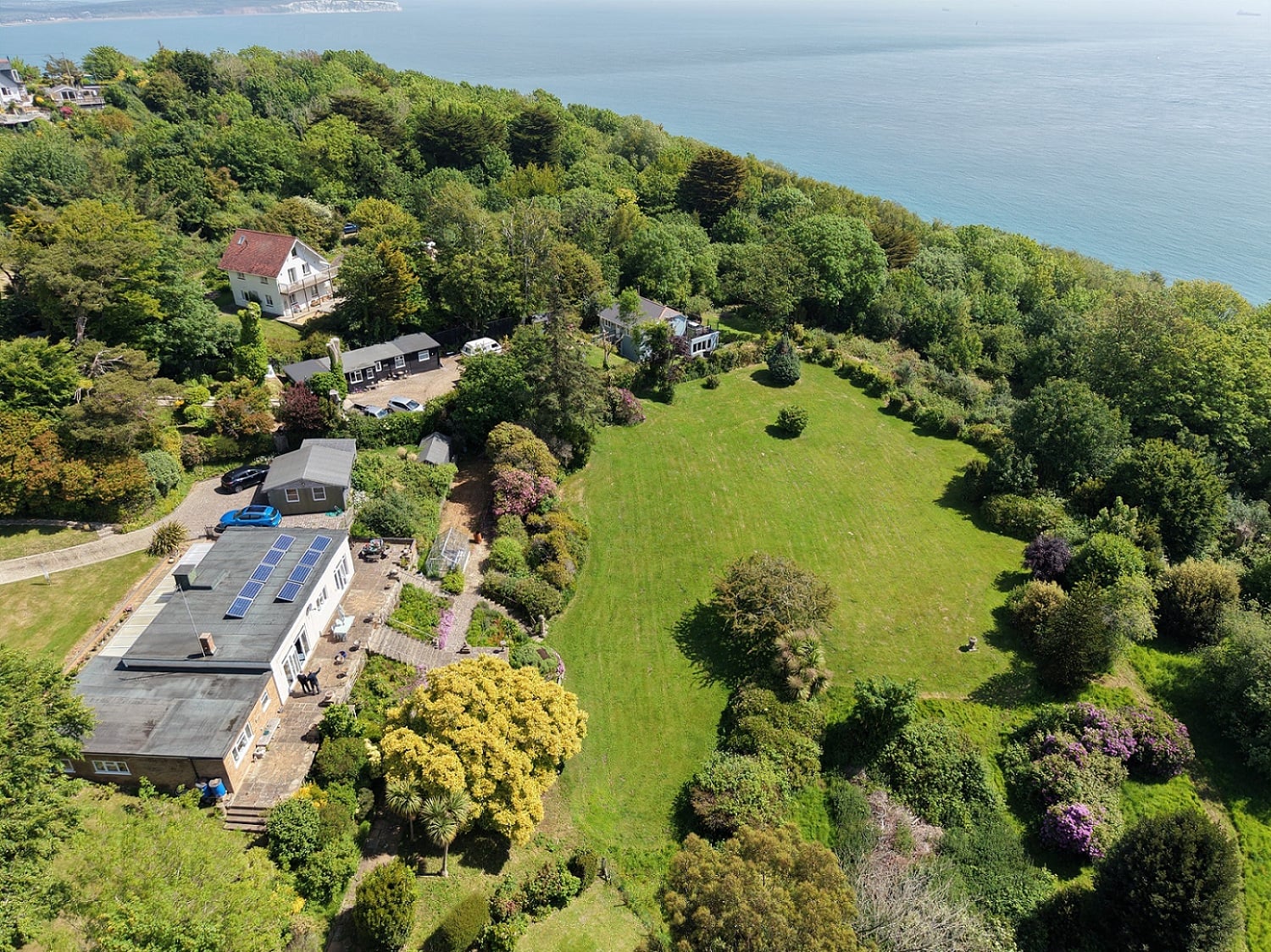
The proposed outline development of a former campsite in St Helens, on Guildford Road, was rejected last year by the Isle of Wight Council.
In the refusal notice, council planning officers said there would be a ‘significant’ increase in the use of the junction of Guildford Road with the classified Upper Green Road adding to the road hazards, as well as attracting stationary vehicles and giving unsatisfactory access for fire engines to serve the proposed development.


Officers also argued there was inadequate information when it came to archaeological deposits so they were unable to consider the impact the development might have on historic assets — including an air raid shelter on the site.
Applicant and agent, Phil Salmon, is appealing the decision, mainly arguing that Guildford Road, an unmade road with no registered owner, is a road upon which traffic regulation orders can be made, contrary to the view taken by the Isle of Wight Council.
During the original application process, according to the appeal statement provided by Mr Salmon, the council determined Guildford Road was private, and not a road to which the public has access under the definition in the Road Traffic Regulation Act — something the applicant rejects.
If the road is privately owned, the council is not able to put a traffic regulation order on it — in this case on Guildford Road to secure highway improvements, changing the road, due to the nature of the development.
Mr Salmon said: “It is common ground that Guildford Road is not a highway … It is, however, a road to which the public has access, and is, therefore, a road”.

He also said the Isle of Wight Council had made a ‘legal error’ by concluding Guildford Road is not a road.
Proposals for the highways put forward in the appeals process include making a traffic regulation order on Guildford Road, adding parking control measures around the junction with Guildford Road and Upper Green Road as well as modifying double yellow lines to secure unobstructed visibility for cars leaving Guildford Road.
Mr Salmon said the council ‘should have recognised there is a strong case in favour’ of granting permission subject to a condition requiring highway works and a traffic order achieved prior to commencement of the development.
Other reasons for an appeal include the ‘unreasonable and unjustified’ request for additional archaeological information with the appeal statement, saying to ‘refuse the application is all the more perplexing given there is a significant need for housing on the Island’.
The appeal was lodged in April but started in October and will be determined by the Planning Inspectorate












we do not want your environmental terrorism Mr Salmon- destroying the habitats of wildlife, birds and insects, cutting down trees, increasing pollution, increasing rubbish, increasing CO2 in the atmosphere, reducing oxygen generation and reducing the air quality.
your environment wrecking plans have thankfully been thwarted.
fed up with you self centred idiots that are happy to trash the environment just to make a few quid at everyones expense.
quite right Liberty we dont want or need anymore houses here in St helens THERE ARE EMPTY propertys here that are only used for 6 weeks a year .We need to get rid of second homes and use them for people who need a permanant place to live, when will the greedy council stop making our live uncomfortable .Guildford road is small lane and to have cars and lorries coming in and out it will be an accident waiting to happen so no more houses here thankyou.
barbara – the council should be considering the following and taking the subsequent action on second home owners…
if a single person lives in a house for 52 weeks of the year, they spend a minimum of £30 a week on food in the local economy. This means that dwelling contributes £1560 in food spend, a year locally.
if a person owns that home as a second home/holiday home and only stays there for up 6 weeks of the year, then they will only spend a minimum of £180 per year on food locally. (£30 x 6 weeks)
This means that the islands economy will lose out on £1380 per dwellling each year, as a minimum because no one lives there all year round. (£1560 minus £180)
Anyone owning a second home on the island should face a “non primary dwelling charge” of £1560 per year, which covers the amount not spent by that dwelling into the local economy on food each year.
in 2017 the island had 746 empty properties (excluding those where the owner has died/no probate/owner in care and those repossessed)
That is potentially £1,029,480 of food money not spent into the local economy because these properties are empty on a regular basis.
The council should be looking at this, as a way of making these owner pay, for the impact that they have on the local economy.
Mr Salmon, go and find somewhere else to destroy. Leave our Island alone.
It is WHO you know with Isle of Wight planning.
Vote them OUT next time.
PLEASE EVERYONE GO TO THE PLANNING AND STOP THIS !!
I hope i have read the above correctly.
The site may contain archaeological deposits and before planning can be given, the site should be properly investigated and a report submitted.
The access road in question is an unmade road with no registered owner.
How can you use land that does not have an owner.
How can the council give permission on a piece of land that the council or the developer do not own?
If they do build on it and then the owner is found, will the developer return that land to its original state and hand the land back?
Mr Salmon – Take your vile disgusting development and shove it. You and your profiteering are not wanted here.