

















































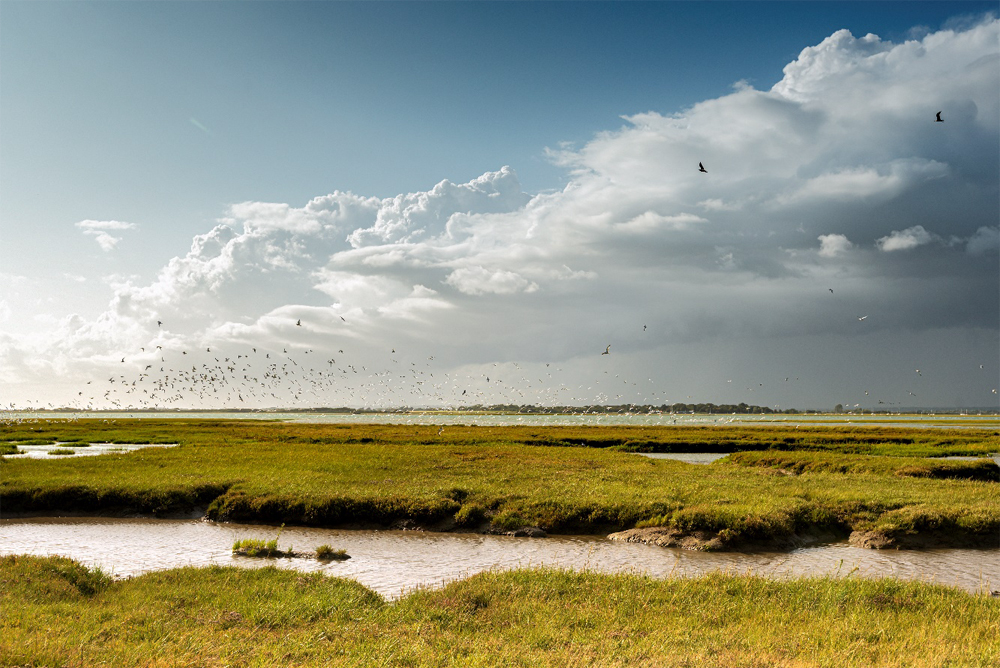

A new report has revealed that many of the internationally important habitats within the Solent, such as saltmarsh, mudflats and seagrass beds, as well as key bird and fish species, have suffered dramatic declines and they could be lost entirely in the future.
The Solent State of Nature Report reveals that, not only have oyster reefs disappeared completely from the Solent since 2007, but that around 92% of seagrass meadows have been lost in the UK over the last century, and saltmarsh has declined rapidly to half its extent 80 years ago. This means these vital habitats could vanish from the Solent within the next 100-200 years without intervention.
The knock-on effect of this is that the 85% of all seabirds that breed in the Solent on saltmarsh islands are at risk, while the numbers of non-breeding waders in the region have already seen a decline of almost 60% over the last 30 years, with the Solent facing increasing pressure from human activity, including pollution and climate change, the report revealed.


The Solent strait, which is covered by a number of environmental designations, is of international importance for its wildlife and habitats which provide homes for overwintering marine and coastal birds as well as seabird breeding colonies, whilst the harbours and estuaries are of particular importance to juvenile fish, rays and sharks. The threatened habitats also help in the fight against climate change, aid coastal protection and improve water quality by capturing carbon, and stabilising sediment.
Louise MacCallum, Solent Restoration Project Manager for Blue Marine Foundation, says:
“As someone who has lived on the shores of the Solent for more than a decade, it is hugely sad to see all of the evidence of nature’s decline here in a single report. You read about nature being in trouble on the global stage, but having stark evidence for that trend happening right here on my doorstep is distressing”.
But there is hope. The active restoration recommended by the report to stop this decline is already taking place across the Solent including by the Solent Seascape Project who commissioned the Solent State of Nature Report. This is a first-of-its-kind project in the UK that aims to protect and restore nature on a seascape level within the Solent area, and which is part of the internationally recognised UN Ocean Decade.
Following the results of the Solent State of Nature Report, the Project is launching a series of workshops, alongside a survey, which aims to engage the Solent community, allowing them to collaborate together to help save this important strait of water, its habitats and wildlife.

Working with local people, community groups, industry representatives and politicians, the aim is to develop and co-create a Seascape Recovery Plan to support be`er management of existing Solent marine and coastal habitats.
It follows restoration work the project is actively undertaking at a number of sites across the Solent, including the creation of oyster reefs, planting of seagrass, restoring saltmarsh and seabird islands, in order to initiate recovery of the marine and coastal environment and to start tipping the balance from a degraded state to a naturally expanding, connected and productive ecosystem.
Louise adds:
“Solent nature is in trouble, but the Solent Seascape Project hopes to help kick start its recovery, reconnecting the seascape into a vibrant, ecologically connected marine landscape. It’s not too late for Solent nature, but it’s now or never”.
If you’d like to help shape the future of nature in the Solent, you can take part in the survey here and read the full report on the Solent Seascape Project website at https://solentseascape.com/resource/solent-state-of-nature-report-solent-seascape-project/.









thats life ..it changes..
Life doesn’t stay the same for ever..