
















































Landowners are being urged to tackle the growing problem of Himalayan Balsam before it takes seed and threatens more of the Island’s waterways.
The appeal comes from Natural Enterprise who are currently in the frontline of the annual battle to control the invasive and destructive species.
Himalayan Balsam (Impatiens glandulifera) was introduced to Britain from the Himalayas in 1839 by Victorian gardeners. A particularly invasive species, it quickly took hold in the wild and because the plant prefers damp conditions, it can be found growing on many of the country’s riverbanks and ditches across the UK.


It grows in dense clumps up to three metres in height and crowds out native plants before dying back in winter. This can cause problems on riverbanks as they are then left bare and susceptible to erosion. It can also cause navigation problems for boaters and can damage river habitats such as fish spawning beds.
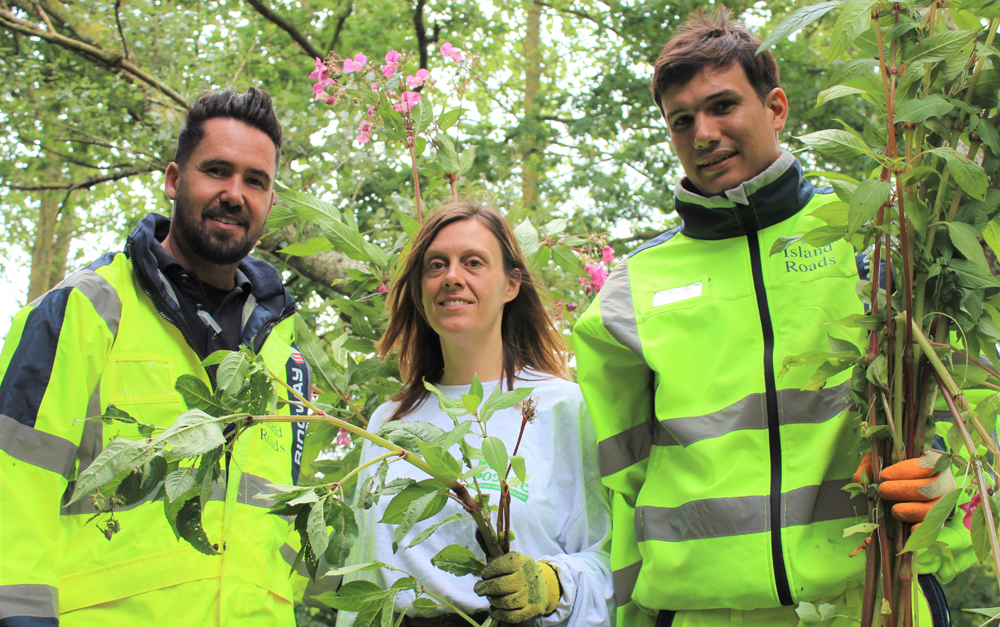
The species (pictured) which has dark green leaves and bears large pink flowers shaped like a bonnet, which are then followed by hanging, green seed pods, is evident across the Island.
Carol Flux Project Manager from Natural Enterprise said:
“It’s a real problem as it spreads very quickly with up to 800 seeds per plant which, quite literally, explode from the seedpods travelling up to seven metres from the plant. Often the seeds are also transferred to rivers and they then travel down stream to start a new colony.”
“Taking steps to control the plant by pulling it up before the seedpods develop is really important and should be done as soon as possible during July when seeding starts and kept in check up to October when the plant starts to die back.
Article continues below this advertisement

Island Roads district stewards have undergone some training so they can identify and tackle any Himalayan Balsam they encounter during their maintenance activity.
Following reports of its abundance in the vicinity the Newport to Sandown cycle track, between Horringford and Sandown, Island Roads contractors will be on the lookout when strimming back vegetation there next week (from Monday 20) under its contractual partnership with the Isle of Wight Council.
Kevin Legg, Operations Supervisor from Island Roads said:
“We remove around a metre of the plants either side of the cycle track around this time each year. It is a non-toxic plant so it is relatively straightforward to remove but we are fighting a losing battle unless we can get the support of landowners to also help tackle it from within their property boundaries.”
Carol added:
“We really need a partnership approach if we are to diminish the efforts of this invasive species and protect the Island waterways. We have proved this can work on Wroxall Stream, but we have limited capacity to work on all water-courses. I would urge landowners to help us and act now to control the spread of this relentless weed.”








Island Roads have tried to do well for the Island the uncooperative people do not understand that their Masters ( The Council ) interfere with their work and are the main cause any public Perception !! Good Luck to them over the weed !!!
Invading species bought over by our Great, great, great grandparents are spreading and ruining our countryside and yet few seem bothered by such, until the damage is permanent.
One assumes that now here, we will never be rid, all we can do is control the amount and the damage in sensitive areas, yet likely that our indigenous species will become reduced, changing the face of our beautiful country forever.
I know how George O must have felt. Well done all those who do bother trying to do something other than just moan.
First I’ve ever heard about it .
Don’t know why I’m getting down votes .I only said I’ve never heard of it .
“introduced to Britain from the Himalayas in 1839 by Victorian gardeners.”
You mean the super wealthy. Maybe their estates should pay for it’s removal.
I strongly suspect it was the gardeners who introduced it and persuaded their employers that it was the very latest fashion. The Victorians were dominated by their servants in things like this – think of Jeeves!
What happened to Gift on/to Nature?
Not just people from the main land invading the island then.