








































Fort Victoria was built to guard the western approaches of the Solent – regarded as the backdoor to the great ports of Southampton and Portsmouth.
It was intended to form a formidable defensive triangle with Fort Albert to the west and Hurst Castle on the north shore, to protect the channel between the Island and the mainland, which is less than a mile wide at this point.
There has been a long history of military structures on the site of the present-day fort. First came Worsley’s Tower in 1525, which was said to have been an octagonal stone building – 19ft high and 20ft wide – with guns on the roof.


At around 1547, Sharpnode Blockhouse was built where Fort Victoria now stands. Henry VIII ordered this earth structure to be made in response to an invasion threat from France and Spain.
In 1589, the threat from the Spanish Armada led to the blockhouse being rebuilt as a 5-pointed star fort called Carey’s Sconce. It was named after Sir George Carey, Governor of the Island at the time. The area on which it once stood has been known as ‘Sconce Point’ ever since.
The threat of a Napoleonic invasion led to the fort being rebuilt again around 1805, as Napoleon threatened to invade Britain and emergency defences were constructed to cover the most likely landing places. 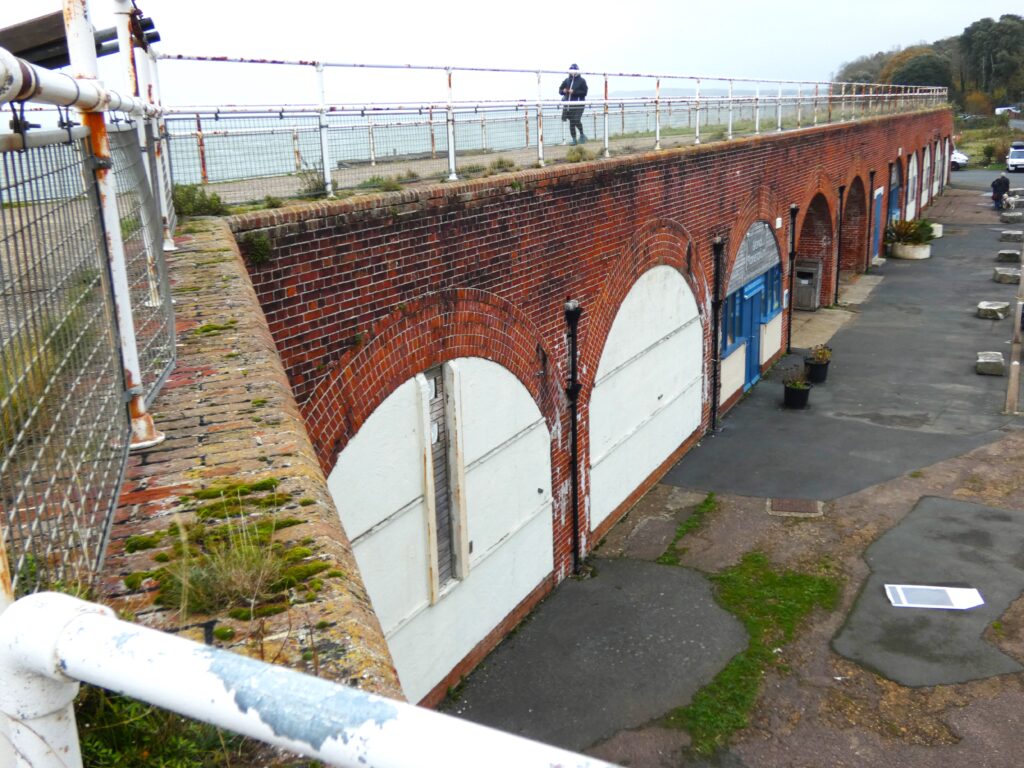 Fort Victoria as we know it today was built following the accession of Napoleon III to the French throne in 1851, causing an invasion scare in Britain. Queen Victoria then demanded strong defences for her kingdom.
The tender for the new fort at Sconce Point was awarded to builder Edward Smith of Woolwich in 1853 for the sum of £37,795 (nearly £4million in today’s values).
The work was completed in a year-and-a-half. 350 workmen were employed on the project, who were housed on the the hulk ship H.M.S Talbot afloat near the site.

A model of the fort was taken to Osborne House and shown to the Queen’s husband, Prince Albert. Thereafter, it was referred to as Fort Victoria in honour of the reigning monarch.
The fort was officially completed on April 27th 1855. However, only a few years after the fort had been finished and manned with regular soldiers, it was declared obsolete.
Technological advances in weaponry had created guns that fired elongated shells instead of spherical ones. Now, the work of 1 gun could shatter the brickwork and masonry with ease.
In 1859, the French launched their first iron-clad warship, which was superior to British wooden vessels, causing a new invasion threat. Fear of invasion led the then Prime Minister – Lord Palmerston – to set up a commission on the defences of the United Kingdom. Fort Victoria and nearby Fort Albert were described as “not of the most approved construction”.
New forts were constructed with batteries situated on cliff tops to bring down fire onto approaching warships. The brick forts of Albert and Victoria were placed into reserve status.  In the 1860s, Fort Victoria was used as a barracks and storehouse, but it maintained a small garrison until 1876 when its armaments were removed. However, it continued to be used as a barracks for the Royal Artillery.
In the 1930s, a proposal was made to run a car ferry between Fort Victoria and Keyhaven on the mainland. However, a lack of funds caused the proposal to be abandoned in 1938.
At the start of World War II, the fort was used as a training battery for coastal gunners. After the war, it became a National Service training station. Its military use came to an end in 1962.
What remains today is only a fragment of what once was. The rear barracks blocks were demolished in 1969 to provide material for sea defences. The Isle of Wight Council bought what remained in 1971. It is now a Grade II Listed Building.
Although Fort Victoria has had an undistinguished military record, it has had a tragic history, with 61 deaths recorded close by.
In 1854, A group of builders (and some of their wives) – employed in the construction of the fort – were on a day trip to Lymington, returning on a boat in a state of intoxication. The vessel capsized. 15 people were on board; 7 were drowned.
On April the 25th 1908 – in the midst of a terrific snowstorm – the HMS Gladiator collided with an ocean liner the SS St Paul off Sconce Point. The disaster cost the lives of 27 men. Soldiers of the Royal Engineers – who were stationed at Fort Victoria – distinguished themselves in their rescues of sailors at risk of drowning.

According to a contemporary newspaper report, 2 soldiers who were playing billiards when the vessels collided – named Wiltshire and Poole – finished their game in the style of Drake at Plymouth Hoe before venturing into the blizzard. Wiltshire launched a small boat and rowed out to where he had seen some heads bobbing in the cold waters of the Solent, saving a man who was at the uttermost point of exhaustion and bringing him to land.
Wiltshire’s billiard partner Poole was said to have made the most gallant rescue, plunging into the sea and dragging a man close to shore to land. Other soldiers then joined in the rescue, with many acts of heroism being performed on that tragic day.
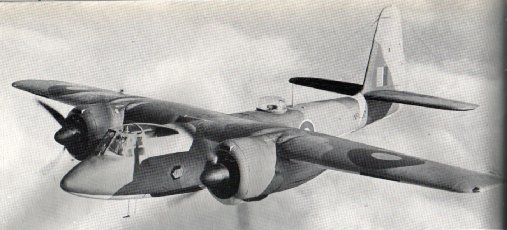
A further tragedy occurred on 3ist August 1945, when a Miles Monitor aircraft on a test flight crashed into the shore at Fort Victoria, killing its 2 occupants: Sub Lieutenant Fehler and Lieutenant Habgood. The engine of the crashed plane can still be seen at low tides.
Today, Fort Victoria is a Country Park. Numerous attractions are to be found within its fortifications. These include a Reptilarium, a Planetarium, and an Imaginarium. Those interested in the story of HMS Gladiator can visit an exhibition dedicated to the doomed ship.
Further information on present-day Fort Victoria may be found at the following website.









What an amazingly interesting story thank you IE
Thank you IE.
Very interesting. Articles like this are very informative about our local history that we do not know .
It would be lovely to get a Lottery Grant to upgrade the whole Fort Victoria area.
Great idea YCC, problem is they would then introduce sky high car parking charges.
If the Greedy robbing B’stards start charging to park at Fort Vic,
it would not be worth visiting.
The best thing about Fort Vic is the Free Parking
Once again a very interesting story about the history of our island.
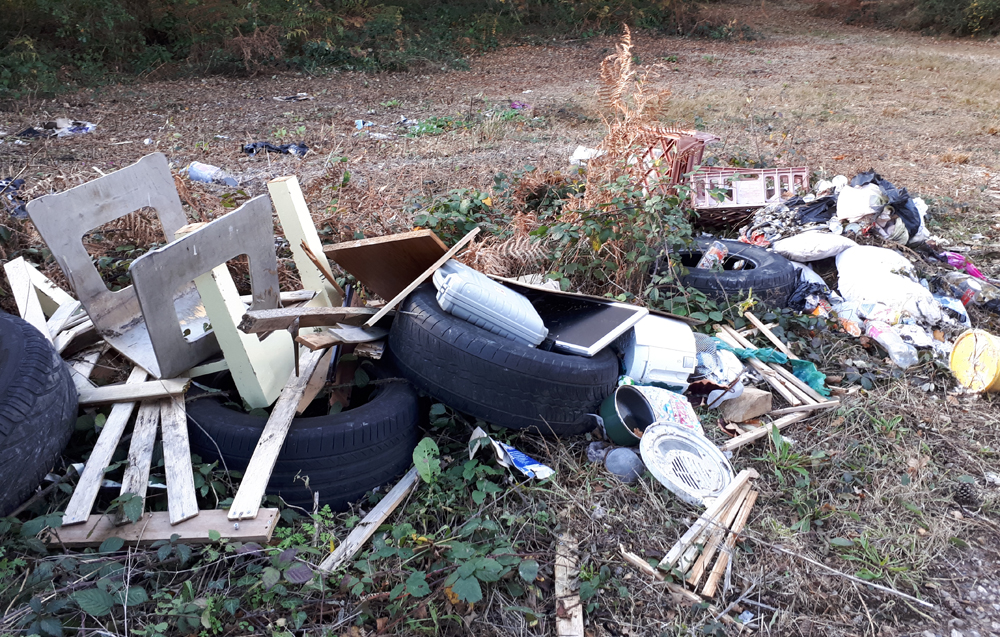
It is such a shame today to find it as one of the only free places to park on the island, that’s a rarity, but it is littered with a dozen people permanently living in vans in the car park with bits of old cars, wheels, trailers, caravans in the corner ~ all looking like hillbillies.
Nobody knows why the council allows this, some of these people have been living there for years, it certainly would not be allowed at Carisbrooke Castle or Puckpool Park car parks.Urinating in a bottle then tip it onto the grass is not a nice thing to see as a tourist, or seeing them doing laundry and shaving in the toilets.Time the council evicted them from this historic site.
Let them be, people want different things from life, some want houses and cars, others want a simple hand to mouth life. Who are we to tell people how to live their lives? Far more much bigger problems out there that need sorting first.
It’s an eyesore for a start. Car parts, broken cars, trailers, campers without tax or mot and insurance living in a council car park. If these people want hand to mouth then pay to stay on a camp site.
They are also using the water pipe in the car park to fill up their water tanks, this water is paid for by the taxpayers. If you go into the public toilets you do not expect to see people getting washed and changed in them. Another man is living in one of the historic buildings, he had placed a blue tarpaulin over the roof which again is an eyesore flapping about in the wind. If you think it is ok to tip urine next to a pathway to the seating area then there’s something not right with you.
Bring in parking charges.
A very instresting read thank you.
Excellent article, thanks Island Echo. I find history easier to absorb in interesting bite sized bits like this