









































Almost 4 years after her death, an inquest has concluded that 44-year-old Charlotte Birch died from hypothermia on the banks of the River Yar having been able to abscond from the care of St Mary’s Hospital following a raft of critical mistakes by staff.
His Majesty’s Coroner of the Isle of Wight, Caroline Sumeray, has this week blasted the Isle of Wight NHS Trust for the role they had to play in Charlotte’s ‘potentially avoidable’ death, with several lapses in care uncovered. The inquest has also heard of frustrations with the Police’s 101 system and delays in Police searching through CCTV footage.
Charlotte – whose name was previously given as Charlotte Alder – was a vulnerable woman due to her frontal lobe epilepsy, which developed aged 10 and became progressively worse during her lifetime, peaking at 10 seizures a week. The 44-year-old from Shanklin was unable to go out alone and was a regular user of cannabis to ease back pain. She suffered from depression and anxiety and had to live on microwave meals due to the risk of burning herself.


It was on 9th January 2019 that Island Echo published that concerns had been raised for Charlotte’s welfare after she disappeared from St Mary’s Hospital, Newport in freezing cold temperatures. She had left her money and mobile phone behind and was last seen wearing hospital scrubs.
12 hours after she left the hospital grounds, the search was ramped up with the Coastguard Helicopter called in to search the River Medina and surrounding areas. A formal appeal was finally launched by Hampshire Constabulary and WightSAR – the Island’s volunteer search and rescue team – was deployed. Those searches continued throughout 10th January and the National Police Air Service Helicopter was deployed over the Merstone area that afternoon, with Coastguard Rescue Teams also called in. But nothing was found.
It was the following day, 11th January 2019, that Charlotte’s body was discovered beside the River Yar on land at Great Budbridge Manor near Merstone.
Hospital Admissions
Charlotte was admitted to hospital on 27th December 2018 in a confused and agitated state, with doctors querying whether or not she was suffering from psychosis – a repeat admission to that 3 years previously. It was believed that she had either taken too many, or too few of her epilepsy meds. She was transferred from the Medical Assessment Unit (MAU) to Appley Ward and despite making some improvements, 2 days later it was determined that Charlotte was still not medically fit to be discharged. She was talking about gay rape, writing a list of every man she had ever met in her life and also appeared confused as to who people were.
It was on 1st January 2019 – New Year’s Day – that Charlotte was witnessed to leave Appley Ward with visitors, without having had a full mental health assessment. It had been determined she wasn’t fit for assessment in the days prior. At the time it couldn’t be validated who Charlotte had left with, but it transpired the next day to be her sister – Deborah – who was told that Charlotte was fit for discharge by a Deputy Sister. The mental health team were not informed that Charlotte had left the hospital and it is now known that Charlotte went without the correct medication.

On 2nd January, hospital staff spoke with Charlotte who was much more coherent and was able to recognise that she had ‘messed up’ her tablets and whilst feeling better, her epilepsy was driving her ‘mad’ – but she did not have any self-harm intentions. Charlotte said: “I’m glad I’m not dead”.

However, it was just 5 days later, on 7th January, that paramedics were called to Charlotte’s flat on Atherley Road in Shanklin. The 44-year-old was talking to the walls and pointing at things that simply didn’t exist, with paramedics raising concerns of an overdose.
Once in hospital, Charlotte was diagnosed with postictal psychosis, which typically follows a cluster of seizures – something the inquest noted may have been made worse by a lack of medication on her previous discharge. She was kneeling and rocking on the bed and did not acknowledge or respond to staff. She was fidgety and restless and at one point had taken her clothes off and had become incontinent of urine. She was warding off imaginary objects and also started shouting at other patients in the bay.
The Crisis team were called for to complete a full mental health assessment of Charlotte, but they never came.
By 23:00 that night Charlotte was starting to wander. She was found looking for something to eat and was also located in the corridor outside MAU.
The day Charlotte went missing
Fast forward to 9th January and there had been some improvement, but Charlotte was still unwell. Concerns were being raised that she might attempt to leave the ward or hospital as she stated she simply wanted to go home. Despite how she was presenting and with a full mental health assessment having not taken place, it was decided that there were no grounds to Section Charlotte.
By noon on 9th January, Charlotte was no longer in a postictal state and just 2 hours later was wanting to leave the ward with her sister. However, it was insisted she waited for a mental health assessment to take place and she was led back to her bad. Her sister raised concerns with staff that Charlotte was a flight risk.
At this point, doctors were talking more about a potential Section, but before those plans could develop any further it was discovered Charlotte was missing. She had left her personal possessions at her bedside and had disappeared.
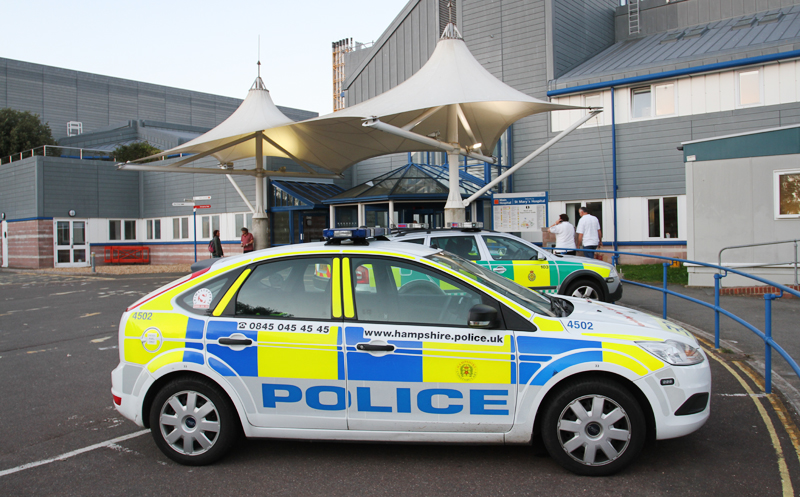
By 16:00 the Police had been informed that Charlotte – classified as a vulnerable adult – had gone missing from the hospital, with Hampshire Constabulary grading this as a ‘concern for welfare. A search of the hospital was commenced but due to a lack of security staff, porters were tasked to help search internal areas. Later on, 5 members of the catering team were also pulled in to help.
Police Delays
As the night rolled on, concerns were growing for Charlotte’s welfare – but a media appeal was not issued by Hampshire Constabulary until the next morning. The inquest heard that it was after 08:30 on 10th January that PC Emery arrived at the Island Roads’ CCTV hub to search through footage, which revealed that Charlotte had walked through the Coppins Bridge area at around 16:30 the previous day.
The inquest heard from Mr Keith Burton, a Newport resident, who gave a statement to Police stating that he had spoken to Charlotte the afternoon she went missing. She was unsteady on her feet and seemed confused. She tried to walk down Prospect Road – a dead-end street – stating she wanted to go to Shanklin. Mr Burton directed her to the cycle path entrance at Matalan car park and shortly afterwards left her, feeling powerless to stop her. The next day, Mr Burton’s neighbour informed him of a missing person alert he had seen in the media and believed that it may have been Charlotte that Mr Burton was speaking to. With this in mind, he went to Shide where Police had rendezvoused for a search and informed them of what he had seen.
Just hours after Charlotte went missing and now in the dark, on footpath A34, Caroline Cooper came across Charlotte whilst walking her dogs. Charlotte asked Mrs Jeanette-Cooper if the footpath was the way to Shanklin, stating she wanted to see her dog, Merlin. Mrs Cooper thought that Charlotte was drunk and walked away, but did try to seek help. A call was made to Police on 101 but they didn’t answer, with a subsequent call to the hospital – but they too did not answer.
WightSAR, Police and members of the public continued their search for Charlotte throughout 10th January, unaware of Charlotte’s contact with the 2 witnesses at first.
The discovery of Charlotte’s body
Late on the afternoon of the 11th, PCSOs Cooke and Burfitt were conducting enquiries in the Merstone area when they spoke to Mrs Venetia Verey of Great Budbridge Manor. She told the officers that her husband, John, had heard a commotion on the night of the 9th at around 23:45.
In a statement read out during Monday’s inquest, Mr John Piers Hopton Verey stated that he had heard around 10 seconds of loud shouting around 500m away from his property. When he investigated, the noise had stopped and he assumed it was neighbours trying to beckon their dogs. He checked again around 15 minutes later but heard nothing more and retired to bed.
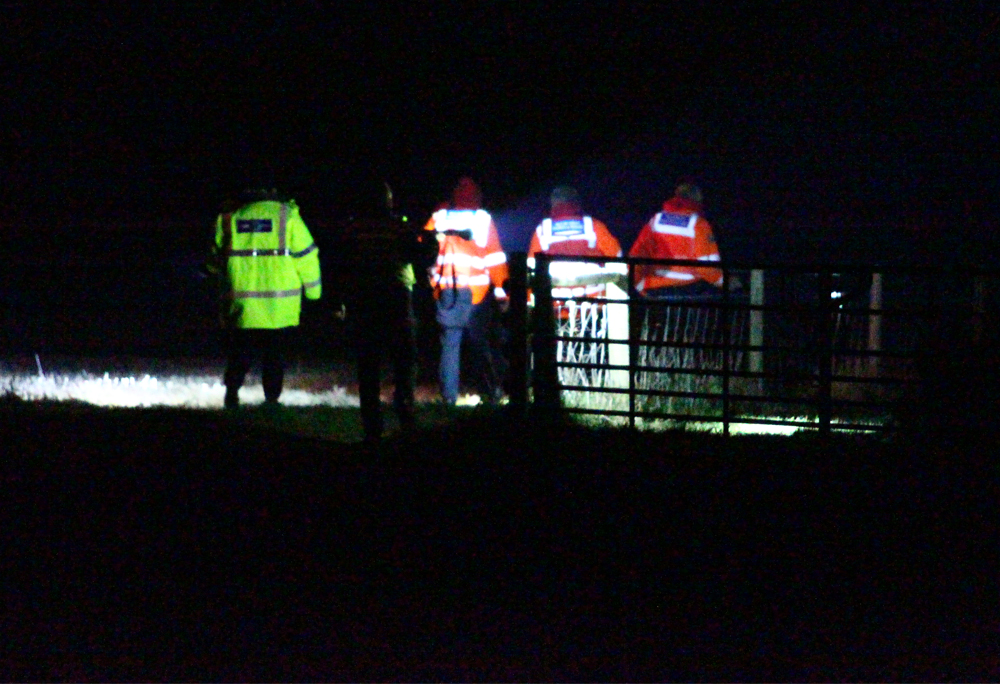
With the PCSOs speaking to John, Mrs Verey conducted a search of their land to assist in the search – despite it being almost pitch black. It’s at this point, at just before 17:25, that the body of Charlotte was discovered in the middle of nowhere laying on the bank of the River Yar. Mrs Verey called 101 and after what ‘seemed ages’, Police arrived.
Charlotte was located in a wet state on a muddy bank. No evidence of third-party involvement was found and it was determined that she had been in that position for some time. Under torchlight, officers then set about recovering Charlotte’s body across the 12ft span of river. The next day they located her cardigan nearby, in amongst the trees. It was suggested during the inquest that she may have done this as hypothermia set in.
2-and-a-half hours later, Charlotte’s family were informed of the sad discovery. The search had ended with the worse possible outcome, something which was possibly preventable.
Detective Sergeant Jamie Wilkinson of Newport CID told the inquest that had the witness – who had become frustrated at the automated 101 system – called 999 instead on the night of the 9th, then she would have received a response.

Serious Incident Investigation
As a result of Charlotte’s disappearance from hospital and her subsequent untimely death, a Serious Incident investigation was launched by the Isle of Wight NHS Trust. Tragically, the report concluded that Charlotte’s death was caused by the incident they were investigating.
The Coroner grilled representatives of the Trust in the court on how it was possible for it to be determined that it wasn’t appropriate for Charlotte to be detained under a Section without a full mental health assessment having taken place. Mrs Sumeray said it was a ‘hollow phase’ to say she wasn’t suitable to be detained and that there had been a missed opportunity to complete a formal capacity assessment with Charlotte.
With almost 4 years having passed since the incident, the Isle of Wight NHS Trust reported back on improvements made including mental capacity training, changes to documentation and pharmacy support, with improvements also made to communication between staff and departments. Swipe access to MAU has now also been implemented, meaning patients cannot leave without being let out by staff. In total 6 lessons were identified as being learnt from the Serious Incident report.
Still work to be done
Despite the improvements made, Coroner Sumeray said that there is still work to be done and that there must be improvements in terms of discharge summaries, with 1 in 5 patients not receiving a summary upon leaving hospital – something she said is a matter of patient safety. The Coroner also said that it was seriously disappointing that only a single positive practice point could be identified in a report of its size, which took almost a year to complete. She said that there was considerable room for improvement.
Mrs Sumeray highlighted the ‘less than great’ care by St Mary’s, with a lack of mental health assessment, delays in medication being given, no discharge summaries, poor documentation and that there was no consultant psychiatrist input at all during Charlotte’s stay.
Summing up, the Coroner drew a short narrative conclusion stating that having walked out of the hospital, Charlotte was trying to get home to Shanklin and died of hypothermia on the bank of the River Yar. She said that Charlotte most likely fell into the river having become lost and disorientated.








How very sad poor poor Charlotte the system failed her can’t start to imagine how she must have felt and there was nobody there for her absolutely heartbreaking to read this list of catastrophic errors by our so called mental health team!!
Not surprised at all to be honest, but I’ll be interested to see what the outcome is towards St Mary’s and the IOW NHS Trust, and if anyone’s head will role. I suspect not, as from the top to the bottom there is a wall of corruption and silence surrounding matters like these, especially around mental health and the lack of action when red flags are raised. Our family have had first hand dealings with this crowd, and the cover up following our loved ones death in their care has been nothing but disgraceful, and it seems from the top to the bottom when the sh*t hits the fan they always seem to wriggle out of facing disciplinary or even criminal charges! Joke!
Can someone please let me know what St Mary’s are good at!
They are good at doing Nothing
Our mental health team on the island are just not up to scratch.
The fact that this poor lady never received a consultant psychiatric assessment when it was clearly obvious she was suffering with psychosis is appalling. Unfortunately though, when patients are admitted to medical wards, the mental health team are reluctant to get involved as they think the primary reason for admission is medial and not mental. So many patients need mental health input and are denied it for hours, sometimes even days.
The team on the medical wards have an array of patients to look after, and often, those with mental health needs, especially those deemed a flight risk need a staff member with them at all times, although not always available.
That hospital is not fit for purpose
Sorry but some of the staff there are really good and lovely a few let it down but there time it taken up by writing everything they do in to a computer which is where things are going wrong
They are only worried about convid
If someone is deemed to have capacity, which this lady obviously did once she had come out of her psychotic state, there is nothing anyone can do to prevent her from leaving unless she is under section – and then she should have been admitted to Seven acres.
Although, one does question why a deprivation of liberty had not even put in place when first admitted in her psychotic state to cover the staff looking after her and of course to prevent this lady from causing harm to herself.
Quite often though, the mental health team are so blazè about matters, that patients do not get the proper assessment they need.
It’s a very sad state of affairs.
This very sad tale is all the more dreadful because it was avoidable.
Four years of distress for the family.
But the one sentence in the article that gets me is:
“Detective Sergeant Jamie Wilkinson of Newport CID told the inquest that had the witness – who had become frustrated at the automated 101 system – called 999 instead on the night of the 9th, then she would have received a response.”
Therefore pointing the blame at the witness.
As though the outcome could have been avoided if the witness had rung 999.
Sure it wasn’t meant to come over like that but sadly it does.
Mental health takes all shapes and forms, this young lady obviously needed 24/7 support especially regarding her medication. It is a shame all the facilities that used to support these people have over the years been removed from society or drastically cut back. Mental Health is becoming a much stronger “killer” than half a century ago and needs more recognition and training along with support. The Mental Health care offered by Seven Acres does leave a lot to be desired and if the poor girl was subject to that I can appreciate why she escaped. Mental health is a specialised area and it takes special people to provide it, unfortunately the association of working with these poor souls can results in the giver also having high stress level
Sums up everything about this island no one gives a f**k.Poor soul I hope she has now found peace
Anybody sacked i very much doubt it
Many are paid over 50k per year. Many do very little for that I know for a fact.
Too much money is wasted on high wages yet they consider striking for more.
A poor performing section of St Mary’s needs investigating at top level to see just how much money is wasted on poorly performing staff.
Many throw sickies week on week but a very tight knit closed unit.
All staff pay and attendance should be made public so WE can see the truth and where OUR money is wasted whilst innocent helpless people die.
They could not Sack a bag of spuds.
The island hospital and police are inadequate! Their attitude is diabolical. Countless failings leading to deaths for a number of years. Any sign of proper work and they hide away. Joke of a system anyway but these islanders have no hope with forces like them. They act like they’re the only people that work but the thing is, according to multiple findings by the news and locals, they do the hours but achieve minimal. Sack them all start again.
OMG and still it continues.
2020 my father was so poorly treated on Appley Ward, and I am still dealing with the Ombudsman regarding this.
Don’t leave your loved ones alone on that ward or Colwell ward.
I slept next to my father’s bed the last week he was there before we took him to Mountbatten Hospice to die with some dignity.
I had never witnessed such lack of care in all my life, and I worked at St Mary’s for 30 years.
They should build a bridge instead of throwing more money at that place.
We could have access to a variety of care from the medical profession without the need to be transferred by Helicopter or the expense of the ferry.
God help us all on the Island.
I have no confidence in St Mary’s Hospital anymore.
I miss my cousin so much … too young and let down by the professionals. May she rest in peace now.