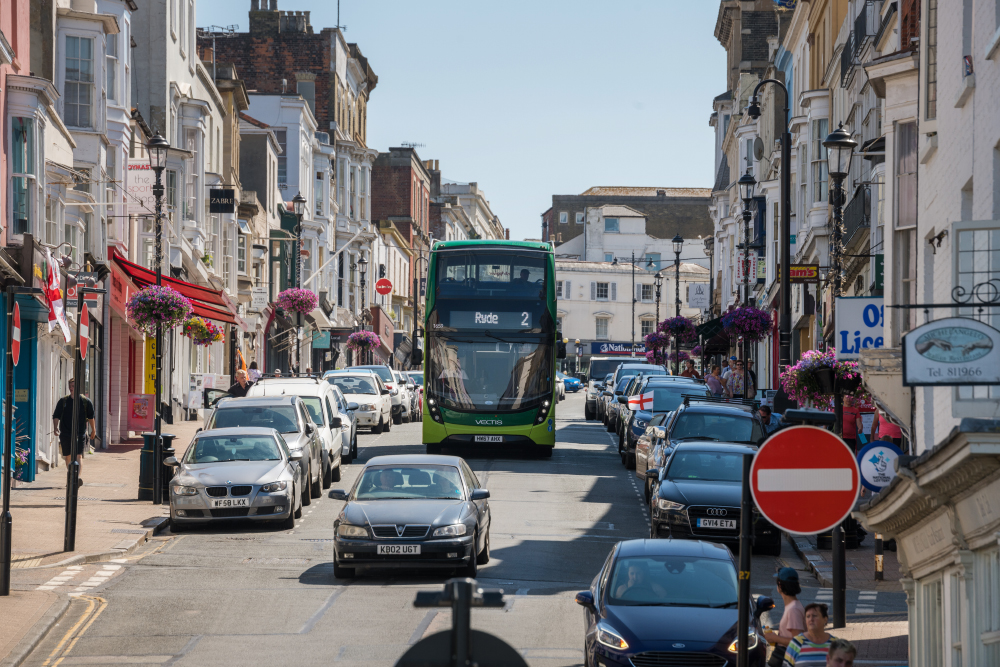





















































The argument flared up again this month. Green Party councillor Claire Critchison said she wanted 20mph limits in the centres of Niton and Whitwell, calling speeding the issue residents raise with her more than any other. Reform UK councillor Stephen Reynolds hit back on social media, calling the island’s speed limits “ridiculous” and arguing that enforcement too often targets “the wrong easy targets.” It is a row that has been simmering for years, but it captures something real – a divide between islanders who want traffic slowed down and those who feel they are already being squeezed by limits that do not match the roads they drive on every day. The truth, as the council’s own data shows, is more complicated than either side makes it sound.
What the Island-Wide Review Actually Found
In late 2024, a comprehensive speed limit review covering more than 410 sites was published by Island Roads on behalf of the council. It assessed over 200 requests logged on the Highways Safety and Improvement Register from residents, businesses, parish councils and ward councillors, plus an additional 210 locations where traffic surveys measured what drivers were actually doing. Cabinet approved the findings on 9 January 2025 and agreed to develop a three-to-five-year programme of work based on the recommendations.
What the review did not do was recommend blanket reductions. Several roads had already seen limits come down before the report was finished – Pan Lane in Newport, Summers Lane in Totland, and the High Streets of Godshill and Newchurch all dropped from 30mph to 20mph. But the data also showed that on some town centre roads, average speeds were already as low as 13mph with 85th percentile speeds of just 17mph. On those stretches, a formal 20mph sign would simply confirm what drivers are already doing. The review was a road-by-road assessment following Department for Transport guidance, not a political gesture, and its conclusions reflected that. Some roads clearly needed lower limits. Others did not.


That distinction between shared characteristics and individual circumstances matters in other regulated sectors too. Sister site casinos in the UK may share the same operator, licence and underlying systems while still differing in their individual offers and presentation. In much the same way, two island roads can appear broadly similar but have different traffic patterns, pedestrian risks and accident histories. A common label does not remove the need for a case-by-case assessment.
The A3056 – A £2.1 Million Test Case
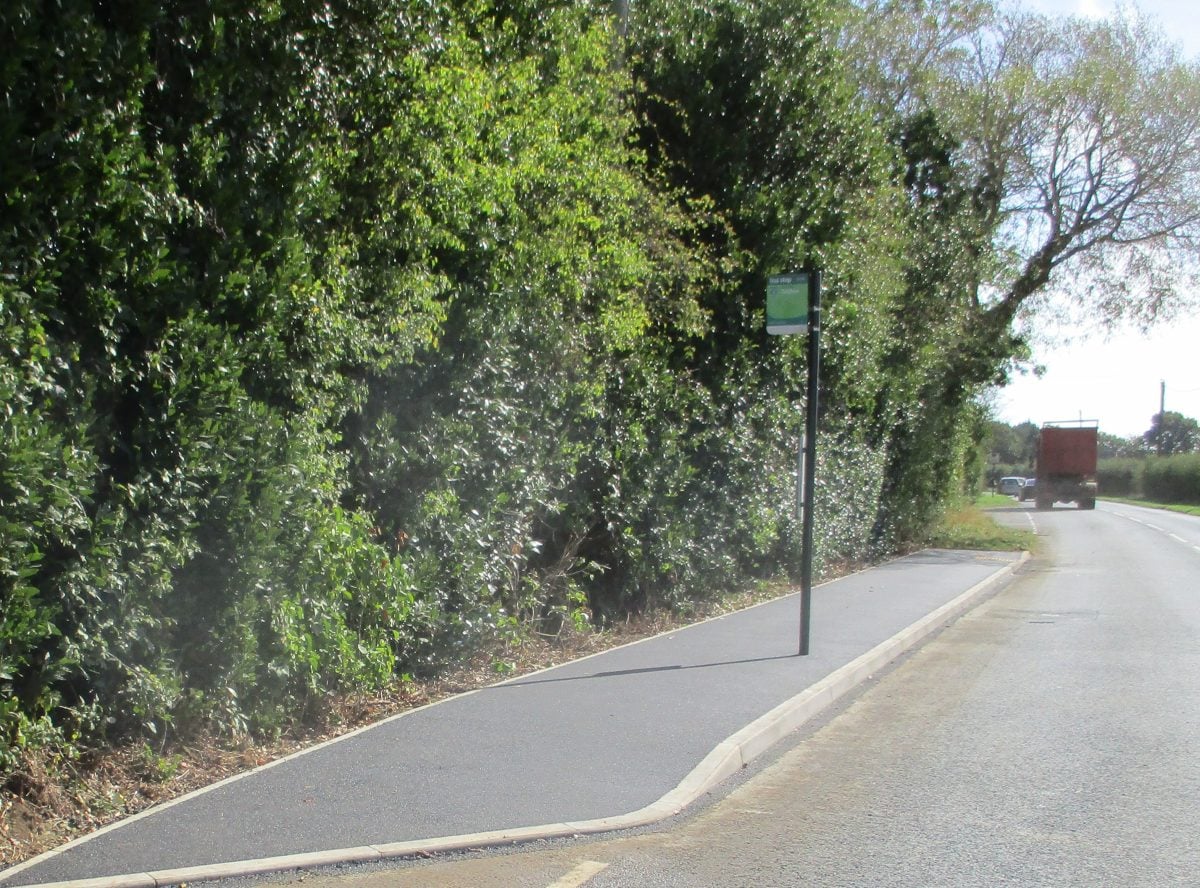
The main Newport to Sandown road has become the flagship for the council’s approach. A £2.1 million Safer Roads Fund project from the Department for Transport has delivered a series of changes along the A3056, cutting the Blackwater Road stretch to 50mph, dropping the Branstone area from 50mph to 40mph, and introducing time-limited 20mph zones near Arreton Primary School and Broadlea Primary in Lake. Those school zones are only active during morning drop-off and afternoon pick-up and are controlled by illuminated signs that switch on and off at set times. The first phase of changes went live on 29 August 2025, and the formal speed limit order consolidating the full package was made in February 2026.
Cabinet unanimously approved the A3056 scheme back in July 2024 with no opposition. The logic behind it was explicitly proactive, designed to manage risk before crashes happen rather than react after someone gets hurt. The time-limited school zones are a useful middle ground that avoids frustrating drivers outside school hours while protecting children when they are most vulnerable. It is the kind of targeted approach that tends to generate less resistance than a permanent blanket reduction, though anyone who read the comments section on this site when the plans were first announced will know it still divided opinion sharply.
Do Lower Limits Actually Make Roads Safer?
The safety case is not abstract on the Isle of Wight. Between 2015 and 2017, the island recorded 57.7 people per 100,000 killed or seriously injured on its roads, significantly above the national average of 40.8. For children under 16, the figure was even starker – 33.2 per 100,000 compared to 17.4 nationally, a gap the Community Safety Partnership described as statistically significantly worse. A separate review by the Isle of Man noted that small islands, including Jersey and the Isle of Wight, tend to have higher road fatality rates than the mainland, linked to rural road characteristics and limited infrastructure.
Councillor Karen Lucioni, cabinet member for community protection, put the evidence plainly when the review was published: at 20mph or below, survival chances for pedestrians and cyclists improve dramatically in a collision, and at under 40mph, vehicle occupants are far more likely to survive a head-on crash. Those are not opinions. They are well-established findings from decades of road safety research. But the review itself was careful to acknowledge that speed limits alone are not enough. On roads where average speeds are already well below the posted limit and collisions have no speed-related contributory factor, changing the number on a sign achieves very little. This is where the critics have a point, though a narrower one than the blanket dismissal of all limits suggests.

The Enforcement Gap
The real tension in this debate is not about the limits themselves but about whether anyone is there to enforce them. Councillor Critchison acknowledged the problem directly, telling Niton and Whitwell Parish Council that “the police can’t be there enough” and urging residents to set up community speedwatch groups as a volunteer-run alternative. The speed limit review made the same point in more formal language, recommending that all proposed changes be discussed with police before implementation because “the threat of enforcement is essential to the success of speed limits.”
There is also a funding question. A council briefing note to scrutiny revealed that the £250,000 allocated by the DfT for implementing review recommendations was unlikely to cover all the schemes, meaning lower-priority changes would need additional money that has not yet been found. New signs are the cheapest and most visible thing a council can do. Actual enforcement, police patrols, speed cameras, and physical traffic calming costs far more and is far harder to deliver on a small island with stretched policing resources. Councillor Reynolds’ frustration about “anti-social driving” and poor driver quality, including mainland visitors unfamiliar with island roads, points to the same gap from the other direction. Both sides of this argument are, in different ways, asking for something the council currently cannot afford to provide.
The wider lesson is that safety rules are only as effective as their implementation. The same principle can be seen in areas such as responsible gambling, where published limits and protective policies have little value unless they are consistently applied and monitored. On the roads, a lower number on a sign may establish the rule, but enforcement, road design and driver behaviour determine whether it changes anything in practice.
Where Does This Leave Islanders?
The council has committed to rolling out changes over three to five years based on the review, subject to funding. Calls for 20mph zones continue to arrive from villages like Brighstone, Niton, and Whitwell, driven by parish councils and residents who see speeding traffic outside their windows daily. The debate mirrors a national one – Wales introduced a blanket 20mph default in built-up areas in 2023 and faced fierce backlash, but the Isle of Wight has deliberately taken a different path, assessing each road on its own merits using traffic survey data rather than applying a one-size-fits-all rule.
The honest answer is that neither “lower limits everywhere” nor “leave things as they are” is right for every road on the island. The review gave the council a data-led framework for making those judgements. The question now is whether there is enough money and enough will to implement it properly, road by road, rather than letting the whole thing calcify into a culture war where no side listens to the other. The island’s roads are statistically more dangerous than average. Whether lower speed limits are the fix depends entirely on which road you are talking about and whether anyone is there to enforce them.