







































 Data from the early stages of the COVID-19 pandemic last year show that admissions to hospital for stroke fell in the first wave, a 13% drop between March – July 2020.
Public Health England data shows the average yearly stroke-related deaths for all ages between 2017-2019 is 4,843 in the South East, a rate of 50.8 per 100,000 population.
Stroke is a medical emergency and anyone experiencing symptoms should seek urgent help. Early treatment not only saves lives but results in a greater chance of a better recovery, as well as a likely reduction in permanent disability from stroke.

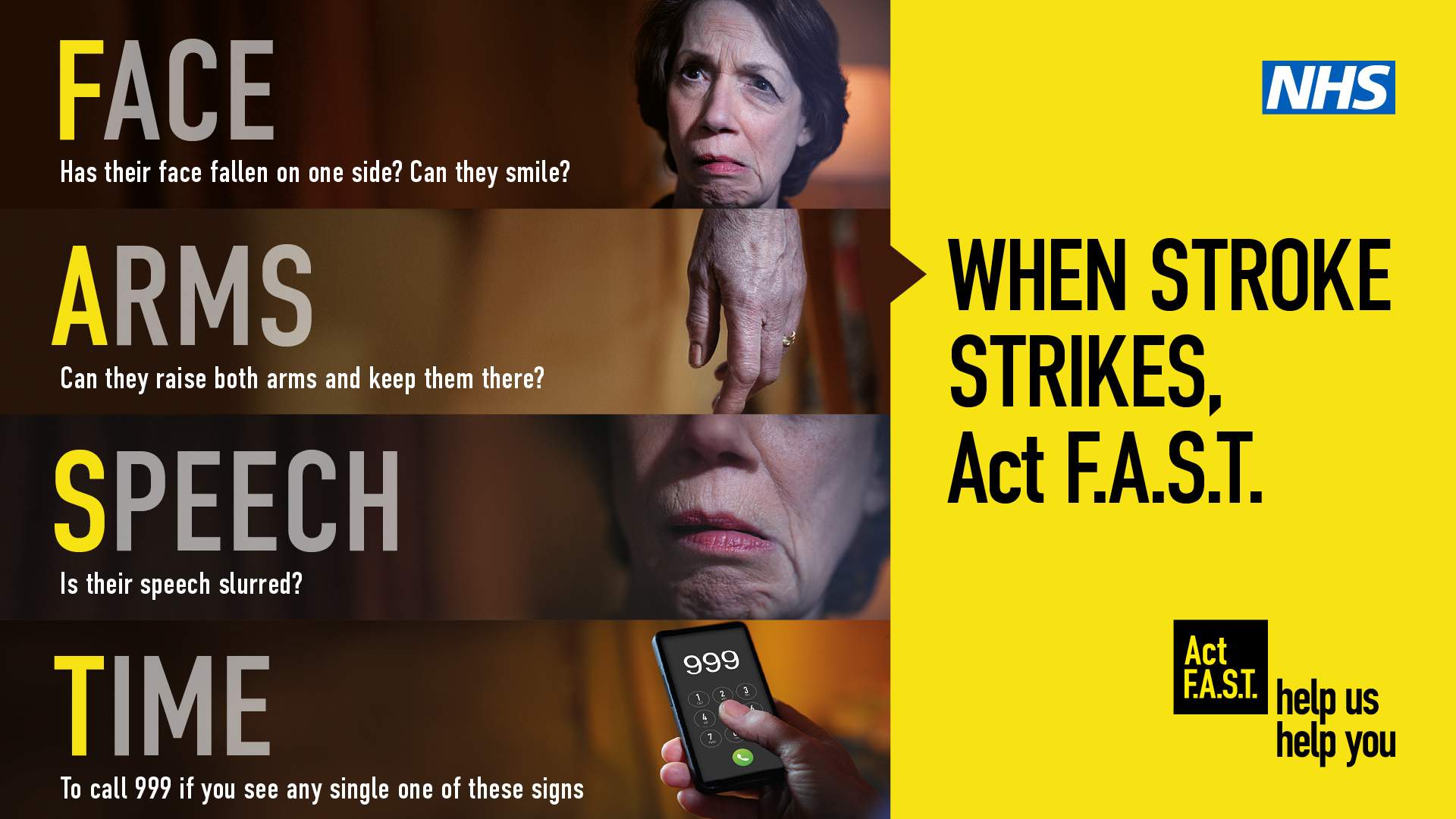
Public Health England, supported by the Stroke Association, is today (Tuesday) relaunching the Act F.A.S.T. campaign reminding people of the symptoms of stroke and why urgently calling 999 is vital in saving lives. Stroke is a time-sensitive condition that means any hesitancy and delay in getting treatment kills brain cells and has sadly and unnecessarily proven to be fatal in the early phase of the pandemic.
Think and act F.A.S.T – the signs of stroke are:
• Face – has their face fallen on one side? Can they smile?
• Arms – can they raise both their arms and keep them there?
• Speech – is their speech slurred?
• Time – time to call 999/are they having speech difficulties?
Dr Mohit Sharma, Centre Consultant Healthcare Public Health at Public Health England South East, said:
“Stroke is a medical emergency and is still one of the leading causes of death in England.
Article continues below this advertisement “It is vital people know how to spot the signs of stroke and if they have any concerns about any early signs whatsoever to call an ambulance immediately – don’t wait until a second potentially more fatal stroke hits. The most common signs of stroke are changes to the face, arms and speech – acting fast and getting treatment will help save lives and prevent people from severe disability.
“The NHS is open, safe and if you suffer a stroke will want to see you as soon as possible – don’t hesitate just call 999.”

Some other signs of stroke or mini-stroke can include:
• Sudden loss of vision or blurred vision in one or both eyes
• Sudden weakness or numbness on one side of your body (including in your leg)
• Sudden memory loss or confusion
• Sudden dizziness, unsteadiness or a sudden fall, especially with any of the other signs
For information on stroke go to https://www.nhs.uk/conditions/stroke.









Sadly I didn’t get the chance to act quickly as my dad was in the shower late at night and I found him collapsed after a stroke. But it’s good to raise this awareness.