






















































A further 12 white-tailed eagles have been released on the Isle of Wight in the next stage of one of England’s landmark conservation projects.
Begun in 2019 the project, led by Forestry England and the Roy Dennis Wildlife Foundation, is closely monitoring these iconic birds as they successfully return to the English landscape.
The project, based on the Isle of Wight, released 6 birds in 2019 followed by a further 7 last year. Evidence from similar reintroductions suggests that the rate of survival to breeding age is around 40%. 10 of the 13 birds previously released have survived and are doing well.


White-tailed eagles are Britain’s largest birds of prey with a wingspan of up to 2.5 meters and were once widespread across England until human persecution wiped them out. The reintroduction project is bringing them back after an absence of over 240 years by releasing up to 60 birds over 5 years. It aims to establish an initial population of 6 to 8 pairs with breeding activity not expected to start until 2024 at the earliest.
Each bird is fitted with a satellite tracker to enable the team to monitor and track their progress. 3 years into the project, this data and considerable field observations are showing encouraging signs of the birds developing key skills and improving their understanding of the landscape around them.
As expected, the previously released birds have explored widely, taking many journeys across Britain as they build up their knowledge of the landscape. 1 bird released in 2020 crossed the English Channel earlier this year and has since spent time in France, The Netherlands, Germany and Denmark.
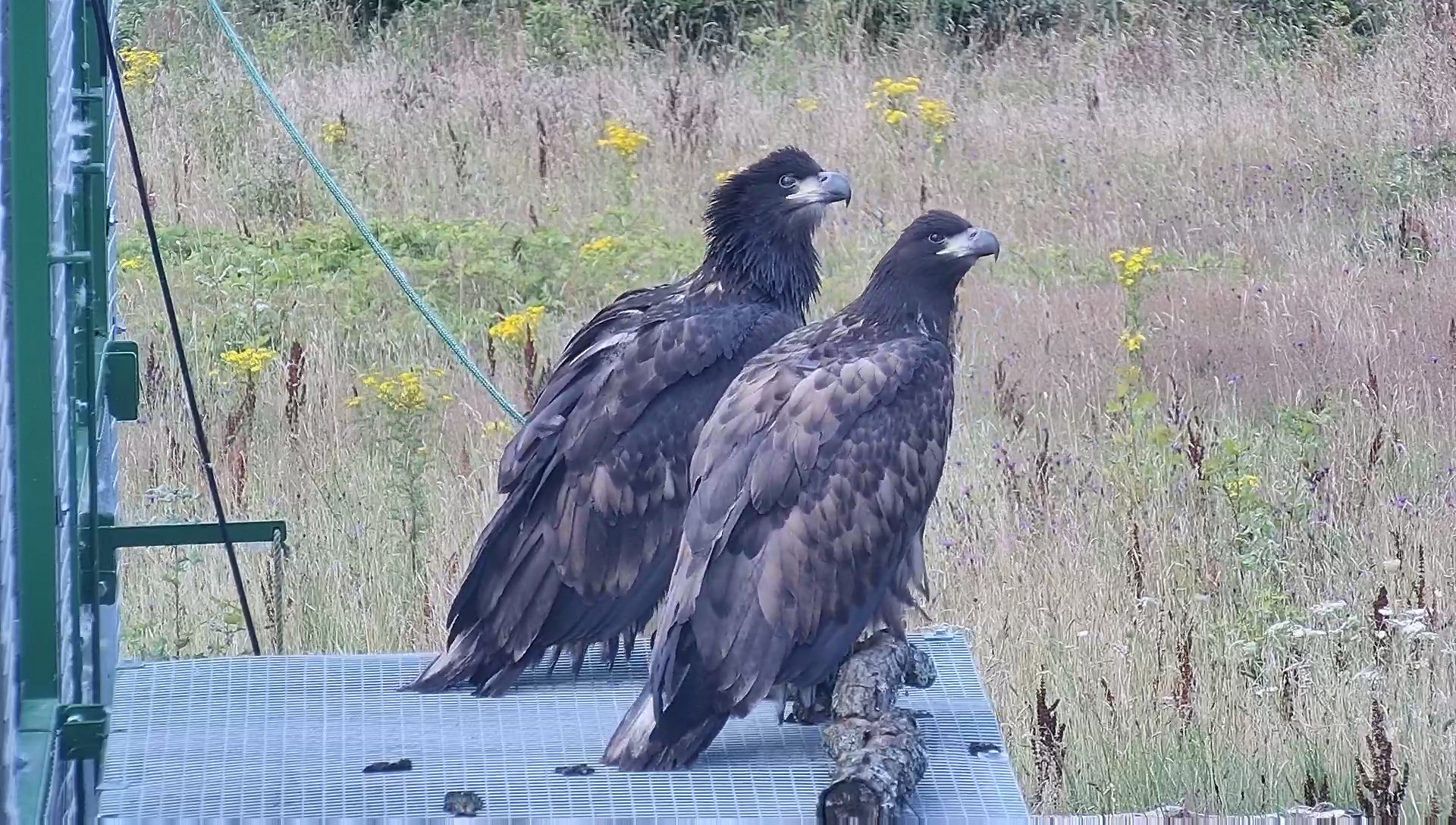
However far the birds travel, the tracking data clearly shows that the birds consistently return to the Isle of Wight, their release point. This means they see the Island and the surrounding coastline as their home and is an encouraging indicator for potential successful breeding conditions in the future.

2 birds in particular, G324 and G274 have already formed a close and lasting pairing and are showing some signs of territorial behaviours with other eagles. Whilst it is too early to predict, the team is hopeful that these early signs may lead to breeding activity over the next few years.
With each year’s releases there is an opportunity for the youngest birds to observe and learn from those who are more mature. Whilst the older birds will gradually become more territorial, there are still many chances for the younger birds to identify key feeding locations and skills from their older cohort. Over time it is expected that the birds will establish more formal territories and disperse across the south coast of England.
Roy Dennis, MBE, Founder of the Roy Dennis Wildlife Foundation said:
“We are now 3 years into this reintroduction project, and it is extremely encouraging to see just how successfully white-tailed eagles are settling into the English landscape. Highlights for me have included watching the birds learn how to successfully fish all year round and the growing interactions between the birds.
“I am also always fascinated in tracking some of their huge exploratory flights across England and Europe and their ultimate return back to the Isle of Wight.
“We have seen from other reintroduction programmes that returning lost species offers real benefits for the health of our environment, and to people and local economies. None of this would be possible without the support of many people and I would like to thank everyone who has helped us again with this year’s release and ongoing monitoring of the birds.”
Steve Egerton-Read, White-Tailed Eagle Project Officer, Forestry England, said:
“Over the last 3years we have closely tracked the progress of these incredible birds. It’s been brilliant to see how well they are fitting into the landscape and we are hopeful that before too long they will breed in England again.
“It’s been particularly rewarding to hear from people across the country who are delighted to have seen the birds in their local area. It’s still a real thrill for me to see these incredible birds in the skies above the Isle of Wight and I look forward to the day that they are re-established right across southern England.”
The reintroduction of white-tailed eagles is being conducted under licence from Natural England, the Government’s wildlife licensing authority. All of the young birds involved in the project are collected under a NatureScot licence from the wild in Scotland and brought to the Isle of Wight.
Natural England Chair, Tony Juniper, said:
“Today’s release marks another important milestone on the road toward the restoration of these magnificent birds as a breeding species in England. I’m so encouraged to see this project go from strength to strength, with this third release enabling white-tailed eagles to strengthen their foothold on the Isle of Wight.
“We will continue to work closely with Roy Dennis and his team, Forestry England and various stakeholders to ensure this project serves as a guide for further successful species reintroductions in England, which are a vital part of achieving our overarching goal for nature recovery.”
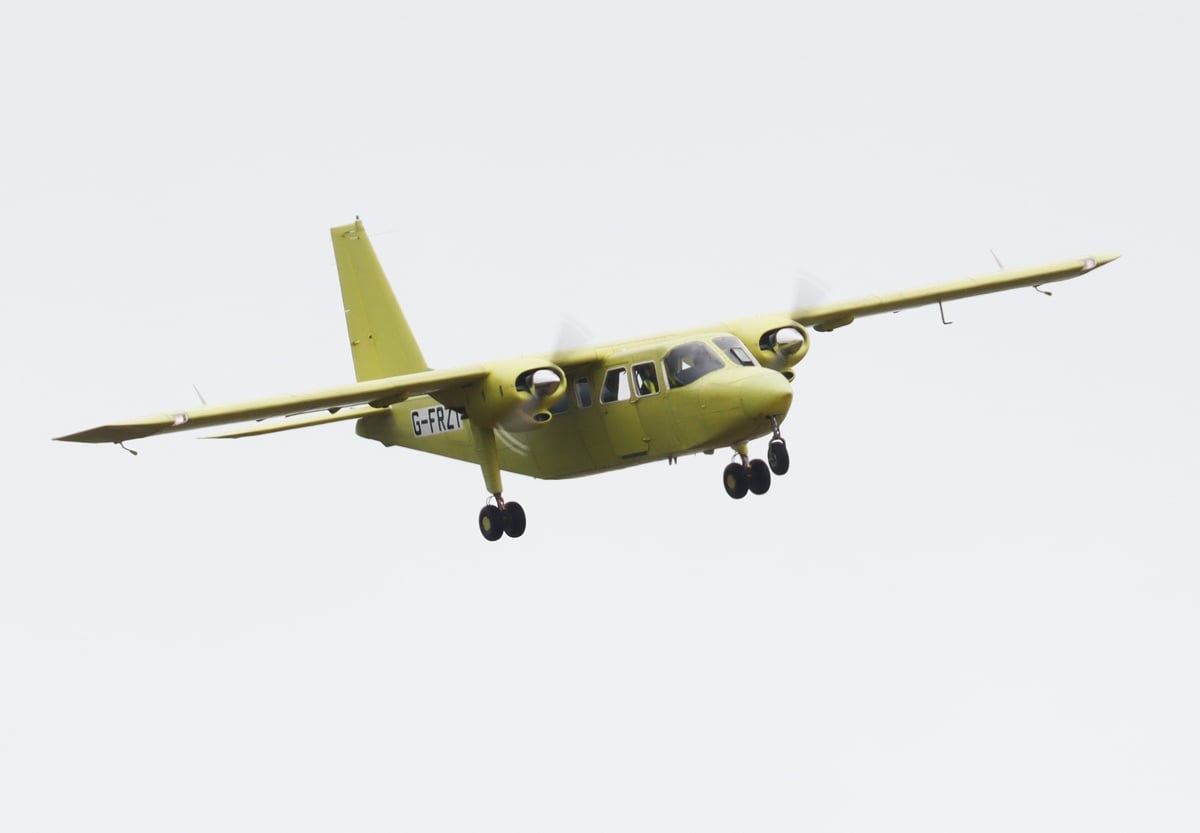
This year the project again received valuable support from pilot Graham Mountford, and his daughter, Helen, who flew a cohort of birds south from the Outer Hebrides in his plane, thereby greatly reducing the transit time for the birds.
The Isle of Wight was chosen as the location to reintroduce the white-tailed eagles, also known as sea eagles, as it offers an ideal habitat for these coastal loving birds with plentiful sources of food in the surrounding waters. It also offers a central position on the south coast allowing the birds to disperse and link with other populations in Scotland, Ireland and on the continent.
A comprehensive feasibility study and public surveys were conducted prior to reintroduction and a steering group made up of local organisations and members of the community are helping to guide the project.













: ) : ) : ) Well done for you guys…x
A superb sight to see these birds. Just hope that they don’t ruin that by having too many in a small area as we have seen with the unorgainic population swell in the UK.
I would hate for other, currently indigenous wildlife to become depleted via over population
I guess the Eagles would then reside elsewhere should that occur.
Just ‘less’ is often more imo.