















































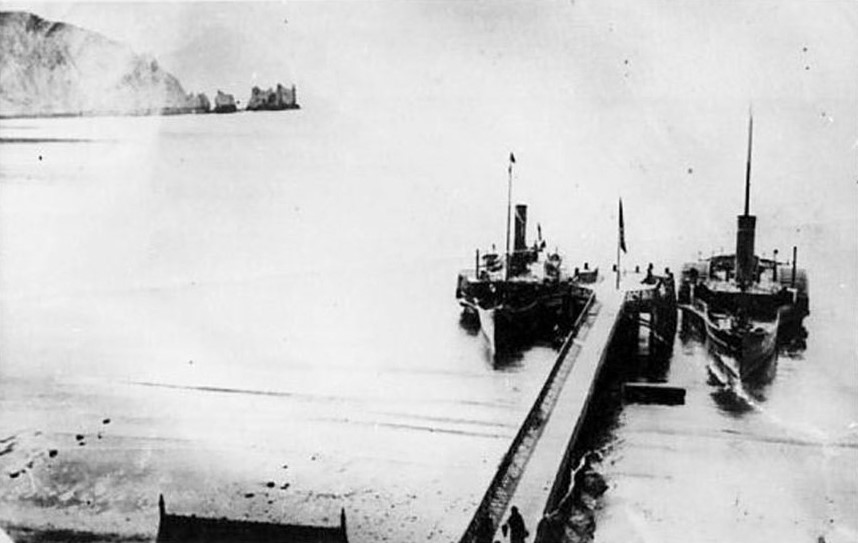

In the last of our mini-series on Isle of Wight piers, Island Echo looks at the 2 substantial piers that stood at Alum Bay between 1869 and 1927.
Since the start of the 18th century, visitors have been attracted the amazing multicoloured sands of Alum Bay. Despite the extreme difficulties of access, the sands were mentioned in travel guides at the end of that century.
Hassell’s Tour of the Isle of Wight stated in 1790:


“Were there no other objects in this part of the Island to attract attention, the toil of the journey would be amply repaid by a view of the ineffable beauty of these cliffs.
“The varied strata of which they are formed, composed of the different colours of red, blue, yellow, grey and black, when gilded by the rays of the declining sun and reflected on the waters below, presenting a scene, interesting alike to the visitor who has an imagination to please, or a scientific taste to gratify.”
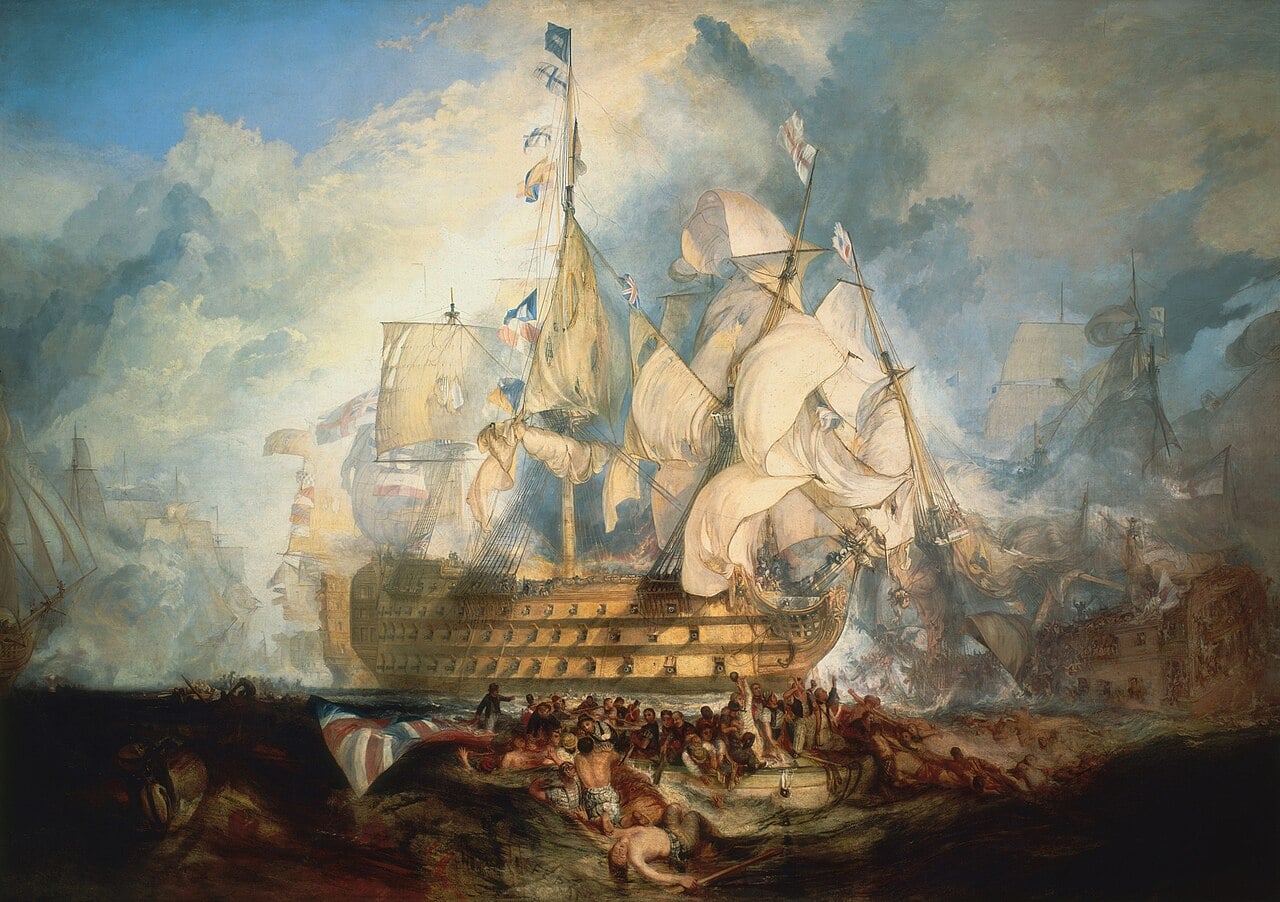
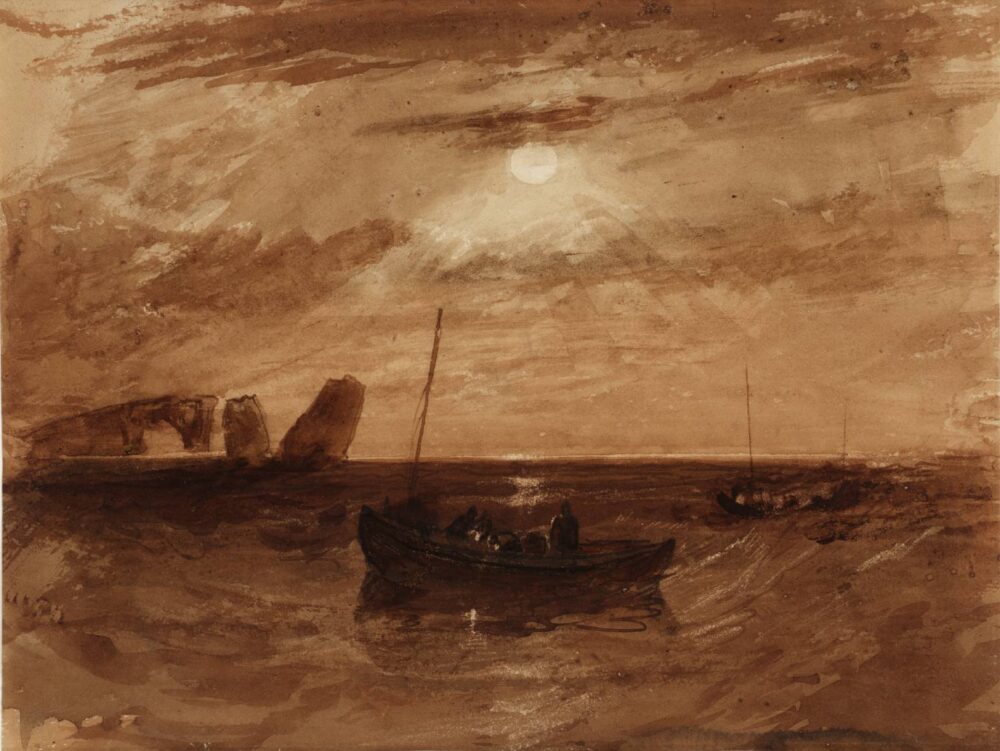
The 1st landscape painting of the celebrated landscape artist J. M. W. Turner to be exhibited at the Royal Academy was of fishing boats painted off the Needles after a visit in 1796.
West Wight became even more famous in the mid-19th century when the Poet Laureate, Alfred Lord Tennyson, came to live at Freshwater. His presence attracted many famous visitors, including Charles Darwin, Charles Kingsley, Edward Lear and the artists Molman Hunt and Millais. Tennyson would often take his guests to see the coloured sands at Alum Bay – usually by boat from Freshwater Bay.
An Ordinance Survey map of 1862 shows the presence of 2 small wooden piers, but these would have been too small to cope with landing tourists from steamers.

The 1st Alum Bay Pier Act was passed in 1869 for the construction of a wooden structure. Work on the pier was reported to be well advanced in the summer of that year, although the exact date when it was completed is unknown.
Further transport improvements brought an increasing volume of visitors to Alum Bay. A new road was built from Totland in 1873. The Freshwater, Yarmouth and Newport railway was completed in 1879.
The wooden pier was now worn out. A new 370 ft iron pier was finished in 1879. Steamers from Bournemouth, Southampton and Southsea began calling at Alum Bay, with the paddle steamer Princess Beatrice making her maiden voyage to the new pier in 1880.

Steamers started from the London and South Western Railway called regularly at the pier until the start of World War I. The last steamer to call was the Red Funnel’s Queen in 1920.
The pier had fallen into disuse by 1924. The following year, it was declared unsafe and closed. By 1926, the Needles and Alum Bay Pier Company was in liquidation, and attempts were made to dismantle the pier.
The end of the Alum Bay pier came in a storm in 1927, which broke the structure in 2. It was never rebuilt. However, the shore side end of the pier remained in operation until the start of World War II.

No trace of the former pier remains today. However, there is a small landing stage on its site, catering for the craft which make short cruises around the Needles.










I’ve really enjoyed this series. Interesting and informative – well done Mr Whitmore!
Great to learn out the piers no longer here sadly many thanks x
Brilliant series.
Thank you.